
A Visa card you fund with USDT, published almost nowhere
 Available in US
UstarPay is a crypto card that converts a stablecoin balance into ordinary Visa spending, aimed at people who cannot get a normal bank card to work — or who simply want one that spends from crypto. The promise is unremarkable and useful. The information behind the promise is almost absent. Across the card’s public pages and the third-party write-ups available, the issuer, the fee schedule, the country list, the limits and the app’s rating are either not stated or explicitly unconfirmed. What I can give you is therefore narrower than I would like: a clear score, an honest account of what is known, and a firm list of the things you must check yourself before you commit money.
The conditions described below are current as of October 28, 2026.
Verdict: 4.8 out of 10, and the low marks are mostly about missing information
I score UstarPay 4.8 out of 10. That is not a verdict on a scam — there is no evidence of harm here — it is a verdict on how little can be confirmed. The card works along a familiar design: you send USDT to a wallet in the app, the balance converts, and you spend it as Visa. The problems are the absences. No fee schedule is published. No country list is published. The issuing bank is not named. The company behind the app was incorporated in January 2026, which makes this a product measured in months, not years.
Who it suits, on the evidence: an early adopter who already holds USDT, is comfortable sending funds to a new provider, and treats the balance as something they could afford to lose. Who it does not suit: anyone whose card needs to work reliably this month, anyone who needs dispute resolution or chargeback protection in practice, anyone who must know the fee before the payment, and anyone in a country not confirmed to be served.
| Criterion | Mark | Why |
|---|---|---|
| Who can get it | 5 / 10 | Officially not disclosed; unofficial sources say no country list is published and access depends on KYC approval and the user’s country sitting on a regulated list |
| Cost | 5 / 10 | Not disclosed; unofficial sources say a virtual card issuance fee exists but no amount is published, and campaigns have waived it, while FX, ATM and replacement fees are unpublished |
| Top-up options | 5 / 10 | Unofficial: the only confirmed route is USDT into the in-app wallet, other listed assets are swapped into USDT, on the Ethereum, Bitcoin and Solana networks |
| Reliability and complaints | 4 / 10 | Unofficial: the operator is named as USTAR GLOBAL TECH LIMITED in Hong Kong, incorporated 12 January 2026, with no bank-issuer named; Trustpilot shows 0 reviews and no complaints were found |
| Everyday use | 5 / 10 | Unofficial: the card can be added to Apple Pay or Google Pay depending on device and region; card type, ATM access and delivery are not disclosed |
| Total | 4.8 / 10 | A workable mechanism held back by what nobody will put in writing |
Will they give you the card?
The card’s own public pages do not say who qualifies. That is the plain answer, and I want to say it once, plainly, because everything else in this section is inference from third-party descriptions.
What the unofficial descriptions say is this: there is no published country list, and whether you can get the card depends on your identity check being approved and on your country appearing on a regulated list that the card does not publish for reading. The practical upshot for you is that “can I use UstarPay in my country” cannot be answered by reading the website. It has to be answered by applying and finding out.
That is a real cost even if it works. Some people are willing to spend an afternoon on an application that may go nowhere. Some are not, and should not be. If your country is under sanctions or otherwise restricted in your region, the answer is almost certainly no, and no application will change it — but I am not going to speculate about your specific situation beyond that plain point.
How to get it
Officially, the signup requirements are not stated. What the unofficial sources describe is the shape of the process: identity verification is mandatory before you can fund or spend; the documents you need vary by region; and there is a wait for approval after you submit. The card itself is not described in official detail beyond the starting data naming it as a Visa card, and the KYC tier structure and delivery arrangements are not stated.
So the honest sequence, as far as anyone outside the company can describe it, is: sign up, complete KYC with whatever regional documents apply, wait to be approved, then look at what card form is offered. I would add one caution of my own that no page makes for you. When the details vary by region — documents, delivery, even whether a physical card exists — that variation is a sign the service is run region by region, and you should assume your region’s terms may differ from anything you read about someone else’s.
Fees: what it really costs, and why you have to assume the worst
The costs table is the weakest part of this review, and I will not dress it up. The card publishes no fee schedule. The table below mixes what is stated with what is marked not stated, because a reader comparing cards needs to see the gaps as clearly as the numbers — and because a table that hides four empty cells looks more complete than it is.
| Fee or limit | What is published |
|---|---|
| Issuance | Not stated; unofficial: a virtual card issuance fee exists in the base product, amount not published, campaigns have waived it |
| Monthly fee | Not stated |
| Conversion | Not stated; in-app swap pairs and spreads not published |
| FX / foreign currency | Not stated |
| ATM withdrawal | Not stated |
| Declined payment fee | Not stated |
| Replacement card | Not stated |
| Daily limit | Not stated; unofficial: no limits are published |
| Monthly limit | Not stated; unofficial: no limits are published |
| Card currency | Not stated |
| Loyalty tiers | Not stated |
Now let me walk you through what that means at a till, because abstract gaps worry people less than real ones do.
Buying coffee abroad. You tap the card, the payment goes through, and something is converted somewhere between a stablecoin and a local currency. Who takes the spread — you or the operator — is not published. You cannot know whether that coffee cost you the price on the menu or the price plus a margin you never agreed to.
Withdrawing cash. Whether UstarPay charges an ATM fee is not stated, and neither is how many ATMs, if any, the card reaches. If you keep cash as a habit, this is the use that will hurt you first and hardest.
A payment the shop refuses. Whether a decline costs anything is not stated. Some providers charge for this, some absorb it. You will find out at the moment it happens.
Replacing a lost or damaged card. Not stated. If your card is delivered physically and you lose it, you do not know what the second one costs.
The daily and monthly limits being unpublished is the one I would raise the most. Limits are the difference between a card you can run a month on and a card you top up every other day. Without them you are guessing at capacity as well as cost.
My advice is arithmetic, not advocacy: assume the card carries a conversion margin and an ATM fee until you have read both in writing on the current fee page. If the fee page does not exist, treat that as the answer.
How to Top up
Officially, the funding routes are not stated. Unofficial sources describe exactly one confirmed path, and it is narrower than the marketing usually is for cards like this.
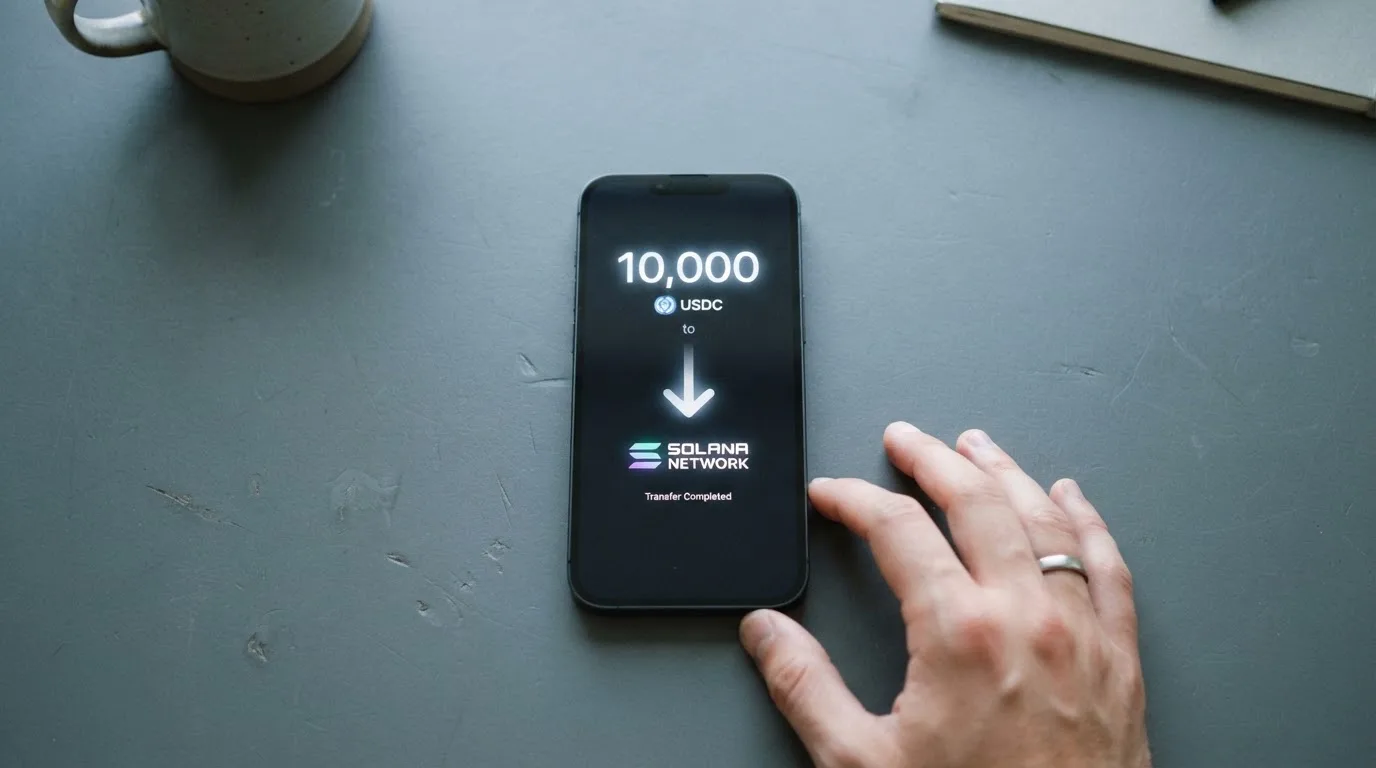
The single confirmed route is a USDT deposit into the in-app wallet. An in-app swap converts other listed assets into USDT, so anything else you hold is a two-step journey rather than a direct deposit. The networks listed are Ethereum, Bitcoin and Solana. The network fee on a USDT deposit is charged by the blockchain, not by UstarPay.
That last point is small but worth internalising. It means a top-up is two costs, not one: the chain’s fee, and whatever UstarPay’s own conversion spread turns out to be. The second is the one nobody has published.
There is a mistake here that costs real money, and I want to name it because it is irreversible rather than annoying. Deposits sent on the wrong network are lost. Blockchain transfers cannot be undone; the network cannot freeze or return them. If you send USDT on a chain the provider does not support, or to an address belonging to another network, recovery depends on the provider’s willingness to help, with no guarantee attached. Before your first transfer, confirm twice — network and address — and keep a small balance as a test rather than funding the full amount you intend to use.
The withdrawal side is not stated either. Whether you can move the balance back out, in what currencies, and at what cost, is one of those things you should establish before you deposit, not after.
Paying with it every day
The everyday mechanics of this card are standard. Unofficial sources say official posts stated the card can be added to Apple Pay or Google Pay, depending on your device and region. That is genuinely useful: it means the card lives in the wallet you already unlock with your face or fingerprint, and each mobile payment uses a device-specific number and a one-time dynamic code rather than your actual card number.
What is not stated: whether the card is virtual only or also arrives as plastic, whether it works at ATMs, and how it is delivered. If your plan involves handing this card to someone for a restaurant bill or keeping a physical card as backup, you are relying on unstated facts.
The rewards picture is equally thin. No permanent cashback rate is confirmed. What exists are time-limited campaigns: a $1 sign-up coupon, a $2 verification coupon (unofficial), and $50 for the top referrers until 31 October 2026, with a referral payout of 3 USDT per qualifying friend up to a cap. A launch promotion is not a loyalty programme. Judge this card on what it costs, not on the coupon.
The app is another open question. The App Store search page was not readable when I checked, and the available source notes that App Store reviews are too few to rate. That is what a very young app looks like from the outside. A low number of reviews is not a warning in itself; the absence of any review history at all is.
Disputes and complaint handling are not stated. In the United States, reversal rights on a debit card come from Regulation E and credit card rights from Regulation Z, and prepaid-card coverage varies and should not be assumed. Whatever jurisdiction you are in, do not assume a chargeback route exists here.
What can go wrong
I want to organise this section by what you would actually lose, and how.
The first category is the money on the card. This is a custodial arrangement in the ordinary sense: the provider holds the credentials, so you trust the provider with the balance. That trust now sits with an operator incorporated on 12 January 2026. Custodial platforms have a real record of failure — Mt. Gox, about US$350 million reported stolen between 2011 and 2014; Coincheck, about US$400 million in 2018; Ronin Network, US$625 million in 2022 — and a card like this inherits that counterparty risk in miniature.
The second is your money at the merchant. A card can be declined for reasons that have nothing to do with you having done anything wrong. A prepaid or foreign BIN can be refused outright because the merchant’s system can look up which institution and country issued the card and apply extra scrutiny when the issuer country differs from your billing address. Address verification is generally unavailable for foreign-issued cards, which itself causes declines. Online payments can be challenged with a one-time code or a biometric check. And gambling merchants — merchant category 7995 — are blocked on many cards by policy, not by law, with the list varying by issuer. Any of these can produce a declined authorisation that leaves a hold on your funds for several days.
The third is the merchant category problem, which is worth separating out: some shops simply will not take this card, and when they refuse, the reason may be the BIN lookup rather than anything about you. That is a friction you cannot argue with at the counter.
The fourth is the card programme itself. Card programmes close. Visa terminated its global agreements with FTX on 13 November 2022 and the FTX US debit card was wound down by its issuer. WaveCrest, a Visa issuer that supplied crypto card brands, was suspended by Visa in Europe in 2018, closing all WaveCrest-issued Visa programmes. Closures typically follow a pattern: a notice period, then spending and loading stop, then users are asked to withdraw remaining balances. This is not a prediction about UstarPay. It is the shape of what a card programme ending looks like, and it is why holding a balance you need next week on any provider run by a company months old is a choice with a tail.
On the company’s side, the name is not consistent across sources. The app operator is named as USTAR GLOBAL TECH LIMITED, a Hong Kong company incorporated 12 January 2026. The starting data instead names CORAL GLOBAL TECH PTE. LTD. in Singapore and FASTESTPAY LTD. as a Canadian money services business. Neither has been verified, and the two sources differ. The issuing bank is not named at all. You do not need to be a lawyer to see why that matters: when something goes wrong, the question of who your regulated counterparty is becomes the first question, and here it cannot be answered from public sources.
Security claims are not stated officially, and the multi-signature and cold/hot wallet safeguards that cards like this usually advertise are not independently audited. Support is unofficial: a website, an X account and a Telegram channel, with no published hours and no statement about language support.
On complaints, I found nothing — which is not the same as there being none. One search across reviews, Trustpilot and Reddit returned nothing about UstarPay. Trustpilot shows 0 reviews (“This company hasn’t received any reviews yet”) on an unclaimed profile, read on 21 October 2026, with no recurring themes because there are no reviews at all. A very new product has had no time to accumulate a complaint history.
So: no evidence of a problem, and no track record to rely on. For a reviewer that is the honest summary.
What to take instead
If the reason you are reading about UstarPay is that a normal card will not work for you, you have alternatives with more published detail. None of them is a recommendation, and none is risk-free — but they are at least legible, which is not something UstarPay currently is.
| Alternative | Score | Card form | Cost picture | Funding |
|---|---|---|---|---|
| UstarPay | 4.8 / 10 | Visa card, form not stated | No fees published; issuance fee reportedly exists, campaigns have waived it | USDT to in-app wallet; Ethereum, Bitcoin, Solana |
| Cardex | 5.6 / 10 | Debit card on VERVE, Visa, Mastercard and UnionPay; virtual and physical; listing is Naira-focused | Real-time crypto-to-fiat conversion at payment, no fee percentage stated | USDT, USDC and BTC wallets; networks not stated |
| TakeCard | 5.5 / 10 | Virtual card immediately, physical card Bolivia only; Visa; issued in the United States; prepaid; USD 1:1 | Virtual USD 5; physical Bolivia USD 20 issuance plus USD 20 shipping (one article says USD 10 — conflicting); 1% commission per purchase | Top up from the Takenos balance; coins not named in the article |
| OkiCard | 6.0 / 10 | Virtual card; a physical card is also mentioned; network “Visa/Mastercard” not specified; USD/EUR pegged | Pages disagree: issuance $0 and monthly $0 on the pricing page, a starting price of $15 for the virtual card, and a FAQ one-time fee; load fee 3%, transaction fee 0% | USDT on BSC, Ethereum, Tron and Solana; USDC “soon”; initial deposit 100 USDT |
A few comparisons worth drawing out.
Who is served is the axis on which UstarPay is most silent. Cardex advertises one crypto card across 200+ countries with no exclusions listed, though its App Store listing is Naira-focused. OkiCard advertises 150+ countries (some pages say 200+), no geo-blocking based on your passport, and requires users to confirm they are not in a sanctioned jurisdiction. TakeCard does not list countries in its help articles; the physical card is “available only to Bolivian users for for now” while the Takenos site says the wallet can receive payments from any country, and its starting data lists virtual cards for Argentina, Bolivia, Peru, Chile, Paraguay, Colombia, Ecuador, the US, Spain and Italy — which I could not confirm on a page.
On cost, OkiCard is the most transparent and also shows why transparency matters: its own pages contradict each other, with a pricing page of issuance $0 and monthly $0, a starting price of $15 for the virtual card, and a FAQ mentioning a one-time issuance fee. TakeCard has real, conflicting numbers too — USD 20 issuance plus USD 20 shipping for the physical card in Bolivia, with another article in the same centre saying USD 10. TakeCard at least commits to a 1% commission per purchase and a 1:1 USD rate, with other currencies at the official Visa rate on the day of the transaction.
None of the three publishes a crypto conversion fee cleanly either. Cardex converts in real time at the moment of payment with what it calls an “AI-Powered Conversion Rate” that scans global exchange rates and picks the best one, with no percentage stated. OkiCard states a 3% load fee, 0% transaction fee in USD, and “no hidden exchange spreads”, with the FX fee not stated.
If your priority is knowing exactly what a payment costs before you make it, OkiCard has the most published numbers and the most internal contradictions. If your priority is breadth of countries, Cardex and OkiCard both say more than UstarPay does. If you want a card that is only usable where you can top up locally, TakeCard’s Bolivian physical option is at least a defined product.
Who I would recommend it to
I would recommend this card, cautiously, to one specific person: someone who already holds USDT, has verified for themselves that their country is served, is comfortable that the balance is exposed to a provider incorporated in January 2026, and is treating the card as a convenience experiment rather than as infrastructure. For that person, the card does what it says: crypto goes in, ordinary Visa spending comes out, and it fits in a phone wallet.
I would not recommend it to anyone who is trying to solve a serious banking-access problem and needs the card to be dependable. This is not about whether the card is fraudulent — there is no sign of that. It is that a company months old, with no published fees, no published limits, no named issuer and no review history, is asking you to depend on it at exactly the moment dependence is what you were short of.
Before you deposit, I would put four things on a checklist. Confirm your country is served by the only method available to you, which is applying. Read the current fee page for conversion, ATM and decline charges; if no such page exists, that fact is itself your answer. Send a small test deposit on the correct network before funding anything substantial. And accept that no permanent cashback exists and that the launch coupons expire.
If you want the mechanism that UstarPay promises with more of the details written down, one of the alternatives above will serve you better, even with their own contradictions. If you want this one specifically, go in with the balance you could lose.
Frequently asked questions
What is UstarPay card?
UstarPay is a crypto payment card that lets you spend a stablecoin balance as ordinary Visa purchases. You deposit USDT into a wallet inside its app, the balance converts, and you pay by card or through your phone’s mobile wallet. The interesting part is not the mechanism, which is common, but the fact that it is aimed at people a normal bank card will not work for.
How does UstarPay card work?
The card draws on a stored balance rather than a bank account, so it behaves much like a prepaid card. Funding comes from USDT sent to an in-app wallet, and other listed assets are swapped into USDT first. At the moment of payment the balance converts to the merchant’s currency. The conversion rate, spread and any fee are not published, which is the part of the mechanism you cannot see.
Is UstarPay a bank?
No evidence suggests it is a bank. It is an app and a card programme, and the issuing bank is not named in any source I could check. Card programmes are usually run by a licensed institution under the network’s licence, with the crypto brand as a manager or front-end. Without the issuer’s name, you cannot tell which regulator stands behind your balance.
Who owns UstarPay?
The sources disagree. The app operator is named as USTAR GLOBAL TECH LIMITED, a Hong Kong company incorporated on 12 January 2026. Other starting data names CORAL GLOBAL TECH PTE. LTD. in Singapore and FASTESTPAY LTD. as a Canadian money services business. None of this is verified, and the company’s own readable pages do not state it. Treat the identity as unsettled.
Can I use UstarPay card in my country?
Nobody can tell you from public information. The card does not publish a country list, and unofficial sources say access depends on your identity check being approved and your country appearing on a regulated list that is not published. The only way to find out is to apply. If your country is sanctioned or restricted in your region, expect a refusal regardless.
How do I get a UstarPay card?
Sign up, complete the mandatory identity verification with the documents your region requires, and wait for approval; unofficial sources describe a wait rather than instant access. After approval the card is issued in a form that is not officially detailed. Basic starting data names it as a Visa card. Delivery arrangements and whether a physical card is offered are not stated.
Does UstarPay card require KYC?
Yes, according to unofficial sources, identity verification is mandatory before you can fund or spend. The official pages do not state the requirements. Regional document rules differ, and there is no published tier structure. Expect to submit identity documents and to wait; the exact list is something you will learn by going through it.
How do I top up UstarPay card?
The only confirmed route is sending USDT to the wallet in the app. An in-app swap converts other listed assets into USDT, and the listed networks are Ethereum, Bitcoin and Solana. The network fee is charged by the blockchain, not UstarPay. Deposits on the wrong network are lost, so confirm the network and address carefully before sending.
Is UstarPay card safe?
There is no sign of fraud, and there is also no track record to rely on. The operator was incorporated in January 2026, Trustpilot shows 0 reviews, no complaints were found, and security claims like multi-signature or cold wallets are not independently audited. It is safest to hold only a balance you could afford to lose and never treat this card as your primary payment method.
Is UstarPay card free and worth it?
Free is not established either way. An issuance fee reportedly exists in the base product but no amount is published, and campaigns have waived it; monthly, FX, ATM, decline and replacement fees are all unpublished. The only confirmed rewards are time-limited launch offers — a $1 sign-up coupon, a $2 verification coupon (unofficial) and referral payouts — which are not a permanent cashback rate. Judge it on fees you have read, not on coupons.
Highest-scored virtual cards – cryptocardbest.com
Content created by the «cryptocardbest.com» team