
A prepaid Visa tied to a crypto app: how the Crypto.com card works in practice
 Available in US
The Crypto.com card is a prepaid Visa, not a bank account or a debit card. You load it from a balance inside the Crypto.com app and spend at any shop that takes Visa. The catch is that everything runs through the same app, the same tier system, and the same CRO-token rewards scheme. If you already use Crypto.com to trade, the card is a natural add-on. If you are only after a card, the tier system and the regional patchwork of issuers can feel heavier than it needs to be.
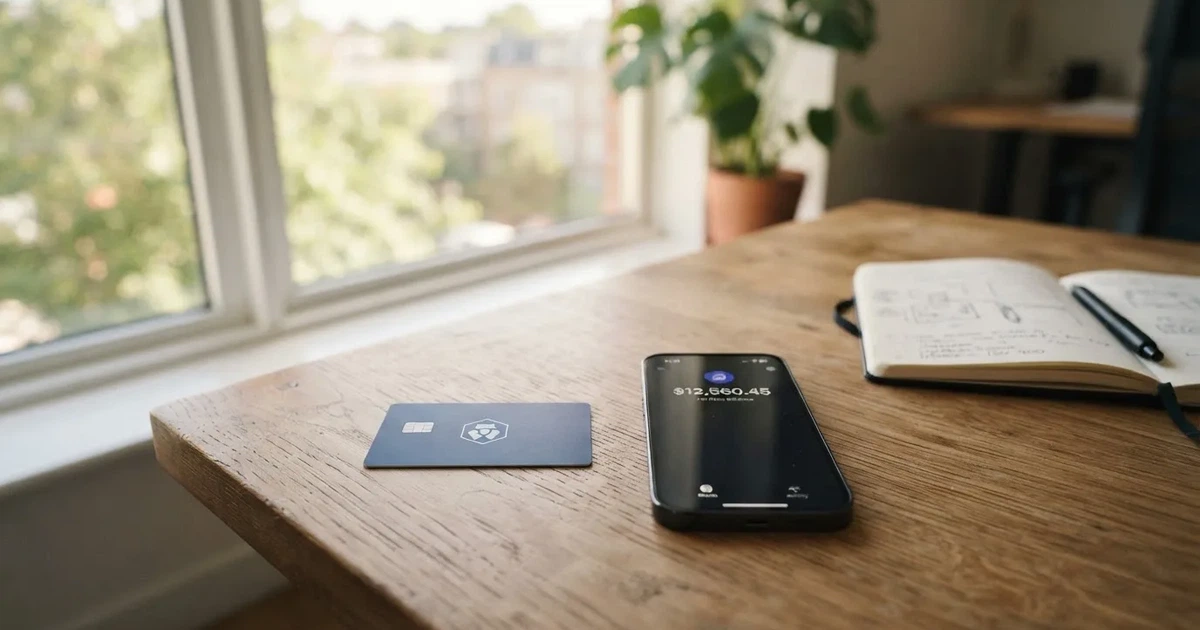
I went through the card’s own pages and help articles, then cross-checked details on third-party sites where the official wording was thin. The card is solid for everyday spending and gets the basics right: contactless, mobile wallets, tiered cashback in CRO, and a free monthly ATM allowance on the paid tiers. It loses points on clarity (some tier labels are jumbled on the cards page itself), on the inactivity fee that quietly applies after a year, and on a Trustpilot score dragged down mostly by the app and the exchange rather than the card itself.
Conditions are current as of October 28, 2026.
Verdict
The Crypto.com card earns 7.0 out of 10 in my scoring. That puts it in the upper half of crypto cards I have looked at, mainly because the everyday mechanics work and the cashback in CRO is competitive once you reach a paid tier. The mid-band score reflects two real downsides: a layered cost structure (subscription, conversion, FX, ATM, inactivity) where one missed detail can wipe out a month’s rewards, and the fact that the card is locked to one app and one custody arrangement.

| Criterion | Mark | Why |
|---|---|---|
| Who can get it | 8 / 10 | Broad coverage (US, 31 European countries, Singapore, Canada, Australia, UK, Brazil) but tier labels and issuer names differ by region |
| Cost | 6 / 10 | Subscription tiers, top-up fee, ATM fee above the monthly cap, and FX outside the EU/UK add up if you do not sit on the right tier |
| Top-up options | 6 / 10 | From Crypto.com Wallet, Cash Account or another card, but crypto is converted first; no direct crypto load |
| Reliability and complaints | 6 / 10 | Multiple regulated issuers by region; Trustpilot 2.0/5 from 9,493 reviews is poor, though most complaints are about the app and exchange, not the card |
| Everyday use | 9 / 10 | Prepaid Visa, mobile wallets, free ATM allowance, broad acceptance |
The card suits residents of Europe and Singapore who already want tiered crypto rewards and are willing to lock up CRO to get the better tiers. It is less of a fit if you only need a flat 1-2% cashback without a subscription, if you want to keep your own custody, or if your country is not on the supported list.
Will they give you the card
Crypto.com does not run a single global programme. The card is issued by a different regulated entity depending on where you live, and the list of supported countries is not identical to the list of countries Crypto.com serves for trading.
- United States: issued by Community Federal Savings Bank (the bank itself is an FDIC member, and the card runs on a Visa U.S.A. licence).
- Europe (31 countries): issued by Foris MT Limited, an electronic money institution based in Malta. The European help article names Austria, Belgium, Bulgaria, Croatia, Cyprus, Czech Republic, Denmark, Estonia, Finland, France, Germany, Greece, Hungary, Iceland, Ireland, Italy, Latvia, Lithuania, Luxembourg, Malta, Netherlands, Norway, Poland, Portugal, Romania, Slovakia, Slovenia, Spain, Sweden, Switzerland and the United Kingdom.
- Singapore: Foris Asia Pte. Ltd., a Major Payment Institution under the Monetary Authority of Singapore.
- Canada: Digital Commerce Bank, offered by Foris, Inc. The card is denominated in Canadian dollars only.
- Australia: Foris GFS Australia Pty Ltd, an Australian Financial Services Licence holder.
- United Kingdom: ForisGFS UK Limited, authorised by the Financial Conduct Authority as an e-money institution. Funds are not covered by the Financial Services Compensation Scheme.
- Brazil: a USD card issued by Foris MT, intended for use outside Brazil. There is no local-currency Brazilian card.
The rule is by residential address. The card is available where you actually live, not where you hold citizenship. The cards page does not state a separate citizenship rule, which is itself a point to flag: sanctions screening and issuer risk policy are usually applied to citizenship and country of birth as well as to your address, so nationality can still matter at the KYC step even when the country is on the list.
One unofficial point worth knowing before you invest time: a third-party guide (CryptoCardHub, August 2026) lists Russia among ten restricted countries, alongside Afghanistan, China, Cuba, Iran, North Korea, Somalia, Sudan, Syria and Yemen. The same page also lists Sudan in the “available” list, so the third-party information is inconsistent. Earlier 2020 coverage from CoinDesk and CoinCodex noted that Russia, Turkey and Ukraine were unsupported at launch. I have not confirmed the current Russia position from an official Crypto.com page, so treat it as unconfirmed.
How to get it
The card sits inside the Crypto.com app, and the app is what you actually apply through. You create an account, complete the identity check the app asks for, then apply for a card tier.
The cards page shows only a US PATRIOT Act identity notice: name, address, date of birth, and a national ID number (Social Security Number for US residents, or a country ID for non-US). The page may also ask for a driver’s licence or another photo ID. The page does not state the level of proof of address required, the minimum age, or how long verification takes.
A third-party guide (CryptoCardHub, August 2026) reports that identity verification can include a government ID, a selfie, and a proof-of-address document, and that a virtual card becomes available immediately on approval with the physical card shipped later. I have not confirmed this from Crypto.com’s own pages, so treat it as unofficial.
Once your account is verified, your card tier depends on your Level Up plan, which in turn depends on how much CRO you lock up. The lowest tier (Midnight Blue in Europe) is free and is what you land on by default. The cards page itself uses jumbled tier labels in places, so it is worth cross-referencing with the help articles for the region you live in.
In Europe, the physical card costs EUR 4.99 on the Midnight tier and EUR 24.99 on the Ruby Steel tier (waived for some Level Up Plus subscribers and CRO stakers). Card upgrades are free. Replacement cards are EUR 45.01 on Midnight and EUR 50 on other tiers. The page does not state delivery time.
Outside Europe, unofficial third-party figures (CryptoCardHub, August 2026) put the US physical card at USD 4.99 for Midnight, USD 29.99 for Ruby Steel, and free on higher tiers, with replacement at USD 7 for Midnight and USD 50 for other tiers. Delivery time is not stated.
A small but important point: the card is prepaid, not a debit card linked to a bank account. You have to top it up before you can spend, and the balance is held by the issuer, not in your bank.
What it really costs
The Crypto.com card is unusual among crypto cards in that it is built around a subscription: even the “free” tier is a free tier of a paid plan, and the subscription comes with both a monthly fee and a CRO lockup requirement on the upper tiers. The costs sit on top of normal payment-card fees (conversion, FX, ATM), and the worst surprises tend to come from those, not the headline subscription price.
| Fee or limit | Amount |
|---|---|
| Subscription tiers | Free; USD 4.99 per month or USD 49.90 per year or USD 500 CRO lockup; USD 29.99 per month or USD 299.90 per year or USD 5,000 CRO lockup; higher lockup tiers at USD 50,000 and USD 500,000 |
| Issuance fee (Europe) | Midnight EUR 4.99; Ruby EUR 24.99 (waived for some Level Up Plus subscribers and CRO stakers) |
| Replacement card (Europe) | Midnight EUR 45.01; other tiers EUR 50 |
| Card top-up by debit/credit card (Europe) | 1% |
| Crypto conversion | Crypto is converted to local currency before loading; the page refers to top-up, exchange-rate and ATM fees that “may apply” depending on jurisdiction and tier, without giving amounts on the main page |
| FX fee (Europe) | Midnight 0.2% in EU and UK on EUR purchases, 2.0% outside; Ruby Steel no fee up to EUR 400 per month outside EU/UK then 2.0%; Jade/Indigo no fee up to EUR 800; Icy/Rose/Obsidian no FX fee |
| ATM fee (Europe) | 2% above the monthly free amount; provider surcharges still count toward the cap |
| Inactivity fee (Europe) | EUR 5 per month after 12 months without cardholder-initiated activity, rising to EUR 6 from 1 October 2026 |
| Account closure (Europe) | EUR 50 |
| Daily ATM cap (Europe) | EUR 2,000 |
| Monthly ATM cap (Europe) | EUR 10,000 |
| Yearly ATM cap (Europe) | EUR 75,000 |
| ATM withdrawals per year (Europe) | 360 |
| Free ATM per month by tier (worldwide) | Free tier USD 200; USD 4.99 tier USD 400; USD 29.99 tier USD 800; USD 50,000 tier USD 1,000; USD 500,000 tier USD 1,000 |
| Aggregated top-up limit (all tiers) | USD 25,000 per month |
| POS purchase cap (Europe) | EUR 25,000 daily and monthly; EUR 250,000 yearly |
| Max card balance (Europe) | EUR 25,000 |
Three everyday situations, to make this less abstract:
You buy lunch in Berlin for EUR 12. The card is on the Midnight tier. The 1% top-up fee was already paid when you loaded the card. The purchase is in EUR, so the FX leg (0.2% for Midnight in the EU) applies on top of the network conversion. On the Midnight tier you earn 0% CRO rewards, so the net effect is a small fee, no cashback. On the Jade/Indigo tier the same lunch earns 2.5% CRO back up to the monthly cap, which is where the subscription starts to pay for itself.
You withdraw EUR 100 from an ATM in Spain on the Midnight tier. The free allowance is EUR 200 per month, so this withdrawal is free up to the cap, then 2% on anything above. The ATM operator’s own surcharge is separate and counts toward your limit. Stay under EUR 200 a month and Midnight is fine; push past it and 2% is the cost.
You spend USD 200 on a US hotel booking while your card is the European Midnight tier. This is outside the EU/UK, so the FX fee jumps to 2.0%. On Jade/Indigo or above the same spend is fee-free up to the tier’s monthly no-FX cap (EUR 800 on Jade/Indigo). This is the case where a small bump in tier saves more than the monthly subscription costs.
Top up
The card has no balance of its own in the everyday sense. It draws on a balance you have loaded in advance, and that balance has to be in fiat. Crypto is converted first, then the fiat is loaded onto the card.
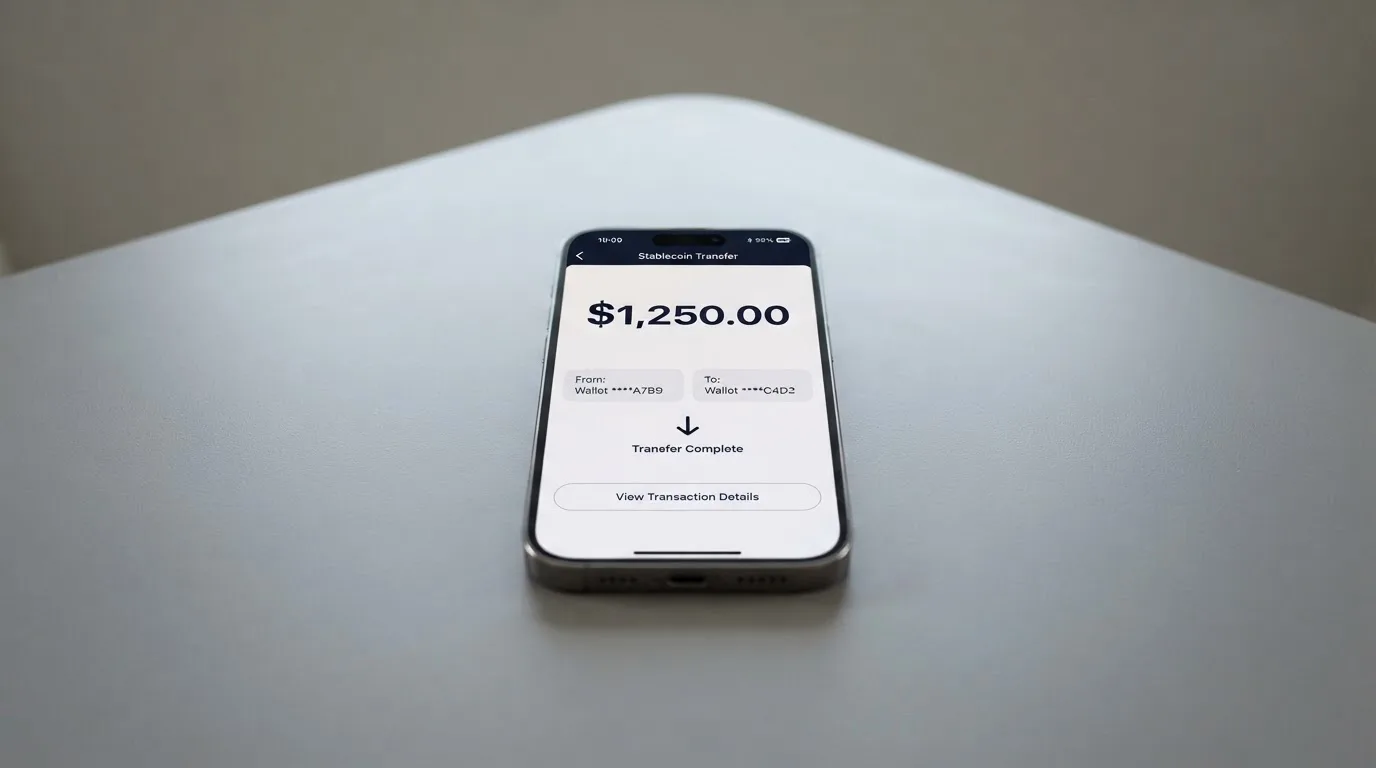
In Europe, the top-up options are:
- From the Crypto.com Crypto Wallet, with a conversion to fiat at the current rate before the load.
- From the Crypto.com Cash Account.
- From another debit or credit card. This carries a 1% top-up fee, with a EUR 20 minimum card top-up.
The top-up caps in Europe are EUR 25,000 per day and per month, EUR 250,000 per year, with up to 12 top-ups per day and 140 per month. Crypto-to-card and Cash-Account-to-card share these caps. The maximum balance you can hold on the card is EUR 25,000. Worldwide, the aggregated top-up limit is USD 25,000 per month across all tiers.
The cards page does not state a fee for getting your card balance back to your wallet or bank. The European fee article does not state one either; the only end-of-life fees I could find are the EUR 50 account closure fee and the EUR 5/month inactivity fee that kicks in after 12 months without cardholder-initiated activity (rising to EUR 6 from 1 October 2026).
The most common error is sending crypto to a card address that does not exist (the card is not a crypto address), or sending the wrong network. The Crypto.com app is the source of truth for the load, and the conversion is what you are paying for.
Paying with it every day
In day-to-day use the card behaves like any other prepaid Visa. It is contactless, and unofficial sources (CryptoCardHub, August 2026) say Apple Pay, Google Pay and Samsung Pay are supported, with availability varying by region. I have not confirmed mobile-wallet support from Crypto.com’s own cards page, so treat that as unofficial. The Crypto.com app itself is the management layer: freeze, top up, view transactions, set controls.
The headline benefit is the CRO rewards paid in CRO token to your Crypto Wallet after each eligible transaction, with rates by tier:
- Midnight Blue: 0% on everyday spend.
- Ruby Steel: 1.5% on everyday spend up to USD 750 per month.
- Jade Green / Royal Indigo: 2.5% up to USD 1,500 per month.
- Icy White / Rose Gold: 3.5% up to USD 3,000 per month, then 0.5% above that.
- Obsidian: 4.5% up to USD 5,000 per month, then 1% above that.
- Travel bookings through Crypto.com Travel earn up to 5% / 20% / 25% / 30% / 40% by tier.
Two caveats the page itself flags: certain merchant categories and channels are excluded from CRO rewards, and the full list sits in a help article I have not read in full. The smaller tables on the same page show slightly different numbers from the main table; I have used the main table. Also worth noting: rewards are paid in CRO, not in fiat, so the cashback is itself a crypto position that moves in price.
The app itself is well-rated: “Crypto.com: Trade Every Market” sits at 4.7 out of 5 from around 336,000 App Store ratings (read 2026-10-20), and Russian is among 26 supported languages. The unofficial Google Play figure (CryptoCardHub, August 2026) is 4.5/5 from 661,155 ratings, which I have not confirmed from the Play Store directly.
Mobile-wallet support is the small detail that often decides whether a card feels modern. If your region has Apple Pay or Google Pay, the Crypto.com card can be tokenised into the wallet; the issuer can then restrict the tokenised number, for example blocking it on magnetic-stripe use while leaving contactless and in-app payments active. This is a useful control if your card is ever lost.
A few other everyday notes:
- The card is prepaid, so it cannot overdraw. Authorisations that are declined can leave a temporary hold for up to 7 days, which is normal across the industry.
- 3-D Secure (Visa Secure) is the standard for online payments, so you will see a one-time code or biometric prompt for riskier transactions.
- Some merchants decline foreign-issued prepaid cards because the BIN (the first six to eight digits of a card number) tells them the issuer country. This is true of any prepaid card issued outside the merchant’s country and is not specific to Crypto.com.
What can go wrong
Crypto cards as a category have a worse track record than bank cards, and Crypto.com’s own user feedback reflects that.
Crypto.com’s Trustpilot page (read 2026-10-20) shows 2.0 out of 5 from 9,493 reviews, with 72% of those reviews at one star. The company replies to 31% of negative reviews. The most common recent themes are about the app and the exchange, not the card: inability to fund the card, payment failures, subscriptions cancelled but still charged, cashback terms changing after sign-up, withdrawals failing, chatbot-like support, and tokens delisted without conversion. The card is part of that same app, so a rough patch on the exchange side tends to spill into card support.
A few structural risks worth weighing:
- Custodial model. The card is custodial: your card balance and your crypto are held by Crypto.com and the relevant issuer, not by you. Crypto transfers are irreversible, and a stolen or lost credential cannot be recovered the way a bank password can. Past custodian failures (Mt. Gox, Coincheck, Ronin Network) are a reminder that holding funds with a custodian carries counterparty and hack risk, even if Crypto.com’s own setup cites SOC, ISO 27701, ISO 22301 and PCI DSS.
- Multiple issuers, one brand. The card is issued by a different licensed entity in each region. If your country changes issuer, or if a programme is wound down, you typically get a notice period, then spending stops, then you are asked to withdraw the remaining balance. WaveCrest’s suspension by Visa in 2018 closed every WaveCrest-issued Visa programme, and FTX’s global card agreements were terminated by Visa in November 2022, with the FTX US debit card wound down by its issuer. The pattern is not unique to Crypto.com, but it is the pattern.
- KYC depth. The cards page lists only the US PATRIOT Act identity fields (name, address, date of birth, national ID number, possibly a driver’s licence or other photo ID). In practice, EU due-diligence rules require more, including sanctions screening, and an account can be frozen or closed if due diligence cannot be completed. The page does not state a citizenship rule, which can matter for cross-border readers.
- KYC and sanctions. Prepaid cards are generally restricted to adults (18+). Nationality is screened separately from residence, so a supported country of residence does not automatically mean a supported nationality.
- Gambling and excluded categories. Gambling is blocked on some crypto cards by issuer policy. The cards page does not state Crypto.com’s policy on gambling, but the help article on excluded CRO reward categories covers the rewards side, not the acceptance side.
- Inactivity fee. After 12 months without cardholder-initiated activity, the European card charges EUR 5 per month, rising to EUR 6 from 1 October 2026. A card you forget about is a card that costs you money.
- Rewards paid in CRO. The headline cashback is itself a crypto position. If CRO halves, so does the value of last month’s cashback.
On the company side, the brand is Crypto.com (the site footer reads “Crypto.com”). The card is issued under separate regulated entities in each region, which is the standard way to run a multi-region card programme but does mean the entity you have a contract with depends on your residential address.
For support, the app and the chat at chat.crypto.com are the main entry points. Phone and email vary by region (US 888-824-8817; Singapore 65-6264-0211). Higher tiers get priority support. The app listing includes Russian among 26 supported languages, so the app itself is accessible if you prefer Russian.
What to take instead
Crypto.com’s score (7.0) is reasonable but it is not the only crypto card on the market. The honest comparison is against other prepaid or credit-style cards that spend from a crypto balance, with similar custody trade-offs.
| Card | Score | Type | Card networks | Where you can get it | Standout feature |
|---|---|---|---|---|---|
| Crypto.com | 7.0 / 10 | Prepaid Visa | Visa | US, 31 European countries, Singapore, Canada, Australia, UK, Brazil (USD card) | Tiered CRO rewards, free ATM allowance by tier |
| MSX | 6.4 / 10 | Not stated officially | Not stated officially | Not stated on an official page I could read | Not stated officially |
| Bybit Card | 6.0 / 10 | Mix of prepaid and credit | Mastercard and Visa depending on region | Argentina, AIFC (Kazakhstan), Georgia, Kazakhstan, Australia, Mexico, Brazil, Peru, Asia Pacific (not EEA) | Tiered cashback in USDT up to 10% on Infinite |
| MEXC | 5.6 / 10 | Virtual only | Not stated | Philippines, Taiwan, Thailand, and others (full list not shown) | M-Score cashback up to 10% on Elite |
A few notes on the alternatives:
MSX is the second-highest scorer but the public information is thin. The official page I could read does not state supported countries, card type, fees, funding, or rewards, so most of what you would compare on is simply not published in a place I can verify. Treat the score as a placeholder until the issuer publishes more.
Bybit Card is a useful comparison because it is explicit about what it is not. The cards page says the product is not meant for European Economic Area customers and that all EEA participation is prohibited, which removes it as an option for European readers. The card is available across Argentina, AIFC (Kazakhstan), Georgia, Kazakhstan, Australia, Mexico, Brazil, Peru and the Asia Pacific region, with a regional split between Mastercard prepaid (Argentina), Mastercard credit (AIFC, Georgia, Kazakhstan, Australia, Mexico), Visa prepaid (Brazil, Peru) and Visa credit (Asia Pacific). A virtual card is issued first; the physical card is not available in Peru. Crypto-funded transactions earn tier-based cashback in USDT (Base 2%, Beta 2%, Alpha 4%, Apex 6%, Omega 8%, Infinite 10%), but fiat-funded spending does not earn under the rule that took effect on 5 October 2026 at 10:00 UTC. The card has no balance of its own: it draws on the Funding Account and the Flexible Easy Earn balance, with crypto sold automatically when fiat is short. Bybit’s fiat-service restricted list includes Belarus, Russia, Serbia, China and the United States, and the card currency depends on the country of your Advanced Identity Verification, not your citizenship.
MEXC sits lower (5.6) mainly because it is virtual-only at the time of writing and the published information on fees and networks is thin. The cards page lists the Philippines, Taiwan, Thailand and others without showing the full list. The card is funded by sending USDT to a Fiat account, then adding it to the card. Cashback is tiered by M-Score (Standard 4% up to 100 USDT per month, Premier 6% up to 300, Elite 10% up to 800).
If you are in Europe or Singapore, Crypto.com remains the stronger default. If you are in Latin America or Central Asia, the Bybit Card is a real alternative with explicit regional support, even if it sits half a point lower in my scoring. MEXC and MSX are worth watching rather than switching to today.
Who I would recommend it to
The Crypto.com card is worth opening if you are in a supported country, you already (or are willing to) use the Crypto.com app, and you can take advantage of one of the paid tiers without overstretching. The Jade/Indigo tier in particular is the sweet spot: USD 4.99 per month, 2.5% CRO cashback up to USD 1,500 per month, and a USD 400 monthly ATM free allowance. If you are spending more than USD 200 a month and withdrawing less than USD 200, the subscription pays for itself in cashback within a few weeks, and the rest of the benefits (no FX fee up to EUR 800 outside the EU/UK, higher ATM cap) are the upside.
It is not the right card if any of the following is true:
- You only need a flat 1-2% cashback with no subscription and no lockup. A non-crypto cashback card will do the job.
- You want to keep your own custody. The card is custodial, and your balance is held by the issuer.
- Your country is not on the supported list. The list is long, but it is not the world, and the unofficial third-party list of restricted countries is itself inconsistent.
- You do not want CRO price risk on your cashback. The rewards are paid in CRO, so the value of last month’s cashback moves with the token.
- You will not use the card for at least a year. The inactivity fee will quietly start charging you.
If you are a European or Singapore resident who already trades on Crypto.com, the card is a sensible extension. If you are starting from scratch and only want a card, the tier system and the cost of converting crypto before loading are real friction, and the better fit is probably a flat-rate cashback card with the crypto exposure held separately.
Frequently asked questions
What is the Crypto.com card?
The Crypto.com card is a prepaid Visa that you load from a balance inside the Crypto.com app. It is not a debit card linked to a bank account, and it is not a credit card. The card is issued by different regulated entities depending on where you live, including Community Federal Savings Bank in the US, Foris MT Limited in Europe, Foris Asia in Singapore, and ForisGFS UK in the UK.
How does the Crypto.com card work?
You open a Crypto.com account, complete identity verification, and apply for a card tier. You load the card by converting crypto from your Crypto.com Wallet, drawing on the Cash Account, or topping up by debit or credit card. Crypto is converted to local currency before loading, and the card then spends that fiat balance anywhere Visa is accepted. Cashback is paid in CRO token to your Crypto Wallet.
Is Crypto.com a bank?
Crypto.com is the brand behind the app, but the card itself is issued by regulated banks or e-money institutions in each region, not by Crypto.com directly. In the US the issuer is Community Federal Savings Bank, an FDIC member. In the UK the issuer is ForisGFS UK Limited, an FCA-authorised e-money institution, and the funds are not covered by the Financial Services Compensation Scheme.
Who owns Crypto.com?
The site footer identifies the brand as Crypto.com. The card programme is run through a network of licensed issuers by region, including Community Federal Savings Bank (US), Foris MT Limited (Malta/EU), Foris Asia Pte. Ltd. (Singapore), Digital Commerce Bank (Canada), Foris GFS Australia Pty Ltd (Australia), and ForisGFS UK Limited (UK). Crypto.com itself acts as the programme manager and front-end.
Is the Crypto.com card available in my country?
The card is available in the US, 31 European countries (Austria, Belgium, Bulgaria, Croatia, Cyprus, Czech Republic, Denmark, Estonia, Finland, France, Germany, Greece, Hungary, Iceland, Ireland, Italy, Latvia, Lithuania, Luxembourg, Malta, Netherlands, Norway, Poland, Portugal, Romania, Slovakia, Slovenia, Spain, Sweden, Switzerland, UK), Singapore, Canada, Australia, and Brazil (as a USD card for use outside Brazil). A third-party guide lists Russia among ten restricted countries, but I could not confirm that from Crypto.com’s own pages, so treat it as unconfirmed.
How do I get the Crypto.com card?
You get the card by creating a Crypto.com account, completing the identity check the app asks for, and applying for a card tier inside the app. Your tier depends on your Level Up plan and the amount of CRO you lock up. The cards page shows only the US PATRIOT Act identity fields (name, address, date of birth, national ID number, possibly a driver’s licence). A third-party guide says a virtual card is issued immediately on approval and the physical card is shipped later, but that is unofficial.
Does the Crypto.com card require KYC?
Yes. The cards page lists a US PATRIOT Act identity notice covering name, address, date of birth, national ID number (SSN or country ID), and possibly a driver’s licence or other photo ID. The page does not state a proof-of-address requirement or a minimum age, but EU due-diligence rules typically cover name, address, date of birth, nationality, ID documentation, sanctions screening, the purpose of the relationship, and PEP status.
How do I top up the Crypto.com card?
You top up from your Crypto.com Crypto Wallet (with a conversion to fiat first), from the Crypto.com Cash Account, or by debit or credit card. The card top-up fee by debit or credit card in Europe is 1%, with a EUR 20 minimum. In Europe the caps are EUR 25,000 per day and per month, EUR 250,000 per year, and a maximum card balance of EUR 25,000. Crypto cannot be loaded onto the card directly.
Is the Crypto.com card free?
The Midnight Blue tier is free of subscription, but the European physical card costs EUR 4.99 to issue and the Ruby Steel physical card costs EUR 24.99 (waived for some Level Up Plus subscribers and CRO stakers). Top-up by debit or credit card is 1% in Europe, ATM withdrawals above the monthly free cap are 2%, and the inactivity fee is EUR 5 per month after 12 months without cardholder-initiated activity (rising to EUR 6 from 1 October 2026). Higher tiers cost USD 4.99, USD 29.99, or more per month, or you can unlock them by locking up CRO.
Is the Crypto.com card safe?
The card is custodial, so your balance is held by the issuer rather than by you. The cards page cites AICPA SOC, ISO 27701, ISO 22301 and PCI DSS, but does not describe card-level features such as 2FA, instant freeze, or spending controls. The Trustpilot score is 2.0/5 from 9,493 reviews (read 2026-10-20), with most complaints about the app and the exchange rather than the card itself, but a rough patch on the exchange side tends to spill into card support. Treat the card as one part of a wider custodial app, with the usual counterparty and hack risk that comes with that.
Highest-scored exchange cards – cryptocardbest.com
Content created by the «cryptocardbest.com» team