
Relopay review: a cheap prepaid crypto card for Southeast Asia, with hard country rules
 Available in US
The Relopay card is a prepaid payment card that spends a balance you load with USDT, mostly reached through a Telegram mini app rather than a phone app store. On the numbers it scores 6.0 out of 10 — genuinely cheap to hold, with a $3 issuance fee and a $0.2 charge per successful transaction, but gated to a short list of supported countries, offered only as a virtual card for now, and built on terms that say every transaction is final. I have gone through the card’s own pages and documents and I want to walk you through what I found, what it means for the person actually holding one, and where it goes wrong.
The conditions described here are current as of October 28, 2026.
| Criterion | Mark | Why |
|---|---|---|
| Who can get it | 3 / 10 | Accounts only in the “Supported Countries” listed in the app; the card works in 170+ countries, but the US, Canada and Hong Kong are closed |
| Cost | 7 / 10 | $3 issuance, free annual/inactivity/cancellation, $0.2 per successful transaction, 0% top-up — but the crypto conversion rate is not published |
| Top-up options | 8 / 10 | USDT on TRC20, minimum $5; the cards page names Bitcoin, USDT and other coins, converted at the moment of payment |
| Reliability and complaints | 7 / 10 | Issued by Xfers Pte. Ltd.; no complaints found — but transactions are final and cannot be disputed |
| Everyday use | 6 / 10 | Virtual card with Apple Pay and Google Pay; the physical card is “launching soon”, ATMs only with that physical card |
| Total | 6.0 / 10 | Strong on price and funding, weak on eligibility, protection and physical use |
Who it suits, and who it does not
If you live in one of the countries the app calls Supported Countries, hold USDT on Tron, and want a prepaid virtual card to spend that USDT in ordinary shops and online, this is a competent tool and the price is genuinely low. I would say it is built for residents of Southeast Asia paying with USDT through Telegram — that is the shape of the product the documents describe, from the mini app to the TRC20-only deposit path.
If you are anywhere else, read the country list before anything else. Accounts are limited to the “Supported Countries” shown in the website and app, and that list is not published in text I could read; an earlier check showed Vietnam, Thailand and Indonesia plus a waitlist. Meanwhile the docs claim the card can be *used* in 170+ countries. Those are two different things — you can spend where you travel, but you cannot necessarily open an account from where you live.
The restrictions are explicit and they apply to both citizens and residents, not just residents. The barred list is extensive and covers American Samoa, Albania, Belarus, Bosnia and Herzegovina, Burundi, Canada, CAR, Congo, DR Congo, Cuba, Guam, Hong Kong, Afghanistan, Iran, Iraq, Kosovo, Lebanon, Liberia, Libya, Montenegro, Myanmar, Nicaragua, N. Mariana Islands, North Korea, Puerto Rico, North Macedonia, Russian Federation, Serbia, Somalia, South Sudan, Sudan, Syria, Ukraine, United States, US Virgin Islands, Venezuela, Yemen and Zimbabwe. Because the service bars both citizens and residents of these countries, the restriction applies even if you are living in a supported country while holding a restricted passport, or living in a restricted country while holding a different citizenship.
That is also the honest limit of my review: “Supported Countries” is a list inside an app, and I could not read it as published text. Treat the country question as something you check yourself in the app before you send anything anywhere.
Will they give you the card
Age 18 or over with full legal capacity, and standard verification is required — that is the short answer. Verification runs through Sumsub: you choose the region “All countries except USA”, pick your country and document, upload a photo, then complete a selfie or camera check, and the result comes back in “a few seconds”. Cards described as prepaid are labelled “KYC required”. Proof of address is not mentioned anywhere in what I read.
Two things to keep in mind. First, there is a single standard Sumsub verification described — no tiers, no stated turnaround beyond “a few seconds”, and no stated list of rejection reasons. If you have been turned down by other crypto services, nothing here tells you whether that history is checked. Second, the fact that verification is fast says nothing about whether you are eligible at all: the country rules above are enforced separately, and clearing KYC does not override them.
The other half of the question is what you get. There are two products today:
- A virtual card — 24 months validity, reloadable, in USD, with 3-D Secure. This is the one labelled “most popular”.
- A prepaid virtual card — 60 days validity, maximum balance $1,000.
- A physical card — “launching soon”, 3 years validity. No shipping information is published, and the card has not launched.
The network is not named in the docs; an earlier check said Visa, but the current pages do not confirm it, so I would not plan around it. The honest summary is that Relopay is a virtual card product today, with a physical card promised for a date the company has not given.
How to get it
The route is the Telegram mini app at @RelopayBot — no App Store or Google Play app was found, and there are no app-store ratings to read. If you have never used Telegram, that is a real consideration before you start, because the account, the card, the top-up and the support all live there.
The sequence the documentation describes is: open the mini app, choose your region as “All countries except USA”, select your country, complete the Sumsub verification with your document, a photo and a selfie, and then your virtual card appears in the app for you to add to a wallet. You do not wait for a physical card to arrive; nothing is posted to you.
Where people get stuck is usually eligibility rather than paperwork. If your country is not on the Supported Countries list in the app, there is a waitlist for further countries rather than an application you can push through. My advice, if you are outside the listed markets, is to open the app and look at the list before you prepare documents — that costs you nothing and saves you a verification you cannot use.
Fees: what it really costs
The published numbers are good. The gaps are what matter day to day. Issuance is 3 USD. Annual, inactivity and cancellation fees are free. A successful transaction costs $0.2 and a declined one $0.5. Top-up is 0% on the virtual card. What is *not* published is the conversion rate: “conversion fees apply when cryptocurrency is converted to fiat at the time of purchase”, but no rate is given. Payments in a currency other than USD are converted automatically, and no FX fee is stated. ATM withdrawals “may include small charges” with no amounts — and virtual cards are online-only, so ATMs are not available to you today anyway.
| Fee or limit | Value |
|---|---|
| Card issuance | 3 USD |
| Annual fee | Free |
| Inactivity fee | Free |
| Cancellation fee | Free |
| Successful transaction | $0.2 |
| Declined transaction | $0.5 |
| Crypto conversion | Fee applies; rate not published |
| FX on non-USD payments | Converted automatically; fee not stated |
| Top-up, virtual card | 0% |
| Top-up, physical card | 1% USDT |
| ATM withdrawal | May include small charges; no amounts given; virtual cards are online-only |
| Funds held in | USD |
| Virtual card validity | 24 months |
| Prepaid virtual card validity | 60 days |
| Prepaid maximum balance | $1,000 |
Two everyday payments, to make this concrete. A $20 subscription paid in USD on the virtual card: $0.2 transaction fee, plus whatever the crypto conversion charges at the moment of purchase — which is the line you cannot check in advance. A €15 dinner abroad: the euro amount is converted to USD automatically, and both the conversion fee and the FX treatment are unstated, so I cannot tell you the total. What I can tell you is that the fixed parts — $0.2 — are cheaper than most cards in this category, and the variable parts are exactly the ones the company does not publish.
The limits deserve a note of their own because the company’s own pages disagree. The usage terms give the virtual plan a maximum monthly spending of $4,000. The cards page shows the virtual card with a maximum balance of $4,000 and monthly spending of $50,000. Those cannot both be right, and I would plan against the lower figure until you see the number in your own app. The prepaid card’s maximum balance of $1,000 is consistent across sources. The terms also reserve the right for Relopay and the Issuer to set daily, monthly and per-transaction limits, so the ceiling can move without being the same as either published figure.
Three plans, as the card presents them:
- Virtual — most popular; top-up fee 0%; balance $4,000; 24 months.
- Prepaid — spending fee 0%; balance $1,000; 60 days.
- Physical — USDT top-up fee 1%; 3 years; launching soon.
Money is held in USD and the docs recommend paying in USD; other currencies such as EUR and JPY are converted automatically. There is no cashback or rewards scheme stated anywhere.
How to Top up
Top-up is the strongest part of the product. The usage terms say USDT on TRC20 — that is, the Tron network — and the minimum top-up via USDT (TRC20) is $5. The cards page names Bitcoin, USDT and “other cryptocurrencies”, and an earlier check listed USDT, USDC, ETH, BTC, TON and BNB. Coins are converted into local currency at the moment of payment. Top-up and transaction fees are calculated in USDT. A fiat top-up is not stated.
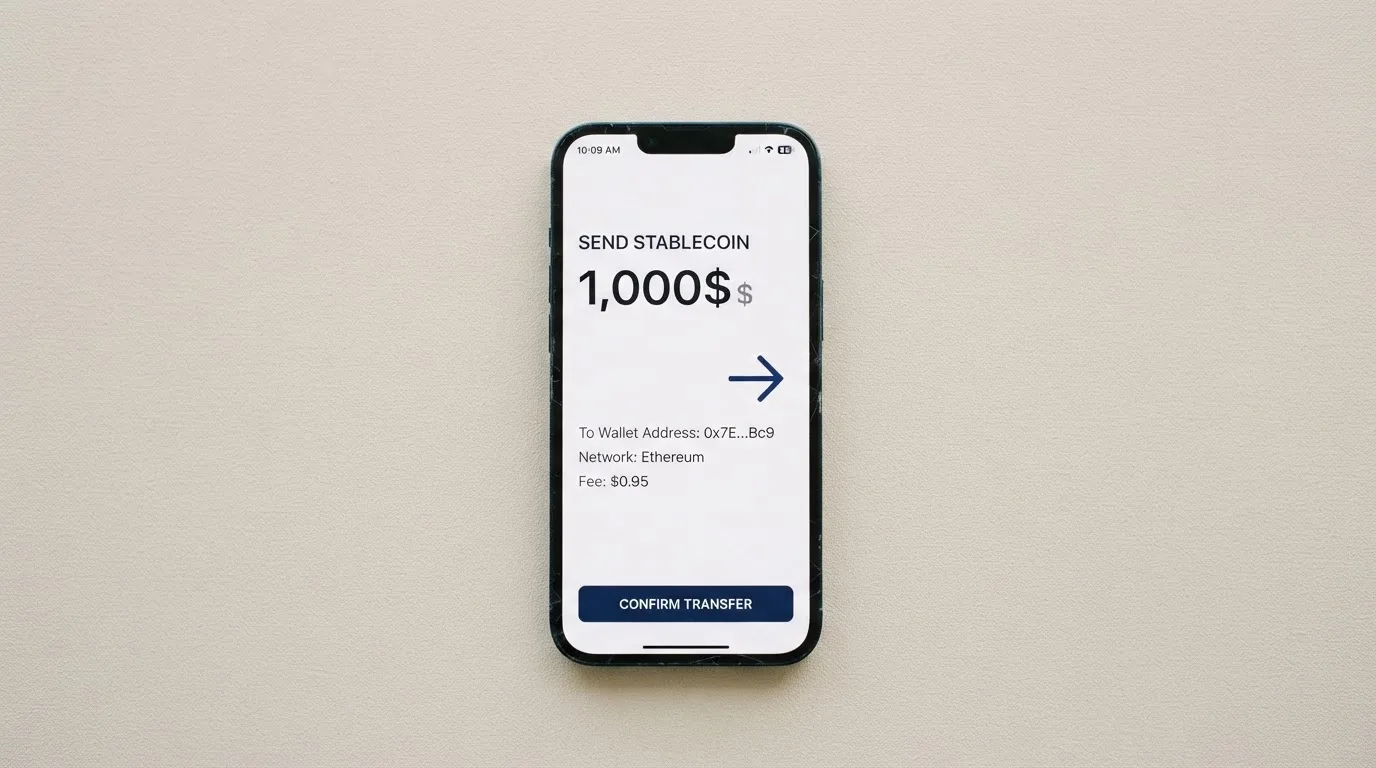
So the practical shape is: hold USDT on Tron, send at least $5, spend it wherever the virtual card is accepted. The conversion happening at the point of payment rather than at deposit is worth understanding, because it means the rate you get is the rate on the day you pay, not the day you loaded.
Two cautions about money going in. Top-ups here are not reversible in the ordinary way: virtual-plan deposits are non-refundable and unused balances cannot be refunded to the wallet. The card expires after 24 months with any remaining balance still on it. And blockchain transfers are irreversible in general — a deposit sent on a network the provider does not support, or to an address belonging to a different network, can be lost or need manual support recovery with no guarantee. Tron fees are paid through the network’s own resource pricing rather than as a line item from Relopay, so a small network cost sits on top of the 0%.
If you close the account, funds are withdrawn within “a reasonable period” less fees, and unclaimed funds are kept for three years. “Reasonable period” is doing quiet work in that sentence.
Paying with it every day
In practice the virtual card behaves like a prepaid card: you load a balance and the card spends only that balance, so it cannot overdraw. It supports Apple Pay and Google Pay, and adding it to a wallet uses a $0 verification transaction that may carry a small fee and can briefly push you into a negative balance — a detail worth knowing before you panic at the first debit.
Not everything works, though. Restricted categories include gambling, dating, money transfers, quasi-cash, fuel and EV charging, telecoms, gift cards, brokerage and charity. Charity carries a 30% penalty of the transaction value with a $5 minimum — read that one twice. These are the issuer’s own policies, not law, and the blocked list is the kind of thing that varies by issuer; the practical lesson is that some shops and subscriptions simply will not work with this card.
You will also meet the generic friction of any foreign-issued prepaid card. Address verification, which compares the numeric parts of the billing address a buyer types with the issuer’s records, is mostly a US, Canada and UK service and is generally unavailable for foreign-issued cards, so a merchant that leans on it may decline you. Some merchants decline prepaid or foreign-issued cards outright because the card’s issuer details are visible in the lookup. Neither is a fault in your account; both are things that happen when the card comes from outside the country you are shopping in.
In day-to-day terms, what you have is a virtual prepaid USD card with Apple Pay and Google Pay, no ATM access, no cashback, and a restricted merchant list. That covers subscriptions and everyday online and in-store spending well. It does not cover travel cash, petrol or anything you would want to dispute later.
What can go wrong
The biggest risk is in the terms rather than in the technology. Clause 9.11 says: “All Relopay Card transactions are final and may not be disputed, reversed, or cancelled” — except where the Issuer or the law provides otherwise. Clause 9.13 says disputes about goods are between you and the merchant. Read that together and the meaning is plain: if something goes wrong with a purchase, you are relying on the issuer’s or the law’s exception, not on the card’s own promise to make it right. That is a materially weaker position than an ordinary bank card, and it is the reason my reliability mark is 7 rather than higher despite no complaints existing.
Who you are trusting matters here. The cards are issued by Xfers Pte. Ltd., and fiat balances are held by the Issuer. A third-party profile says Xfers holds a Major Payment Institution licence from MAS — unofficial, and not confirmed by the card’s own pages. Relopay itself appears through 1507613 B.C. LTD in Canada, described as a FINTRAC-authorised payment services company, and RELOPAY PTE. LTD in Singapore, UEN 202514348M. Your balance is custodial: the provider holds the credentials, so your trust in the provider is total. Deposits held at an e-money or payment institution are safeguarded funds, not bank deposits, and they are not the same thing as a deposit guarantee scheme.
On complaints, I found nothing. No official incidents, and a search for reviews and discussion turned up only unrelated companies with similar names — RelayPay, Relay Payments, Lopay — and no user reports. There is also no Trustpilot page for Relopay that I could find. So the absence of complaints is weak evidence: a young service with few users produces few complaints whether or not things go well. I would not read the clean record as a clean bill of health.
Security features are ordinary rather than strong. 3-D Secure is present, which is what adds an identity check to online payments and can shift liability for fraudulent online transactions. There is no App Store or Google Play app, and no ratings to check. Whether the account supports instant card freeze or two-factor authentication is not stated, so I would ask support before you load a large balance.
One more structural risk belongs in this section rather than a general one: card programmes get wound down. Visa terminated its agreements with FTX in November 2022 and the FTX US debit card was wound down by its issuer; WaveCrest, a Visa issuer that supplied crypto card brands, was suspended by Visa in Europe in 2018 and all its programmes closed. Closures follow a pattern — notice, then spending and loading stop, then you are asked to withdraw remaining balances. If Relopay’s issuer relationship or the physical card launch does not work out, knowing that pattern in advance is what lets you withdraw early rather than late.
What to take instead
If Relopay is not right for you, the alternatives are worth comparing on the same axes: who can open it, what the card is, what it costs, how you fund it, and whether there is any rewards programme.
Ape Wallet — 5.5 / 10. No country list is given; the site says the card works “wherever Visa is accepted”, and there is a clear Russian focus (SBP payments, passport KYC using a Russian passport). Nothing is stated about citizenship versus residence, and no restrictions are published. Two virtual Visa products: a “service card” for subscriptions and online spending, and an Apple Pay / Google Pay card. Issuance price is not stated and changes with promo codes, though holders of an active Apple or Google Pay card get a discount on a service card. No fee amounts are given, but the fee and total are shown before you confirm any operation, and transfers to other users by Telegram username carry no fees. The balance is USDT, and issuance and top-ups are paid from it. No cashback; a two-level referral programme pays a share of invited users’ card purchases without publishing percentages.
MaxSwap — 5.2 / 10. Country eligibility is not stated, though the site claims no geographical restrictions. Virtual Mastercard only, currency not stated on the home page. The card costs 50 USD and requires a 25 USD first deposit, with total issuance listed as 77.125 USD; no monthly fee is stated. Top-up is 4.5% plus $1, and each transaction costs 0.25 USD plus 0.4%; there is no separate FX rate, only a note to take possible fees into account when paying and converting currencies. Funding is crypto with no network list given, including ADA, ALGO, AVAX, BCH, BNB, BTC, DOT, ETH, HBAR, HT, KRRX, LINK, LTC, MATIC, NEAR, SHIB, SUSHI, TON, TRX, UNI, USDC, USDT, XLM and XRP. No cashback mentioned.
AnoCard — 5.9 / 10. Country eligibility is not stated on the page I could read in a browser, and ano.cards was down. It sells virtual cards (VCC) — reloadable and one-time products from several BINs, chosen with filters in the SORN web dashboard at sorn.anoncult.com — where both network and currency depend on the BIN. Creation fees vary by BIN and some products carry a maintenance fee; top-up percentage and minimum depend on the asset route. All of it is shown in SORN before payment, which is a transparency advantage over a published-but-empty rates page. Top-up route depends on the asset; starting data, unverified here, includes SOL, BTC, USDT, USDC and ETH via Telegram bot or web dashboard. No cashback; the referral programme pays $5 per referred card creation and 0.25% of referred top-ups.
The comparison in one view:
| Relopay | Ape Wallet | MaxSwap | AnoCard | |
|---|---|---|---|---|
| Score | 6.0 / 10 | 5.5 / 10 | 5.2 / 10 | 5.9 / 10 |
| Country rules | Published restricted-country list; Supported Countries in app | Not stated | Not stated | Not stated |
| Card | Virtual USD card, physical “launching soon” | Two virtual Visa cards | Virtual Mastercard | Virtual cards from several BINs |
| Issuance | 3 USD | Not stated | 50 USD + 25 USD first deposit (77.125 USD total) | Varies by BIN |
| Transaction cost | $0.2 success / $0.5 declined | Shown before confirming | 0.25 USD + 0.4% | Shown in dashboard before payment |
| Top-up | USDT TRC20, 0% on virtual | From USDT balance | 4.5% + $1 | Depends on asset route |
| Rewards | None stated | Referral only | None mentioned | $5 per referral, 0.25% of referred top-ups |
Read that table with the gaps in mind: three of the four publish less about who can use them than Relopay does. Relopay’s advantage is transparency about eligibility; its weakness is the weaker protection when something goes wrong.
Who I would recommend it to
I would recommend this card to one specific person: someone living in Vietnam, Thailand or Indonesia — or another country the app actually lists as supported — who already holds USDT on Tron, pays for things online and in shops with a virtual card, and has accepted that a purchase they cannot get back is a purchase they cannot get back. The 0% top-up, the $3 issuance and the $0.2 transaction fee are hard to argue with, and Apple Pay and Google Pay make it feel like an ordinary card in daily use.
I would not recommend it to you if any of these are true of you. You need a physical card, or cash from an ATM — neither exists today. You need chargeback protection — the terms say transactions are final. You plan to spend on fuel, charity, gambling, gift cards, telecoms or money transfers — those categories are restricted, and charity costs 30% with a $5 minimum. You are a citizen or resident of one of the listed restricted countries, including the US, Canada, Hong Kong, the UK-restricted? — no: the United States, Canada and Hong Kong are on the barred list alongside Belarus, Russia, Ukraine and others, and both citizenship and residence count. Or you want to know exactly what a payment costs before you make it — the conversion rate is not published, and the company’s own pages disagree about your monthly limit.
One thing I would tell everybody: check the Supported Countries list in the app first. It is the one fact that decides everything else, and it is not published in text you can read from outside.
Frequently asked questions
What is the Relopay card?
The Relopay card is a prepaid payment card that spends a balance you load with cryptocurrency, mainly USDT. You get a virtual card in USD with 24 months validity and 3-D Secure, usable in Apple Pay and Google Pay. A physical card is described as “launching soon” with 3 years validity, but it has not launched. There is also a prepaid virtual card variant with 60 days validity and a $1,000 maximum balance.
How does the Relopay card work?
You load USDT, the provider converts it to a fiat balance, and the card spends only that balance — so it cannot overdraw. Coins are converted into local currency at the moment of payment rather than at deposit, so the rate applies on the day you pay. Funds are held in USD, and payments in other currencies are converted automatically. The card is reached through a Telegram mini app at @RelopayBot.
Is Relopay a bank?
No — the card’s own pages describe an e-money and payment-services arrangement, not a bank account. The cards are issued by Xfers Pte. Ltd., and fiat balances are held by the Issuer. A third-party profile says Xfers holds a Major Payment Institution licence from MAS, which is unofficial and not confirmed by Relopay. Relopay itself appears through a Canadian company and RELOPAY PTE. LTD in Singapore. Balances are custodial and safeguarded funds, not bank deposits.
Who owns Relopay?
Relopay appears to be operated through 1507613 B.C. LTD, registered in Canada and described as a FINTRAC-authorised payment services company, together with RELOPAY PTE. LTD in Singapore, UEN 202514348M. The cards are issued by Xfers Pte. Ltd., a separate Singapore entity. On top of that sits the Telegram mini app as the front end. That layering is typical of crypto cards, where the brand is a programme manager rather than the institution that issues the card.
Can I use the Relopay card in my country?
It depends on two separate tests. To open an account you must be in a “Supported Countries” list shown inside the app, which is not published in readable text; an earlier check showed Vietnam, Thailand and Indonesia plus a waitlist. Once you have the card, the docs say it works in 170+ countries. Citizens and residents of a long restricted list — including the United States, Canada, Hong Kong, Belarus, Russia, Ukraine and others — are barred. Check the app list before you send any documents.
Does the Relopay card require KYC?
Yes. Age 18 or over with full legal capacity is required, and “standard verification is required” — prepaid cards are labelled “KYC required”. Verification runs through Sumsub: pick the region “All countries except USA”, choose your country and document, upload a photo, then complete a selfie or camera check, with a result in “a few seconds”. Proof of address is not mentioned. Only one standard verification level is described, with no tiers or stated rejection reasons.
How do I top up the Relopay card?
The usage terms specify USDT on the TRC20 network, with a minimum top-up of $5. The cards page also names Bitcoin, USDT and “other cryptocurrencies”; an earlier check listed USDT, USDC, ETH, BTC, TON and BNB. Top-up is 0% on the virtual card and 1% USDT on the physical one, and fees are calculated in USDT. A fiat top-up is not stated. Virtual-plan deposits are non-refundable, so check the network before you send.
What does the Relopay card cost?
Issuance is 3 USD. Annual, inactivity and cancellation fees are free. A successful transaction costs $0.2 and a declined one $0.5. Top-up is 0% on the virtual card. What is not published is the crypto conversion rate — a fee applies at the time of purchase — and the FX treatment for non-USD payments, which are converted automatically. ATM withdrawals “may include small charges”, though virtual cards are online-only.
Is the Relopay card safe?
It uses 3-D Secure, which adds an identity check to online payments and can shift liability for fraud. Your balance is custodial — the provider holds the credentials — so counterparty and hack risk sit with you, as they do with any custodial platform. Whether instant freeze or two-factor authentication is supported is not stated. I found no complaints about Relopay, but there is also no Trustpilot page and few users, so a clean record is weak evidence.
Can I dispute a transaction or get my money back?
Probably not through the card. Clause 9.11 of the terms says all Relopay card transactions are final and may not be disputed, reversed or cancelled, except where the Issuer or the law provides otherwise, and clause 9.13 puts disputes about goods between you and the merchant. That is much weaker than an ordinary bank card’s chargeback protection. Money loaded is also non-refundable, and unused balances cannot be returned to your wallet.
Highest-scored virtual cards – cryptocardbest.com
Content created by the «cryptocardbest.com» team