
Tegro card, reviewed by someone who never opened one
 Available in US
Tegro is a payment card you order inside Telegram, top up with USDT on the Tron network, and use anywhere Visa is taken — including through Apple Pay and Google Pay. There is no plastic, no app, no monthly fee, and no identity check for the basic card. The trade-off is that almost nothing about the product is stated up front: the issuing bank is unnamed, the company behind it is not clearly identified, and a stack of ordinary questions — FX fees, ATM access, blocked merchant categories, daily limits — go unanswered on the official pages.
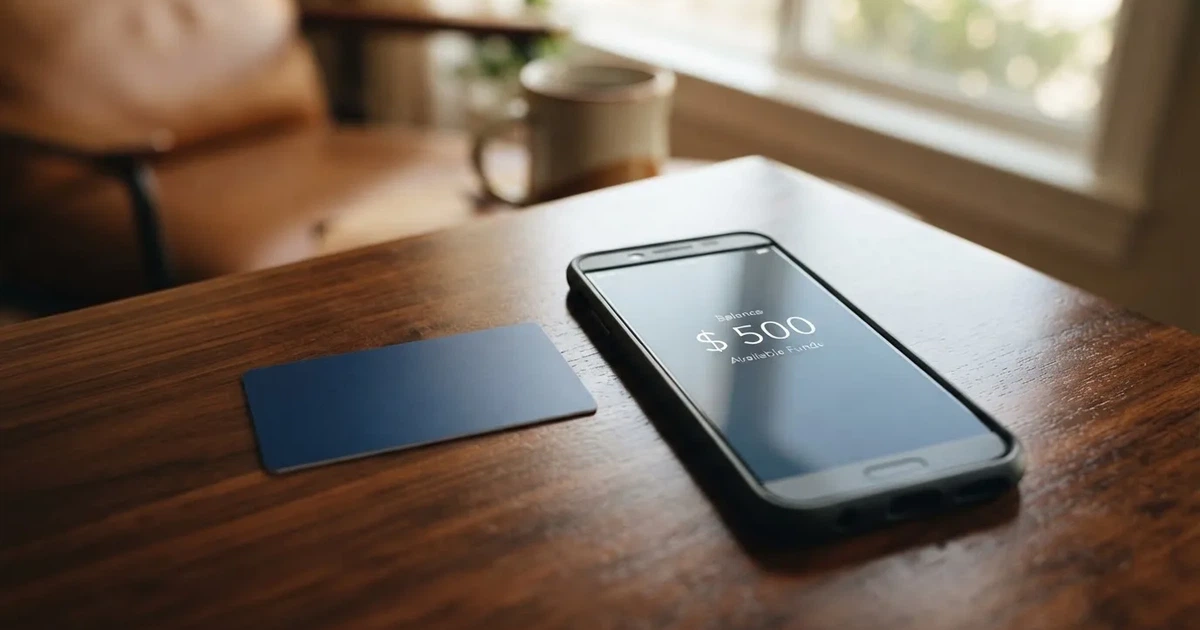
The conditions described here are current as of October 28, 2026.
Verdict: 4.7 out of 10
Tegro sits at the lower end of the crypto-card range. It is cheap to try ($13 to issue, no subscription) and frictionless to start (Telegram bot, no documents). The catch is that the rest of the package is thin: one funding rail (USDT TRC-20), no physical card, no stated FX fee, no stated cashback, and an issuer whose name is not given. If you only need a no-questions-asked virtual Visa that you can fund from a USDT balance you already hold on Tron, it will do the job. If you want transparency, multi-currency spending, rewards, or a card backed by a clearly named and regulated institution, you will find more solid options elsewhere.
The score below is the same one carried through the rest of the review.
| Criterion | Mark | Why it scores that way |
|---|---|---|
| Who can get it | 7 / 10 | Works wherever Visa is accepted, no country list, no sanctioned-country users |
| Cost | 3 / 10 | $13 one-time issue, no monthly fee, but a 4% deposit fee and a $50 minimum make a $50 card cost $65 |
| Top-up options | 4 / 10 | USDT TRC-20 only, no other network or fiat, anything else has to be bridged first |
| Reliability and complaints | 4 / 10 | Issuing bank unnamed, operator Libermall LLC with no published licences, almost no public feedback at all |
| Everyday use | 5 / 10 | Virtual Visa, Apple Pay and Google Pay supported, no plastic, no ATM |
| Total | 4.7 / 10 | — |
The audience note is short: Tegro is built for people who already hold USDT on Tron, want a no-KYC virtual card, and are happy to live inside a Telegram bot to manage it. If any of those three things does not describe you, the rest of this review is going to feel like a list of things missing.
Who will they give you the card
Tegro does not publish a list of supported countries. The only official line is that the card “works wherever Visa is accepted”, which on its own says nothing about where you can actually order it from. Two hard rules do appear in the terms: you must be at least 18, and you must confirm that you are not in a country under international sanctions. Persons who are on sanctions lists are excluded by name, and the service is not available to them.
The card currency is not stated in the user-facing materials I could find, but every figure on the page — issuance price, minimum, starting limit — is in US dollars. Practically, that means you are being sold a dollar-denominated balance whether or not the card itself is labelled in USD.
Because there is no identity check for the basic card, the “eligibility” question is mostly answered by what the bot will accept rather than by a form you fill in. You open the bot, ask for a card, and the system either produces a virtual card or it does not. There is no list to cross-check against beforehand.
The takeaway is simple. If you are in a non-sanctioned country, can use Telegram, and can send USDT on the Tron network, you will almost certainly be able to order a Tegro card. If you want to check before you go through the steps, there is no published way to do that.
How to get it
Tegro is a Telegram-only product. There is no native mobile app, no web dashboard for ordering, and no bank-grade onboarding form. The whole flow runs through the @TegroCardbot chat, with a separate @Tegro_bot handle for support.
The headline pitch is “zero KYC” for the basic card: no passport, no selfie, no verification step at all. To order, you open the ordering bot, request a card, and the system walks you through funding it. Card details — the long number, expiry, CVV — arrive inside the Telegram chat rather than by post or courier. There is no physical card.
Two things follow from that, and they shape the rest of the review:
- The card is virtual only. The site’s own page says “no plastic”. You cannot ask for a printed Visa. You can, however, add the virtual card to Apple Pay or Google Pay and pay with your phone at any contactless terminal.
- Identity verification does exist for some products. The terms mention that “part of the products” with extended features do require a full KYC pack: full name, date of birth, citizenship, residential address, ID document and a selfie. They also reserve the right to ask for more documents if monitoring flags unusual activity, and they can refuse to issue without giving a reason. The basic virtual card is the one that stays document-free.
So the practical sequence is: install Telegram if you have not already, find @TegroCardbot, ask for a card, top it up, and start paying. If at some point a feature prompts you for documents, you can either provide them or stop using that feature.
What it really costs — Tegro fees
The headline fees are low, but the structure makes them bite harder than the numbers suggest. The full costs table is below; the short version is that there is one fixed price and one percentage fee, and that percentage fee is charged every time you put money in, not when you spend it.
| Fee or limit | Amount |
|---|---|
| Card issuance | $13 one-time |
| Monthly fee | None |
| Deposit fee | 4% of the top-up amount |
| FX / conversion | Not stated |
| ATM withdrawal | Not stated (no physical card, ATM not mentioned) |
| Minimum top-up | $50 |
| Starting card limit | $1,000 |
| Daily / monthly spend limits | Not stated |
| Tiers | One tier only — single virtual Visa product |
| Card currency | Figures in USD; card currency not labelled |
| Multi-currency balances | Not stated |
Two worked numbers are worth doing out loud, because the deposit fee is what catches people.
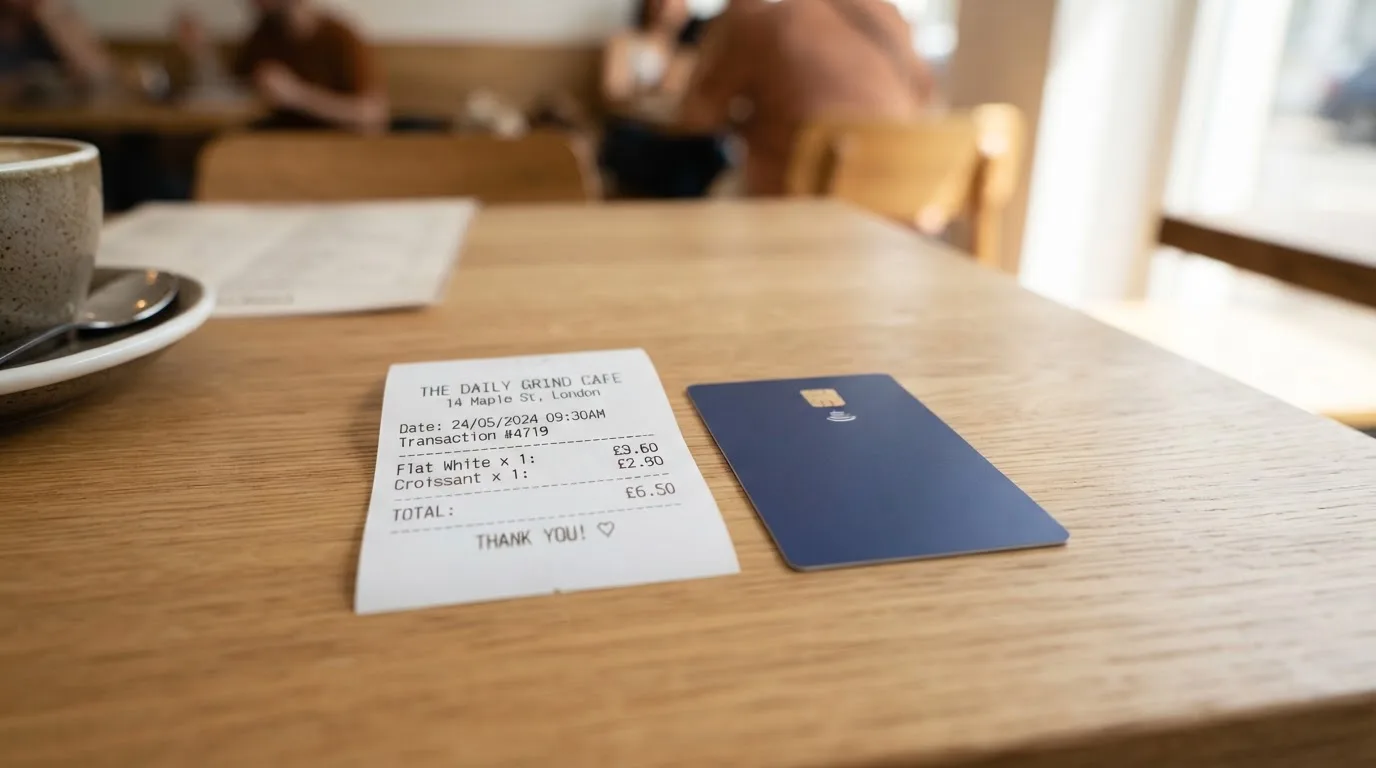
- $50 top-up, the smallest the bot will accept: the 4% deposit fee is $2, so the card balance credited is $48. You will have paid $13 (issue) + $50 (top-up) = $63, and the card holds $48.
- The bot’s own example says it more bluntly: a $50 card ends up costing $65 once the $13 issue fee is added to a $50 minimum top-up plus the 4% on that top-up.
The 4% top-up fee is the single biggest cost in normal use. If you load $200, $8 disappears into the fee. If you load $1,000, $40 disappears. There is no published rebate for larger top-ups.
What is missing is at least as important as what is there. The site does not state a foreign-exchange fee or a conversion spread for paying in a currency other than the card’s base. It does not state a cash-advance or ATM fee (and there is no physical card, so ATM access is unclear). It does not state a refund or dispute fee. If any of these matter to you, the only honest answer is that you will find out by trying.
Two everyday payments, walked through the way the fees would actually apply:
- A $30 coffee in your home currency, paid by tapping Apple Pay. The card is denominated in USD figures and your local-currency transaction is converted somewhere along the line. The deposit fee does not apply (it was charged when you loaded the card). The FX fee is not published, so you cannot predict the spread between the card-network rate and what you actually pay. In practice the conversion spread is where most “free” crypto cards hide their cost, and Tegro does not show its hand here.
- A $9.99 monthly streaming subscription paid online. Same pattern: no per-transaction fee is published, but the issuer is unnamed and the FX fee is not stated. The $1,000 starting card limit, which the terms say can change at any time, is the only spending guardrail you are given.
If you do not like the sound of “not stated” as a fee answer, you are not the audience for this card. If you are happy to size top-ups so the 4% deposit fee is a known, fixed cost on each load, then the spending side is at least no worse than the rest of the no-KYC market.
How to top up Tegro
Top-ups are USDT on the Tron network, and only USDT on the Tron network. Anything else — USDT on Ethereum, USDC on any chain, BTC, ETH, a bank transfer — has to be turned into TRC-20 USDT before it reaches Tegro, and that conversion is your problem, not theirs. There is no fiat on-ramp.
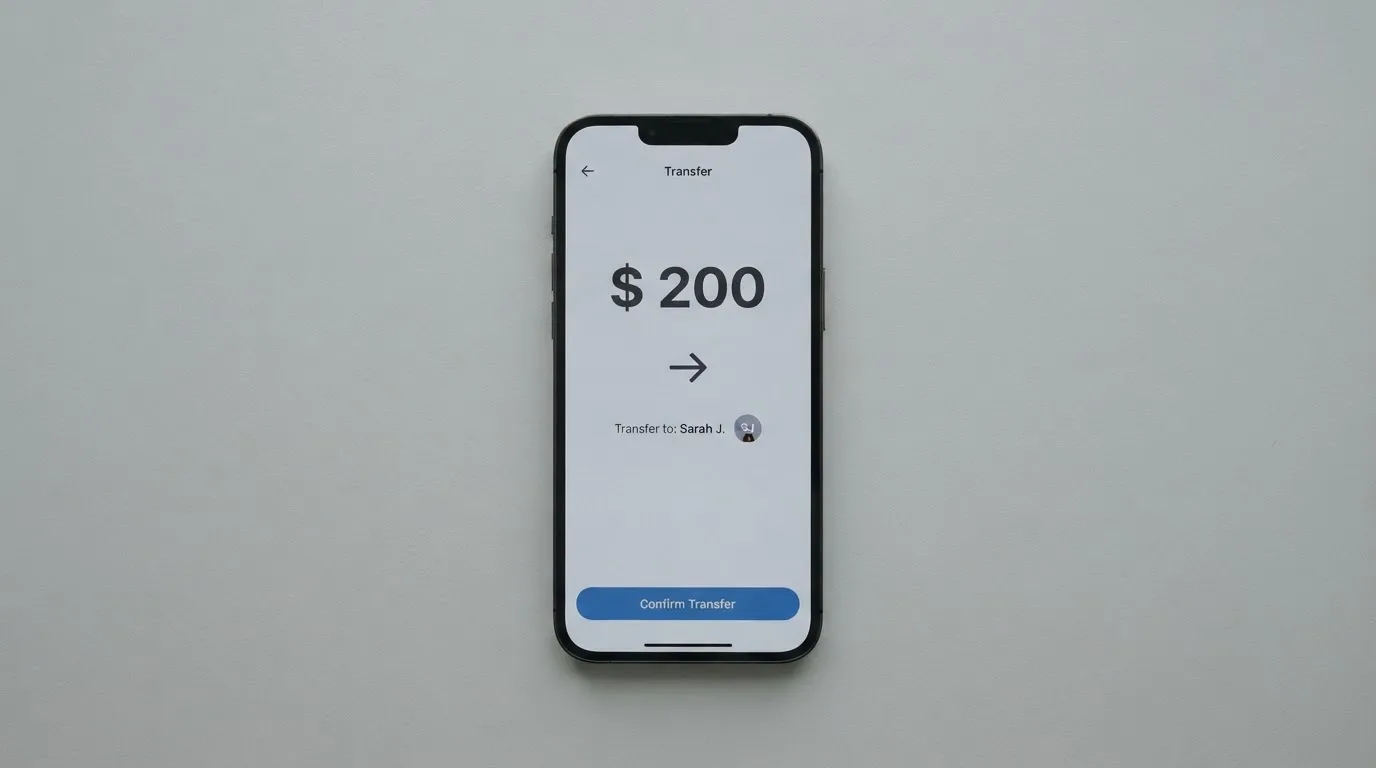
The mechanics are the standard stablecoin pattern. You open the bot, ask to top up, and the bot gives you a unique deposit address and a unique amount. You send that exact amount of USDT TRC-20 to that exact address, and the bot credits your card automatically when the transfer confirms. The unique-amount trick is how the bot matches incoming transfers to accounts, and it is the same approach a lot of crypto-only services use.
The hard rules are:
- Minimum $50 per top-up. Below that, the bot will not credit you.
- The 4% deposit fee is taken on every top-up, not just the first.
- Other networks must be converted to TRC-20 first. If you send USDT on ERC-20 to a TRC-20 address, you can lose the funds. Blockchain transfers are irreversible, and Tegro’s terms warn that “crypto transfers are irreversible”.
Who pays the Tron network fee is not stated. In practice, when you send USDT from a wallet, your wallet pays the Tron bandwidth/energy cost (often in TRX). Tegro does not say whether it reimburses this, and the amounts are small enough that most users do not think about them.
A few questions the official pages do not answer: how long confirmation takes, what happens if you send from a smart-contract address that does not trigger the unique-amount match, and whether there is a way to recover a mis-sent deposit. Given the irreversibility warning, the safe assumption is that there is not.
Paying with it every day
In daily use, the card behaves the way you would expect a no-frills virtual Visa to behave. The headline features that work are: contactless payment through Apple Pay and Google Pay, and any online merchant that takes Visa. The features that do not exist are: a physical card, ATM access, a native app, and a published cashback or rewards scheme.
Three practical things to know:
- Apple Pay and Google Pay are supported. That covers most in-person payments, including abroad, because the virtual card gets tokenised onto your phone. The token (a Device Account Number) is what the terminal sees, not your real card number.
- Blocked categories are not stated. The site does not list merchant category codes that will be declined, so the gambling block that most issuers apply (MCC 7995) is implied but not confirmed. If a category matters to you, you only find out by trying.
- There is no cashback, points or referral bonus mentioned. If you were hoping to claw back some of that 4% deposit fee through rewards, the published product does not do that.
Disputes and refunds are handled “in accordance with the rules of payment systems and our partners’ timelines”. The terms tell you to try the merchant first, then contact support. No time frame is published, and the governing law is Wyoming, USA — relevant if a refund ever needs to be escalated.
A second-hand friction worth knowing about for any virtual Visa: foreign-issued BINs can be declined by some merchants, especially for online card-not-present payments. The Address Verification Service that US/CA/UK merchants use is generally not available on foreign-issued cards, and a declined authorisation can leave a hold on your balance for up to around a week. Tegro does not address this on its pages, and the issuing bank is not named, so you cannot even look up the BIN to check the issuer country in advance.
What can go wrong
The risk list for Tegro is shorter than for some crypto cards, but the items on it are heavier. Five stand out.
1. The issuing bank is not named. The site refers to a “Visa partner bank” without saying which one. That matters for two reasons: the partner bank’s regulator is the regulator that actually supervises the card programme, and the partner bank’s licence is what allows your card to be a Visa in the first place. Tegro does not name the partner and does not publish its own licence details.
2. The operator is Libermall LLC, and the company structure is otherwise opaque. The terms page is titled “Libermall Card” and names Libermall LLC as the operator. No company address, no regulator reference, no licence number is given. The site exists in Russian and English, support is via Telegram, and the ordering bot is a separate handle. For a payments product, that is a thin paper trail.
3. There is no public feedback to lean on. A user report on Trustpilot, dated 5 June 2026, is the only review I could find anywhere, and it is a five-star note on a possibly related site (tegro.cash) that says the product is simple but adds that clear support and clear limits/fees “will be important”. A hunted.space listing shows no upvotes and one comment. There are no Reddit threads, no complaint patterns, and no long tail of user experience to draw on. The lack of complaints is not the same as a track record.
4. Some ordinary protections are not described. The site does not mention two-factor authentication, an in-app card freeze, or any insurance on stored funds. The general security advice — never share PAN and CVV, never store them unencrypted — is standard, but the issuer’s own safety features are not enumerated. Tegro does say it can pause an operation or restrict access “on risk”, which is reassuring from a fraud-control angle and less reassuring from a user-control angle.
5. Crypto transfers are irreversible. The terms warn about this directly. If you send USDT on the wrong network, to the wrong address, or from a wallet you later lose access to, there is no built-in recovery. That is a category-level fact about every crypto card, not a Tegro-specific failing, but it is the risk that dominates every other risk on this list.
A sixth, smaller risk is regulatory. Tegro explicitly excludes sanctioned-country users, and the Telegram-only interface plus no-KYC basic card puts it in the same regulatory bucket as most of the no-document crypto-card market. If that bucket gets tightened — through Visa, through a national regulator, or through the Telegram channel itself — the product could change quickly.
What to take instead
If Tegro’s trade-offs do not match your situation, three other crypto cards turn up repeatedly in the same market segment, with different shapes. The summaries below are drawn from the same research pass and are written for comparison, not as endorsements.
Ape Wallet — 5.5 / 10. A Telegram-based virtual Visa with a Russian focus (SBP payments, Russian-passport KYC) and a split between a “service card” for subscriptions and online payments and a separate card for Apple Pay / Google Pay. The card currency is not stated. The issue price is not stated, and the page notes that promo codes change it; holders of an active Apple/Google Pay card get a discount on a service card. There is no cashback, but a two-level referral programme pays a share of card purchases made by invited users (no percentages published). P2P transfers by Telegram username are free. Tops up come from a USDT wallet balance.
Ape Wallet is the closest comparison to Tegro in feel, with two differences: it adds a referral programme, and it makes P2P transfers inside Telegram a feature rather than an afterthought. If you want a card that lives in Telegram and you are happy with Russian-language onboarding, it is a step up on rewards and on the ability to send value to other users.
MaxSwap — 5.2 / 10. A virtual Mastercard (the network difference matters for some merchants and some wallets) with a stated cost structure: $50 card plus a $25 first deposit, giving a published total of $77.125 to issue. Top-up is 4.5% plus $1; transactions are $0.25 plus 0.4%. There is no separate FX rate published — the site just tells you to “take into account possible fees when paying and converting currencies”. Funding is crypto-only and unusually broad: ADA, ALGO, AVAX, BCH, BNB, BTC, DOT, ETH, HBAR, HT, KRRX, LINK, LTC, MATIC, NEAR, SHIB, SUSHI, TON, TRX, UNI, USDC, USDT, XLM, XRP.
MaxSwap is the right comparison if the Tron-only funding on Tegro is the deal-breaker. The fee stack is similar (around 4-5% on top-ups), and the card is Mastercard rather than Visa, which helps if you have hit a Visa-specific decline.
AnoCard — 5.9 / 10. A virtual-card dashboard running under the SORN brand, offering several BINs across reloadable and one-time VCCs. The network and currency depend on the BIN you pick. Creation and maintenance fees vary by product and are shown in the dashboard before payment. Top-up routes also depend on the asset and are shown in SORN before payment. The starting data (unverified) lists SOL, BTC, USDT, USDC, ETH and more, top-up-able through a Telegram bot or the web dashboard. There is a referral programme: $5 per referred card creation and 0.25% of referred top-ups.
AnoCard is a different product shape: it is a tool for buying virtual cards from a menu, not a single Telegram-only Visa. If you want flexibility (different BINs, different networks, different card types from one place) and you are comfortable with a web dashboard, it scores higher than Tegro on transparency and on choice.
A quick comparison table:
| Card | Score | Form | Network | Funding | Issue price | Top-up fee | Cashback / rewards |
|---|---|---|---|---|---|---|---|
| Tegro | 4.7 | Virtual only, Telegram bot | Visa | USDT TRC-20 only | $13 | 4% | None stated |
| Ape Wallet | 5.5 | Virtual only, Telegram | Visa | USDT balance | Not stated | Not stated | Two-level referral |
| MaxSwap | 5.2 | Virtual only, web | Mastercard | Many cryptos | $50 + $25 deposit | 4.5% + $1 | None stated |
| AnoCard | 5.9 | Virtual, web + Telegram bot | Several BINs | Several assets (unverified) | Varies | Varies | $5 per referral + 0.25% of top-ups |
These are not the only options in the market; they are alternatives that work for the same kind of reader.
Who I would recommend Tegro to
Three readers will be happy with Tegro. The first is someone who already holds USDT on Tron, wants a virtual Visa, and would rather not do a KYC pack for a card they will use for a small, predictable set of online subscriptions. The second is a Telegram-first user who likes the idea of a card that lives in the same chat app as the rest of their crypto life and has no interest in a separate app. The third is a curious tester willing to put $50–$100 through the card to see what it does in practice, treating the 4% top-up fee as the price of a lesson.
If you are none of those three, Tegro is the wrong card. You should look elsewhere if any of the following apply: you want a card you can put real money through every day (the 4% top-up fee is too high for that), you want to spend in anything other than USDT on Tron, you want cashback or a referral programme, you want to know the name of the bank that actually issues your card, or you want a regulated electronic-money institution with a published licence and a deposit-safeguarding regime. Tegro does not offer any of those things today, and the public materials do not promise them.
A short, honest list of the ups and downs as I see them:
Pros
- No KYC for the basic card; no documents, no selfie.
- $13 one-time issue with no monthly or subscription fees.
- Apple Pay and Google Pay supported.
- Sits inside Telegram, so the whole flow is one chat window.
Cons
- USDT TRC-20 is the only top-up rail.
- 4% deposit fee on every load, with a $50 minimum.
- Issuing bank not named; Libermall LLC is the operator but no licence is published.
- No FX fee, ATM fee, blocked-category list, daily/monthly limits, or rewards scheme stated.
- Almost no public track record — one Trustpilot review, no Reddit threads, no complaint history to learn from.
If the cons list reads like the rest of the review, that is the point: Tegro is a small, narrow product that does a few things, and the rest is silence. Whether the silence is acceptable depends on what you are using the card for.
Frequently asked questions
What is the Tegro card?
Tegro is a virtual Visa you order through a Telegram bot, fund with USDT on the Tron network, and use online or through Apple Pay and Google Pay. There is no physical card and no native app. The card is run by Libermall LLC and issued through an unnamed Visa partner bank.
How does Tegro work?
You open @TegroCardbot in Telegram, order a virtual card, send USDT TRC-20 to the unique address the bot gives you, and the bot credits your card balance. You can then pay online with the card details or tokenise the card into Apple Pay or Google Pay for in-person payments. A 4% fee is taken on each top-up.
Is Tegro a bank?
No. Tegro is a card programme run by Libermall LLC. The card itself is issued by an unnamed Visa partner bank, which is the entity that actually holds the card programme. Tegro is the interface you order, top up and get support through.
Who owns Tegro?
The terms page is titled “Libermall Card” and names Libermall LLC as the operator. No parent company, regulator reference or licence number is published, and the site is in Russian and English.
Is Tegro available in my country?
Tegro does not publish a list of supported countries. The card works wherever Visa is accepted, the service is unavailable to persons from sanctioned countries or on sanctions lists, and you must be 18 or older. Beyond that, eligibility is decided by the bot when you try to order.
How do I get a Tegro card?
Open the @TegroCardbot in Telegram, ask for a card, and follow the prompts. There is no KYC for the basic card. You will need USDT on the Tron network to fund the $13 issue fee plus the $50 minimum top-up.
Does Tegro require KYC?
No KYC is required for the basic virtual card. Some extended products do require full identity verification (name, date of birth, citizenship, address, ID, selfie), and the operator can ask for more information if monitoring flags unusual activity.
How do I top up my Tegro card?
Ask the bot for a top-up. It will give you a unique TRC-20 address and a unique USDT amount. Send exactly that amount of USDT from a Tron-network wallet, and the bot credits the card automatically when the transfer confirms. The minimum is $50 and a 4% fee is taken on every top-up.
How do I add Tegro to Apple Wallet or Google Pay?
Once the bot has issued the card details, use the standard “add card” flow in Apple Wallet or Google Pay and enter the virtual card’s number, expiry and CVV. From then on you can pay contactless with your phone, and the merchant never sees the underlying card number.
Is Tegro safe?
Tegro is custodial — the card is issued by a partner bank and the operator holds the balance. Standard safety advice applies: never share your PAN or CVV, never store them unencrypted, and remember that crypto transfers are irreversible. The site does not list features like two-factor authentication, in-app freeze or fund insurance, and the issuing bank is not named, so you cannot look up the regulator behind the card.
Highest-scored virtual cards – cryptocardbest.com
Content created by the «cryptocardbest.com» team