
The MSX card promises fee-free crypto spending, but almost every number comes from launch coverage rather than the card's own pages.
 Available in US
If you hold crypto and want to spend it like ordinary money, the MSX card looks appealing on paper: a Visa card you load from crypto, with zero annual fee, zero top-up fee and zero payment fee during a promotional period. That is the pitch. The problem is that almost none of these specifics are published by the company itself in a way you can verify — they come from sponsored and news coverage around a June 2026 launch, not from a fee schedule I could read on an official page. That gap between the marketing and the paperwork is the story of this review.

The conditions described here are current as of October 28, 2026.
The short version: who the MSX card suits, and who it does not
I scored the MSX card 6.4 out of 10. In plain terms: it is a plausible tool if you are already an MSX platform user who wants a Visa card funded from crypto, and a poor fit if you need a bank you can verify, a published fee sheet, or a clear answer to “who actually issues this card.”
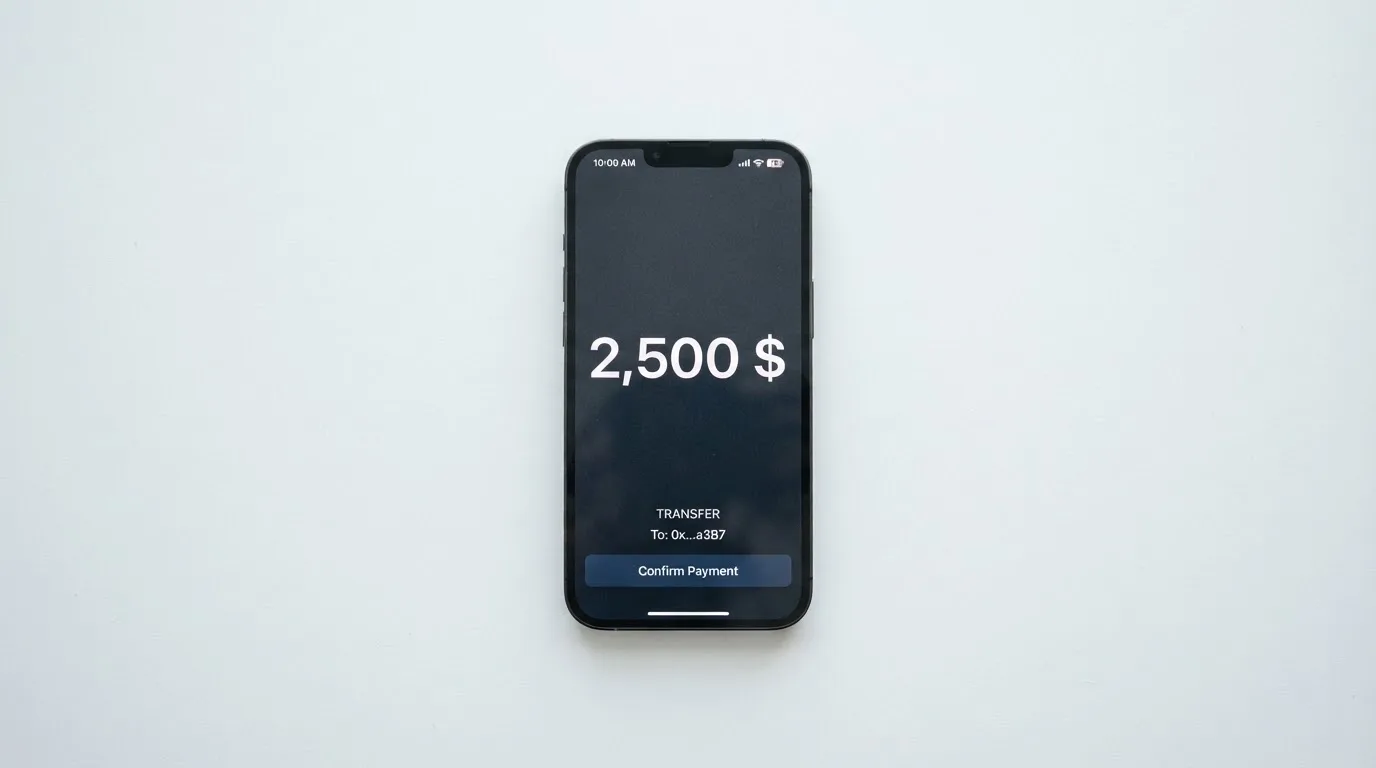
- It suits you if you keep assets on the MSX platform, spend from a stablecoin balance, and value a (reportedly) fee-free Visa card more than published transparency.
- It does not suit you if you are outside the supported regions, if you need a regulated bank deposit rather than a crypto-platform balance, or if undisclosed fees after the promo period are a dealbreaker.
Here is how the score breaks down by criterion, so you can see exactly where the card earns its marks and where it loses them:
| Criterion | Mark | Why |
|---|---|---|
| Who can get it | 8 / 10 | Reported as global, with ATM access in multiple countries and regions, excluding mainland China and OFAC-sanctioned areas; platform terms reportedly exclude the US, Canada and Hong Kong |
| Cost | 7 / 10 | Reported zero annual, top-up and payment fees during a promotional period; the fee after that is not disclosed, and the FX fee is not named |
| Top-up options | 5 / 10 | Spending draws on crypto held on the platform; reported stablecoin top-up (USDT, USDC) from the MSX account, but coins and networks are not disclosed |
| Reliability and complaints | 5 / 10 | Launched by MSX (Maitong), a tokenization platform with MSB registrations in FinCEN and Canada; issuer not named; no complaints found |
| Everyday use | 6 / 10 | Physical Visa card for online and in-store payments, contactless via Google Pay, ATMs in several countries; Apple Pay not disclosed |
| Total | 6.4 / 10 | A workable crypto-spending tool with a transparency gap |
The audience this card is really built for is narrow: MSX platform users who want a Visa card for their crypto. If that is you, the 6.4 is a reasonable score. If you are reading this hoping for an ordinary replacement for a declined bank card, this is a different product with a different risk profile.
Who can actually get the MSX card?
The honest answer is: I could not find the eligibility rules on an official page I could read. What I found instead is unofficial reporting. By that account, the card is global, with ATM withdrawals available in multiple countries and regions, excluding mainland China and OFAC-sanctioned areas. The starting data additionally indicates that the MSX platform’s terms of service exclude the United States, Canada and Hong Kong.
So the picture is a card that is broadly open, minus a set of excluded jurisdictions. That exclusion list is the part to sit with. If you are in the US, Canada or Hong Kong, or in a sanctioned region, this is not your card — and, importantly, that exclusion attaches to the platform, which is where the money sits, not just to the plastic in your wallet.
The card’s own currency is not stated, which matters more than it sounds: the currency a card is denominated in affects how the merchant sees it and how foreign-exchange fees behave when you travel or buy across borders.
How do you get an MSX card?
I could not confirm a documented signup flow from an official page. The card’s identity-verification steps, the documents required and any minimum age are not stated. Unofficial reporting says MSX operates under applicable KYC, AML and transaction-monitoring requirements, but gives no card-specific steps.
What is reported, again from third-party coverage rather than the company: the physical card sits on the Visa network and can be used online and in-store. Whether a virtual card is offered is not consistently reported — one outlet implies physical, another is simply silent — so I would not count on a virtual version existing. Delivery times and KYC tiers are likewise not stated anywhere I could read.
The practical takeaway is that the “how to apply” story is thin. Most of what circulates is launch coverage. Before you commit, the things worth confirming in the product itself are: the exact KYC documents, whether a physical or virtual card is issued, delivery time and cost, and which currency the card is denominated in. None of those come from me — they are the questions to put to the app when you are inside it.
What it really costs: fees and limits
This is where the card both wins and loses. The headline is genuinely attractive — zero fees, on paper — but the moment the promotional period ends, the card’s own pages do not tell me what happens. Let me give you the numbers as they are actually reported, and flag where the reporting stops.

| Fee or limit | Reported value | Status |
|---|---|---|
| Annual fee | 0 | Reported; fee after the promotional period not disclosed |
| Top-up fee | 0 | Reported during the promotional period |
| Payment fee | 0 | Reported during the promotional period |
| FX (currency conversion) fee | Not stated | No official figure published |
| ATM withdrawal fee | Not stated | ATM withdrawals reported in multiple countries and regions; fee and allowance not stated |
| Monthly spending limit | Up to $1,000,000 (unofficial) | Reported; an upper ceiling, not confirmed by the card |
Now the honest reading of that table. The zeros are real as reported — the card is described as waiving deposit, payment and annual fees for an initial promotional period. But a promotional period has an end date, and that date is not stated, nor is what replaces the free terms. Nor is the FX fee, which is the one that quietly decides whether “free” card is actually free when you spend outside your home currency.
Let me walk through three everyday payments, because that is where fee design either shows its work or hides it:
- Paying at a café in your own country while your balance is in a stablecoin. This is the card’s home turf. A stablecoin converts to local currency at the point of sale and the purchase fee is reported as zero. This is the scenario the card is built for, and the one where the zero-fee claim does the most work.
- Paying online in a foreign currency. This is where the missing FX fee bites. Because the FX fee is not stated, you cannot know in advance what a cross-border online purchase costs you. The conversion happens at the sale, but at what markup is exactly the information the card does not publish.
- Taking cash out at an ATM. Withdrawals are reported in several countries, but the fee and the allowance are not stated. So the cost of a cash withdrawal — the operation people most want a card for — is one of the least specified things about it.
There are no tiers and no card currency disclosed, which is itself part of the picture: this is a single, thinly specified product rather than a tiered card with a published schedule. When a fee sheet is missing, the safest posture is to assume there is a cost you have not been told about, rather than to assume the zero applies forever.
How do you top the MSX card?
Topping up is the part of the system I understand least from official sources, and it is the part that determines whether the card is actually usable day to day. Not stated on an official page: the funding mechanism, the top-up options, and how you withdraw money. What is reported, unofficial: spending is funded from crypto assets held on the MSX platform, and the starting data describes stablecoin top-up — USDT and USDC — from your MSX account, converted at the point of sale.
So the model is a pre-loaded balance, not a bank account. You do not top up “the card” so much as you fund the platform and the card draws down what is there. That has a real consequence: your spendable money lives on the platform until you spend it, which makes the platform itself part of your risk (more on that below). And the specifics you would want — which coins are accepted, on which networks, is a direct transfer or an internal balance — are not disclosed.
There is also no stated withdrawal path, which is the gap I would want closed before I relied on this card for anything important. A card you cannot easily move money out of is a spending terminal, not a financial tool. Confirm in the app how you get crypto or fiat back out before you treat this as your everyday card.
Paying with the MSX card every day
For day-to-day use, the card behaves like a prepaid Visa: a physical card for online and in-store payments, plus contactless through Google Pay, and ATM withdrawals in multiple countries and regions. Apple Pay is not disclosed, and neither is any list of blocked merchant categories — so I cannot tell you which categories are off-limits.
Two things about how cards like this behave in the real world are worth knowing, because they explain the friction you may hit even with a working card:
- Online merchants can look up your card’s issuing country and type. Some merchants apply extra scrutiny or decline prepaid and foreign cards when the issuer country differs from your billing address, or when the BIN reveals a prepaid product. This is not about you — it is a general property of card payments, and it is why some crypto cards work great locally and get declined abroad.
- A declined online payment can leave a hold. A failed authorisation may temporarily hold your funds for several days, sometimes up to about a week, even though you never completed the purchase.
On rewards: no cashback or reward programme is described. What cardholders reportedly get is exclusive subscription rights to MSX pre-IPO offerings. That is not everyday spending value — it is an equity perk, and its worth to you depends entirely on whether you were going to invest in MSX anyway.
The app and dispute process are not stated either. I cannot tell you how disputes work, how freezes work, or what support looks like after an issue — and for a card you are considering as a primary spend tool, that gap is worth weighing.
What can go wrong
Risk is the part I take most seriously here, because the platform sits between you and your money.
- Who issues the card is not named. The card is described as launched by MSX (Maitong), a real-world-asset tokenization platform holding MSB registrations with FinCEN in the US and in Canada (the starting data names Mystonks Holding LTD). But the actual card issuer is not named. When you cannot name the issuer, you cannot easily name who stands behind your balance when something goes wrong.
- Your balance sits with the platform, so you carry counterparty risk. Custodial platforms have a history of failure — Mt. Gox, Coincheck and Ronin between them lost on the order of hundreds of millions of dollars. Keeping funds with a custodian always carries that counterparty and hack risk, and MSX is the custodian here.
- Identity verification is a moving target. The card reports operating under KYC/AML requirements, but the specific steps are not published. Accounts can be frozen or closed pending documents when due diligence cannot be completed, so treat your documents as something you keep current.
- Sanctions screening applies to citizenship, not just address. Because screening often looks at citizenship and country of birth as well as residence, where you were born can matter as much as where you live. This is another reason the excluded jurisdictions are worth taking seriously.
- Blockchain transfers are irreversible. Crypto sent on the wrong network, or to an address the provider does not support, can be lost or need manual recovery with no guarantee. Since topping up runs through stablecoins, getting the network right matters.
- Programme closure is a real category risk. Card programmes do get shut down — Visa terminated FTX’s agreements in 2022, and other issuers have been suspended — and closures typically mean spending and loading stop and you are asked to withdraw your balance. You should keep an exit in mind.
- Customer protection is not guaranteed. Chargeback rights for prepaid cards vary and should not be assumed; e-money balances are not the same as insured bank deposits.
The one thing I could not find was evidence of harm. I found no official incidents and no user complaints — searching for reviews turned up launch coverage and promotional material, not a Trustpilot page or Reddit thread of real friction. That is mildly reassuring, but it is also what a very young product looks like before its first real users, so I would not weight it heavily. The card is new (announced June 2026), which cuts both ways: newness is why the paperwork is thin, and also why there is no track record either way.
What to consider instead
If the MSX card’s appeal is “spend crypto on a card, cheaply and globally,” it is worth knowing how it stacks up against the other cards in the same category. I scored each of these out of 10 the same way. Here is the comparison that matters most:
| Card | Score | Top-up | Fees | Everyday use |
|---|---|---|---|---|
| MSX | 6.4 / 10 | Crypto on platform (USDT/USDC reported) | 0 reported in promo period; FX and later fees not stated | Physical Visa, Google Pay, ATMs in several regions |
| Bybit Card | 6.0 / 10 | Draws on funding account / flexible balance; fiat first, else crypto sold | Conversion 0.5–0.9%; FX 1–7% by region; no annual fee | Virtual + physical; Mastercard or Visa by region; points/cashback on crypto-funded spend |
| MEXC | 5.6 / 10 | USDT to fiat account, then added to card | Issuance 20 USD (page ambiguous); service 0% | Virtual only; cashback 4–10% by M-Score tier |
| Pionex | 4.8 / 10 | USDT only, from main account to card account | Visa 1% transaction; Mastercard up to 3.5%; FX free on Visa | Virtual only; Visa or Mastercard by region; 1% cashback |
A few observations as you read across:
- Bybit Card is the most fully specified of the group and has the richest reward structure (points or cashback on crypto-funded transactions, tiered caps, and it is explicit about conversion and FX fees). Its trade-offs are regional — it is not for European Economic Area customers, and eligibility is by country of residence with a defined region list.
- MEXC is virtual-only and simpler, with a cashback ladder tied to your M-Score tier, but its fee page is itself ambiguous about the issuance charge.
- Pionex is the most restrictive on funding (USDT only) and switches Visa or Mastercard by your KYC country, but it is the only one of the three that clearly documents transaction fees.
- MSX has the most attractive headline (free spending) and the thinnest documentation. That is the trade: you are buying a reported zero-fee experience and accepting that the fine print is not public.
None of these is a bank account, and none should be treated as one. If your priority is a card you can verify end to end, an exchange you already use that publishes its fees is the safer default than a newer card whose issuer you cannot name.
Who I would recommend it to
I would recommend the MSX card to someone who is already using the MSX platform, keeps spendable funds there in USDT or USDC, and wants a Visa card for everyday purchases without wanting to convert to fiat themselves first. For that person, a reportedly fee-free physical Visa with ATM access is a genuinely useful tool, and the 6.4 reflects a card that does its basic job while leaving a lot on the page.
I would not recommend it as your primary or only card. The combination I keep returning to is this: the issuer is not named, the FX and post-promo fees are not disclosed, the withdrawal route is not stated, and your balance sits with a young platform rather than an insured bank. That is not disqualifying, but it is a lot of “not stated” for something you might rely on every day.
My rule of thumb: if you would be uncomfortable seeing your balance held by a platform you have never heard of, or if a published fee schedule is part of your peace of mind, pick one of the more established alternatives above. If you are comfortable with crypto-platform custody and read the in-app terms yourself, MSX is a reasonable pick.
Frequently asked questions
What is the MSX card?
The MSX card is a Visa payment card tied to the MSX crypto platform, letting you spend from crypto assets held on that account. It was announced in June 2026 by MSX (Maitong), a tokenization platform. It is reported as a physical card for online and in-store use, with contactless payments through Google Pay and ATM withdrawals in several countries and regions.
Is MSX a bank?
No — MSX is described as a crypto platform (Maitong) holding money-services-business registrations with FinCEN and in Canada, not as a bank. Your balance is a platform balance, not a bank deposit, so deposit-guarantee protection should not be assumed. The actual card issuer is not named in any source I could find, which is unusual for a card.
How do I get an MSX card?
I could not find a documented signup flow on an official page. The card reportedly operates under standard KYC/AML requirements, but the exact steps, required documents and minimum age are not published. Expect identity verification as part of signing up for the MSX platform, but confirm the card-specific process in the app itself.
Is the MSX card free?
Reportedly free during an initial promotional period — zero annual, top-up and payment fees. But the fee that applies after the promotional period is not disclosed, and neither is the FX fee. So “free” is a launch offer with an unpublished end date and an unpublished successor price, not a permanent zero.
How do I top up the MSX card?
Spending draws on crypto held on the MSX platform, and the reported top-up is stablecoins (USDT and USDC) from your MSX account, converted at the point of sale. The accepted coins and networks are not disclosed. Note there is no stated withdrawal path, so check how to get funds out before relying on this as an everyday card.
Can I use the MSX card in my country?
Reported as usable globally, with ATMs in multiple countries and regions, excluding mainland China and OFAC-sanctioned areas. However the MSX platform terms reportedly exclude the US, Canada and Hong Kong, and because your money sits on the platform, those exclusions apply to you regardless of where the card physically is.
Does the MSX card require KYC?
Unofficial reporting says MSX operates under applicable KYC, AML and transaction-monitoring requirements, but no card-specific KYC steps, documents or age are published. In practice expect to verify identity to use the platform, and be aware that accounts can be frozen or closed when documents cannot be completed.
Is the MSX card safe?
There is no evidence of harm — no incidents and no user complaints found, only launch coverage. But safety here is mostly a question of custody: your balance is held by a young platform, the card issuer is not named, and crypto transfers are irreversible. Treat it like any other custodial crypto balance, not like a bank account.
Is the MSX card worth it?
It is worth it if you already hold crypto on MSX, want a fee-free-at-launch Visa, and are comfortable with crypto-platform custody and thin documentation. It is probably not worth it as your main card if you need published fees, a named issuer, or the reassurance of an insured bank balance. For most people a fee-documented card from an exchange they already use is the safer default.
Where can I use the MSX card, and does it work in Apple Pay?
It is reported for online and in-store payments, at ATMs in multiple countries, and contactless through Google Pay. Apple Pay is not disclosed, so I cannot confirm it. Also note that online merchants can decline prepaid or foreign-issued cards, and blocked merchant categories are not published.
Highest-scored exchange cards – cryptocardbest.com
Content created by the «cryptocardbest.com» team