
A USDT-funded virtual Visa with no physical card yet and a 1% spending fee arriving
 Available in US
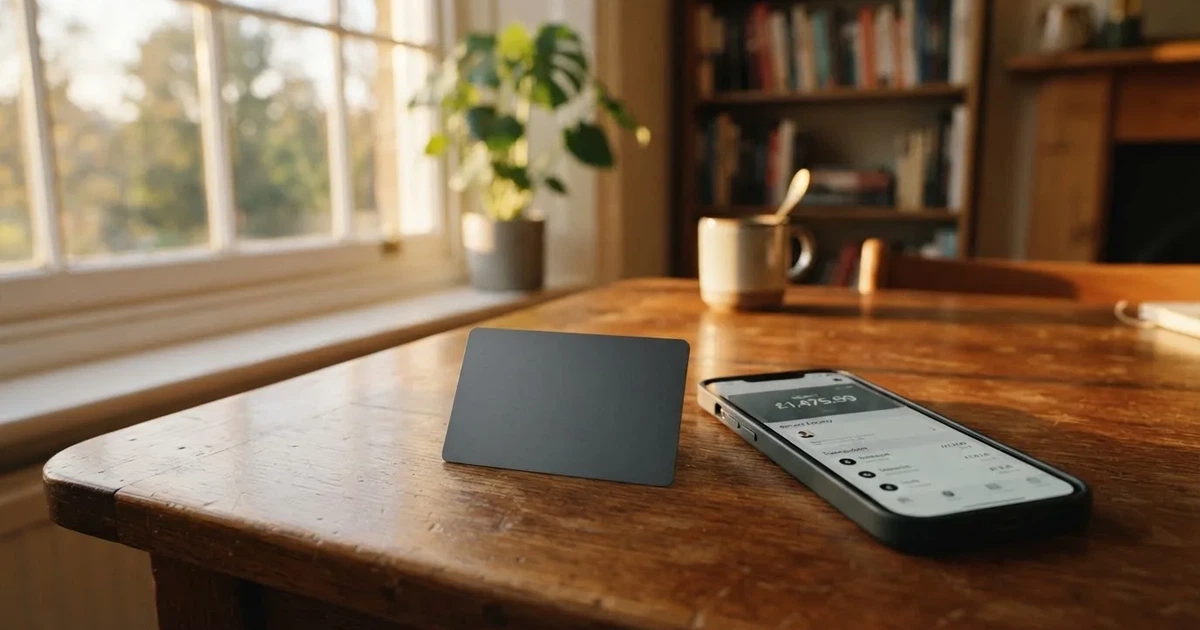
The MEXC card is a virtual Visa Platinum that you load with USDT and spend like an ordinary payment card. It launched on 31 August 2026 as the MEXC Global Card, with a second, older product called the MEXC Card aimed at selected Asia-Pacific markets. It suits one audience particularly well — people who already hold USDT, sit inside the eligible country list, and want their spending to earn cashback back in USDT rather than points in an exchange’s own system. It suits almost nobody else. There is no physical card yet, no ATM, no monthly fee worth speaking of, no issuer named on the public pages, and a 1% spending fee that starts applying from 1 October 2026.
The conditions described here are current as of October 28, 2026.
My score is 5.6 out of 10. That is not a rejection — it is a card with two genuinely good properties (0% crypto conversion on the Global Card, and a cashback ladder that pays real USDT) wrapped in a package with real gaps. Here is how the six criteria broke down.
| Criterion | Mark | Why |
|---|---|---|
| Who can get it | 8 / 10 | Global Card is closed to residents of 69 countries and territories; everyone else is judged by the country on their proof of address. Unofficially, 110 countries appear in the DefiLlama catalogue. |
| Cost | 7 / 10 | Global Card: 20 USD issuance (temporarily waived), annual fee and top-up 0, crypto conversion 0%, currency at the Visa rate with no markup, and a 1% payment fee from 1 October 2026. |
| Top-up options | 4 / 10 | USDT only: you transfer to the Fiat account, then move it onto the card. Networks are not named. |
| Reliability and complaints | 3 / 10 | Issuer not named, balance held at the exchange; on Trustpilot the exchange has no score, 88% one-star, with frozen funds and withdrawal delays. Unofficially, it appears on the Hong Kong SFC’s suspicious platforms list. |
| Everyday use | 4 / 10 | Virtual Visa Platinum only; Apple Pay and Google Pay exist; no physical card and no ATM. |
| Total | 5.6 / 10 | A card that works well for a USDT holder in an eligible country, and not much beyond that. |
If you read the rest of this and think “that is me”, the product is probably worth your time. If you were hoping for something that behaves like the debit card your bank gave you — with a plastic card in the post and cash from a machine — this is not it, and no fee waiver will change that.
Will they give you the card?
Yes for a large share of the world, but eligibility follows the country on your proof of address rather than your citizenship, and the list moves.
The card page lists “The Philippines, Taiwan, Thailand…” with a Details link, and the full list is not shown on the page itself. What is stated clearly is the rule underneath: you are eligible according to the country your proof of address comes from. As of August 2026 the application blacklist includes the United States, China, India, Indonesia, Turkey and Russia among others, while the Philippines, Taiwan, Vietnam and Thailand are not blacklisted. The card’s own documentation says the list changes, so treat any answer you give today as provisional.
Two things worth being clear about. First, this is a residence-and-address test, not a citizenship test, but the country where you were born can still be screened separately by the exchange’s compliance systems — that is standard practice, not something specific to this card. Second, the ban list and the open list are not mirror images of each other. Not being blacklisted is not the same as being approved; you also have to complete identity verification.
Unofficially, and not confirmed by the card’s own pages: DefiLlama lists the card in 110 countries, and SpendNode describes Global Card coverage as Southeast Asia, Latin America, Africa, the Caribbean, the Gulf and Central Asia, plus Japan, South Korea, New Zealand and Israel. Both of those are third-party catalogues reading 2026 information, and the official list excludes Russia and Turkey in any case.
A practical note on the countries people ask about most. If you are in the Philippines, Taiwan, Vietnam or Thailand, you are inside the stated boundary as of August 2026. If you are in the United States, China, India, Indonesia, Turkey or Russia, the application route is closed as of that same date. If you are somewhere else entirely — Nigeria, Kenya, Colombia, the Gulf states — the honest answer is that the public pages do not give you a list to check, and you would be guessing until you tried.
How to get it
Advanced KYC comes first, then the application on the My MEXC Card page, then funding.
The stated order is: complete Advanced KYC, apply on the My MEXC Card page, transfer USDT to your Fiat account, then fund the card. Advanced KYC is a government ID plus a face verification. Your proof of address must come from an eligible country. No income proof is required. The card you receive is virtual only — physical cards are described on the card page as “not yet available” — and it is a Visa Platinum virtual card with USD as the card currency. Age requirements are not stated on the pages I could read, and neither is how long processing takes or what the rejection reasons would be.
So the honest answer to “how long until I can pay with it” is: the card’s public pages do not say. What they do say is that the thing you get is a number you add to a phone wallet, not something posted to you.
One thing to keep in mind as you go: your money does not leave the exchange when you spend. It stays in the exchange’s care, and the card is a view onto that balance.
Fees and what a purchase actually costs
The headline numbers are good. The spending fee that starts on 1 October 2026 is the one that changes the arithmetic.

For the Global Card: 20 USD issuance as the standard price, waived for a limited time as of August 2026; annual fee 0; top-up 0; inactivity 0; termination 0; crypto conversion 0%; currency conversion at the Visa rate with no MEXC markup; and a transaction fee of 1% applying from 1 October 2026. The APAC Card is the older, cheaper-shaped product: 0 issuance, 0% transaction fee, but 1% crypto conversion.
| Fee or limit | MEXC Global Card | MEXC Card (APAC) |
|---|---|---|
| Issuance | 20 USD standard, waived for a limited time (as of Aug 2026) | 0 |
| Annual fee | 0 | 0 |
| Crypto conversion | 0% | 1% |
| Currency conversion | Visa rate, no MEXC markup | Visa rate plus 1% on non-USD purchases |
| Payment fee | 1% from 1 Oct 2026 | 0% |
| Top-up | 0 | 0 |
| Inactivity / termination | 0 / 0 | not stated |
| ATM withdrawal | Not applicable — no ATM for virtual cards | Not applicable — no ATM for virtual cards |
| Per transaction | 80,000 USD | 50,000 USD |
| Per day | 1,000,000 USD | 50,000 USD |
| Per year | no monthly or annual spend cap listed | 1,000,000 USD |
A separate support article also lists 100 transactions per day, 2,500 monthly and 25,000 annually for the Global Card; the APAC card is listed at 50 transactions per day and 1,040 per year. The Visa spread is described as usually 0.1% to 0.3%. Monthly fees are not stated on the card pages, and the page does not publish the crypto conversion or FX lines itself — they come from the card’s fee documentation. Fees vary by card type per a linked guide on the page.
Three everyday payments, so the fees stop being abstractions.
A 20 USD coffee. On the Global Card from 1 October 2026, the purchase deducts 20.20 USDT. Before that date it would have been 20 USDT. If you pay in a currency other than USD, the Visa rate applies with no MEXC markup, and the Visa spread is usually 0.1% to 0.3% on top — so a 20 USD coffee in euros might cost you about 20.20 to 20.26 USDT depending on the day. On the APAC card the same coffee costs 21 USDT, because of the 1% transaction fee plus 1% crypto conversion.
A 300 USD monthly subscription in your local currency. This is where the two cards diverge sharply. On the Global Card: 303 USDT after 1 October, with the currency conversion at the Visa rate plus its usual 0.1% to 0.3% spread. On the APAC Card: 306 USDT in USD equivalent terms — 3% of the purchase, once the 1% crypto conversion and the 1% on non-USD are counted. Over a year that is roughly 36 USDT versus 72 USDT on a spend most people would not notice month to month.
A 900 USD flight. On the Global Card, 909 USDT, and you stay well inside the 80,000 USD per-transaction limit so nothing is flagged. On the APAC Card, 918 USDT. Neither figure touches the daily ceiling.
The pattern I would plan around: if your spending is mostly in US dollars, the Global Card’s only real charge is the 1%, and cashback can offset it. If your spending is mostly in local currency, the APAC card’s 1% on non-USD compounds badly and you should convert to USD yourself first if you can.
Top up options
USDT only, in two steps, and the networks are not named.
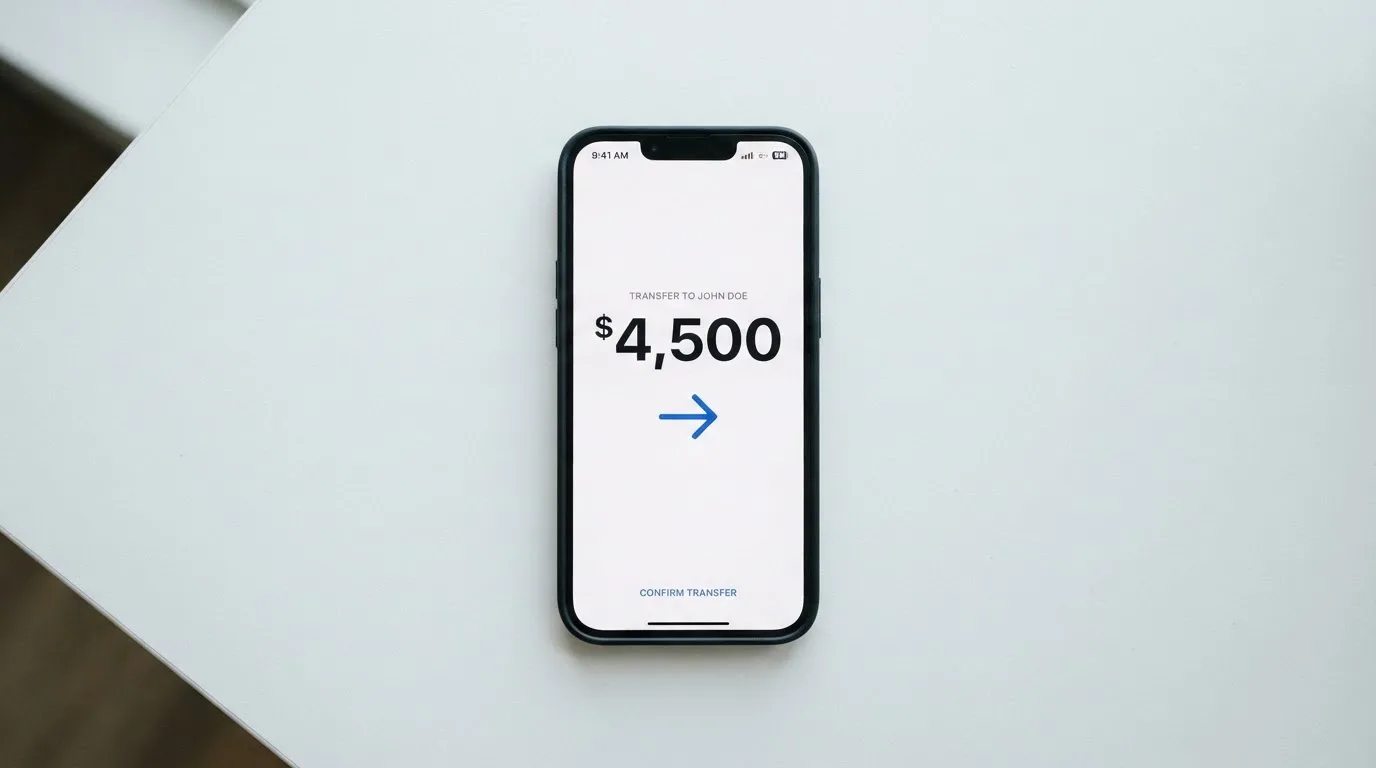
You transfer USDT to the Fiat account on the exchange, then add it to the card on the My MEXC Card page. There is no top-up fee, and moving USDT into the Fiat account is free. Each top-up runs from 1 to 1,000,000 USDT per the Global Card guide, though an older MEXC post cites a 100 USDT minimum, which conflicts — treat the newer guide as the better guide. Fiat top-up is not stated.
That is the whole menu. No bank transfer in, no card load from a debit card, no Apple Pay top-up, no P2P route described on the card pages.
The unnamed networks are the part that should slow you down. Stablecoins exist on several chains, USDT among them on Ethereum, Tron, Solana, Polygon, Avalanche and others, and a transfer sent on a chain the provider does not support can be lost or need manual support recovery with no guarantee. Every on-chain transfer also costs a network fee that is set by the blockchain, not by MEXC. Check the supported network at the point of sending, every time, rather than assuming the last one you used still works.
On the way out: the termination fee is 0 and there is no inactivity fee. How to move the remaining balance back to the exchange account, and what happens to it on closure, is not stated on the card pages — so if the money in the card is money you cannot leave behind, ask before you load it.
Paying with it every day
Apple Pay and Google Pay on the Global Card, Google Pay only on the APAC card. That is the whole everyday surface.
Apple Pay replaces the card number with a device-specific number stored in the phone’s Secure Element, so the real card number never reaches Apple’s servers, and each payment carries a one-time code. The issuer can still restrict a tokenised number — for example block it for online or phone payments — which is one of the reasons a virtual card can feel oddly narrow in practice. Which merchants are blocked is not stated on the card pages, and many issuers block the gambling merchant category (MCC 7995) on their own policy rather than by law, with the list differing from issuer to issuer. Assume some declines and do not be surprised by them.
The cashback is the real reason to look at this card, and it is structured around an M-Score tier you do not fully control.
| Tier | Cashback | Monthly cap | Paid |
|---|---|---|---|
| Standard | 4% | 100 USDT | by the 15th of the next month |
| Premier (600–799) | 6% | 300 USDT | by the 15th of the next month |
| Elite (800+) | 10% | 800 USDT | by the 15th of the next month |
Standard, Premier and Elite change only the cashback rate and the monthly cap — there is no metal tier and no physical tier, because there is no physical card. Referral pays 20 USDT to the referrer and 10 USDT to the referee.
Do the arithmetic honestly before you fall for the 10% headline. At Standard, spending 2,500 USDT a month earns 100 USDT and stops there — anything above that earns nothing that month. At Elite, you would need to be spending 8,000 USDT a month to reach the 800 USDT cap. The tiers depend on an M-Score that is not explained on the card pages, so you cannot reliably aim for one. And note the direction of travel: cashback on refunded purchases is deducted.
If something goes wrong with a payment, the stated route is to contact the merchant first, then MEXC Customer Service with a reason and evidence. The windows are 90 days for duplicate charges and 120 days for suspected fraud, goods not received, or goods not as described. Filing is free, but a review fee may apply if the dispute is rejected for incomplete evidence — that is the line to read twice. Refunds usually arrive in 1–7 days, travel refunds up to 30 days, and a 0.50 USD per-refund fee applies only if the refund rate is excessively high.
What can go wrong
The largest risk here is not a fee. It is that the money stays with the exchange and you do not know who issued the card.
The card is custodial. The exchange holds the spending balance, and no safeguarding arrangement, segregation of customer funds or insurance statement could be found on the pages I read. Unofficially, SpendNode’s 2026 review of the documents reached the same conclusion — no issuer, no safeguarding arrangement — and notes that nobody has published the issuer’s name. The card page itself names neither issuer nor licence. That is unusual, and it means that when you ask “who is my money with”, the public answer is “a company whose card programme I could not identify”.
How do crypto cards work at all, and why does that matter here? A payment card number starts with a 6- or 8-digit issuer identification number, and merchants look that up to see which institution and country issued it — and may apply extra scrutiny when the issuer country differs from your billing address. A card issued in one country can look foreign to a shop in another. Behind that number sit three separate parties: the network (Visa here) routes messages and sets rules, the issuer is a licensed bank or e-money institution that holds the card programme, and the crypto brand is often only a programme manager or front-end that markets the thing. Visa and Mastercard do not themselves issue crypto cards to consumers; they license issuers and can suspend a programme. Visa said in November 2022 that it had “terminated our global agreements with FTX”, and the FTX US debit card programme was wound down by its issuer. WaveCrest, a Visa issuer that supplied crypto card brands, was suspended by Visa in Europe in 2018 and all its programmes were closed.
So programme closure is not hypothetical. A closure typically means a notice period, then spending and loading stop, then you are asked to withdraw whatever remains. The specific worry for a custodial card is the sequence before that: accounts flagged as risky without a stated reason, withdrawals frozen or delayed, generic support replies, hard account deletion. Those are the themes in the user reports.
The complaint picture is stark and it is about the exchange, not only the card. Trustpilot shows no score for MEXC as a whole, with a “breach of our guidelines” notice after fake reviews were removed, 1,368 reviews and 88% one-star as read on 20 October 2026. FinTelegram reported a 1.8 out of 5 score with one-star reviews about frozen or withheld funds, withdrawal friction and support. Other reported themes: accounts flagged “risk” without reasons and then restricted, withdrawals frozen or delayed for months, unresolved tickets, hard account deletion, and one review about a 0.50 USD fee on a declined Apple Pay transaction. Unofficially, FinTelegram also says MEXC was on the Hong Kong SFC’s suspicious platforms alert list. Official incident reports on the card page: none stated.
Third-party card catalogues disagree with each other about the product itself. DefiLlama describes a Visa card in 110 countries; CryptoCardHub described a Mastercard, EUR, restricted to internal test users in February 2026. Neither is the card’s own statement.
Security features that do exist: you can freeze the card in Card Management if you lose it and then contact Customer Service for a replacement. 3-D Secure one-time codes arrive by email — valid for four minutes — or in the MEXC app. Repeated failed payments can trigger a risk review and card termination, which is worth knowing before you try a card at three different shops in a row. On the regulatory side, the card is an e-money and payment service regulated separately from the crypto side, so a product like this normally depends on two licences: one for the exchange and custody, one for the card. Under MiCA, the EU’s crypto-asset regulation, e-money tokens may be issued only by a credit institution or an electronic money institution, and providers operating under national law had a transitional period running only until 1 July 2026. Support is by ticket from the platform; the help centre and learn pages exist in a Russian version, and live chat hours for the card specifically are not stated on the pages I checked.
The timeline, in short: on 31 August 2026 MEXC launched the Global Card, a Visa Platinum virtual card, waiving the 1% transaction fee from 31 August to 30 September 2026 — it applies from 1 October 2026 — and waived the 20 USD issuance fee for a limited time as of August 2026.
What to take instead
None of the three alternatives I checked is unambiguously better. Each trades the MEXC weaknesses for different ones, and the right comparison depends on which country you are in.
| MEXC card | Bybit Card | Pionex | MSX | |
|---|---|---|---|---|
| Score | 5.6 / 10 | 6.0 / 10 | 4.8 / 10 | 6.4 / 10 |
| Card | Virtual Visa Platinum | Virtual and physical; Mastercard or Visa by region | Virtual Visa or Mastercard | not stated officially |
| Issuance | 20 USD, temporarily waived | Virtual free; physical 5–29.99 USD by region | none listed | not stated |
| Crypto conversion | 0% (Global Card) | 0.9% over the One-Click Sell rate | 0% Visa (1:1 USD/USDT) | not stated |
| FX | Visa rate, no markup | 2% on top of network rate in several regions | Mastercard converts at its own rate | not stated |
| Rewards | 4%–10% cashback by M-Score, capped | 2%–10% by tier, monthly cap; crypto-funded only | 1% cashback, no cap mentioned; 5% APY on USDT balance | not stated |
| Funding | USDT only | Funding Account and Flexible Easy Earn, fiat first, then crypto | USDT only | not stated |
Bybit Card is the strongest of the three on paper, at 6.0 / 10, and it is the only one here with a physical card in most regions. The catch is geography. Its help centre lists Argentina, AIFC (Kazakhstan), Georgia, Kazakhstan, Australia, Mexico, Brazil, Peru and Asia Pacific, and the cards page states plainly that the product is not meant for European Economic Area customers and that all EEA participation is strictly prohibited. If your country is not on that list, the application page will register your interest rather than your card. Its costs are heavier: 0.9% crypto conversion over the One-Click Sell rate in most regions, and a 2% FX fee on top of the network rate in Australia, Asia Pacific, Georgia and Mexico, with Kazakhstan charging 2% on purchases outside the country even in USD, Argentina at 7% and Brazil at 1.5%. Argentina adds VAT of 21% on foreign digital services and a 30% tax on foreign transactions. Its rewards changed on 5 October 2026: only crypto-funded transactions earn, so spending straight from a fiat balance earns nothing.
Pionex scores lowest at 4.8 / 10 and is the most restricted. Which card you get depends on the country your KYC was completed in — by KYC country, not citizenship. Only virtual cards are issued now. Visa costs 1% per transaction with free USD/USDT conversion; Mastercard is “up to 3.5%”. Its rewards are modest: 1% cashback on local-currency and general USD purchases, no cap mentioned, credited in real time, plus 5% APY on the USDT balance credited hourly. New Visa applications from Belarus stopped on 14 August 2026, with Mastercard offered instead.
MSX scores 6.4 / 10, the highest of the four, and it is also the one I can tell you least about. Eligibility, card type, fees, funding and rewards are all not stated on any official page I could read. A higher score with no published detail is not something I would build a decision on.
The general rule I would apply: look for a named issuer and a stated safeguarding arrangement first, region availability second, fees third. MEXC fails the first test. If a card with a named European issuer is available where you live, that is worth more than 0% crypto conversion.
Who I would recommend it to
I would recommend the MEXC card to three kinds of person, in this order.
First, someone who already holds a meaningful USDT balance, lives in a country on the eligible list, and spends in US dollars. For them the Global Card is close to the ideal shape: 0% crypto conversion, no markup on the currency conversion, a 20 USD issuance fee currently waived, and cashback that lands in USDT rather than in an exchange’s points. The 1% spending fee is offset at Standard tier as soon as you pass 100 USDT a month, and the caps are high enough that nobody ordinary will meet them.
Second, someone who needs a Visa virtual card for online payments and has no better option — no local bank willing to open an account, no card that works for them. On that reading, the honest comparison is not against another crypto card but against having nothing. Here the card is adequate, provided they understand that the money is at the exchange’s mercy and they do not park a large balance on it.
Third, someone testing the waters with a small balance, who treats it as a convenience rather than as a place to keep money. That is a reasonable use, provided you withdraw what you do not need for spending.
I would not recommend it to anyone who needs a physical card, an ATM, a card that works in local currency without a penalty, or reassurance about who holds their funds and who issued the card. I would also not recommend it to anyone whose main worry is the reputation of the platform, because the complaints pattern around frozen withdrawals and hard account deletion is documented enough that it deserves to factor into the decision.
Frequently asked questions
What is the MEXC card?
The MEXC card is a virtual Visa Platinum you fund with USDT and spend like an ordinary payment card. It launched on 31 August 2026 as the MEXC Global Card, alongside an older MEXC Card for selected Asia-Pacific markets. There is no physical card yet, and the APAC product is virtual-only too.
How does the MEXC card work?
You load USDT into the exchange’s Fiat account, then move it onto the card, which spends a fiat balance. The crypto conversion rate and any fees are applied when the balance is loaded. The card itself is virtual: you add the number to Apple Pay or Google Pay rather than waiting for plastic.
Is MEXC a bank?
No. MEXC is a cryptocurrency exchange, and its card is a payment product built around that exchange. The card pages name neither an issuing bank nor a licence, and no safeguarding or insurance statement could be found. That is the single most important thing to understand before loading money onto it.
Who can get the MEXC card?
Eligibility follows the country on your proof of address, not citizenship. As of August 2026 the application blacklist includes the United States, China, India, Indonesia, Turkey and Russia; the Philippines, Taiwan, Vietnam and Thailand are not blacklisted. The list changes, so check before you invest time in an application.
What countries is the MEXC card available in?
The card page lists “The Philippines, Taiwan, Thailand…” with a Details link but does not show the full list. Unofficially, DefiLlama catalogues 110 countries and SpendNode describes coverage across Southeast Asia, Latin America, Africa, the Caribbean, the Gulf and Central Asia plus Japan, South Korea, New Zealand and Israel. Neither is confirmed by the card.
How do I apply for the MEXC card?
Complete Advanced KYC first — government ID plus face verification, with a proof of address from an eligible country and no income proof required. Then apply on the My MEXC Card page, transfer USDT to your Fiat account and fund the card. Age requirements, processing times and rejection reasons are not stated on the pages I could read.
How much does the MEXC card cost?
On the Global Card: 20 USD issuance, waived for a limited time as of August 2026; annual fee, top-up, inactivity and termination all 0; crypto conversion 0%; currency conversion at the Visa rate with no MEXC markup; and a 1% transaction fee from 1 October 2026. The APAC Card charges 0 issuance but 1% crypto conversion and 1% on non-USD purchases.
What is the MEXC card cashback rate?
Cashback depends on your M-Score tier and is paid by the 15th of the following month: Standard pays 4% up to 100 USDT a month, Premier (600–799) pays 6% up to 300 USDT, Elite (800+) pays 10% up to 800 USDT. Only the rate and the monthly cap change between tiers, and cashback on refunded purchases is deducted.
How do I top up the MEXC card?
Transfer USDT to the exchange’s Fiat account, then add it to the card on the My MEXC Card page. Top-ups are free and range from 1 to 1,000,000 USDT per the Global Card guide, though an older post cites a 100 USDT minimum. The supported networks are not named, so check carefully before sending — a transfer on an unsupported network can be lost.
Is the MEXC card safe?
The safety question here is mostly about custody and issuer identity, not card fraud. The balance is held by the exchange with no safeguarding statement found, the issuer is not named, and Trustpilot shows 88% one-star reviews across 1,368 reviews with frozen funds and withdrawal delays among the themes. Treat it as a place for spending money, not for keeping it.
Highest-scored exchange cards – cryptocardbest.com
Content created by the «cryptocardbest.com» team