
A virtual Mastercard for crypto, but only if you live in the EEA
 Available in US
The Phemex card is a virtual Mastercard that draws directly on your Phemex Spot Account balance in USDT and USDC, converting the stablecoins to US dollars at the moment of payment. It is free to issue, has no annual or monthly fee, and pays a small cashback in USDT. The catch is geography: the card is offered exclusively to people who reside in the European Economic Area, and the line-up of features is otherwise narrower than on competing cards. This review goes through who can actually get one, what it costs in real life, how to top it up, and what can go wrong, so you can decide whether it belongs in your wallet.
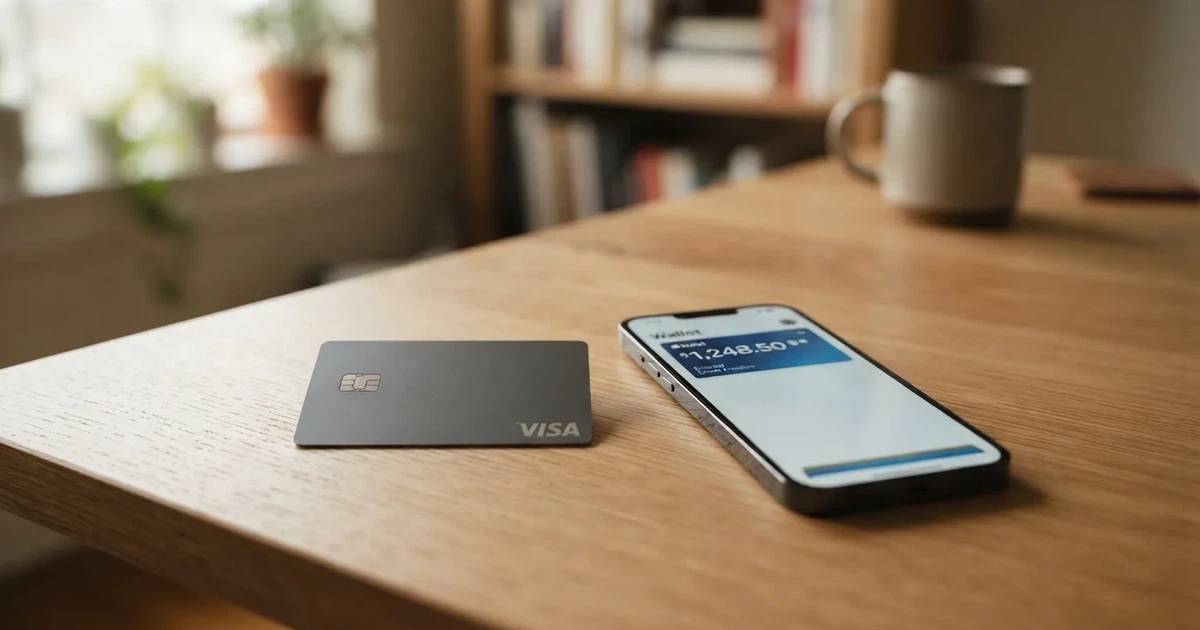
The conditions described here are current as of October 28, 2026.
Verdict
I would give the Phemex card 5.9 out of 10. It is a clean, low-fee product aimed at a narrow audience, and it does the basic job of turning stablecoin balances into everyday spending. The headline number reflects the trade-off: the cost side is genuinely good for what is, in effect, a free virtual card, but the product is held back by its geographic restriction, the limited surfaces you can spend on (no physical card, no ATM), the track record of complaints about the wider Phemex exchange, and the fact that the programme is run by a third party in New Zealand rather than by a familiar European issuer. The cashback is modest at the Standard tier, and the rewards programme reserves anything meaningful for VIP users.
Who it suits: someone already living in the EEA who keeps a stablecoin balance on Phemex, is happy with a virtual card, and wants a low-fee way to spend USDT or USDC at shops and online without an extra conversion step on the exchange. Who it does not suit: anyone outside the EEA, anyone who needs cash, anyone who needs a physical card for in-person chip-and-PIN payments, and anyone uncomfortable leaving spending money on a custodial exchange.
Score breakdown
| Criterion | Mark | Why it matters |
|---|---|---|
| Who can get it | 5 / 10 | Only EEA residents in 30 countries; physical impossibility for the rest of the world |
| Cost | 8 / 10 | Issuance, annual and closure all free, no monthly charge, no percentage spread published for conversion |
| Top-up options | 6 / 10 | Spot Account in USDT and USDC with auto-conversion, but you cannot pick the network because the top-up is internal |
| Reliability and complaints | 4 / 10 | Programme run by a New Zealand manager under a Mastercard licence; the parent exchange has a poor Trustpilot and a history of withdrawal blocks |
| Everyday use | 6 / 10 | Virtual Mastercard with Apple Pay and Google Pay, no ATM, no physical card |
| Total | 5.9 / 10 | A solid niche product whose geographic restriction and parent-exchange risk keep it from the top of the table |
Who will they give you the card
The Phemex card is available exclusively to people who reside in the European Economic Area. The published list runs to 30 countries: Austria, Belgium, Bulgaria, Croatia, Cyprus, the Czech Republic, Denmark, Estonia, Finland, France, Germany, Greece, Hungary, Ireland, Italy, Latvia, Lithuania, Luxembourg, Malta, the Netherlands, Poland, Portugal, Romania, Slovakia, Slovenia, Spain, Sweden, Iceland, Liechtenstein and Norway. Eligibility is by residence, not by citizenship, which is a meaningful distinction: a French citizen living in Switzerland, for example, would not be eligible on the basis of the passport alone. There is also a small inconsistency between the marketing list and the cardholder terms, since the latter’s definition of the EEA excludes Croatia, Ireland and Romania even though those three appear on the supported-country list. If you are in one of those three, treat the situation as ambiguous and check with support before you start a KYC that may stall.
Age is 18 or over, and you need a Phemex Wallet. Outside the EEA, the card is not on offer, so no amount of VPN or alternative documentation will open it up. If you live in the UK, Switzerland, the United States or anywhere else, you are not in scope.
How to get it
The signup path is built into the Phemex app and the web card page. In outline, you open the Card page, complete identity verification, verify your residential address, enter a mobile number, agree to the Terms of Use, the Privacy Policy and the Cardholder Terms, and submit. There is one identity-verification step plus an address step, and Phemex publishes the possible rejection reasons: an incomplete KYC, an unsupported region, a failed address verification, a failed risk and compliance review, or inconsistent information. The processing time after submission is not stated, so you should not assume it is instant just because the card itself is virtual.
Address verification works slightly differently depending on where you live. If you are in one of the 12 countries Austria, Belgium, Denmark, Finland, France, Germany, Italy, the Netherlands, Norway, Poland, Spain or Sweden, the system asks you to enter an address directly. For residents of any other EEA country, you upload a proof of address dated within the last three months, such as a bank document, a utility bill or a government document.
You are allowed one virtual card per user, and it is denominated in US dollars. The card is issued immediately on approval and is not delivered in the post. If the card is cancelled or terminated, you cannot simply ask for a replacement; a fresh card is possible only if the concerns that led to the cancellation no longer apply.
What it really costs: Fees
The cost story is the strongest part of the Phemex card. There is no card issuance fee, no annual fee, no monthly charge and no account-closure fee. There is a single fee tier; the card has no paid plans. The cashback rate depends on your Phemex user tier rather than on a card subscription, so the only way to climb is to trade more on the exchange.

The two real costs sit at the moment of payment. First, when a transaction is funded from USDT or USDC, crypto is auto-converted at the prevailing rate and a spread is applied at the time of the transaction, with no percentage stated. Second, if you pay in a currency other than US dollars, the card applies the Mastercard network’s baseline FX rate plus a possible Phemex conversion spread, again with no percentage stated. Spreads and markups are non-refundable, which means you cannot reclaim the spread later by asking support. ATM fees are not stated, which is consistent with a virtual-only card that has no cash access.
The default spending limits are adjustable downward and look like this.
| Limit | Amount (USD) |
|---|---|
| Per transaction | 5,000 |
| Daily | 5,000 |
| Monthly | 30,000 |
| Annual | 100,000 |
Cashback is paid in USDT: 1 percent for VIP users, 0.25 percent for Standard users, with promotional rates of up to 3 percent for VIPs from time to time. There is no monthly cap, and cashback is credited to your Spot Account on the 10th of the following month in UTC. It only counts on completed eligible purchases as classified by merchant category code, and refunds reduce the cashback proportionally.
Three everyday payments
A lunch in Paris, paid via Apple Pay at a restaurant. You are spending from USDT, the card auto-converts to USD at the network rate, the merchant’s acquirer converts euros to USD on its side and the card applies its own spread on top. You will see the spread in the final amount, but you will not see it broken out as a line item.
An online subscription in London. The card settles in USD, so it pays the Mastercard FX rate plus a Phemex conversion spread. A Standard-tier user earns 0.25 percent cashback in USDT, credited the next month.
An in-store purchase in Berlin, paid with Google Pay. Standard limits of 5,000 USD per day and 30,000 USD per month comfortably cover the amount, and no ATM withdrawal is involved.
In each case, the fixed costs are zero. The variable cost is the combined spread, and the variable benefit is the cashback. Compared with cards that publish a clear 0.9 percent crypto conversion fee or a 2 percent FX fee, the lack of a published percentage on the Phemex card is both a plus (the marketing copy never promises a low number that might be hidden in a schedule) and a minus (you have to do a real transaction to see what the spread looks like in practice).
How to top it up
The Phemex card is a thin layer on top of the exchange’s Spot Account. Top-up is therefore not a separate operation the way it is on many standalone cards; the card simply reads from the Spot Account balance you already hold in USDT or USDC. When you make a purchase, the card auto-converts the appropriate amount at the point of sale, in the order of priority you have set, and only switches coins on or off if you have configured it that way. Networks are not applicable because the transfer is internal to Phemex.
This is convenient in two ways and limiting in two. Convenient: you do not have to think about blockchain networks, gas fees or wrong-address mistakes, because the top-up is a credit on Phemex’s own ledger. Convenient: you can keep your crypto in stablecoins and let the card handle the conversion. Limiting: you cannot top the card up from another wallet or from another exchange, so all the money has to be on Phemex first. Limiting: there is no Transfer or Deposit flow with a published fee or minimum, which means the cost of getting funds onto the platform in the first place is the standard exchange cost of depositing crypto.
If you cancel the card, the remaining balance is refunded to your Phemex Wallet after the final transactions and fees have settled. The programme also reserves the right to terminate with 60 days’ written notice.
Paying with it every day
The card is virtual, denominated in US dollars, and works as a Mastercard. It supports Apple Pay and Google Pay, which means you can add it to a phone wallet and pay at contactless terminals without a physical card. There is no physical card, and therefore no chip-and-PIN experience at a card reader and no cash at an ATM. If a merchant requires a physical card, the Phemex card is not an option.
Online, the card behaves like any other Mastercard number, and 3-D Secure checks can be required at checkout. Address Verification Service, the address-matching system used heavily in the United States, Canada and the United Kingdom, is generally unavailable for foreign-issued cards, and that can produce declines at US merchants in particular. Some merchants also decline prepaid or foreign-issued cards outright because the card’s BIN reveals the issuer country; that risk is real for any virtual card issued outside the country you are shopping in.
Cashback is paid only on certain merchant categories. The exclusions listed in the terms are Financial and Investment, Cash-like and Crypto-related, Gambling, Government Services, Education, Insurance, Business Services and Professional Services. So a monthly brokerage top-up or a payment to a government portal will not earn cashback, and a hotel booking or a restaurant meal will.
You manage the card in the Phemex app or on the web card page, which supports Chrome, Safari and Firefox. From there you can freeze the card, set a 4-digit PIN for in-person use, and adjust per-transaction, daily and monthly limits downward. If the issuer itself imposes a freeze, you cannot undo it from the app. To dispute an unauthorised transaction, you have 13 months from the debit date; for a merchant dispute, you need written confirmation within 120 days; for a merchant-initiated amount dispute, you have 8 weeks. A fiat refund reduces the cashback proportionally.
What can go wrong
The card itself is a small layer on top of a much larger exchange, so the most likely sources of trouble are upstream of the card.
Counterparty risk is the first one. Your spending balance sits in the Phemex Spot Account, not in a personal bank account. Phemex’s terms describe the funds as being safeguarded “in accordance with applicable law” and do not promise a deposit guarantee scheme. Liability for a lost card is capped at 50 euros or 35 pounds. Phemex has had a 2025 security incident that interrupted deposits and withdrawals. Reviews on Trustpilot for the exchange, as of 21 October 2026, stand at 2.0 out of 5 from 277 reviews, with 31 in the last 12 months; recurring themes are blocked or locked withdrawals, repeated KYC re-verification, slow or bot-like support, and disputed liquidations. A 1 July 2026 review mentions a card deposit followed by a KYC re-check. These are not card-specific complaints, but they colour the picture of who you are trusting with your balance.
Programme structure is the second one. The card programme is run by IMMERSVE LIMITED, a New Zealand-registered company (registration number 9429050083725, FSP1003031), under a Mastercard International licence. The terms name IMMERSVE LIMITED as the Card Issuer. In practice that means the issuing entity is a non-bank fintech in a country that is not part of the EEA, and the card’s regulatory home is therefore unusual for a product sold only to European residents. Programmes run by smaller third parties have a history of being suspended by the network; the most cited example is WaveCrest in 2018, which Visa suspended in Europe and which closed every crypto card programme it was running.
Compliance and KYC are the third. The card uses a single identity verification plus an address check, and there is no separate tiered KYC. If your documents go out of date, if you move country, or if the compliance team flags something on your account, the response is often a freeze until you provide fresh proof. The card’s day-to-day usability depends on that side of the business responding quickly, and the reviews suggest the support side does not always do so within minutes.
Network and merchant friction is the fourth. Because the card is virtual only, you cannot fall back to a physical swipe if a terminal rejects tokenised payments. If Mastercard’s network treats the BIN as foreign, certain US merchants will decline it; if Address Verification Service is required, foreign cards without an address match tend to fail. Authorisation holds can leave funds tied up for several days even if a payment is later voided.
A frozen, cancelled or terminated card is not always reversible. The terms allow for a replacement only if the concerns that led to the cancellation no longer apply, so a routine closure can be a one-way door.
What to take instead
If the Phemex card is not quite the right fit, three alternatives cover most of the same ground with different trade-offs. The table below summarises them on the same score scale.
| Card | Score | Card form | Best for |
|---|---|---|---|
| MSX | 6.4 / 10 | Not stated officially | Anyone willing to dig into a less-documented programme |
| Bybit Card | 6.0 / 10 | Virtual and physical, in some regions | Spenders who want a physical card and bigger cashback tiers |
| MEXC | 5.6 / 10 | Virtual only, with a 20 USD issuance fee | Users who want a simple virtual card and are already on MEXC |
The MSX card scores higher than the Phemex card but the public material I could read does not state who can get it, what it costs, how it funds or what it pays in cashback, so the score is a thinner claim.
The Bybit Card is a more rounded product for a global audience. It offers both virtual and physical cards in several regions, including a USD Mastercard for AIFC (Kazakhstan), Georgia, Kazakhstan, Australia and the Asia Pacific region, a Visa prepaid in Brazil and Peru, and a Mastercard prepaid in Argentina. The card has no balance of its own; it draws on Bybit’s Funding Account and Flexible Easy Earn balance, selling crypto at the One-Click Sell rate plus a Bybit Card crypto conversion fee of 0.9 percent in most regions and 0.5 percent in Argentina. FX fees are 2 percent on top of the network rate in most regions, 7 percent in Argentina, 1.5 percent in Brazil and 1 percent in Peru. The rewards scheme, from 5 October 2026 at 10:00 UTC, pays cashback only on crypto-funded transactions, not on fiat-funded ones, with tiers running from Base at 2 percent up to Infinite at 10 percent, paid in USDT. There is a welcome offer of 10 percent cashback up to 110 USDT in the first 30 days, a 100 percent subscription cashback perk for VIPs and Alpha tier or above, and a referral bonus. The important catch for European readers is right on the cards page: “This product is not meant for European Economic Area customers. All European Economic Area customer participation is strictly prohibited.” The fiat-service restricted list also includes Belarus, Russia, Serbia, China and the United States. So Bybit is the right alternative outside the EEA, not for European residents.
The MEXC card is a virtual-only product. Issuance is 20 USD, the service fee is 0 percent, and crypto is moved to a Fiat account and then added to the card page. Cashback is paid by M-Score tier: Standard 4 percent up to 100 USDT per month, Premier at 600 to 799 M-Score 6 percent up to 300 USDT, Elite at 800 or more 10 percent up to 800 USDT. The official list of supported countries is incomplete on the public page; the visible line names the Philippines, Taiwan and Thailand, with a Details link for the full list. If you are in a region where neither Phemex nor Bybit is an option, MEXC is worth a closer look, but the issuance fee and the limited public detail mean you should read the linked guide before paying for the card.
A quick rule of thumb: if you are in the EEA, the Phemex card or a non-crypto debit card are your realistic options, since Bybit is closed to European residents. If you are outside the EEA and want a physical card with a deeper rewards programme, Bybit is the better fit, subject to its restricted-country list. If you are in the Asia-Pacific region and want a virtual card with a flat 4 to 10 percent cashback, MEXC is the natural pick.
Who I would recommend it to
I would recommend the Phemex card to someone who lives in the EEA, has a Phemex account in good standing, keeps a meaningful balance in USDT or USDC, and is happy with a virtual card. The fit is best for online shopping, recurring subscriptions, in-store contactless payments through Apple Pay or Google Pay, and any situation where converting crypto to spend would otherwise mean an extra exchange step. The zero-fee structure makes it a sensible default for someone who already has stablecoins on Phemex and would otherwise let them sit idle.
I would not recommend it to someone outside the EEA, because the card is not on offer. I would be cautious about it for someone whose primary need is cash, because there is no ATM access and no physical card. I would also be cautious for someone who is not comfortable keeping spending money on a custodial exchange, because that is where the balance lives. Finally, I would not recommend the card on the strength of the cashback alone: at 0.25 percent on Standard, the rewards are real but modest, and the only way to a more interesting rate is to climb to VIP by trading more on the exchange, which is its own commitment.
In short, this is a card for a specific person in a specific region with a specific stablecoin balance. If you are that person, the costs are low and the experience is straightforward. If you are not, the alternatives above will serve you better.
Frequently asked questions
What is the Phemex card?
The Phemex card is a virtual Mastercard that lets you spend the USDT and USDC in your Phemex Spot Account at any merchant that accepts Mastercard. Crypto is auto-converted to US dollars at the point of payment, and cashback is paid back in USDT. The card is free to issue, has no annual fee and is offered only to residents of the European Economic Area.
Is Phemex a bank?
No, Phemex is a cryptocurrency exchange, not a bank. The card is run by IMMERSVE LIMITED, a New Zealand-registered programme manager, under a Mastercard International licence. Funds in your Phemex Spot Account are safeguarded in line with applicable law, but they are not covered by a deposit guarantee scheme the way a bank account would be.
Is the Phemex card available in my country?
The card is available only to residents of 30 EEA countries: Austria, Belgium, Bulgaria, Croatia, Cyprus, the Czech Republic, Denmark, Estonia, Finland, France, Germany, Greece, Hungary, Ireland, Italy, Latvia, Lithuania, Luxembourg, Malta, the Netherlands, Poland, Portugal, Romania, Slovakia, Slovenia, Spain, Sweden, Iceland, Liechtenstein and Norway. Eligibility is by residence, not by citizenship. There is also a small internal conflict in the terms: the cardholder terms’ definition of the EEA excludes Croatia, Ireland and Romania, so if you live in one of those three, check with support before you start KYC.
How do I apply for the Phemex card?
You open the Card page in the Phemex app or on the web, complete identity verification, verify your residential address, enter a mobile number, agree to the Terms of Use, the Privacy Policy and the Cardholder Terms, and submit. Residents of 12 listed countries enter their address directly; residents of other EEA countries upload a proof of address dated within the last three months, such as a bank document, a utility bill or a government document. The card is virtual and is issued immediately on approval.
Does the Phemex card require KYC?
Yes. The card uses a single identity verification plus a separate address check. Rejection reasons include an incomplete KYC, an unsupported region, a failed address verification, a failed risk and compliance review or inconsistent information. The processing time after submission is not stated in the public terms.
How do I top up the Phemex card?
You do not top the card up the way you would a prepaid card. The card draws on your Phemex Spot Account balance in USDT and USDC, and converts the appropriate amount at the moment of payment. You can switch each coin on or off and change the priority order. Networks are not relevant because the transfer is internal to Phemex.
Can I use the Phemex card at an ATM?
No. The Phemex card is virtual only, with no physical card and no cash access. If you need cash, this card will not do it, and ATM fees are not part of the published schedule.
How do I add the Phemex card to Apple Wallet or Google Pay?
The card supports Apple Pay and Google Pay, so you can add it from the Phemex app to a phone wallet and pay at contactless terminals. When you pay, the wallet substitutes a device-specific token for the card number, and each payment is authorised with a one-time dynamic security code rather than with the card’s primary account number.
Is the Phemex card safe?
The card uses standard safeguards, including app-based controls, a 4-digit PIN, instant freeze in the app, adjustable limits and tokenised mobile wallets. The balance, however, is custodial, which means it sits in your Phemex Spot Account and depends on Phemex’s solvency and security. The exchange has had a 2025 security incident and a poor Trustpilot score, with reviewers repeatedly mentioning blocked withdrawals and slow support, so the safety of the card is only as good as the platform behind it.
Is the Phemex card worth it?
For an EEA resident who already keeps USDT or USDC on Phemex, the card is a low-cost way to spend that balance online and at contactless terminals, with a small USDT cashback on top. The 0.25 percent Standard cashback is modest, and the rewards only get interesting at VIP level. For anyone outside the EEA, anyone who needs cash, or anyone who is uneasy about custodial balances, the answer is no, and one of the alternatives above is likely a better fit.
Highest-scored exchange cards – cryptocardbest.com
Content created by the «cryptocardbest.com» team