
A crypto card that keeps your keys but leaves fee cards blank
 Available in US
The Tonhub card sits in an awkward middle ground. It promises the thing crypto card users care most about — a non-custodial Visa Debit that spends straight from your own wallet, so your keys never leave your hands — and on the security side it delivers, with audited smart contracts and on-chain spending limits. But almost every practical detail a cardholder actually needs is left unfilled. The public pages don’t state the fee schedule, the limits, the card currency, the issuing bank, or even who operates the company. What you can read instead is a headline score of trust concerns and a single, damning Trustpilot review.

So who is this card for? In my reading, it suits one specific person: an EU resident, aged 18 or over, who already holds TON or USDC in a self-custody wallet and wants to spend that balance directly, ideally with Apple Pay, without handing the funds to a custodian. If that describes you, the concept is genuinely appealing. If you’re comparing cards on price, on limits, on rewards, or on how quickly a dispute gets resolved, you will find this one frustratingly hard to evaluate — because it doesn’t tell you those things.
The conditions described below are current as of October 28, 2026.
The verdict: 5.3 out of 10
Let me put the number up front and then explain it, because a single score on its own tells you very little. Here is how the card breaks down across the criteria I look at, and why.
| Criterion | Score | Why |
|---|---|---|
| Who can get it | 5 / 10 | Needs age 18+ and EU residence; “25+” countries named only as a usage statistic, not an eligibility list |
| Cost | 7 / 10 | Officially undisclosed; unofficially reported as a 1.5% transaction fee |
| Top-up options | 5 / 10 | TON and USDC shown; a user review mentions USDT; SEPA and SWIFT bank transfers offered |
| Reliability and complaints | 4 / 10 | Operator and issuer not named; smart contracts audited by Trail of Bits; Trustpilot 3.2/5 from a single review with two-month disputes |
| Everyday use | 5 / 10 | Virtual Visa Debit only after verification; Apple Pay and Google Pay reported unofficially; ATM support not disclosed |
That adds up to 5.3 out of 10 — a middle-of-the-road score dragged down most by the reliability mark, and held up a little by the fact that the security model is genuinely strong and the cost position, while unofficially worrying, is not as bad as many crypto cards.
Let me be honest about what that 5.3 means in practice. It is not a warning; it is a description. The card is not obviously dangerous — the smart contracts are audited and the funds stay in your wallet. But it is not polished either. It is the kind of product where you can probably use it, but you will spend a lot of your own time working out the rules because the rules are not published. Think of it as an early-stage crypto card with a real security idea and an unfinished business layer.
Who it suits: an EU resident holding TON or USDC who values self-custody above all and reads the fine print themselves. Who it does not suit: anyone shopping on price, someone who needs a high spending limit, an ATM user, or someone who wants a card with a named, accountable bank behind it. I’ll come back to both groups at the end.
Will they give you the card?
The short answer is: probably, if you are an adult living in the EU, and probably not otherwise. Eligibility requires you to be 18 or older and resident in the EU. Those two conditions are the whole of the official gate.
One number deserves care here, because it is easy to misread. The card’s page cites “25+” countries — but that’s presented as a statistic about usage, not as a list of countries where you can sign up. So don’t read “25+ countries” and assume there are 25 places you live. Your address has to be in the EU. The page doesn’t offer a country picker or an eligibility checker in the way some competitors do, and it doesn’t clarify the difference between citizenship and residence — you need to live in the EU, not merely hold EU citizenship.
Beyond age and residence, that’s it. The card doesn’t publish a list of excluded countries, doesn’t state whether a particular EU member state is treated differently, and doesn’t say what happens if you move. So there is real uncertainty the moment your situation is anything other than “EU resident.” If you’re reading this from outside the EU, the honest position is that this card is not addressed to you.
Who actually gets approved is a separate question. The page doesn’t explain the review process, and I’ll return to verification in the next section.
How to get it
Getting the card is a two-step path, and the order matters: verify first, get the card second. You cannot have a Tonhub card before your identity is verified.
The sign-up flow includes an identity verification step — the page has you “Verify Your identity” — and only after that verification is complete is the virtual card issued. So the card itself is the reward for clearing KYC, not something you hold while you wait.
What the page does not tell you is almost everything around that step. Which documents you need is not stated; whether you must supply proof of address is not stated; how long verification takes is not stated; what reasons get an application rejected is not stated. If you have been turned down by other financial apps for document reasons, or if you’re unsure what counts as acceptable proof of address, you won’t find reassurance here. You’d be walking in with the bare minimum the page gives you — that you must verify — and no map of the process.
What you do get is the card itself: it’s a Visa Debit, and the version issued after verification is virtual. A physical card is not mentioned at all. So if you were imagining a piece of plastic in the post, that isn’t part of what’s described. Delivery — countries, time, cost — isn’t mentioned either, which is consistent with there being nothing physical to deliver.
The card’s currency is not stated. For a card that converts between crypto and fiat at the point of payment, that omission is more consequential than it sounds, and it’s why I can’t fully cost the thing in the next section.
So the practical takeaway: sign-up is straightforward in shape (verify, then a virtual Visa Debit appears), thin on detail. Make sure you have whatever identity document your jurisdiction expects to be asked for, because the card won’t preview the list.
What it really costs: the fees you aren’t told
This is the section where I’d want the most and find the least. The card has a “Fees & Conditions” section on its page — the section exists — but no amounts were captured from it, and the card does not publicly state its fees. That means the honest score here is not “it’s expensive” or “it’s cheap.” It’s “you cannot tell from the public page.”

Let me lay out what is and isn’t known, item by item.
| Fee or limit | What the card states |
|---|---|
| Issuance fee | Not stated |
| Monthly or annual fee | Not stated |
| Transaction / conversion fee | Not stated officially; unofficially reported as 1.5% per transaction |
| Foreign-exchange fee | Not stated |
| ATM withdrawal | Not stated |
| Daily spending limit | Not stated; user can set custom on-chain limits |
| Monthly spending limit | Not stated; user can set custom on-chain limits |
| Card currency | Not stated (TON and USDC are the assets shown) |
| Tiers | None listed; a single card is implied |
Read that table carefully, because the pattern is the point. The only concrete number anyone has for the cost of using this card is an unofficial one: a 1.5% transaction fee, reported by Forklog in November 2024 and repeated in a company profile on dealroom. I want to be clear about the status of that number — it did not come from the card, and the card has not confirmed it. Treat it as a useful hint, not a promise. And even if it’s roughly right, a per-transaction fee of that size interacts with how you shop: several small payments cost noticeably more than one large one, because the percentage presumably bites on each purchase.
Now let me walk through a few ordinary days, because a percentage fee and an undisclosed fee are very different things depending on what you’re buying. I’ll use simple, hypothetical amounts — I’m not quoting prices or claiming what a given coffee costs, just showing how a fee like the reported 1.5% would apply if it is the real schedule.
A coffee bought with a virtual card online, from a merchant in a country whose currency isn’t the card’s (which isn’t stated): you’d expect the network to convert, and you’d want to know the foreign-exchange cost. It’s not disclosed. Add the reported 1.5% transaction fee on top if that’s accurate, and you have two possible layers of cost that are not confirmed.
A larger online purchase, say a few hundred in your local currency, funded from TON: the percentage fee bites less painfully here than on the coffee, which is the one argument in favour of a percentage model. But because the card currency isn’t stated, you can’t be sure whether the conversion happens in the card’s currency or yours, and an unstated FX fee could still sit on top.
An ATM withdrawal, if you even try: the card doesn’t disclose whether ATM use is supported or what it costs. Given that ATM support isn’t mentioned at all, I would not plan around having it.
The self-set on-chain spending limits are the one genuinely user-friendly element in this section. The card lets you set custom spending limits directly on-chain. That’s a real safety feature, and it’s the kind of thing that matters if your wallet holds more than you intend to spend in a given week. But note what it is not: it’s a user-imposed ceiling, not a statement of what the card’s own daily or monthly caps are. Those remain unstated.
The bottom line on cost: you’re being asked to accept a fee schedule you cannot read. If transparency on price is a hard requirement for you, this card doesn’t meet it, no matter what the unofficial 1.5% turns out to be. Ask in the Help Center before you commit money, and get the answer in writing.
How to top it up
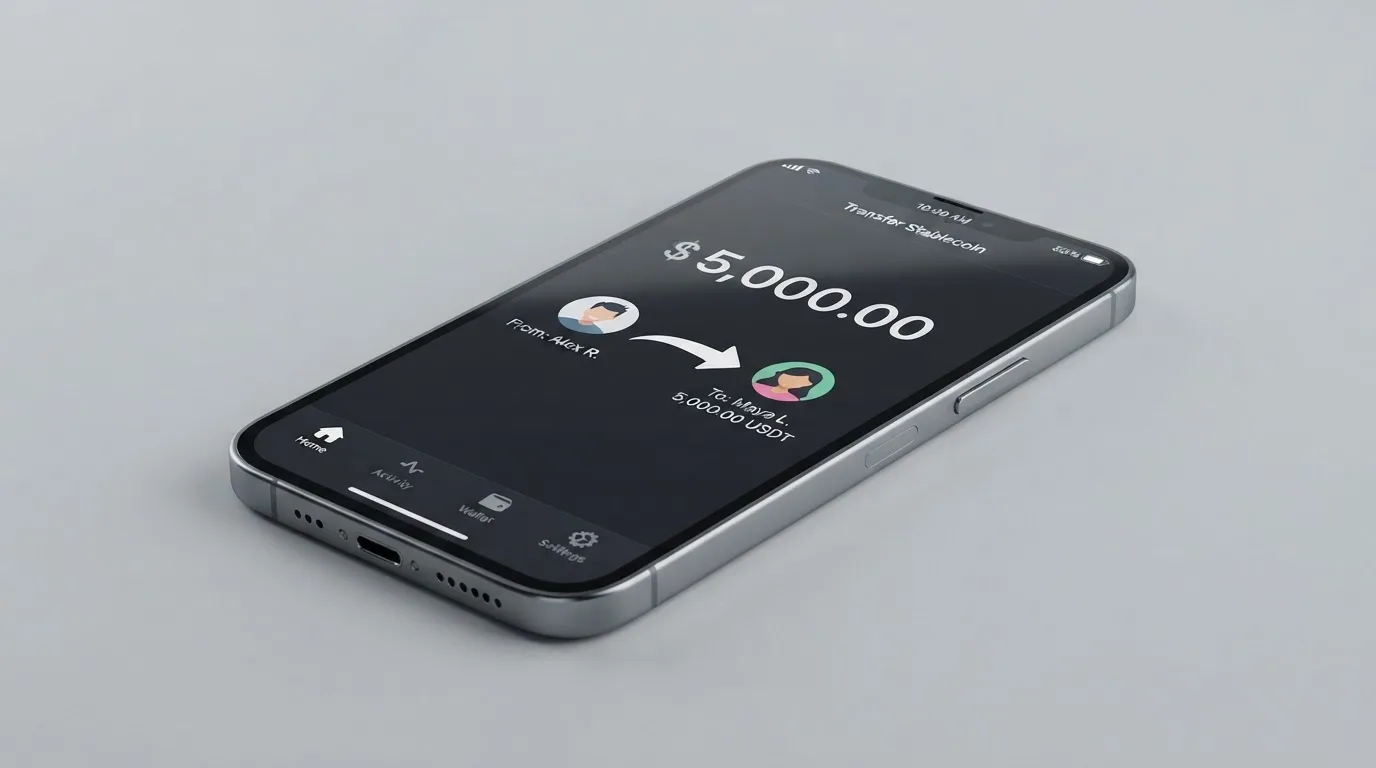
To use the card you first have to fund it, and the way the funding works is worth understanding before you look at options. The card spends from a linked crypto balance that stays in your own wallet. When you pay, Tonhub pre-funds the payment and debits your balance after the network and the merchant confirm. If your balance is insufficient, the payment is declined. That’s the non-custodial promise in action: your coins are yours, and the card simply spends them.
So topping up means getting crypto into the balance, and the card is picky about what it accepts. The page shows TON and USDC as the assets involved. A user review quoted on the page also mentions paying with USDT, so USDT may work in practice, though the page itself doesn’t list it as an official asset. Which coins exactly can fund the card isn’t fully enumerated on the page.
There’s a second route: bank transfers. The card offers both SEPA and SWIFT bank transfers for funding. That’s useful if you want to move fiat rather than crypto. But the minimum top-up amount and any fee charged on a fiat top-up are not stated — so again, you’d be finding out the terms as you go.
Two warnings about crypto top-ups in general, which apply here. First, blockchain transfers are irreversible: a deposit sent on a network the card doesn’t support, or to an address belonging to a different network, can be lost or need manual support recovery with no guarantee. Get the network right. Second, on-chain network fees for your deposit are charged by the blockchain, not by the card — so the amount that lands can be slightly less than the amount you send, and that’s normal, not a card fee. If you’re topping up with a stablecoin, be aware these are dollar-pegged but not always dollar-stable; TerraUSD famously collapsed and USDC briefly lost its peg during the 2023 banking crisis.
Paying with it every day
Day-to-day, the card is a virtual Visa Debit. You manage it through the Tonhub app: you add your wallet, then tap the Tonhub Card banner. That’s the whole operating model.
For mobile payments, the picture is partly official and partly not. Apple Pay is mentioned only inside a user review quoted on the page, and a separate, unofficial source (Forklog, November 2024) reports that both Apple Pay and Google Pay are supported. The card itself doesn’t confirm mobile wallet support in a way I’d call official. Google Pay support in particular isn’t stated by the card. So: promising, and probably true, but take it as unconfirmed until you see it in your own app.
What you won’t find stated: which merchant categories are blocked, whether there are cashback or rewards (they’re not stated), and what app platforms are supported or how the app is rated in the stores. Those omissions matter for daily use. Some issuers block certain merchant category codes — the four-digit codes that classify a business — by policy, most visibly gambling (MCC 7995), and the blocked list varies by issuer. Tonhub doesn’t publish its list, so you won’t know in advance whether a category you use will work.
One day-to-day mechanic worth internalising, because it works in your favour when things go wrong. Tonhub pre-funds a purchase and only debits your balance after the network and merchant confirm. The card states that refunds are issued only for legitimate, verified transactions, and that a failed or declined payment leaves your funds untouched. In practice that means a payment that doesn’t go through shouldn’t cost you. What the card does not state is how long chargebacks take, and given the complaints below, that silence is significant.
Finally, a merchant-side reality that isn’t the card’s fault but will affect you: a card issued in one country can look “foreign” to a shop in another. Merchants can look up the issuer country from the card’s BIN and apply extra scrutiny, and some decline prepaid or foreign-issued cards outright. In online payments, address-verification checks are largely a US/Canada/UK feature and often don’t work for foreign-issued cards, which can cause declines. Expect the occasional refusal that has nothing to do with your balance.
What can go wrong
The most important thing I can tell you is not theoretical. It’s a specific, documented complaint, and you should read it before you deposit anything.
On Trustpilot, the card carries a rating of 3.2 out of 5 — but from exactly one review. That single review, dated 18 February 2026, describes: two months to submit card chargeback disputes (filed in early December 2025, won in January 2026, and as of mid-February the money still had not been returned); slow, copy-paste support answers; and extra anti-money-laundering video-call ID checks despite having already verified. To be fair and precise: this is one person’s report, and one review is not a pattern. But when the single data point you have is this negative, it deserves weight rather than a shrug.
The structural reason those two months matter is general, not specific to Tonhub, but it’s worth stating. A chargeback is a refund ordered by the issuer, and it runs on the issuer’s timetable, not the card’s. And on a prepaid-style card, the protections you might expect from a bank debit card don’t automatically apply — in the US, debit reversal rights come from Regulation E, credit card rights from Regulation Z, and prepaid-card coverage varies and shouldn’t be assumed. So when a crypto card is really a prepaid balance behind a Visa Debit, “I have a Visa card” is not the same as “I have the statutory consumer protections of a bank account.” Keep that in mind.
Who is behind the card is the other structural unknown. The brand is Tonhub, with some references to “Holders,” the smart contracts were audited by Trail of Bits (a real and respected name, which is a point in the card’s favour), but the operating entity and the card issuer are not named on the page. That means when something goes wrong — a dispute, a freeze, an insolvency — the card doesn’t tell you which legal entity is responsible or which regulator stands behind it. This is common in the category and not unique to Tonhub, but it directly affects how much recourse you’d have.
On the security side the picture is much better, and I want to be fair about that. The card is non-custodial: funds stay in your own wallet and you keep the keys. Ledger hardware wallet support is there. Smart contracts are audited. You can set custom on-chain spending limits. Every transaction is monitored by anti-fraud and AML systems, and suspicious activity is blocked automatically. That is a strong list. The trade-off of self-custody is that responsibility is yours alone: if you lose your seed phrase — typically 12 to 24 words that anyone with them can use to spend your funds — there’s no support desk that can restore it, because crypto transfers are irreversible and the network can’t freeze or return money. Watch for clipboard-hijacking malware that swaps a copied address. In-app freeze and card insurance aren’t stated.
One more category-specific risk to hold in mind: card programmes do close. Visa and Mastercard don’t themselves issue crypto cards to consumers — they license issuers and can suspend a programme. FTX’s US debit card was wound down after Visa terminated its agreements in November 2022, and WaveCrest, a card issuer that supplied several crypto brands, was suspended by Visa in Europe in 2018, closing all its programmes. Closures typically mean a notice period, then loading and spending stop, then you’re asked to withdraw what’s left. That’s history, not a prediction for Tonhub — but it’s the reason to not treat a crypto card balance as a permanent account.
Finally, a regulatory horizon to keep one eye on. In the EU, the crypto side is governed by MiCA, which took legal effect in 2023, with its stablecoin and service-provider rules applying from 2024 and a transition period running until 1 July 2026. A payment card, separately, sits under e-money and payment-services law. Providers operating under old national rules could be required to obtain MiCA authorisation or wind down. I mention this not to alarm you but because your funds-in-a-crypto-card is exactly the kind of product this reorganisation touches, and it’s better to notice a service winding down than to be surprised by it.
What to take instead
If any of the above gives you pause — the undisclosed fees, the unnamed issuer, the complaint about disputes — there are alternatives worth looking at. I’ll compare the three I know against Tonhub’s 5.3.
| Alternative | Score | Card | Cost headline |
|---|---|---|---|
| Tonhub | 5.3 / 10 | Visa Debit, virtual | Undisclosed; unofficially 1.5% per transaction |
| BloFin Wallet Card | 6.9 / 10 | Visa Platinum | $0 activation/annual/issuance; spend “1% or lower” by tier |
| Decaf | 6.2 / 10 | Visa, virtual or physical | $5 virtual activation; no annual fee; no added FX fee |
| SafePal | 6.2 / 10 | Mastercard debit, virtual | No account fee; 1% Mastercard non-USD FX fee |
BloFin Wallet Card is the strongest of the alternatives on the numbers and the clearest on cost. Its activation, annual, issuance and dormancy fees are each $0.00, and there’s no cancellation fee. Its spend fee is “1% or lower” depending on a VIP tier that runs from 1.00% down to 0.00% as you climb, and it’s charged at the point of payment — so you know roughly what you’re paying and can reduce it by moving up tiers. You fund it with USDT and USDC on the Arbitrum and Base networks. Its trade-offs: it’s a Visa Platinum, and its eligibility list is not published on the card page (you pick your country in the app), though the starting data lists 35 countries including the US, Australia, Japan, the UAE, Brazil, Mexico, Malaysia and New Zealand; it says nothing about citizenship versus residence; and it has no cashback, instead reducing the spend rate itself. If the reason Tonhub worries you is that you can’t see a fee schedule, BloFin is the opposite problem — it publishes one.
Decaf is the most transparent about eligibility. It publishes an explicit not-issued-in list of countries — Belarus, China, North Korea, India, Iran, Iraq, Israel, Myanmar, Nepal, Russia, Syria, Turkey, Cuba, Ukraine, Venezuela, Vietnam, Nicaragua, Puerto Rico, Nigeria — and a list of restricted US states. That kind of upfront honesty is valuable in itself, though note it doesn’t clarify whether the rule keys off citizenship or residence, and Russia and Belarus are both on the list. On cost it’s clear too: a $5 virtual card worldwide, a physical card that’s $10 in the US or $90 elsewhere, and no annual or monthly fee. Its standout feature is FX: Decaf adds no fee of its own — “the FX is the one Visa offers” — so you pay the network’s rate, not a house mark-up. You can pay a Decaf payment link or account details by card, bank transfer or USDC, with the app running on Solana and Stellar. What’s missing is detail on which coins and networks top up the card itself.
SafePal is the option if you want self-custody with a Mastercard. It’s a virtual Mastercard debit, with spending limits given in euros, and eligibility is framed as “citizens of supported regions who live in supported areas” — though the regions list on its page was empty when I checked, so treat that as unverified. On cost: no account creation or management fees, but a 1% Mastercard FX fee on non-USD settlement, and refund processing costs 1 USD/EUR/CHF or 7 CNH; swaps include an unquantified spread, though its bank page advertises crypto top-up “as low as 0.4%” on the top tier. It funds from 40+ blockchains, converted to USDC or fiat, with transactions on Arbitrum. No cashback, but referral commissions of up to 40% of referred top-up fees.
Which of these is right for you depends on what you were optimising for with Tonhub. If it was non-custody plus a known price, BloFin or SafePal. If it was a clearly stated eligibility and a clean FX rate, Decaf. If it was specifically spending TON in the EU with a Visa Debit, nothing on this list replaces that — but you’d be trading a lot of transparency for it.
Who I would recommend it to
Let me finish where I started, with the score and the two groups I promised.
I would recommend Tonhub to: an EU resident, 18+, who already keeps meaningful TON or USDC in a self-custody wallet and has, through their own reading, accepted that the fee schedule, the limits, the issuing bank and the dispute timeline are all unpublished. For that person the non-custodial model — money stays in your wallet, you set your own on-chain spending limits, contracts audited by Trail of Bits — is a real and principled advantage, and it’s the kind of thing the big custodial exchanges will never offer you. Add in likely Apple Pay and Google Pay support and the everyday experience is probably fine.
I would not recommend it to: anyone whose first question is “what does it cost?” — you cannot answer that from the card’s own information, and the only number floating around is an unconfirmed 1.5%. I would not recommend it to someone who needs a physical card, an ATM, a named bank behind the card, or a reward scheme. And I would be cautious for anyone who has been burned by a slow dispute before: the single most informative complaint here is about a chargeback taking two months to submit and money not returned even after it was won. That’s one review, not a track record — but it’s the only track record available.
If that second group is you, go and read BloFin, Decaf or SafePal above. They publish more, and at least two of them publish their fees outright.
If you’re in the first group: the real homework isn’t on the card’s page. It’s in its smart contracts and in the Help Center at help.holders.io. Ask for the fee schedule, the daily and monthly limits, the card currency, the FX treatment, the dispute process and its typical duration, and who the issuer and operator actually are. Get answers before you load money you can’t afford to be stuck. That’s not distrust of the card — it’s just what the missing information on it obliges you to do.
Frequently asked questions
What is the Tonhub card?
The Tonhub card is a Visa Debit that spends directly from crypto you hold in your own wallet. It is non-custodial: your coins never leave your wallet, and the card debits them only once a purchase is confirmed. The version issued after identity verification is virtual, not physical. TON and USDC are the assets shown on its page; a user review also mentions paying with USDT.
How does the Tonhub card work?
When you pay, Tonhub pre-funds the purchase and then debits your balance after the network and the merchant confirm. If your balance is insufficient, the payment is declined, so the card can’t overdraw. You manage everything in the Tonhub app by adding your wallet and tapping the Tonhub Card banner. You can also set your own spending limits directly on-chain.
Is Tonhub a bank?
The card doesn’t say, and that’s the honest answer. The brand is Tonhub, with references to “Holders,” and its smart contracts were audited by Trail of Bits, but the page does not name the operating entity or the card issuer. So I can’t tell you which bank or licensed institution stands behind it. If that matters to you, ask in the Help Center before depositing.
Who owns Tonhub?
The public page doesn’t name a parent company or owner. It refers to the Tonhub brand and to “Holders,” and a Help Center is hosted at help.holders.io, but no legal entity is identified on the card’s own pages. That means there’s no clearly stated accountable party behind the card. Ask directly, and get the answer in writing, before you trust it with money.
Can I get the Tonhub card in my country?
Only if you live in the EU and you’re 18 or over — those are the two stated conditions. The “25+” figure on the page is a usage statistic, not an eligibility list, so don’t read it as “25 countries accept applicants.” The card doesn’t publish a country picker or clarify whether the test is residence or citizenship, so anyone outside the EU should assume it’s not available to them.
Does Tonhub require KYC?
Yes. Sign-up includes an identity verification step (“Verify Your identity”), and the virtual card is issued only after that verification is complete. The card doesn’t state which documents are needed, whether proof of address is required, how long verification takes, or why applications might be refused. Bring whatever identity document your jurisdiction expects to be asked for.
How do I top up the Tonhub card?
You need a balance before you can pay. You can fund with crypto — TON and USDC are shown on the page, and a user review mentions USDT — or by SEPA and SWIFT bank transfer. The minimum top-up and any fiat top-up fee aren’t stated. Blockchain transfers are irreversible, so send on a supported network to the right address, and remember on-chain gas is charged by the network, not the card.
What does it cost to use the Tonhub card?
The card doesn’t disclose its fees. It has a “Fees & Conditions” section, but no amounts are published there for issuance, monthly, conversion, FX or ATM use. The only figure anyone has is an unofficial 1.5% per transaction, reported by Forklog in November 2024 and echoed on dealroom — not confirmed by the card. Ask for the real schedule before you commit funds.
Is the Tonhub card safe and can I use Apple Pay?
On the security side it’s one of the stronger designs: non-custodial, keys stay with you, contracts audited by Trail of Bits, on-chain spending limits, and automatic blocking of suspicious activity. On mobile wallets, Apple Pay and Google Pay are reported by third parties and mentioned only in a user review — unconfirmed by the card. The bigger practical risk is the one review on Trustpilot: two months to file a dispute, money not returned after it was won.
Is Tonhub worth it, and where can I use it?
It depends entirely on what you want. If you hold TON or USDC in self-custody, live in the EU, and value keeping your keys above knowing the fee schedule, it may be worth it. If you want transparent fees, a named bank, a physical card, ATM access or fast dispute resolution, it isn’t — BloFin, Decaf and SafePal all publish more. Wherever you use it, some merchants decline foreign-issued or prepaid cards, so expect occasional refusals unrelated to your balance.
Highest-scored wallet cards – cryptocardbest.com
Content created by the «cryptocardbest.com» team