
Free virtual Visa, real limits: where the Tangem Pay card works and where it bites
 Available in US
The Tangem Pay card is a Visa you load with stablecoins or bank money and then spend like an ordinary payment card. The Basic plan is free, the virtual card arrives in minutes, and the USDC balance sits in a smart contract you control rather than on a custodian’s books. That combination is genuinely unusual. It is also, right now, a product with an unpublished country list, no named cashback payout currency, disputed ATM availability and a recurring complaint pattern around declined payments and identity checks. Six point nine out of ten is not a dismissal. It is the number I land on when the free tier is real and useful, and everything above and around it is still settling.
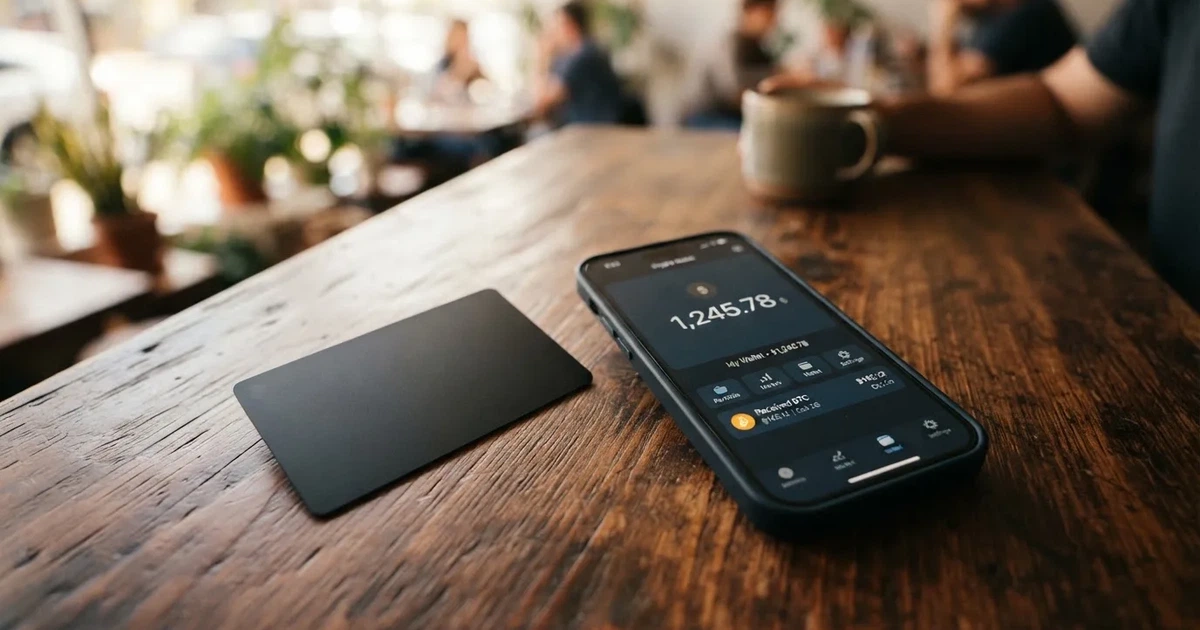
This review covers the conditions as they stand on October 28, 2026; fees, limits and country availability change, so check the app before you commit money.
| Criterion | Mark | Why |
|---|---|---|
| Who can get it | 7 / 10 | Live in the U.S. and selected countries in Latin America, APAC, the Middle East and Africa; the country list is not published, and the UK and EU are planned for 2026 |
| Cost | 7 / 10 | Basic is $0 a month, Plus is $29.99 a month; $0 per transaction, Visa exchange rate plus 1.5% FX, 4% at the ATM on Basic, plastic delivery $14.53 to $82.10 |
| Top-up options | 6 / 10 | Native USDC on Polygon from any wallet or an in-app swap, plus ACH/FedWire bank funding in some regions |
| Reliability and complaints | 7 / 10 | The card is issued by Third National, the programme is managed by Rain, the service is run by Paera LLC, Tangem is not regulated as a financial services provider; complaints about petrol-station declines and KYC lockouts |
| Everyday use | 7 / 10 | Basic is virtual, Plus is plastic, Apple Pay and Google Pay via the card details; ATM 4% on Basic and 2% on Plus; unofficial: cash withdrawal is not really available and plastic cards are not broadly shipped |
Who should care: you already keep a Tangem Wallet, you want a free virtual Visa for subscriptions and everyday spending, you are comfortable moving USDC on Polygon, and you live somewhere the app actually offers you the product.
Who should look elsewhere: you need cash from ATMs, you want a physical card in your hand next week, you want a bank you can call about a chargeback, you are in the UK or EU planning around this card, or you want a published, complete list of who can sign up.
Will they give you the card?
Short answer: if the app shows you the onboarding flow, yes — eligibility is decided by your country and region of residence, and the card’s public pages do not give you the full list. What is published is only that the card works at Visa-accepting merchants in over 150 countries. That is the acceptance footprint, not the signup footprint, and the two get mixed up constantly. You can pay in 150 countries; you can only open an account where the product is offered.
Stated coverage is the U.S. (not all states) plus selected countries in Latin America, APAC, the Middle East and Africa. Physical card shipping is excluded for about 20 countries, including Russia. The United Kingdom and the EU were announced as planned for 2026. The card’s readable pages do not publish the country list, so I cannot confirm one from the card itself — that is a gap in the public documentation, not something I can fill in.
What third-party sites report, and the card does not confirm: Argentina, Australia, the Bahamas, Barbados, Belize, Bolivia, Brazil, Chile, Colombia, Costa Rica, the Dominican Republic, Ecuador, El Salvador, Guatemala, Guyana, Honduras, Hong Kong, Jamaica, Japan, Mexico, New Zealand, Nicaragua, Panama, Paraguay, Peru, the Philippines, Singapore, South Africa, Trinidad and Tobago, the United Arab Emirates and Uruguay — 31 in all — with the UK, Andorra and the EU states treated as restricted. Read that as a pointer for where to look in the app, not as a guarantee of anything.
The Visa comes in three flavours: Platinum on Basic, Signature on Plus, Infinite on Prestige. Basic is virtual (the comparison table also lists a plastic option), Plus is plastic, Prestige is virtual, plastic and metal. The card currency is not stated on the page; the fee sheet points to a USD-denominated card, which I come back to below.
The first thing to check, before anything else, is unglamorous and decisive: open the app and see whether onboarding appears for your country of residence. That is the only test that matters.
How to get it
You need to pass identity verification. The card describes this as “ID verification and eligibility checks”, run through Sumsub: a government ID plus face verification, taking two minutes, performed after you confirm your country of residence. The check applies to the Pay account only, not to the wallet, so completing it does not turn the wallet into a regulated account.
What is not stated matters as much: which documents are accepted, whether proof of address is required, and the minimum age. The card’s pages say none of this. As a general rule, prepaid and debit cards are aimed at adults at 18 and over, and some issuers set higher limits — but that is a category habit, not a Tangem Pay term, and I would not plan around it.
Your transaction limits are not fixed blocks. The card says they depend on your “risk profile, verification level, and account history”, and those levels are not named publicly. This is the single most important thing to understand before you load money: your ceiling is assigned to you individually, and it can sit below the published numbers further down this page.
One more thing about the card you will actually hold: third-party reporting, which the card does not confirm, describes the live format as a virtual Visa only, with plastic not generally available, most virtual cards issued within five minutes and manual review taking up to 48 hours. Tangem press coverage puts the first physical batch at a cap of 5,000 cards. If a plastic card is the reason you are reading this, do not assume it is waiting for you.
Fees: what it really costs
Basic costs nothing a month. Plus is $29.99 a month. Prestige is “coming soon”, shown as a single $999 yearly payment. A first physical card issues at $0; an additional virtual card is $5, a replacement $1. A separate card issuance fee is not stated.
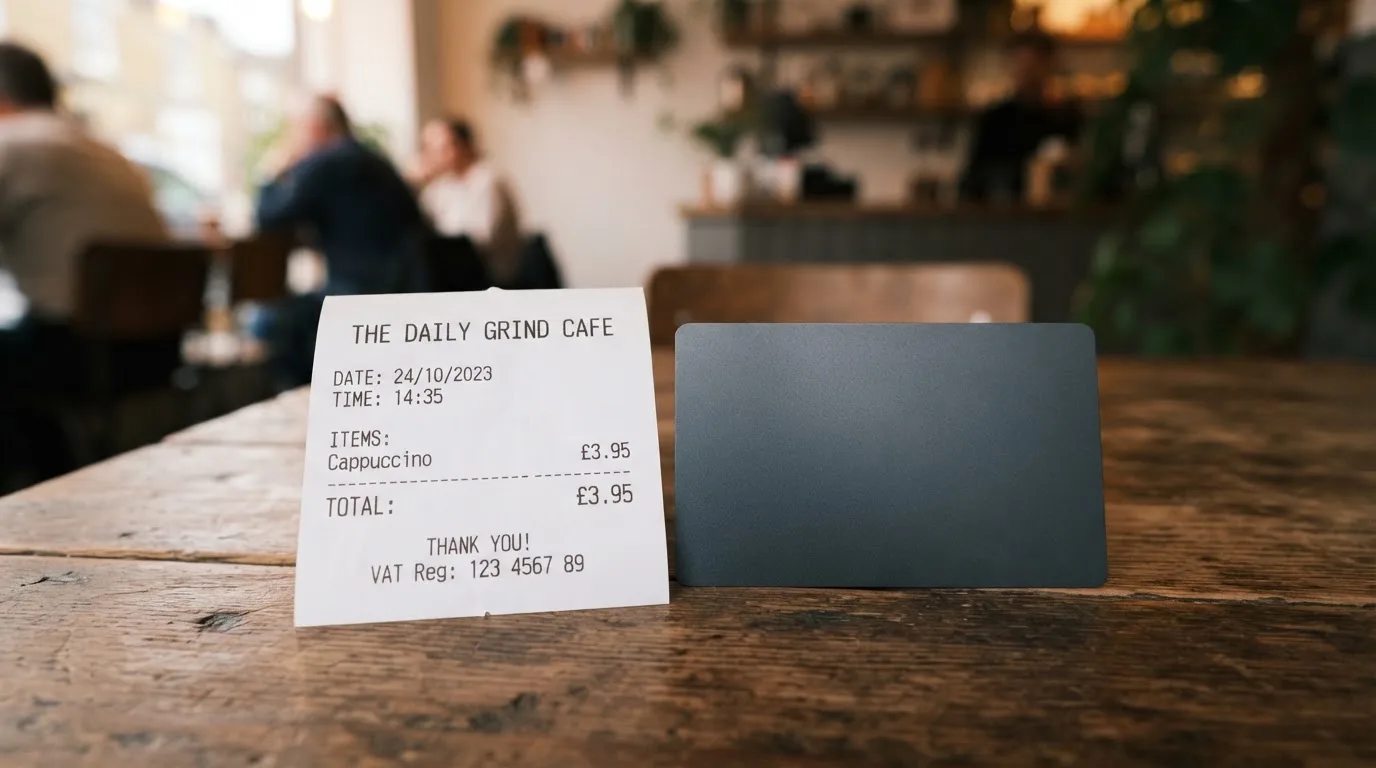
The number that surprises people is the transaction fee: $0. Where costs do appear, they are in three places — currency conversion, cash withdrawal, and the plastic.
| Fee or limit | Value |
|---|---|
| Basic plan | $0 a month |
| Plus plan | $29.99 a month |
| Prestige plan | coming soon, shown as $999 a year |
| First physical card issuing fee | $0 |
| Additional virtual card | $5 |
| Replacement card | $1 |
| Physical card delivery | $14.53 to $82.10 depending on address |
| Per-transaction fee | $0 |
| FX on non-USD purchases | Visa exchange rate plus 1.5% |
| ATM fee | 4% Basic, 2% Plus, 1% Prestige |
| On-chain withdrawal | $0 |
| Crypto conversion | USDC converted 1:1 to USD |
| Bank onramp via ACH | $1 Basic, $0 Plus |
| Bank onramp via FedWire | $10 Basic, $0 Plus |
| Bank offramp via ACH | $1 |
| Bank offramp via FedWire | $11 |
| Dispute fee | $30 |
| Daily spend limit | $10,000 Basic, $50,000 Plus, $100,000 Prestige |
| Daily POS limit per card | $10,000 Basic, $50,000 Plus |
| Annual limit per card | $10,000,000 |
| Cards per user | 3 Basic, 5 Plus, 10 Prestige |
| Transactions | 100 spending transactions per day, 1000 per month |
| ATM caps | maximum 3 withdrawals per 24 hours, $250 each |
| Cashback | 1% Basic, 2% Plus, 4% Prestige |
| Cashback cap | $100, $300, $1,000 a month |
| Monthly spend limit | not stated |
The FX line deserves a second look, because it is the fee you will actually pay most often if you travel or buy in a non-USD currency. The card is USD-denominated, purchases convert 1:1 to USD, and any non-USD transaction carries the Visa exchange rate plus 1.5%. The fee sheet is dated as applicable from 25 September 2026, though the document title reads differently — worth checking which version you are being shown. Multi-currency balances are not stated, which means there is no second currency to shelter the markup in.
Three ordinary payments, so this stops being abstract.
A $40 lunch in a country that charges in euros, on Basic. Visa’s exchange rate converts the euro amount, then 1.5% is added on top — roughly sixty cents on $40 — and the per-transaction fee stays at $0. That is the shape of the cost for everyday spending: small, constant, easy to forget.
$60 of groceries in the United States on Basic. No conversion, no per-transaction fee, $0. You also collect 1% cashback, capped at $100 a month — sixty cents on this basket, assuming the cashback is actually paid out and not merely displayed, since the payout currency is not stated.
$200 in cash at an ATM on Basic. The stated fee is 4%, so $8, on top of whatever the ATM operator charges and on top of FX if the cash is not in dollars. That is where Basic hurts: Plus is 2% and Prestige is advertised at 1%. And here is the practical wrinkle — third-party reporting, which the card does not confirm, says ATM withdrawals are effectively unavailable on Basic today, with higher tiers advertising ATM pricing that is not live. Treat the published percentages as something to verify at the machine, not a feature to budget around. A free allowance per withdrawal is not stated.
If you mostly spend rather than withdraw, the economics are friendly. If you live on cash, they are not.
One cost appears on no fee list because it is not charged by the card: the gas for an on-chain Polygon deposit goes to the network.
Top up: how money gets onto the card
Two routes, both simple in principle. The card’s own phrasing: “Stablecoins or directly from your bank account”. The detail lives in the fee sheet, and it is worth reading twice.
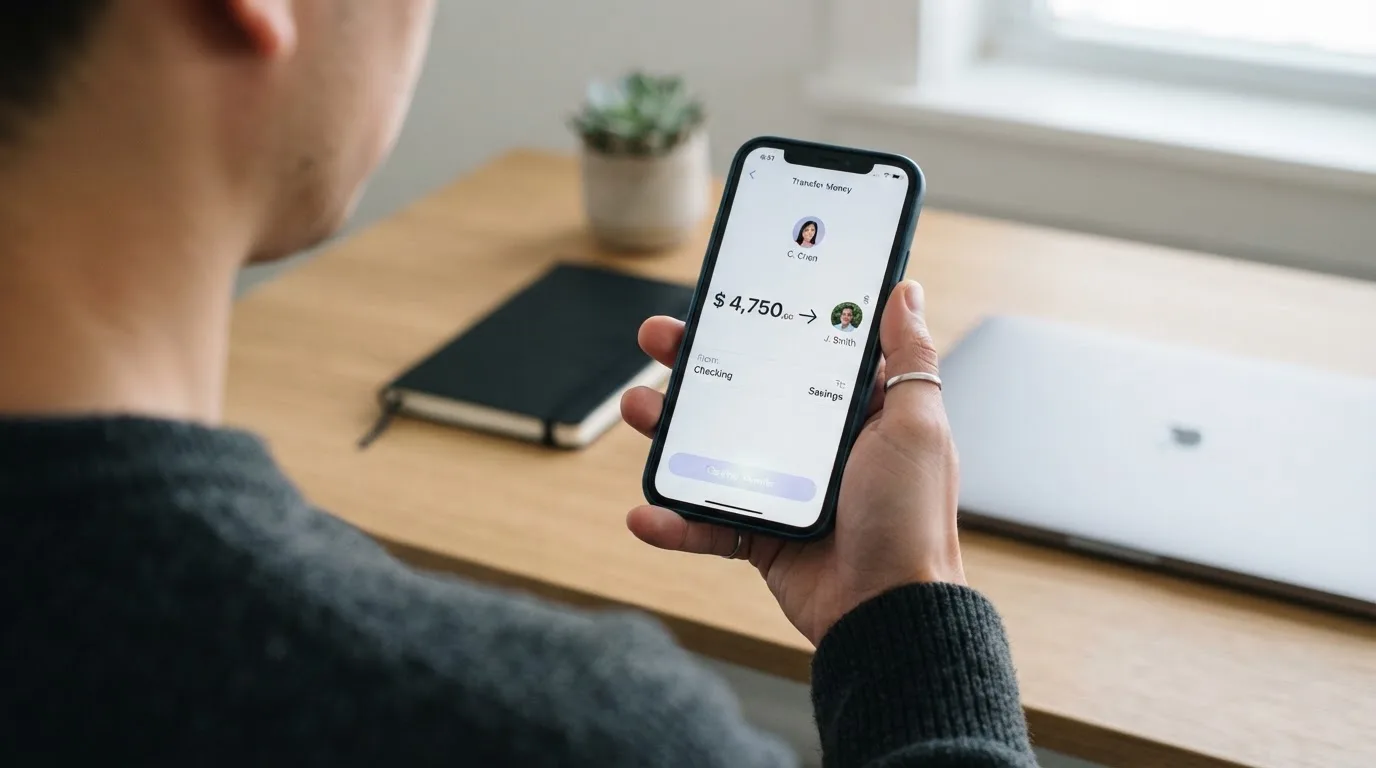
The crypto route is native USDC on the Polygon network, from any wallet that supports it, or swapped inside the app. Polygon gas is paid by you to the network. The minimum top-up is not stated.
The bank route is by account details, priced by rail and plan: ACH costs $1 on Basic and $0 on Plus; FedWire costs $11 on Basic in the onramp table and $0 on Plus. Availability varies by jurisdiction, so bank funding is not something to count on from outside the regions where it is switched on. The pages are not fully consistent — one line gives FedWire on Basic as $10, another as $11 — so assume the higher figure.
The behavioural point that matters most: the card spends only the loaded balance. This is a pre-loaded balance model, not a credit line against your crypto, so it cannot overdraw. That is a real comfort and also a constraint — an empty balance simply declines.
Getting money back out is cheaper than most people expect on-chain: withdrawal is $0, and the remaining balance stays in the account you control, in the smart contract, rather than being swept to a provider. A bank offramp costs $1 by ACH or $11 by FedWire. How to close the account, and where any residual balance goes at that point, is not stated.
If I were doing this, I would send a small USDC amount on Polygon first, confirm the card reflects it, and only then scale up. Irreversibility is not a Tangem Pay rule but a property of the rails: a transfer on a network the provider does not support, or to an address belonging to a different network, can be lost or need manual recovery with no guarantee.
Paying with it every day
Once loaded, you spend it like a prepaid card. The card can be added to Apple Pay or Google Pay using the card details in the app; the card’s own text does not spell out mobile wallet support, so treat that as a property of the setup rather than a headline feature. Blocked merchant categories include gambling, online casinos and liquor stores, with the full list not published — an issuer policy rather than a law, and one that varies by issuer.
The app is the Tangem app, on iOS 16.4 and later and on Android, and Pay needs version 5.35 or later. The App Store listing for the wallet shows 4.9 out of 5 from 25K ratings, but that rating covers the whole wallet app rather than Pay specifically — evidence about the software generally, not about this card.
Disputes cost $30, and no timeframe is stated for how long one takes or how it is settled.
Two limits worth memorising: the daily POS limit per card is $10,000 on Basic and $50,000 on Plus, and the annual per-card limit is $10,000,000. Limits can also differ per cardholder by risk profile and verification level, so the table below is a ceiling rather than a promise.
| Basic | Plus | Prestige | |
|---|---|---|---|
| Price | free | $29.99 a month | coming soon, $999 a year |
| Visa tier | Platinum | Signature | Infinite |
| Card form | virtual | plastic | virtual, plastic, metal |
| ATM fee | 4% | 2% | 1% |
| Cashback | 1% | 2% | 4% |
| Cashback cap | $100 a month | $300 a month | $1,000 a month |
| Cards per user | 3 | 5 | 10 |
| Extras | — | extended warranty, price protection, purchase protection, auto rental insurance, Visa Luxury Hotels, 2 lounge visits a year (coming soon) | 8 lounge visits a year, baggage delay and loss insurance |
A welcome bonus “up to $75” is marked coming soon, and a boosted 5%, 10% or 15% on the first $500 is also coming soon. Read both as roadmap, not offer.
What can go wrong
The identity check can still stop you later. Forum reports, summarised by secondary sources and not verified by the card, describe KYC lockouts after the card was already issued, and support asking for video proof during activation. A Sumsub check that clears at signup is not the same thing as an account that stays clear.
Payments decline where pre-auth holds are involved. The same reports describe declines at petrol pumps, hotels and restaurants, where the merchant places a hold larger than the purchase; one third-party source puts a fuel hold at $175. A declined authorisation can also leave a hold on your funds for days, typically up to seven. If petrol stations and hotels are where your money usually goes, this is the pattern to plan for rather than discover.
Some shops look twice, for structural reasons. A card number starts with an issuer identification number saying which institution and country issued it, and merchants can look that up and apply extra scrutiny when the issuer country differs from the billing address. Address verification, which compares the numeric parts of the billing address against issuer records, is mainly offered in the US, Canada and the UK and is generally unavailable for foreign-issued cards — a cause of declines on its own. Some merchants decline prepaid or foreign-issued cards as policy.
The provider chain is unusual. The card is issued by Third National; Rain, described as a Visa Principal Member, manages the programme; Paera LLC runs the service and, per third parties, handles onboarding, KYC and AML. Tangem AG is the wallet maker. Licences are not stated. The name on your statement may not be the name of the app you installed, which matters when you are trying to work out who to contact.
What Tangem explicitly does not do. The footer says Tangem does not hold, custody or control users’ assets, and is not regulated as a financial services provider. KYC runs through Sumsub, and Tangem does not see the identity data. Transaction monitoring is attributed to Elliptic. Whether funds are insured is not stated — and the self-custody design should not be read as a deposit guarantee.
Freezing is one-way at the payment layer. Freezing disconnects the card from Visa but does not touch the on-chain balance. Your money stays put; your card stops working.
The category has scar tissue. Visa terminated its global agreements with FTX in November 2022 and the FTX US debit card was wound down. WaveCrest, a Visa issuer that supplied several crypto card brands, was suspended by Visa in Europe in 2018, closing all its Visa programmes. Closures typically mean a notice period, then spending and loading stop, then you are asked to withdraw what remains. One 2026 closure reported by a single secondary source ended new loads on 8 July 2026 and spending on 8 August 2026; that is one unconfirmed source, included only to show the shape of the risk.
Support exists, and its scope is uneven. There is a help centre and stated 24/7 online support, plus community channels on Reddit, Telegram and Discord. The listed site languages are English, German, French, Spanish, Portuguese, Turkish, Chinese, Korean, Japanese and Ukrainian — Russian is not among them. Per third parties, Paera handles Pay account questions. Trustpilot for Tangem overall sits around 4 out of 5 from 876 reviews; that is the brand, and I found no Tangem Pay-specific Trustpilot page.
Taxes are yours to think about. Digital assets are treated as property for tax purposes in the US, so exchanging them for goods, services or dollars generally produces a taxable gain or loss, measured in local currency at fair market value on the date of the transaction. Each card payment funded from crypto can therefore be a separate disposal. I am not giving tax advice, and this is not an off-ramp that leaves no trace — check your own position with someone qualified.
What to take instead
Three alternatives came up in this review, all crypto-linked, all with their own gaps. None scores higher than Tangem Pay’s 6.9.
| Tangem Pay | BloFin Wallet Card | Decaf | SafePal | |
|---|---|---|---|---|
| Score | 6.9 / 10 | 6.9 / 10 | 6.2 / 10 | 6.2 / 10 |
| Card | Visa Platinum / Signature / Infinite | Visa Platinum; virtual or physical not stated | Visa, virtual or physical with tracked delivery | virtual Mastercard debit; physical not stated |
| Base cost | $0 / $29.99 a month | $0 activation, annual, issuance, dormancy | $5 virtual; $10 physical (US), $90 physical elsewhere; no annual fee | no account or management fees |
| Spend or FX | $0 per transaction; FX at Visa rate plus 1.5% | 1% or lower by VIP tier, 1.00% down to 0.00% | no added FX fee; Visa rate | 1% Mastercard non-USD settlement |
| Top-up | USDC on Polygon; ACH/FedWire in some regions | USDT and USDC on Arbitrum and Base | card, bank transfer or USDC; app on Solana and Stellar | 40+ blockchains to USDC or fiat; transactions on Arbitrum |
| Cashback | 1% / 2% / 4% | none, reduced spend rate instead | not stated | none |
BloFin Wallet Card matches Tangem Pay on score and beats it on transaction cost: activation, annual, issuance and dormancy fees are all $0.00, and the spend fee runs from 1.00% at VIP 0 down to 0.00% at VIP 5, charged at payment. Against that, there is no cashback at all — the page is blunt about “no waiting for cashback or rebates” — and its starting data lists 35 countries including the US, Australia, Japan, the UAE, Brazil, Mexico, Malaysia and New Zealand, without stating whether the test is citizenship or residence.
Decaf is the one to consider if you want no added FX markup; it says the FX rate is the one Visa offers. Its cost sits entirely in issuance: $5 for a virtual card worldwide, $10 for a physical card in the US and $90 elsewhere. It also publishes the most detailed restricted list in this comparison — Belarus, China, North Korea, India, Iran, Iraq, Israel, Myanmar, Nepal, Russia, Syria, Turkey, Cuba, Ukraine, Venezuela, Vietnam, Nicaragua, Puerto Rico and Nigeria, plus restricted U.S. states including Arizona, Delaware, Georgia, Idaho, Louisiana, Maryland, Montana, Ohio, Oregon, Rhode Island, Washington and Wisconsin. That is unusual transparency, even if the rule’s basis (citizenship or residence) is not stated.
SafePal has the strongest top-up breadth — 40+ blockchains, converted to USDC by default or to fiat, transactions on Arbitrum — and the weakest everyday economics: no cashback at all, a 1% Mastercard non-USD settlement fee, refund processing at 1 USD/EUR/CHF/7 CNH, and swaps that include an unquantified spread, with a top-tier crypto top-up quoted elsewhere “as low as 0.4%”. Its supported regions page came back empty when checked, which is not encouraging.
My shortlist logic: for spend-only use with USDC to hand, Tangem Pay Basic or BloFin if you would rather pay a percentage than think about crypto rails; for travel-heavy FX, Decaf; for topping up from many different chains, SafePal, accepting the fee spread.
Who I would recommend it to
I would recommend this card to three kinds of person. First, you already use the Tangem Wallet and want a free virtual Visa that spends the stablecoins already sitting there — for subscriptions, software, groceries, the ordinary friction of paying online. Second, you are comfortable sending USDC on Polygon and you understand that a wrong-network transfer has no undo button. Third, you treat this as one card among several, not as your only payment method, because your individual limits are assigned rather than published and your ATM access is uncertain.
I would not recommend it as your only card. I would not recommend it if you need cash regularly. I would not recommend it if you are in the UK or the EU and the announcement for 2026 has not yet turned into an offer in the app. And I would be cautious if your income is in a currency other than dollars, because the 1.5% on top of Visa’s rate is charged on every single conversion, with no multi-currency balance to soften it.
What would move the score up: a published country list, ATM withdrawals that actually work on Basic, a named cashback payout currency, and a card-not-stated answer for the monthly limit. What would move it down: any evidence of programme changes, or confirmation that plastic is staying limited. For now, six point nine, with the free tier doing the heavy lifting and everything else arriving slowly.
Frequently asked questions
What is the Tangem Pay card?
It is a Visa payment card linked to a non-custodial payment account inside the Tangem Wallet app. You load it with stablecoins or bank money and it spends only the loaded balance, like a prepaid card. The card is issued by Third National, the programme is managed by Rain, and the service is run by Paera LLC. It comes in Basic, Plus and Prestige tiers, with Basic free.
How does the Tangem Pay card work?
You top up a balance — native USDC on the Polygon network from any wallet, or via in-app swap, or by bank transfer where offered — and then spend that balance at Visa-accepting merchants in over 150 countries. USDC converts 1:1 to USD, the per-transaction fee is $0, and non-USD purchases carry the Visa exchange rate plus 1.5%. It is a pre-loaded balance model, so it cannot overdraw.
Is Tangem Pay a bank?
No. Tangem states in its footer that it does not hold, custody or control users’ assets, and is not regulated as a financial services provider. The card is issued by a bank partner, while Paera LLC operates the programme and handles onboarding, KYC and AML, with identity checks run by Sumsub. Tangem AG’s role is the wallet itself; licences are not stated on the card’s pages.
Who can get the card?
Eligibility is based on your country and region of residence, checked in the app during onboarding. The card states availability in the U.S. (not all states) and selected countries in Latin America, APAC, the Middle East and Africa, but does not publish the full country list. Third-party sites name about 31 countries as available, with the UK, Andorra and EU states restricted. The UK and EU were planned for 2026.
Does the Tangem Pay card require KYC?
Yes. You need identity verification: a government ID and face verification through Sumsub, taking two minutes, after confirming your country of residence. It applies to the Pay account only, not the wallet. Which documents, whether proof of address is needed, and the minimum age are not stated. Your transaction limits then depend on your risk profile, verification level and account history.
How much does the Tangem Pay card cost?
Basic is $0 a month and Plus is $29.99 a month; Prestige is coming soon, shown as a single $999 yearly payment. The per-transaction fee is $0, FX on non-USD purchases is the Visa exchange rate plus 1.5%, ATM fees are 4% on Basic, 2% on Plus and 1% on Prestige, and a first physical card issues free with delivery from $14.53 to $82.10 depending on address.
Can I use the Tangem Pay card at an ATM?
The card advertises ATM access with a 4% fee on Basic, 2% on Plus and 1% on Prestige, with a cap of three withdrawals per 24 hours and $250 each. Third-party reporting, which the card does not confirm, says ATM withdrawals are not actually available on Basic in practice and that higher tiers advertise pricing which is not live. Verify at the machine before you rely on it, and budget the fee either way.
How do I add the Tangem Pay card to Apple Wallet?
The card can be added to Apple Pay or Google Pay using the card details shown in the app, after the card is issued and the Pay feature is available in app version 5.35 or later. The mobile wallet replaces your card number with a device-specific number and uses a one-time code per payment. Note that blocked merchant categories exist — gambling, online casinos and liquor stores among them.
Is the Tangem Pay card safe?
Your USDC sits in a smart contract you control, and freezing the card disconnects it from Visa without touching the on-chain balance. Tangem states it does not custody or control assets. But the balance is not stated to be insured, limits are assigned per cardholder, and forum reports describe KYC lockouts and declined payments at petrol stations and hotels. Use it as one card among several, not your only one.
What are the main complaints?
The recurring themes, from secondary sources summarising forum reports and not verified by the card, are declines at petrol pumps, hotels and restaurants where pre-auth holds apply, KYC lockouts after issuance, and activation problems where support asked for video proof. Trustpilot for Tangem overall shows about 4 out of 5 from 876 reviews, which covers the brand rather than Pay specifically — no Tangem Pay-specific Trustpilot page was found.
Highest-scored wallet cards – cryptocardbest.com
Content created by the «cryptocardbest.com» team