
A virtual card that asks no questions, and tells you almost as little
 Available in US
KlienCard sells a virtual Mastercard that you can issue yourself in a couple of minutes with no identity check, no names, no addresses, no documents. That is the pitch, and for some people it is the entire reason to look. The problem is that the same company that promises total discretion publishes no legal entity, no issuer, no licence and no fee schedule. I went through everything the card states publicly, weighed it against three alternatives, and came away at 4.2 out of 10. In short: it suits a narrow kind of user, it does not suit almost anyone else, and the missing information is itself the finding.

The conditions described below are current as of October 28, 2026.
Verdict: 4.2 out of 10, and the missing information is most of the story
KlienCard scores 4.2 / 10. That is not a rounding error on an otherwise fine product — it is the product’s central problem. A card that asks you for nothing is not automatically a good deal; a card that asks you for nothing *and refuses to tell you who issued it* is a different proposition entirely. The single most important thing I learned is what is absent: no company behind the brand, no issuing bank, no licence number, no country list, no fee table, no limits, no card currency.
Let me be fair about who this does suit. If you are someone who genuinely cannot open an ordinary bank card — no fixed address, a banking system that excludes you, a documentation problem — then a card with no KYC is not a convenience, it is the whole point, and KlienCard’s virtual Mastercard does exactly that job. The card is issued in about 1–3 minutes and the balance you pay at signup sits on it immediately. If your entire plan is to pay for advertising or an online service, and you are comfortable holding a prepaid balance with a provider you cannot name, the product does one narrow thing and does it quickly.
Who it does not suit is a much longer list. Anyone who wants to spend from a bank balance with consumer protection, dispute handling and chargeback rights should not look here. Anyone whose money will sit on the card for months should not look here. Anyone who cares about exchange rates, because conversion and FX fees are not published anywhere. Anyone who wants to file a complaint against a named organisation. And anyone who was hoping to avoid a bank’s rules, but who is subject to the same anti-money-laundering law as everyone else: a provider with no published licensing is not a way around sanctions screening, it is a way of not knowing whether screening happens at all.
| Criterion | Mark | Why |
|---|---|---|
| Who can get it | 9 / 10 | Valid in 190+ countries, no country list or restrictions published |
| Cost | 1 / 10 | $11.5 issuance, non-refundable base fee, top-up fees reportedly around 22% |
| Top-up options | 5 / 10 | First issue in USDC on Polygon, then USDT and BTC, bank transfer via portal |
| Reliability and complaints | 3 / 10 | No legal entity, issuer or licence published; complaints about high fees |
| Everyday use | 2 / 10 | Virtual Mastercard only, no app, no Apple Pay or Google Pay, no ATM |
| Total | 4.2 / 10 | Wide reach and no KYC, offset by opaque costs and no accountability |
Will they give you the card?
Yes, that is the strong part. KlienCard states the card is valid in 190+ countries and publishes no country list and no restrictions. That is the widest reach of anything I looked at, and it is why the “who can get it” criterion scores 9 out of 10. There is no eligibility check to fail, no country dropdown, no exclusion for sanctioned or high-risk jurisdictions that I could find on the public pages.
The card itself is a virtual Mastercard. The FAQ also refers to “Virtual Visa and Mastercards”, and the terms describe it as a “Virtual Credit Card (VCC)” — the naming is not consistent, which is worth noticing on its own. There is no physical card option. The card currency is not stated anywhere on the public pages, so I cannot tell you what happens to a payment priced in a currency other than dollars, only that the card does not declare one.
One line in the terms is worth reading carefully. The cards are described as “intended solely for lawful online purchases and digital advertising campaigns”. That is a narrow statement of purpose. It tells you the provider’s own expectation is online advertising spend, not everyday shopping, and it is the closest thing to a purpose restriction I could find.
For someone in the reader’s position — anywhere in the world, without easy access to a normal bank card — the practical answer is that a card will be issued to you. The harder question, which I take up below, is whether you want a card that is that easy to obtain.
How to get it
The process is short, and that is genuinely its main convenience. Registration happens at the web dashboard. The site describes itself as “No KYC – Fully Anonymous”, and its privacy policy states that it does not collect names, addresses or government ID — only an email address is required. There are no identity-check levels because there is no identity check; the levels question does not apply.
After registering, you pay for the first issue in USDC on the Polygon network. Then the card appears in about 1–3 minutes. There is no app: everything happens in a web dashboard, and support is a Telegram account and an email address.
So the honest summary of signup is: create an account with an email, send crypto to a Polygon address, and receive card details. That is faster than any bank application I have used, and it is also the whole process. There is nothing to check afterwards, because there was nothing to check.
What it really costs: Fees
The costs are the worst part of this card, and the reason “Cost” scored 1 out of 10. The card charges “$11.5 Fee ($5 Card Balance)” — so of the $11.5, $5 is loaded onto the card and the rest is the fee. Crucially, the base card creation fee is non-refundable once the card is generated, and there is no refund of that base fee after delivery. A monthly fee is not stated. So you pay roughly $6.5 in non-refundable cost to receive $5 of spendable balance, before any transaction fee exists.

| Fee or limit | What KlienCard states |
|---|---|
| Issuance | $11.5, of which $5 is card balance; base creation fee non-refundable |
| Monthly fee | not stated |
| Conversion / top-up fee | not listed on the site |
| FX fee | not listed on the site |
| ATM fee | not stated; virtual card only, no ATM |
| Daily limit | not stated |
| Monthly limit | not stated |
| Card currency | not stated |
| Refund of base fee | none after delivery |
Everything else is “not stated”. Conversion and FX fees are not on the site. Limits are not published. The card currency is not declared. I want to be plain about what this means for you: you cannot calculate what a KlienCard payment costs before you make it, because the two numbers that determine the cost — the conversion rate and the FX fee — are not disclosed.
That gap has real consequences. Users have reported a fee of around 22% on top-up, and when the company was asked about it, the reply was that the fee depends on the payment gateway. An unofficial figure circulating on Trustpilot puts the deposit charge at roughly 10–15% depending on the gateway. Neither number is confirmed by KlienCard’s own pages; both come from third-party reports and the company’s reply there. But the direction is clear: top-ups are expensive, and the exact cost is determined by infrastructure the provider chooses and does not name.
There is also the network fee, which is separate and outside the provider’s control. On-chain gas or bandwidth for your deposit is charged by the blockchain, not by KlienCard. Sending USDT on Tron, for example, pays through bandwidth and energy and often burns TRX; sending on Ethereum requires ETH in the wallet for gas. That is a category fact, not a KlienCard fee, but it lands in your wallet the same week the money does.
Three everyday payments, and which fees apply. Take a subscription, an advertising platform and a foreign shop.
- A $50 subscription in dollars. The $5 card balance plus your top-up covers it. What you lose is the unlisted conversion or top-up fee and the non-refundable issuance, which together can exceed what the payment itself costs. You cannot see the fee beforehand.
- A $30 advertising campaign. Same arithmetic, but the terms say this is the intended use, so at least the transaction itself is in scope. The top-up fee still applies, and at a reported 22% it would dominate the cost of a small spend.
- A €40 payment from a euro shop. Here the missing card currency and the missing FX fee bite hardest. The card declares no currency, so what the shop is charged and what it costs you in euros depends on undisclosed conversion terms. If the issuer country on the BIN differs from the shop’s expectations of your billing address, some merchants also apply extra scrutiny or decline prepaid and foreign cards — another reason the same payment can fail at one shop and clear at another.
The pattern across all three is the same: the visible part of the price is $11.5, and the invisible part is where the money actually goes.
How to Top up the card
Topping up is where the cost hides, so this is the section to read twice. The first card issue must be paid in USDC on the Polygon network — not Ethereum, not Tron, the Polygon network specifically. After activation you can top up with USDT and BTC. The FAQ also mentions bank transfer reloads through the portal for fiat.
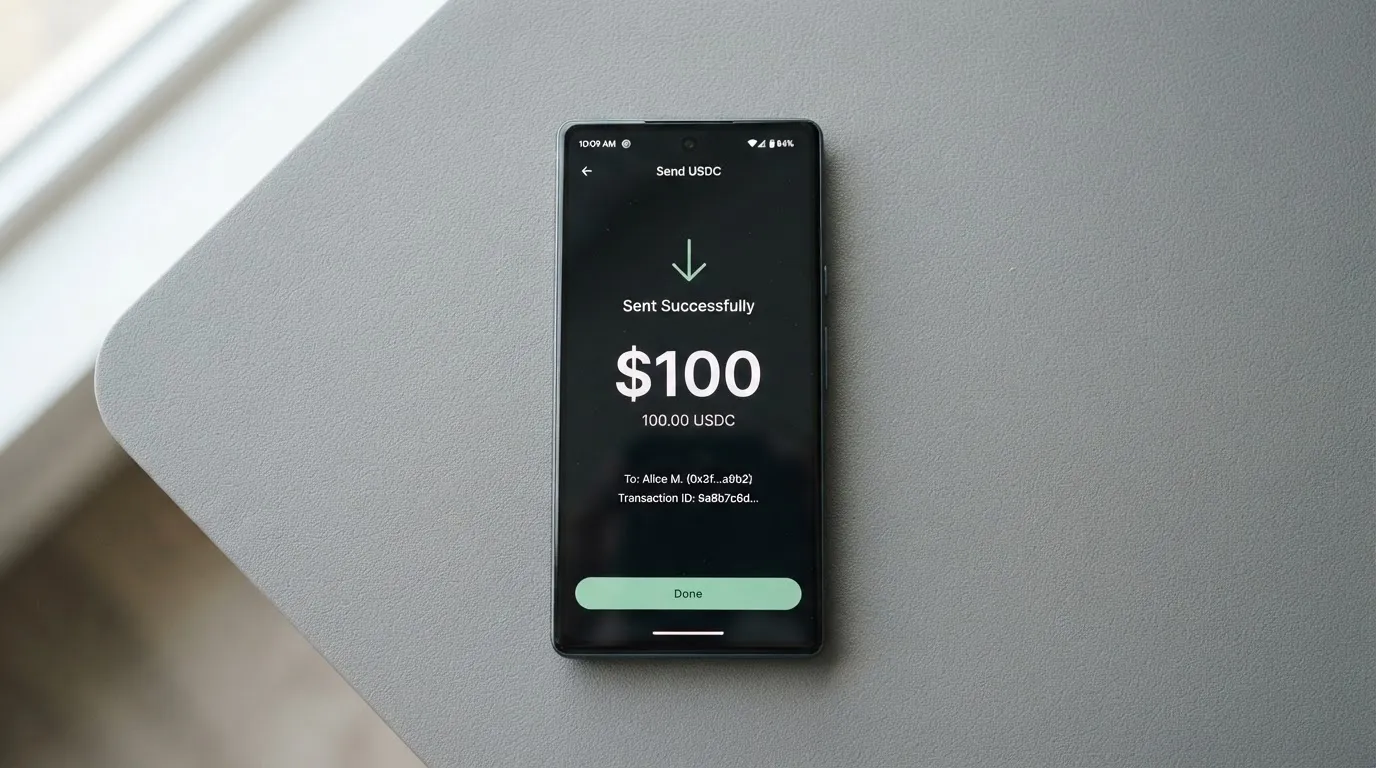
The details that matter: fees and minimums for these top-ups are not listed. The bank transfer route’s fees are not stated either. So every method is available in principle and none is priced in public. Two of the three require you to send crypto on a specific network, and blockchain transfers are irreversible — a deposit sent on a network the provider does not support, or to an address belonging to a different network, can be lost or need manual recovery with no guarantee. Getting the network wrong is the single most common irreversible mistake people make with cards like this, and KlienCard gives you one supported network for the first payment with no margin for error.
One more thing you should know before you try to get money back: how to withdraw is not stated, and the base creation fee is not refunded after delivery. There is no published withdrawal route and no published refund. Whatever balance you cannot spend, you may not be able to retrieve, and I cannot tell you the terms because there are none published.
Note also that USDT and USDC are dollar-pegged stablecoins, and stablecoins can and do move away from the dollar. USDC briefly lost its peg during the US banking crisis in March 2023; TerraUSD collapsed outright in May 2022. A card funded in stablecoins inherits that risk. And a card funded in stablecoins is also not, despite the marketing, censorship-proof: Tether states it disables tokens in wallets on the OFAC sanctions list and has frozen funds tied to illicit activity. So no-KYC here is not the same as unmonitored.
Paying with it every day
This is where the card is weakest in practice, and it scored 2 out of 10 for everyday use. It is virtual only — there is no physical card, no ATM, and no cash withdrawal of any kind. The FAQ promises delivery of the virtual card in less than three minutes, usually 1–3 minutes, so the one thing it is good at is being immediately available online.
Beyond that, the practical picture is thin. Apple Pay and Google Pay are not named in any of the published information, so I cannot tell you the card can be added to a phone wallet, and you should assume you would be typing the card number into every checkout by hand. There is no app — the web dashboard is the only interface. The card currency is not stated, so multi-currency shopping has no documented basis. Rewards or cashback are not stated. Dispute handling is not stated: there is a refund policy page, but only summarised on the site, so if a merchant takes your money and does not deliver, the published basis for arguing is thin.
The one security feature that is described is 3D Secure, with one-time codes sent to the dashboard, by email or by SMS. That is real, and it is the standard cardholder-verification step for online payments. Whether it works depends on the merchant’s checkout supporting it, and its value to you is complicated by the fact that under 3-D Secure the liability for a fraudulent online payment can shift onto the cardholder’s bank — and, per its critics, onto you.
Where can you use it? The card says 190+ countries, which sounds like everywhere. In practice a virtual prepaid card is most reliable for online subscriptions, digital services and advertising platforms, and least reliable anywhere that wants a physical card, a cash payment or a rich set of local payment methods. Because merchants can look up the issuing institution and country behind the card number, a card issued in one country can read as “foreign” to a shop in another, and some merchants decline prepaid or foreign cards for exactly that reason. You should not read “190+ countries” as “accepted everywhere without friction”.
What can go wrong
The most serious risk is the one that cannot be measured: you do not know who you are dealing with. KlienCard publishes no legal entity, no issuer and no licences. The brand is KlienCard; the login domain is debitcard.pw. A brand name and a login domain are not a regulated institution. If something goes wrong — a frozen balance, a disappearing service, a dispute — there is no named company in this review’s sources that you could point to as responsible.
This matters more than it might seem, because of how the industry is built. A payment card involves several parties: the network (Visa or Mastercard) routes the payments and sets the rules, an issuer licensed under that network holds the card programme, and the crypto brand is often only a front end or programme manager. Neither Visa nor Mastercard issues crypto cards to consumers directly — they license issuers, and they can suspend programmes. Visa terminated its global agreements with FTX on 13 November 2022, and the FTX US debit card was wound down by its issuer. WaveCrest, a Visa issuer that supplied crypto card brands, was suspended by Visa in Europe in 2018, closing every WaveCrest-issued Visa programme. Those closures are the standard failure mode in this category: the brand vanishes, and the user is left holding a balance with a company whose licence status you could never check in the first place.
The card is custodial and prepaid. Your balance sits with the provider. If the provider fails, your funds are exposed to counterparty and hack risk — the same risk that produced Mt. Gox (about US$350 million reported stolen, 2011–2014), Coincheck (about US$400 million, 2018) and Ronin Network (US$625 million, 2022). There is also no self-custody option here: no seed phrase, no wallet you control, no recourse if the provider’s records and yours disagree.
On complaints: there are no official incidents, but the user record is thin and consistently negative. On Trustpilot the card shows 4.0 out of 5 from 4 reviews, with 0 reviews in the last 12 months (read 2026-10-21). The specific reports are a user noting fees were expensive in September 2021, and a user reporting deposit and card-load fees of about 22% in March 2022, with the company replying that fees vary by payment gateway. The company said on Trustpilot that roughly 10–15% is charged at deposit depending on the gateway — an unofficial figure reported via Trustpilot in 2026, not confirmed by the card’s own pages. Four reviews is not a body of evidence either way; what it does show is that every substantive complaint is about cost, and none of it is recent, so the picture is stale rather than improving.
On the security claims: the site says “100% Secure” without detail. I would treat that as a marketing line rather than a description of anything. The disclosed mechanisms are 3D Secure OTP and a custodial prepaid balance; that is not nothing, but it is not a security posture, and no safeguards such as app-based two-factor authentication, instant card freeze or spending limits are described. Support is a Telegram account, @kliencard, and [email protected]; the languages it covers and its hours are not stated.
And the withdrawal asymmetry is worth repeating, because it is where anonymous prepaid cards are weakest: your money goes in by irreversible blockchain transfer or bank transfer, and the way back out is not stated at all.
What to take instead
If the reason you are here is “no KYC”, you are not the only option, and the alternatives publish considerably more. Here is how the three I checked compare, on their own stated terms.
| KlienCard | Cardex | TakeCard | OkiCard | |
|---|---|---|---|---|
| Score | 4.2 / 10 | 5.6 / 10 | 5.5 / 10 | 6.0 / 10 |
| Reach | 190+ countries, no list | 200+ countries, no list | Physical Bolivia only; others not listed | 150+ (some pages 200+) |
| Card type | Virtual Mastercard | Virtual and physical, on VERVE, VISA, Mastercard, UnionPay | Virtual; physical in Bolivia; Visa; USD 1:1 | Virtual; physical mentioned |
| Issuance | $11.5 ($5 balance) | not stated | $5 virtual; $20 + $20 shipping in Bolivia | $0 / $15 — pages disagree |
| Fees | Not listed; ~22% reported at top-up | Conversion rate claimed, % not stated | 1% per purchase | 3% load fee, 0% USD transaction fee |
| Top-up | USDC on Polygon, then USDT and BTC | USDT, USDC, BTC | Takenos balance; bank transfer | USDT on BSC, Ethereum, Tron, Solana |
Cardex (5.6 / 10) has the widest reach after KlienCard, “one crypto card, 200+ countries”, again with no list. It is a debit crypto card across four networks including UnionPay, with virtual and physical cards. Its pricing is its weak point: costs are not stated, and while the site advertises an “AI-Powered Conversion Rate” that scans exchange rates and picks the best one, no fee percentage is published. Its App Store listing is Naira-focused.
TakeCard (5.5 / 10) is the clearest about who it serves: the physical card is “available only to Bolivian users for now”, though the Takenos wallet is said to receive payments “from any country”. It is the only one of the four that names a flat transaction fee — 1% commission per purchase — and it pays USD 1:1 with no currency adjustment. Pricing is $5 for the virtual card, $20 issuance plus $20 shipping for the physical Bolivia version, though another page from the same help centre says $10, which is a conflict in their own materials. Its virtual card is issued in the United States and is Visa.
OkiCard (6.0 / 10) is the highest-scoring of the group and the most transparent on cost: a 3% load fee, 0% transaction fee on USD, and it says there are “no hidden exchange spreads”. Its reach is “150+ countries” (some pages say “200+”), with “no geo-blocking based on your passport”, though users must confirm they are not in a sanctioned jurisdiction — a real and sensible check that KlienCard does not visibly perform. Its pricing pages disagree with each other ($0 issuance and $0 monthly on one, $15 starting for the virtual card on another, with the FAQ mentioning a one-time fee). It supports USDT on BSC, Ethereum, Tron and Solana; USDC is “soon”.
The pattern across all four: every one of these cards runs on a custodial prepaid balance, none publishes a card issuer, and none publishes a full fee schedule. OkiCard comes closest on transparency, TakeCard on flat fees. KlienCard is the cheapest to obtain in the sense of fastest, and the most expensive to understand.
If your actual problem is that you cannot open a bank card, the more durable route is usually to fix that rather than to route around it — an e-money account in your jurisdiction, a regulated crypto card that publishes its licence, or a mainstream bank’s card with the consumer protections that come attached. If none of those are open to you, then the honest comparison is between the four cards above on the three numbers that matter: what the top-up costs, what the transaction costs, and who is responsible when it goes wrong.
Who I would recommend it to
I would recommend KlienCard to exactly one kind of person: someone who cannot get an ordinary card at all, who has a specific online payment to make this week, who will spend the balance rather than store it, and who treats the $11.5 plus the reported top-up fee as the price of a one-off convenience rather than the start of a banking relationship.
I would not recommend it to anyone planning to hold a balance, spend regularly, travel, dispute a transaction, or file a complaint. I would not recommend it to anyone who is avoiding their own country’s rules on purpose — a provider that publishes no licence is not an exemption from them, and in most jurisdictions you remain subject to the same anti-money-laundering law whether or not the card asks for your documents. And I would be careful with the word “anonymous”: the card does not ask for your name, which is not the same as being untraceable, and I would not describe any custodial crypto card as untraceable.
Before you decide, check three things in this order. First, the top-up cost, which is the number that will decide whether this is cheap or expensive for you — it is not published, so ask support directly and get the answer in writing. Second, what happens to your balance, because withdrawal is not stated and the issuance fee is not refunded. Third, who the issuer is, because until KlienCard names a legal entity and a licence, you are trusting a brand and a login domain rather than a regulated institution. If any of those three answers is unsatisfying, one of the alternatives above will at least give you a number to work with.
Frequently asked questions
What is KlienCard?
KlienCard is a prepaid virtual Mastercard sold as a crypto card. You pay for the first issue in USDC on the Polygon network and receive card details in about one to three minutes, with no physical card and no app. It is aimed at online purchases and digital advertising. The card states it is valid in 190+ countries but publishes no country list.
Does KlienCard require KYC?
No. KlienCard advertises itself as “No KYC – Fully Anonymous”, and its privacy policy says it does not collect names, addresses or government ID — only an email address is needed. That is genuinely different from most cards, where identity checks are mandatory under anti-money-laundering law. It does not make the card unregulated; it means you have fewer details about who issued it.
Who owns KlienCard?
The public pages do not say. KlienCard publishes no legal entity, no card issuer and no licence; the brand is KlienCard and the login domain is debitcard.pw. I could not find a named company responsible for the card programme anywhere on its public materials, which is the single biggest gap in this review.
How much does KlienCard cost?
Issuance is “$11.5 Fee ($5 Card Balance)”, and the base card creation fee is non-refundable once the card is generated. A monthly fee is not stated, and conversion and FX fees are not listed at all. Users report top-up and deposit fees of around 22%, with the company saying fees vary by gateway.
Can I withdraw money from KlienCard?
The public pages do not say how withdrawal works, so I cannot tell you the terms or whether it is possible. What is stated is that there is no refund of the base card creation fee after delivery. Combined with irreversible blockchain deposits, that asymmetry is the thing to think hardest about before loading funds.
Can I add KlienCard to Apple Pay or Google Pay?
Apple Pay and Google Pay are not named in any of KlienCard’s published information, so I cannot confirm the card can be added to either wallet. Plan on typing the card details into each checkout. There is also no physical card and no ATM, so this is an online-only card.
Is KlienCard safe?
There is no published issuer or licence to check against a regulator, and the site claims “100% Secure” without any detail behind it. The card is custodial and prepaid, so your balance sits with a provider whose corporate identity is not published. That does not make it unsafe by definition, but it is not a card you can evaluate the way you would evaluate a regulated one.
How do I top up KlienCard?
The first card issue must be paid in USDC on the Polygon network specifically. After activation you can top up with USDT and BTC, and the FAQ mentions bank transfer reloads through the portal. Fees and minimums are not listed for any of these methods. Sending on the wrong network is irreversible and can lose the funds.
Which countries can I use KlienCard in?
KlienCard states the card is valid in 190+ countries and publishes no country list and no restrictions, so there is nothing to check your country against. The narrower practical limit is what the card actually works for: virtual-only, no app, no card currency stated, best suited to online subscriptions and digital advertising rather than physical shops or cash.
Is KlienCard worth it?
For a one-off online payment when no ordinary card is available to you, the $11.5 plus an unlisted top-up fee may be worth it. For regular spending, holding a balance, or anything where you might need a refund or a dispute, it is not: the missing issuer, missing withdrawal terms and missing fee schedule make it impossible to price the card properly before you use it.
Highest-scored virtual cards – cryptocardbest.com
Content created by the «cryptocardbest.com» team