
FlexCard: cheap virtual cards, thin paperwork, and an unnamed company behind them
 Available in US
FlexCard is a virtual card aimed at people who spend crypto the way other people spend a bank balance — mostly on advertising platforms and software subscriptions, in small amounts, from anywhere. On those terms it does something useful: registration is quick, you can hold cards in USD, EUR and GBP, and you can load the balance with USDT or USDC. The score I have given it, 5.1 out of 10, is not a verdict on whether the card works. It is a verdict on how much you can find out before you rely on it.

The short version is this. The service is excellent at telling you how to load money and very quiet about who is behind it. No legal entity, no registered address, no named issuer, no published list of countries you can or cannot register from, and no stated verification policy beyond a clause saying it does not verify your data unless the law or the service of your account requires it. The terms themselves are unusually detailed about some things — they spell out which networks you can deposit on, and what happens if you send the wrong asset. They are notably thin on others. For a card that holds your money between loading and spending, that is an uncomfortable balance.
Conditions are current as of October 28, 2026.
The score, criterion by criterion
| Criterion | Mark | Why |
|---|---|---|
| Who can get it | 7 / 10 | No list of permitted or excluded countries; the terms only cover prohibited advertising topics |
| Cost | 3 / 10 | Issue from USD 2.5 (terms say 2-4 USD/EUR), 10 free ADS cards at registration, but top-up commission from 3.5% |
| Top-up options | 8 / 10 | USDT (TRC20), USDT (ERC20), USDC (ERC20) and bank transfer in EUR and USD |
| Reliability and complaints | 3 / 10 | No legal entity, address or issuer named; Trustpilot 4.2 from 51 reviews, with reports of accounts blocked without warning and support going quiet |
| Everyday use | 5 / 10 | Virtual cards in USD, EUR and GBP only, ATM not described; unofficially, Google Pay and Apple Pay can be added |
| Total | 5.1 / 10 | Good at loading money, thin on who you are trusting with it |
Two of those marks explain the rest of this review. Cost scores badly not because the card is expensive — issue is nearly free — but because the top-up commission starts at 3.5% and everything else about the pricing is either variable or absent. Reliability scores badly for reasons that no marketing page can fix: when you cannot identify the company, the complaints have nowhere to go.
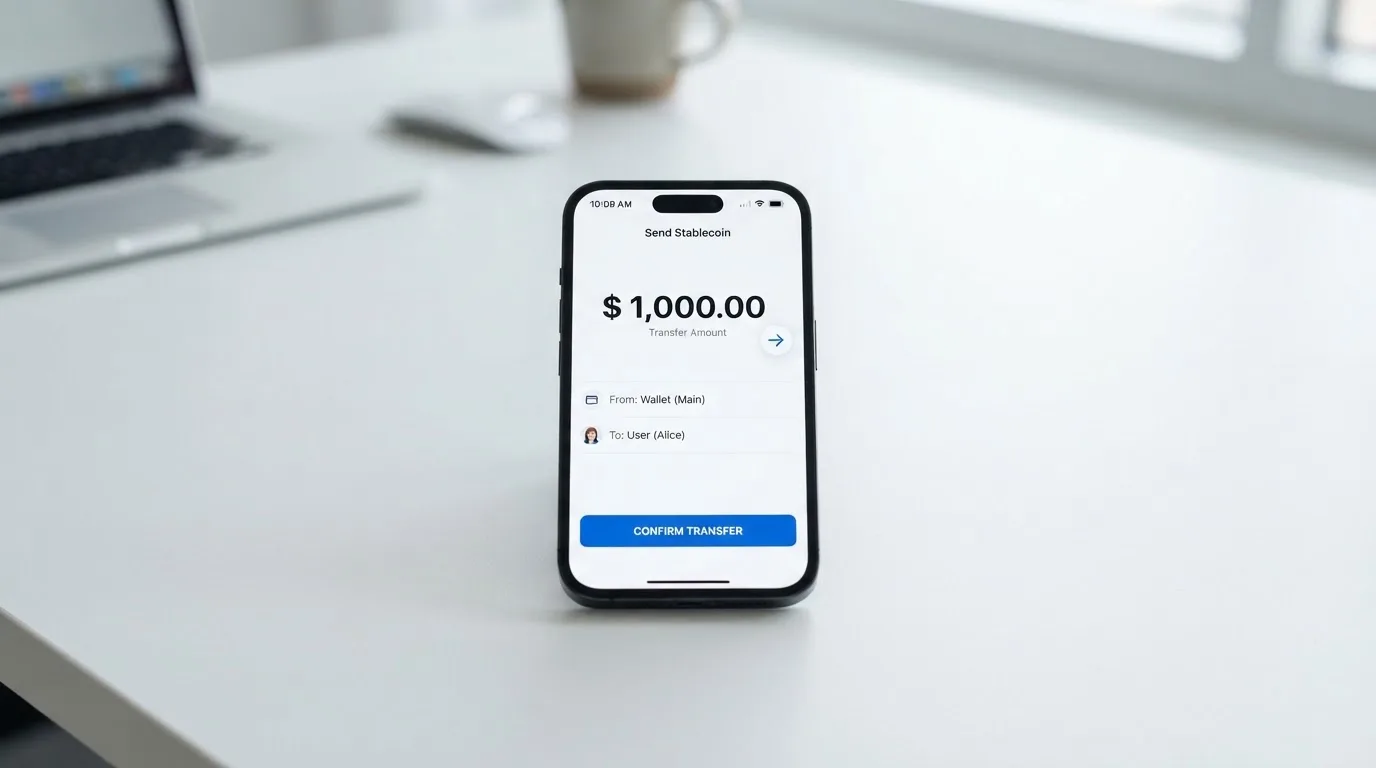
So who is this for? Someone paying for ads and SaaS who already lives in crypto, who values a low-friction card over a large banking app, and who keeps only a working balance on the platform rather than long-term savings. Who is it not for? Anyone whose income depends on the card reliably paying out next week, anyone with money to keep safe for longer than a week, and anyone who needs a physical card in the post, a mobile app, or a support team with published hours and a legal address behind it.
Will they give you the card?
Yes — almost certainly to anyone who can complete registration, because the card does not appear to turn anyone away on nationality or residence. And that is the problem in one sentence. The service’s own public pages do not list a single supported country and do not name a single excluded country. There is no supported-or-excluded list to check before you sign up.
That is unusual, and it cuts both ways. A country list would at least tell you what you are walking into. Without one, the practical answer is: you cannot tell from the public pages whether your country is welcome, and you find out by trying. If registration succeeds, you are in; if something is wrong, the terms give you no prior warning and no appeal route that is spelled out in advance.
There is one narrow exception worth knowing. The service names specific categories of content it will not let you pay for: human trafficking, child sexual abuse material, illegal substances, weapons and malware. That is a list of prohibited advertising topics, not a list of countries. It tells you what the card is built for — advertising spend — but it says nothing about where you are.
If you were told you would be accepted everywhere, treat that as unverified. Nobody at the service has confirmed it, and no page states it.
How to get it
The path is short. Register in the cabinet on the website, top up, and the cards appear in the same cabinet. There is no branch, no paperwork, no delivery to wait for.
On identity checks, the terms say (section 2.3) that the service does not verify user data unless it is required by law or necessary to provide the services to you. There are no verification levels published. That is the whole official position, and it is worth sitting with for a moment: the guarantee you are getting is not “we check nothing,” it is “we check nothing unless we decide we need to.”
That cuts both ways as well, and I want to be fair about it. A card that does not demand documents is genuinely more accessible than a bank that does — for people without tidy paperwork, for people whose address is not in a format a bank will accept, for anyone who simply wants to load 100 dollars and pay for a design tool. That is a real advantage and I do not want to pretend otherwise.
But the flip side is that there is no fallback. When your account is frozen and you ask why, the answer is likely to be the anti-money-laundering and terms reasons rather than “let me send you a passport scan.” On the support side, third-party reviews from December 2025 report that registration needs only an email address with no document verification, and that no KYC documents are requested at signup. That is consistent with what the terms say, but it is unofficial, and I would not treat any specific signup flow as confirmed.
The card itself is virtual, and only virtual — there is no physical card and no delivery described. Cards are issued on a BIN in the currency you select, so you get USD, EUR or GBP. The terms do not name the payment network. Third-party reviews in December 2025 describe them as Visa Business debit cards with European BINs in Estonia, the UK and Spain plus Latin American options, and a partner page in 2026 mentions over 20 BINs. None of that comes from the card’s own pages, so treat the network and the BIN locations as unconfirmed.
Fees and what a payment actually costs
Here is the honest picture, which is short because the published pricing is short.

| Fee or limit | What the card states |
|---|---|
| Card issue | From USD 2.5 on the home page; terms say 2-4 USD/EUR depending on card type |
| Monthly fee | Not stated |
| Top-up commission | From 3.5%, varying with deposit amount and spending volume |
| Conversion fee | No hidden conversion fees claimed, but no exchange rate published |
| Fee for paying in another currency | Not stated |
| ATM | Not described |
| Refunds | Reduced by payment-system fees |
| Card limits | Adjustable free of charge |
| Number of cards, cardholders, spend | Stated as unlimited |
| Minimum deposit | Set by the service; amount not published |
| Decline rate | Above 20% can lead to suspension |
Two things stand out. First, the 3.5% top-up commission is the number that will actually decide whether this card is worth using for you. If you are topping up once a month and spending the balance, you are paying 3.5% on the load. If you are topping up weekly — which is what daily ad spend tends to look like — you are paying 3.5% four times a month on money that is immediately spent. That is the arithmetic that decides this, not the USD 2.5 issue fee.
Second, there is no published exchange rate and no stated fee for paying in a currency other than the card’s. The site says there are no hidden conversion fees, which is a claim rather than a number. If your card is USD and you pay in euros, you are making a conversion somewhere, and the terms do not say who pays for it or at what rate.
Three everyday payments, and what applies:
- A standard subscription in your card’s own currency. Top-up commission applies on the load. No conversion involved. This is the cleanest case, and if your spend is mostly like this, the card behaves.
- A EUR 25 SaaS subscription on a USD card. Conversion happens, and no rate or fee is published. You cannot compute this in advance from anything the card tells you.
- A week of small ad spends across several platforms. Top-up commission from 3.5%, charged on each load. If you load four times, that is 3.5% four times. You should assume this is your real cost, not the issue fee.
There is one tier, and no VIP or plan levels. Nothing improves by spending more except the top-up commission itself, which is described as depending on deposit amount and spending volume — so in principle the rate can come down, though the card does not publish the table that says by how much. Ten free ADS cards at registration is a real, if modest, saving if you were going to pay 2-4 USD per card.
How to top it up
Four methods, and this is the strongest part of the offer: USDT on TRC20, USDT on ERC20, USDC on ERC20, and a bank transfer in EUR and USD. For someone already holding stablecoins, that is a well-chosen set — TRC20 for cheap transfers, ERC20 for reach, and a fiat wire when you would rather not touch crypto at all.
The commission is from 3.5%, varying with the deposit amount and your spending volume.
The minimum deposit is set by the service and may be changed by it; the amount is not published. Third-party reviews from December 2025 put it at USD 50, but this figure is unofficial and not confirmed by the card.
Now the part that can actually cost you money, from section 5.2 of the terms: deposits below the minimum, or sent with the wrong asset, network, amount or address, may be rejected or lost. That sentence covers every classic mistake. USDC to a TRC20 address. USDT to the wrong chain. A transfer with the wrong amount. If a deposit is rejected, you are dependent on support to reverse it, and support is Telegram and email.
The chain choice matters more than it looks. Circle stopped supporting USDC on Tron in February 2024, so “USDC over TRC20” is not a native option anywhere — it is a bridged token with extra steps. And the networks on the blockchain charge you for the transfer, not the card: on Ethereum, gas must be paid in ETH, so a wallet holding USDT with no ETH cannot send at all. Tron fees are paid through bandwidth and energy, often burning TRX. This is background knowledge, not a FlexCard rule, but it lands directly on the deposit you are trying to make.
Because transfers are irreversible, a deposit sent on a network the provider does not support, or to an address belonging to another network, can be lost or need manual recovery with no guarantee. Check the address and network twice. This is not a habit you need for a bank transfer; it is the entire risk profile of putting money in.
Paying with it every day
Virtual cards in USD, EUR and GBP. The card shows funds in the currency of the BIN it was issued on, and you choose that currency when you request it. No physical card, no ATM described — so this is online spending, subscriptions, and advertising platforms.
Apple Pay and Google Pay are not mentioned in the terms. They are mentioned in third-party reviews from December 2025 as things you can add the card to, which is unofficial but plausible and, if true, the practical difference between a card you have to paste into a checkout form and one you tap.
What the card is actually built for is advertising. The restrictions on prohibited topics are all advertising categories, and the services named as accepted include Facebook, TikTok, Google ads, OpenAI, Midjourney, Adobe and Zoom. There is no merchant category code list published — the MCC restrictions you read about for other cards simply do not exist here in public. That cuts both ways: no blocked gambling or adult categories to trip over, but also no published list telling you what is quietly declined.
There is no cashback. The only reward on offer mentioned is a 30% referral share.
The app question deserves a plain answer: the cabinet is on the website, and there is no App Store or Google Play listing. If you are someone who lives in a phone app, that is a downgrade from a bank.
Where things go wrong is the payment that fails. Declined authorisations can leave a hold on your funds for several days, typically up to 7. On an ad account, a declined auto-payment can trigger a cascade — and that is precisely what reviewers describe.
If something does go wrong, the terms say disputes with the service are resolved by email, with jurisdiction at the service’s location. You resolve third-party claims on the issued payment solutions yourself. Chargebacks are not addressed in the terms at all. So if a merchant will not refund you, the terms do not tell you what your route is.
What can go wrong
This is the section I would not skip, and it is the one where the score is lowest.
Nobody is named. The service calls itself Flexcard.cards. No legal entity, no registration, no address, no named issuer. That is unusual for a service holding customer money, and it is the single biggest practical problem in this review. When I say the complaints have nowhere to go, this is what I mean — there is no regulator I can name for you, no company I can point you to, no entity to complain to in writing with legal effect. I am not going to invent one.
Accounts blocked without warning. The terms do allow suspension. Section 6.3c permits it for a decline rate above 20% or links to blocked accounts, without refund. What that looks like in practice is in the reviews. One Trustpilot one-star review describes topping up in crypto, a card payment failing, a withdrawal request ignored for 5 days, and then the account being blocked without explanation — with support citing a “$100 penalty” that the reviewer says is not in the terms. The company replied asking for the account email via Telegram. That single report is not proof of anything on its own, but it is a shape of story worth recognising before you are the one telling it.
The broader Trustpilot picture, read on the company page on 2026-10-20: 4.2 out of 5 from 51 reviews, 41 of them in the last 12 months, with 72% five-star and 18% one-star. The company replies to negative reviews within about 24 hours, which is better than silence. Complaint themes cluster around accounts blocked or frozen without notice — dated 3 September 2026 after auto-pay declines, and 23 July 2026 — and around unresponsive support. The company’s replies to those complaints cite policy violations (prohibited categories, high decline rate) and add a detail worth knowing: closed cards kept generating decline fees, leaving a negative balance. Praise in the same reviews is about fast issuance, quick USDT and USDC top-up, and the card working with Google and Meta ads.
That is what a well-liked-but-not-trusted service looks like. The good reviews are about the first ten minutes. The bad reviews are about month three.
The money is custodial, and unguarded. The balance sits with the provider, not with you. Two-factor authentication, instant freeze and spending controls are not described anywhere — and those, not the card number, are the things that protect you if someone gets into your account. The one control that does exist is card limits, adjustable free of charge (section 4.12). You are responsible for your credentials and card details (2.7), and crypto sent to a wrong address is irreversible (7.1, 7.3). No insurance or safeguarding is stated.
There is a broader context for that last point that is worth a sentence. Custodial platforms have a real history of failing: Mt. Gox, about US$350 million reported stolen between 2011 and 2014; Coincheck, about US$400 million in 2018; Ronin Network, US$625 million in 2022. And the card programme layer is not permanent either — Visa terminated its global agreements with FTX in November 2022 and the FTX US debit card was wound down; WaveCrest, a Visa issuer that supplied crypto card brands, was suspended by Visa in Europe in 2018 and all its Visa programmes closed. Closures typically follow a pattern: notice, then loading stops, then spending stops, then you are asked to withdraw. So the question of who holds your balance is not academic for any custodial card.
Getting money out is not a feature. There is no withdrawal function. What exists is refunds, requested through support or the feedback form and handled manually (4.14, 5.3), and only if the total balance across all your team accounts is zero or positive (5.4). Payment-system fees are deducted (5.5). The money goes back to the original deposit method, not to cash (5.6), and never to a third party (5.7). You can close your account with 30 days’ notice (6.1); the service can close it with 5 days’ notice (6.3a). And accounts suspended or terminated under 6.3 get no refund at all. The site does mention a commission refund on unused funds.
Put plainly: this is not a place to hold money. It is a place to pass money through.
Support is Telegram. Contact points are Telegram @flexcard_support1, a client manager at @flexcardClientManager, [email protected], and a feedback form in the cabinet. Languages and hours are not stated officially; a third-party review from December 2025 puts support at 10:00-22:00 GMT+3 by email and Telegram, with languages unspecified. Telegram as a primary channel is not a small thing when the account holds your balance, because a Telegram compromise is a plausible route to impersonating you to support.
No news, no blog, no dated changes. None were found on the official pages. For a financial service, silence is not neutral — you cannot tell whether the absence of announcements means stability or that nobody is publishing.
What you are exposed to on the payment side. A merchant category code is a four-digit classification of a business, and issuers block categories by policy rather than by law, with different lists each. 3-D Secure adds an identity check to online payments, and liability for fraudulent online payments can shift under it. Address verification compares parts of the billing address you typed against issuer records, and is generally unavailable for foreign-issued cards, which causes declines. Prepaid and foreign BINs get declined at some merchants because the BIN lookup reveals the type and country of issue. None of that is FlexCard’s doing, but it is the environment the card operates in — and if your card’s BIN is not in your own country, you will meet it.
What to take instead
If the reason you are here is “I need a card and normal banks will not give me one”, the honest answer is that FlexCard is one of several options and not obviously the strongest. These are the closest comparisons I looked at, on their own published terms.
Cardex, scored 5.6 / 10. Markets itself as one crypto card for 200+ countries, with no country list or exclusions — the same silence on that front, though its App Store listing is Naira-focused. It is a debit crypto card on VERVE, Visa, Mastercard and UnionPay, virtual and physical, which is a wider network choice than FlexCard’s unspecified one. Its distinguishing feature is conversion at the moment of payment, with an “AI-Powered Conversion Rate” it says scans global exchange rates and picks the best one when you spend; no fee percentage is published, so you are trusting a claim again. Funding is USDT, USDC and BTC with networks not stated. Issuance cost not stated. Worth a look if physical delivery matters to you.
OkiCard, scored 6.0 / 10, the highest of the three. Says 150+ countries (some pages 200+), no geo-blocking based on passport, with users confirming they are not in a sanctioned jurisdiction — an explicit statement, which is more than FlexCard offers. Virtual card, with a physical one mentioned without detail; network “Visa/Mastercard” not specified; USD/EUR pegged card. Its pricing pages disagree with each other: the pricing page shows issuance $0, monthly $0, starting price $15 for virtual, while the FAQ mentions a one-time issuance fee. Load fee 3%, which is below FlexCard’s 3.5%, and transaction fee 0% with “no hidden exchange spreads”. Initial deposit 100 USDT. Funding is broad: USDT on BSC, Ethereum, Tron and Solana, USDC “soon”, BTC and altcoins “coming soon”, deposited to a generated address and converted at the moment of spending. No cashback mentioned. On the two numbers that matter most to me here — a lower load fee and an explicit sanctions statement — it edges ahead.
TakeCard, scored 5.5 / 10. The most restricted of the three and the most transparent about it: the physical card is stated as available only to Bolivian users for now, though the Takenos site says the wallet can receive payments “from any country”. Virtual card immediately, physical for Bolivia; an article names Visa as the network; issued in the United States, prepaid, USD at 1:1. Pricing is clear: virtual USD 5, physical USD 20 issuance plus USD 20 shipping — though another article in the same help centre says USD 10 for physical in Bolivia, which is a conflict worth noting. 1% commission per purchase, USD payments 1:1 with no currency adjustment, other currencies at the official Visa rate of the day. Top up from the Takenos balance, coins unnamed in the article. It also carries the same manual, card-based, no-app model as FlexCard, so it solves a similar problem more expensively at the top but cheaper per purchase.
| FlexCard | Cardex | OkiCard | TakeCard | |
|---|---|---|---|---|
| Score | 5.1 / 10 | 5.6 / 10 | 6.0 / 10 | 5.5 / 10 |
| Card type | Virtual only | Virtual and physical | Virtual, physical mentioned | Virtual; physical Bolivia only |
| Network | Not stated | VERVE, Visa, Mastercard, UnionPay | Not specified | Visa (per article), issued US |
| Card currency | USD, EUR, GBP | Naira per listing | USD/EUR pegged | USD |
| Issue | From USD 2.5; terms 2-4 USD/EUR | Not stated | Pages disagree: $0 or from $15 | Virtual USD 5; physical USD 20 plus shipping |
| Load fee | From 3.5% | Not stated | 3% | Not stated |
| Per-purchase fee | Not stated | Not stated | 0% (USD) | 1% |
| Physical card | No | Yes | Mentioned | Bolivia only |
| Countries | None listed | None listed (200+ claimed) | 150+ claimed, sanctions confirmation required | Bolivia for physical |
| App | Web cabinet only | App Store listing | — | Takenos |
A note on the wider market, since people ask this more than they ask about any single card. A card number begins with a six- or eight-digit issuer identification number, the BIN, and merchants can look it up to see which institution and country issued it, sometimes applying extra scrutiny when the issuer country differs from your billing address. That is why a card issued in one country can look foreign to a shop in another. Underneath, several parties are involved: the network routes the messages and sets the rules, the issuer is the bank or e-money institution licensed to issue, and the crypto brand is often only a programme manager and front-end. Neither Visa nor Mastercard issues crypto cards to consumers directly; they license issuers and can suspend a programme. In the EU an electronic money institution can issue e-money and payment cards but cannot lend. Under MiCA — the EU’s crypto-asset regulation, in legal effect since June 2023, with its stablecoin rules applying from 30 June 2024 and the remaining CASP provisions from 30 December 2024 — e-money tokens may be issued only by a credit institution or an electronic money institution, and providers operating under national law had a transitional period only until 1 July 2026. The card itself is regulated separately as a payment service, so a crypto card often depends on two licences. None of which tells you anything about whether FlexCard holds either. That is the point: the licences are checkable, if the company will tell you who it is.
Who I would recommend it to
If you run ads or buy software subscriptions with crypto every week, you have stablecoins on hand already, you are comfortable with a custodial balance and a Telegram support channel, and you plan to hold roughly a week’s spending on the platform and nothing more, then this is a reasonable tool and the 3.5% load fee is a price you can probably live with. Fast issuance and quick USDT and USDC top-ups are real advantages, and ten free cards at registration pays for a chunk of your setup.
I would steer you elsewhere if any of these are true. If you need the money back on demand, there is no withdrawal — only a manual refund to the original method, conditional on a non-negative balance, with no refund at all if your account is suspended. If you need a physical card, there is none. If you are based in a country where you would want the card to look local, the BIN country is not something the card publishes and third parties describe as European and Latin American. If you need a real company with a real address when something goes wrong, this is not it, and that is not a small thing. If you are putting savings on it, or if you would be hurt badly by a freeze, the 3.5% fee is a cheap insurance premium against a risk the card does not document well enough to price.
My own test is blunt: what is the maximum I would be comfortable losing without being genuinely worse off? Put that amount on it. Not more.
Frequently asked questions
What is FlexCard card?
FlexCard is a virtual payment card that spends a balance you load with crypto or bank money. You register in a web cabinet, top up, and the cards appear there. Cards are issued on a BIN in USD, EUR or GBP, with no physical card described. It is built mainly for advertising and software spend rather than everyday banking, and the company behind it, Flexcard.cards, names no legal entity, address or issuer.
How does FlexCard card work?
You load money, and the card spends that stored balance — the prepaid model, not a linked bank account, so it cannot overdraw. The service names the BIN it issues cards on and lets you pick the currency. Spending draws down the balance you already funded. There is no app, only a website cabinet, and no withdrawal feature: money comes back only as a manual refund to the original deposit method.
Is FlexCard a bank?
No, and it does not present itself as one. The service names no legal entity, no registered address and no issuing bank or e-money institution. It is a card programme front-end holding a custodial balance. That distinction matters: bank deposits have deposit-guarantee arrangements in many jurisdictions, e-money balances held by licensed institutions are safeguarded differently, and here no safeguarding or insurance is stated at all.
Who owns FlexCard?
That is the question I could not answer, and it is the one I would want answered before loading money. The service is named Flexcard.cards and the terms name no owning company, registration, address or issuer. Third-party reviews from December 2025 describe the cards as Visa Business debit cards with European and Latin American BINs, but the card’s own pages do not confirm a network at all.
Can I use FlexCard card in my country?
You cannot tell from the public pages, which list neither permitted nor excluded countries. There is no country list to check before registering. What is published is a list of prohibited advertising topics — trafficking, CSAM, illegal substances, weapons, malware — which says what the card is for, not where you can use it. In practice you find out by trying to register.
Does FlexCard card require KYC?
Officially, not as a rule. Section 2.3 says the service does not verify user data unless required by law or needed to provide the services to you, and no verification levels are published. Third-party reviews from December 2025 report that signup needs only an email address. The practical consequence is not privacy — it is that when your account is frozen, there is no identity file to appeal with.
How do I top up FlexCard card?
Four ways: USDT on TRC20, USDT on ERC20, USDC on ERC20, or a bank transfer in EUR and USD. The commission is from 3.5%, varying with deposit amount and spending volume. The minimum deposit is set by the service with no published amount; third-party reviews from December 2025 mention a minimum of USD 50, but this is unofficial and not confirmed by the card. Deposits below the minimum, or with the wrong asset, network, amount or address, may be rejected or lost.
Can I withdraw money from FlexCard?
Not directly — there is no withdrawal feature. Refunds are requested through support or the feedback form and handled manually, only if the total balance across your team accounts is zero or positive, minus payment-system fees, returned to the original deposit method rather than as cash, and never to a third party. Accounts suspended or terminated under section 6.3 get no refund at all. Plan on losing access to your balance before you plan on getting it back.
Is FlexCard card safe?
It depends entirely on who is behind it, and that is not disclosed. The balance is custodial; two-factor authentication, instant freeze and spending controls are not described, though card limits are adjustable free of charge. Support runs mainly on Telegram, which is a channel worth distrusting for anything involving balances. Trustpilot shows 4.2 out of 5 from 51 reviews, with recurring reports of accounts frozen without notice and support going quiet.
Is FlexCard card worth it?
For weekly ad or SaaS spend funded from stablecoins, the fast issuance and quick USDT and USDC loading can justify a 3.5% load fee. Against that, there is no physical card, no app, no withdrawal, no named company, no published exchange rate and no stated fee for paying in another currency. My own rule was to keep only a week’s spending on it and treat anything more as untested risk.
Highest-scored virtual cards – cryptocardbest.com
Content created by the «cryptocardbest.com» team