
Honest PokePay card review: mostly fine, but Hong Kong only
 Available in US
The PokePay card is a crypto payment card that turns your stablecoin balance into something you can spend at an ordinary shop. On paper it ticks a lot of boxes: zero monthly and annual fees, zero cross-border fees, and top-ups in USDT, USDC, BTC or ETH. But the moment you read past the homepage, the picture gets uneven. The website itself says its content is only for Hong Kong residents living in Hong Kong. The issuing bank is not named. Several fees that would matter to you are simply not stated on the public pages. And there is a wave of user complaints about slow support and blocked accounts floating around.
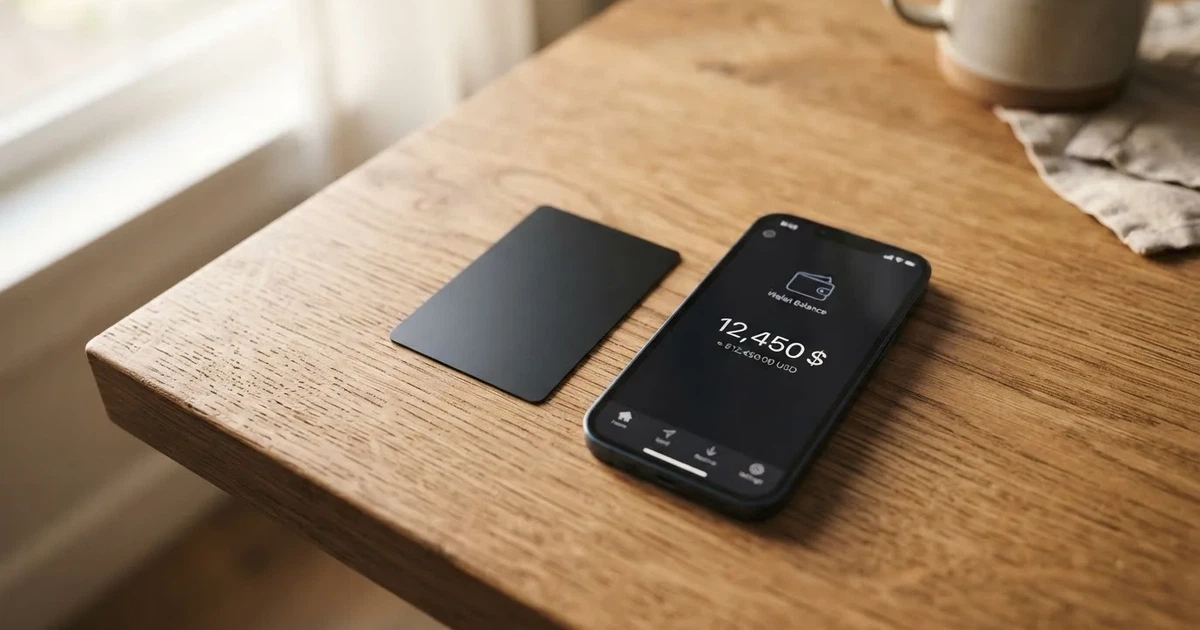
I went through the card’s own terms, FAQ and app listings with a fine-toothed comb, and cross-checked what third parties say. Here is what I found, and — more usefully for you — who it actually suits and who should look elsewhere. Overall I scored it 5.4 out of 10.
Who is this card for? A Hong Kong resident who holds USDT, is comfortable sending crypto to a card platform, and wants to spend it without paying a monthly fee. Who should stay away? Anyone living outside Hong Kong, anyone who needs cash from ATMs regularly, and anyone who wants a card they can load with ordinary bank money without thinking hard about networks and transfer fees. Because you are reading this to decide something real about your own money, I want to walk you through each question in the order you would ask it: who they issue to, how you get one, what it costs, how you fund it, how it works day to day, and what can go wrong.
The conditions described below are current as of October 28, 2026.
The verdict: 5.4 out of 10
The PokePay card is a competent, low-cost crypto card with one very large asterisk: it is built for Hong Kong. Score it honestly and the strengths and weaknesses are hard to separate, so here is how each criterion broke down for me.

| Criterion | Mark | Why |
|---|---|---|
| Who can get it | 2 / 10 | The site says it is only for Hong Kong residents living in Hong Kong. Unofficial sources say “most countries” but that the United States is excluded. |
| Cost | 8 / 10 | Monthly and annual fees are 0, and the cross-border fee is 0%. An unofficial report says a virtual card opens from 5 USD; the FX rate is not disclosed. |
| Top-up options | 8 / 10 | You can top up with USDT, USDC, BTC and ETH. Unofficial sources name five networks, including ERC20, Arbitrum, BNB Chain, Polygon and AVAX C-Chain. |
| Reliability and complaints | 4 / 10 | The issuing bank is not named and the licences are self-listed. There was an unofficial wave of account blocks in late 2025; the Trustpilot page shows 2.8 from 3 reviews and the Hong Kong App Store shows 3.9 out of 5. |
| Everyday use | 6 / 10 | There is a physical and a virtual Visa, and cash withdrawal is mentioned. Unofficial reports say Apple Pay is not supported. |
Two things pull this score in opposite directions. On the cost side it is genuinely strong: a card with no monthly or annual fee and no cross-border transaction fee is rare, and topping up with four different cryptocurrencies is more flexible than most cards in the category. On eligibility and trust it is weak: a card whose own website tells non-Hong-Kong residents to look elsewhere, whose bank partner is unnamed, and whose fees are half-disclosed is a poor fit if you need predictability.
My advice? If you live in Hong Kong and already hold USDT, this card is worth a look. If you are anywhere else, stop here — the terms do not cover you and I would not push a card onto you that says it does not. And if your main worry is cash, note early that ATM fees are not stated.
Who will they give you the card?
The short answer: on the card’s own terms, only people living in Hong Kong. The website carries a clear notice: “The content of our website is only for Hong Kong residents living in Hong Kong,” and it adds that promotion outside Hong Kong may need permits.
What do unofficial sources say? They claim the card is “available in most countries” but that the United States is explicitly restricted. One German-language version of the site reportedly also lists China as blocked. Take all of that with a pinch of salt — none of it is confirmed by the card itself, and the card’s own notice points the other way.
This matters more than it might first seem, because eligibility usually runs through nationality and residence as separate tracks. Sanctions screening and the issuer’s own risk policy are often applied to your citizenship and country of birth, not just your address. A card that is “available in most countries” in practice still filters people, and the card will filter them too. If you are not living in Hong Kong, you should treat this card as not for you rather than something to work around.
How to get it
Getting the card itself is straightforward: it comes as a physical card and a virtual one, both Visa. What is not straightforward is the verification step in front of it.
PokePay requires KYC (know-your-customer) certification before you can use the services. The card is specific about one thing: the data you enter “must be exactly the same as the uploaded documents.” You also verify your email. The name you type must match the passport name exactly, and it is usually the English version. The site recommends using Google Chrome with the camera enabled, because a mismatch at this stage causes verification to fail.
A few points to set expectations:
- Identity verification comes first. You complete it before any services are available.
- Documents, proof of address, and age requirements are not stated on the public pages, so do not assume you know exactly what to upload until you are in the flow.
- Enhanced checks may ask about money. Under “enhanced due diligence” the provider may ask about the source of your funds or wealth.
- Levels and processing time are not stated, so the wait for approval is genuinely unknown up front.
What do unofficial sources add? They describe KYC as free and taking under a minute through a provider called Didit, involving an ID check plus a face scan. They suggest an age range of 18 to 80 in the app, and note that a balance above 0 USD is needed before you can complete KYC. None of this is confirmed by the card; treat it as a plausible outline rather than a promise.
Now the physical card. Delivery takes about 10 to 30 working days depending on the country or region, and it may take longer. Which countries, what delivery costs, and whether there is a replacement fee are not stated.
So the realistic picture: a quick digital verification step, then a wait of a couple of weeks for the physical card in the post. If you are outside Hong Kong, none of this applies to you, because the eligibility question above comes first.
What it really costs: Fees
The headline fees are the card’s strongest suit. There are 0 monthly fees and 0 annual fees, and no micro-transaction fees. Cross-border transactions cost 0%. That last one is worth pausing on, because “cross-border” is exactly what most people want a crypto card for.

But the fees that would actually bite you at the checkout are the ones the card does not publish. Here is what is stated and what is not.
| Fee or limit | What the card says |
|---|---|
| Monthly fee | 0 |
| Annual fee | 0 (one FAQ line about “no annual fee in the 0th year” is unclear) |
| Micro-transaction fee | None |
| Cross-border transaction fee | 0% |
| Issuance / opening fee | Not stated officially; unofficial: “as low as 5 USD” for a virtual card |
| Crypto conversion fee / spread | Not stated |
| FX (currency conversion) fee | Not disclosed |
| ATM cash withdrawal fee | Not stated; unofficial: not disclosed (physical card only) |
| Daily limit | 100,000 HKD |
| Minimum single transaction | 0.1 HKD |
| Monthly limit | Not stated |
| Card currency | Not stated (HKD is used for the limits) |
Let me turn that into three everyday payments and show you which fees apply. This is the part most reviews skip, so I want to be concrete.
Buying a coffee with USDT already loaded. This is the smooth case. You have crypto on the account, it has been converted to a balance, and you tap or insert. There is no cross-border fee and no monthly fee. The one thing that still applies is the conversion: when your crypto is turned into spendable money, whatever spread or conversion fee the provider takes is the cost — and that number is not stated. This is the hidden cost to keep an eye on.
Paying for something priced in a currency other than HKD. Here the 0% cross-border fee is doing you a favour. But if your card balance is in one currency and the shop charges another, a currency conversion happens, and the FX rate or fee for that is not disclosed. The 0% applies to the cross-border transaction; it does not automatically mean the currency exchange itself is free.
Taking cash out at an ATM. You can do it — cash withdrawal is mentioned — but the fee and the allowance are not stated. Unofficial sources say the ATM fee is not disclosed and call heavy ATM use a poor fit for this card. If you regularly need physical cash, this is where PokePay is weakest and where you should ask the support team directly before committing.
There is also a wrinkle about account tiers: there is only one. There are no tiers on the site or in the FAQ, so no level upgrades to chase and no higher-tier limits being held back. That is simple, if unsophisticated.
One more cost to keep in mind. An unofficial report noted that the app charged a 5 USD opening fee in June 2026 despite a “limited-time free” banner. That suggests the virtual card’s headline price can change with promotions. Do not build a budget around “free.”
How to top it up
Topping up is where PokePay is genuinely flexible. The card says you can recharge with cryptocurrencies such as USDT, USDC, BTC and ETH. That is four assets, which is more choice than many competing cards give you.
What do unofficial sources add about networks? They name five deposit networks: ERC20 (Ethereum), Arbitrum, BNB Chain, Polygon and AVAX C-Chain. Here is where a beginner gets hurt, so read this carefully. The network you send on must match what the provider supports, and the networks the card officially names are not stated on its own pages. If you send on a network it does not support, or to an address belonging to a different network, the transfer can be lost or need manual recovery from support with no guarantee. Blockchain transfers are not reversible by nature. One unofficial detail worth knowing: an ERC20 deposit reportedly carries a surcharge of 5 USDT, while the other named networks carry no surcharge.
Timing and the fiat side:
- Crypto usually credits in about 15 minutes. If it has not arrived after 30 minutes, contact support.
- Payment platforms named: WeChat, PayPal, Alipay and Wise.
- For overseas accounts: SWIFT, SEPA and local clearing are listed.
- No top-up fee or minimum is published. For the fiat rails the terms say fees are “disclosed before a transaction or published on the Website or a Fees Schedule” — but no amounts appear in the terms themselves.
So the practical routine is: send crypto on a supported network, wait about 15 minutes, and the balance is there. If you are topping up with ordinary bank money through Wise or a similar service, ask about the fee at the point of transfer, because the amount is not published.
Paying with it every day
Day-to-day, PokePay behaves like a normal prepaid Visa: you load a balance and you spend from it, so it cannot overdraw. It works in physical and virtual form. That is the easy part.
Apps. There is an iOS app (Hong Kong App Store), an Android app on Google Play, an APK download, and a web login. The Hong Kong App Store shows a rating of 3.9 out of 5 from 15 ratings. The Google Play rating was not read from the store. Wallet support is not stated on the home page or FAQ — and unofficial user reports say Apple Pay is not supported (adding the card to Apple Wallet returns “this card is not supported”), and that Steam also did not work.
Rewards. The card mentions “generous rewards” and nothing more — no rate, no currency, no conditions. Unofficial sources mention a 3% cashback on a first purchase as a time-limited banner, which again is the kind of promotion that can vanish. Do not treat any cashback as a permanent feature.
Refunds and disputes. This is the part to bookmark, because it governs what happens when a payment goes wrong. Typical refund times:
- Normal merchants: 3 to 7 working days.
- Airlines, hotels and travel agencies: 7 to 14 days.
- Online payment platforms: 3 to 10 days.
- Cross-border: 7 to 30 days.
- Chargebacks: 30 to 90 days.
Complaints go to a designated contact (which is a placeholder in the terms), and Canadian law governs. Those cross-border and chargeback windows are long. If a dispute ever comes up, that is the timeline you are working with.
One general caution that applies to any card: a declined authorisation can leave a hold on your funds for several days, typically up to 7. That is not a PokePay quirk, but it will show up on a prepaid balance if a hotel or car hire pre-authorises.
What can go wrong
This section is the one I would not skip, because the rough edges of PokePay are all here.
Eligibility is Hong Kong-only on the card’s own terms. We covered this above, but it is the first risk: if you are not a Hong Kong resident living in Hong Kong, you are outside who the card is for.
The issuing bank is not named. The copyright notice names PokePay Technology Co., Ltd., and the licences listed are for Hong Kong, the United States, Canada, Ontario and Poland. But the bank behind the card is not identified. That is a real gap: you are being asked to trust a programme whose issuer you cannot name.
Your money is custodial and not deposit-insured. Funds are held separately from operating funds, but the card is explicit that they are “not deposits” and not insured by CDIC or any deposit insurance scheme. The site claims 24/7 monitoring, custody through partner banks, transaction monitoring, AML screening and encryption. In plain terms: you are trusting the provider, and there is no deposit guarantee behind you. Custodial platforms have a history of failing — Mt. Gox, Coincheck and the Ronin Network are the standard examples — so this is not a theoretical worry.
A wave of blocks in late 2025. Unofficial reporting describes a suspension wave in the second half of 2025, after which the company said funds would be returned within about 10 business days. This is unverified and comes from a third party, but it is the kind of event that should make you think twice about parking large balances here.
Account suspension and freezing. The terms reserve the right to suspend or freeze an account and its balance without prior notice in listed circumstances. Closing an account is possible via the website or support, but only with no pending transactions or amounts owed, and remaining funds are returned after AML/CTF checks. Critically, withdrawal of the balance to crypto or bank, and the fee for it, is not stated.
Self-declared registrations. The site lists registrations including FINTRAC (Canada), Ontario MSB, Poland VASP and Hong Kong (the wording varies between the FAQ and the footer). FINTRAC itself says a registration is not an endorsement. So the licences are self-reported, not verified by you at a glance.
Slow support. The most consistent user complaint in unofficial reports is slow support response. With a 10-to-30-working-day physical delivery, a 15-to-30-minute crypto credit window, and dispute windows stretching to 90 days, slow support compounds every other friction.
Reliability rating. The Trustpilot page found is for a similarly named site (pokeapay.com), possibly a different entity, and shows 2.8 out of 5 from just 3 reviews — one 1-star reviewer calls the app “fake” and says verification passed without showing the full face. There is no pokepay.com Trustpilot page. Small sample, possible wrong entity, but it is the only user-rating signal available.
Promotions are not permanent. The 3% first-purchase cashback banner and the “as low as 5 USD” opening price appear to be time-limited, and the app reportedly charged 5 USD despite a “free” banner. Do not budget around promos.
Apple Pay and some merchants. If Apple Pay genuinely does not work and Steam reportedly did not, a card you cannot add to your phone’s wallet is more annoying to use daily than its fee savings suggest.
Tax, briefly, without advice. Spending crypto generally counts as a disposal of a digital asset, measured in local fiat at fair market value on the date of each payment. Whether that produces a gain or loss for you is between you and a qualified adviser — I am not giving tax advice here, but I would not ignore it if you are a frequent spender.
What to take instead
If PokePay does not fit — because you are outside Hong Kong, you need reliable support, or you want clearer fees — here are the alternatives I looked at, with the same scoring approach. They each have their own catch, which I have noted.
| Card | Score | Where it fits | Where it does not |
|---|---|---|---|
| PokePay | 5.4 / 10 | Hong Kong residents topping up with USDT; low-cost spending | Non-HK residents; heavy ATM use; wants stated FX |
| Whop Cards | 5.2 / 10 | US consumers in 31 states; stablecoin-backed balance | Not for unsupported countries (incl. Hong Kong, China, India, Russia, Ukraine and others); fees not itemised |
| Stella | 6.5 / 10 | Virtual and physical Visa; deposit crypto to auto-top-up | Fees only “described” in the agreement; sanctions and routing caveats; no cashback stated |
| UniFi Card | 4.7 / 10 | Prepaid Visa with send-money routes (Philippines, Mexico, eurozone, and more) | Fees “may apply” but unlisted; cashback on balances, not clearly on the card |
A few notes on each so you can weigh them:
- Whop Cards spend from a Whop balance that is backed by stablecoin collateral from a linked wallet. It offers 5% cashback at select merchants (currently Uber). But eligibility is a patchwork — 31 US states for consumers, 41 for businesses, and a long unsupported-country list — and its basis (citizenship vs residence) is not stated.
- Stella is the highest-scoring of the group here and takes a deposit of crypto that automatically tops up the card. It works at “over 40 million VISA merchants globally.” But the costs are only “described under this User Agreement,” and the terms bar users under economic-sanctions programmes and route US and European users through affiliates.
- UniFi Card is a prepaid Visa issued by Lead Bank, supports Apple Pay, and lists send-money routes to the Philippines, Mexico, the eurozone and, in recent notes, Colombia, Brazil and the UK. Rewards are “3% on balances,” and card cashback is not stated. Fees are “may apply, see website.”
None of these is dramatically safer than the others; they trade different weaknesses. If you are outside Hong Kong and want the widest reach, Whop’s US-state footprint is the most concrete. If you want the simplest deposit-to-card flow, Stella is the cleanest on paper. My honest read: pick on your location and your top-up asset, then confirm the fee you personally care about in writing before you commit money.
Who I would recommend it to
So, my honest, personal recommendation after reading all of this.
I would recommend PokePay if you live in Hong Kong, you already hold USDT (or USDC, BTC or ETH) and are comfortable sending it on a supported network, your priority is low fees (no monthly, no annual, no cross-border charge), and you mostly spend at shops and online rather than pulling cash from ATMs. For that person it is a genuinely good deal.
I would steer you away if any of these are true:
- You live outside Hong Kong. The card’s own terms do not cover you.
- You need cash regularly — ATM fees are not disclosed.
- You want your FX rate and conversion spread spelled out in advance — they are not.
- You are put off by an unnamed issuing bank and custodial, uninsured funds.
- You depend on Apple Pay, or on reliable customer support in a pinch.
The score of 5.4 out of 10 is not a verdict of “bad.” It is a verdict of “narrowly good, and you have to be the right person for it.” The fee structure is a real strength; the eligibility wall, the undisclosed fees, the unnamed issuer and the support complaints are real costs too, paid in trust rather than money. If the right-hand column describes you, one of the alternatives above will serve you better.
Frequently asked questions
What is the PokePay card?
PokePay is a crypto payment card, Visa in both physical and virtual form, that lets you spend a balance topped up with cryptocurrency. It works like a prepaid card: you load funds from crypto such as USDT, USDC, BTC or ETH, and the card spends that balance, so it cannot overdraw. It charges no monthly or annual fee and no cross-border transaction fee.
How does the PokePay card work?
You complete KYC verification, send crypto to the platform, and the balance is credited, usually in about 15 minutes. From then on the card behaves like an ordinary Visa — you tap or insert it in shops and online. Spending draws from the stored balance rather than a linked bank account. The conversion from crypto to spendable money is where any hidden spread or conversion fee would apply, and that figure is not published.
Is PokePay a bank?
No. PokePay is a card programme and app, not a bank. The copyright notice names PokePay Technology Co., Ltd., and licences are listed for Hong Kong, the United States, Canada, Ontario and Poland, but the issuing bank itself is not named. Your funds are held custodially, are explicitly “not deposits,” and are not insured by CDIC or any deposit insurance scheme.
Who can get the PokePay card, and where?
On the card’s own terms, only Hong Kong residents living in Hong Kong — the site says so directly. Unofficial sources claim availability in “most countries” with the United States restricted, and one German-language version reportedly also lists China as blocked, but none of that is confirmed by the card. If you are not living in Hong Kong, treat this card as not intended for you rather than something to work around.
How much does the PokePay card cost?
The stated fees are friendly: 0 monthly, 0 annual, no micro-transaction fee, and 0% on cross-border transactions. The costs that are not published are the issuance fee (unofficial “as low as 5 USD” for a virtual card), the crypto conversion spread, the FX rate for other currencies, and the ATM withdrawal fee. The daily limit is 100,000 HKD with a 0.1 HKD minimum transaction; the monthly limit is not stated.
Does the PokePay card require KYC?
Yes. Identity verification is required before you can use the services, and the data you enter must exactly match your uploaded documents and your passport name, usually the English version. The site recommends Chrome with the camera enabled, because a mismatch fails verification. Enhanced due diligence may ask about the source of your funds or wealth.
How do I top up the PokePay card?
You recharge with USDT, USDC, BTC or ETH. Unofficial sources name five deposit networks — ERC20, Arbitrum, BNB Chain, Polygon and AVAX C-Chain — with an ERC20 deposit reportedly carrying a 5 USDT surcharge and the others none. Credit usually takes about 15 minutes; contact support if it has not arrived after 30. Fiat top-ups are also possible via WeChat, PayPal, Alipay and Wise, though fees are not published.
Is the PokePay card safe?
It is custodial and uninsured, so safety depends on the provider. The site claims 24/7 monitoring, custody through partner banks, AML screening and encryption, and your balance is held separately from operating funds — but those funds are not deposits and carry no deposit insurance. There is also unofficial reporting of a wave of account suspensions in late 2025 and slow support as the most common complaint. Treat it as a convenience tool, not a vault.
Can I add the PokePay card to Apple Wallet?
Unofficial user reports say no — adding it to Apple Wallet returns “this card is not supported,” and Steam reportedly did not work either. Apple Pay support is not stated on the card’s own pages, so if phone-wallet payment is essential to you, confirm it with support before relying on the card daily. This is one of the everyday-use marks that keeps PokePay from scoring higher.
How do I withdraw money from PokePay, or close my account?
An account can be closed through the website or support, but only if there are no pending transactions or amounts owed, and remaining funds are returned after AML/CTF checks. Withdrawal of the balance to crypto or bank — and any fee for it — is not stated, so ask support before you need it. Note also that the terms allow the account and balance to be suspended or frozen without prior notice in listed circumstances.
Highest-scored app and neobank cards – cryptocardbest.com
Content created by the «cryptocardbest.com» team