
Gate card review — a Visa- and Mastercard-branded debit card that spends straight from your crypto, if you live somewhere it works
 Available in US
Gate is best known as a cryptocurrency exchange, and the Gate card is the payment card it offers on top of that exchange. The idea is the one that has become standard in this corner of finance: you hold crypto with Gate, and when you tap the card at a shop or enter its details online, Gate converts some of your crypto into the local currency and the payment goes through like an ordinary Visa or Mastercard transaction. The card itself is issued by a licensed institution, not by Gate directly, and the card page is careful to keep the relationship described as “a digital assets credit card offered by Gate” rather than naming who actually stands behind it.
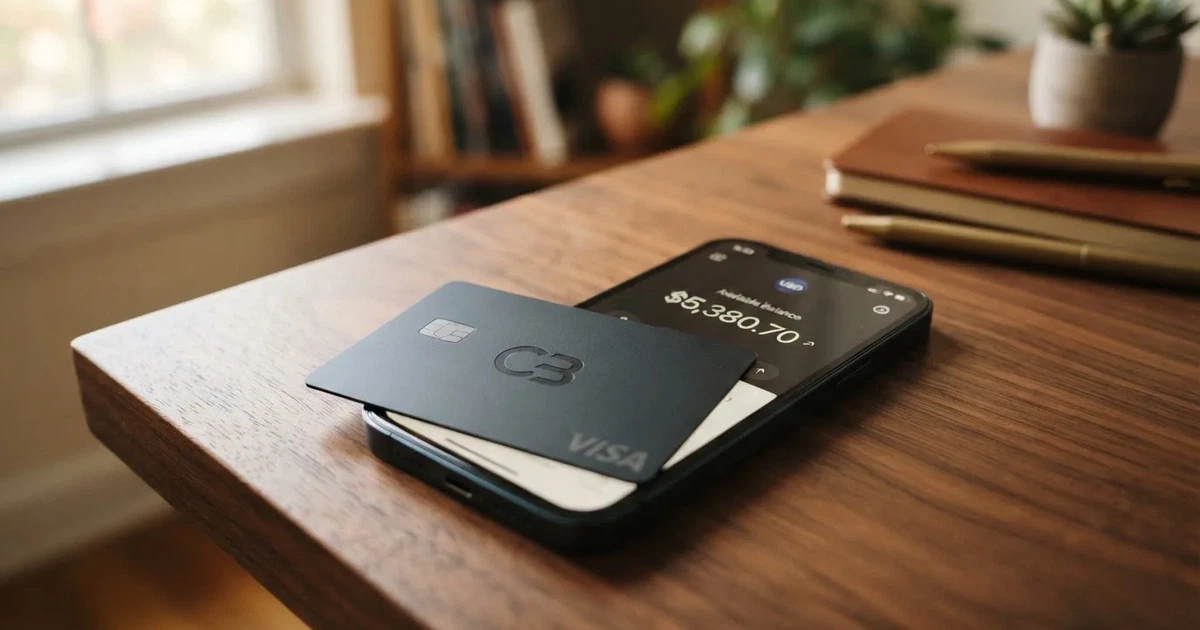
This review is based on Gate’s own card pages and help-centre articles, plus unofficial listings on third-party sites where I had to. I’ve kept unofficial numbers clearly labelled and avoided guessing. If you came here to find out whether the Gate card is worth getting, what it costs in practice, and whether your country is on the list, you’ll find the short answer in the verdict, the detailed answer in the sections that follow, and the practical “what could go wrong” notes under the risks section.
The conditions described below are current as of October 28, 2026. I’ve not used the card myself, and the card programme can change quietly, so check the official fee table and country list in the app before you commit.
Verdict
The Gate card sits in the middle of the crypto-card field. It is competitive on cost for a Standard-tier cardholder, weak on transparency about who issues it and which countries are supported, and middling on everyday reliability. It makes most sense if you already keep USDT, BTC, ETH or GT on Gate and want to spend that balance directly, without first selling it and wiring it to a bank. It makes less sense if you live in a country that Gate does not list as supported, if you want a no-fuss debit card from a household-name bank, or if you care about a clear chargeback process.
The headline number is 6.8 out of 10, broken down as follows.
| Criterion | Mark | Why it gets that mark |
|---|---|---|
| Who can get it | 6 / 10 | Card is “only available to users in non-restricted countries or regions”; the actual country list is not published on the card page. Unofficial sources list the Classic variant in 24 European countries, with the US, UK, Germany, France and Canada not supported. |
| Cost | 8 / 10 | Standard card: virtual and physical issuance free, no monthly or inactivity fee; crypto conversion 0.90%, foreign-exchange fee 1.00% for non-USD, ATM withdrawal 2%; replacement 25 USD. |
| Top-up options | 7 / 10 | Instant Spend Mode lets the card pull directly from USDT, BTC, ETH or GT. Prepaid mode opens a wider crypto list, but the supported networks are not disclosed. |
| Reliability and complaints | 5 / 10 | The issuing institution is not named on the card page (unofficial sources say Stanhope Financial UAB in the EEA and Lead Bank in the US). Trustpilot scores 1.5 out of 5 for the exchange overall; card-specific complaints include a 2024 cashback pause and slow replacement after an ATM retained a card. |
| Everyday use | 8 / 10 | Virtual card available immediately, physical card follows, ATM withdrawals possible, and Gate has a help-centre article on adding the card to Google Pay and Apple Pay. Unofficial reports say the Classic tier is Google Pay only. |
| Total | 6.8 / 10 | A reasonable option for existing Gate users spending from USDT, BTC, ETH or GT, but with gaps in transparency and weaker card-specific support than the more established programmes. |
If that profile sounds like you — an existing Gate customer comfortable with the exchange, who holds USDT or one of the other supported coins and wants to spend that balance without a separate sell step — then the Gate card is worth a look. If you don’t fit that profile, the alternatives section may save you time.
Will they give you the card
The honest answer is that I cannot tell you, from official sources alone, whether the card is available where you live. Gate’s card page puts it this way: “Gate Card is only available to users in non-restricted countries or regions.” No full list of supported or restricted countries is published there, and Gate does not say, on the pages I could read, whether the rule applies to your country of residence, your citizenship, or both. The card’s terms and conditions are the place where you would normally find that detail; the page points you to the issuer’s own review.
Unofficial third-party listings are more concrete. A directory dated 11 August 2026 lists the Classic card as available in 24 European countries: Belgium, Bulgaria, Croatia, Cyprus, Czech Republic, Denmark, Estonia, Finland, Greece, Hungary, Iceland, Ireland, Italy, Latvia, Liechtenstein, Lithuania, Luxembourg, Norway, Poland, Portugal, Romania, Slovakia, Slovenia and Sweden. The same source lists the United States, the United Kingdom, Germany, France and Canada as not supported, although it does not distinguish Classic from other tiers. Another directory adds Austria and Spain, omits Italy and Lithuania, and disagrees on a few smaller states. This is the kind of detail you should not rely on without checking, and Gate’s own pages do not confirm it.
The bottom line: the card is open in “non-restricted” countries, and the public list is thin. If you have a Gate account already, the application step is the point at which you actually find out whether your country is on the list. If you don’t, you’ll be creating a Gate account first, and there is no point doing that until you know you can reach a supported country.
The card programme also does not publish the minimum age. Prepaid and debit cards in this category are usually 18-plus, but the Gate card page does not say so on its own.
How to get it
The application flow has three steps. First, you have a Gate account. Second, you reach Level 2 identity verification, which is the same level Gate uses across its exchange products. Third, you apply for the card in the Gate app.
Level 2 KYC is the part where you upload identification documents. The card page says some card types also ask for a proof-of-address document dated within the last three months. The information you enter in the card application has to match the ID you used for Gate KYC, so it pays to keep that consistent.
Once your application is in, the virtual card is typically reviewed within three to five minutes. If it is approved, you can start using it for online payments right away. The physical card, if you have ordered one, is dispatched to the address you confirmed, and Gate’s help centre says delivery takes between seven and 45 days depending on country. If the card has not turned up after 45 days, the help-centre advice is to contact support, confirm your address and use the “Resend” option. Unofficial estimates put physical delivery at 15 to 45 days where supported. Rejection reasons are not published.
The card itself is described on the page as “primarily supports the Visa or Mastercard network,” which means the network you end up on depends on the card and the region. There is no metal-card tier mentioned on the pages I read, and the card’s default settlement currency is not stated — the prepaid mode converts your balance to the corresponding fiat when you spend.
The Standard tier is the one the public fee table covers, and on that tier both virtual and physical issuance are free, replacement of a lost or damaged card is 25 USD, and there is no monthly fee and no inactivity fee.
What it really costs: Fees
For the Standard card, the public fee table is unusually clear, which is part of why the cost score is 8 out of 10. There is no monthly fee, no inactivity fee, no issuance fee for either card form, and the percentage fees on actual use are competitive. The two things that catch you out are the foreign-exchange fee and the 25 USD replacement fee.

| Fee or limit | Standard card value |
|---|---|
| Virtual card issuance | Free |
| Physical card issuance | Free |
| Monthly fee | Free |
| Inactivity fee | Free |
| Crypto conversion | 0.90% (for transactions of 2 USD or more), 0.05 USD for transactions below 2 USD |
| Foreign exchange (non-USD) | 1.00% |
| ATM withdrawal | 2% |
| Card replacement | 25 USD |
| Chargeback processing | 30 USD (help-centre text says 25 USD) |
| Daily spending limit | 50,000 USD across tiers T0 to T4 |
| Monthly spending limit | 990,000 USD across tiers T0 to T4 |
| ATM daily limit | 5,000 USD (up to 10 withdrawals) |
| ATM monthly limit | 15,000 USD (up to 100 withdrawals) |
| ATM yearly limit | 50,000 USD (up to 1,000 withdrawals) |
| ATM per-transaction limit | 5,000 USD |
If you want to see what this looks like in real life, three everyday payments are enough to show the moving parts. The first is paying a 50 USD subscription in USD: the crypto conversion of 0.90% applies, so the effective fee is 0.45 USD, and there is no foreign-exchange fee because the transaction is in USD. The second is paying a 40 EUR restaurant bill with a USD card balance: 0.90% conversion and a 1.00% foreign-exchange fee apply, amounting to roughly 0.76 EUR. The third is taking 200 USD out of an ATM: 2% ATM fee on 200 USD, so 4 USD, plus whatever your own bank charges on the other end if you are using a third-party ATM.
The chargeback processing fee is one of the few inconsistencies in the published material. The Standard card fee table says 30 USD, while the help-centre text on disputes says “typically a $25 processing fee applies regardless of outcome.” The 30 USD number is the more recent and the more specific, but expect to pay roughly that amount if you raise a chargeback.
There are also variant-specific fees that unofficial sources report, mostly for the prepaid version: a 0.9% top-up charge, a 10 USDT first-load minimum, a 2% refund charge, a 1 USD reversal fee, a 35 USD chargeback fee, a 0.10 USD Apple Pay authorisation charge, and a 2 USDT virtual-card fee below VIP tier 5 unless waived. I have not been able to confirm these on Gate’s own pages, and they may apply only to the prepaid variant, not the Standard tier. Treat them as unofficial until you check the fee page for the card you actually hold.
How to top it up: Top up
The card has two top-up styles and the distinction matters. The first is Instant Spend Mode, where the card pulls directly from one of four supported cryptocurrencies at the moment of payment: USDT, BTC, ETH and GT. You do not need to “load” the card in the sense of moving money onto a stored balance — the conversion and the payment happen together when you use the card. The 0.90% conversion fee still applies.
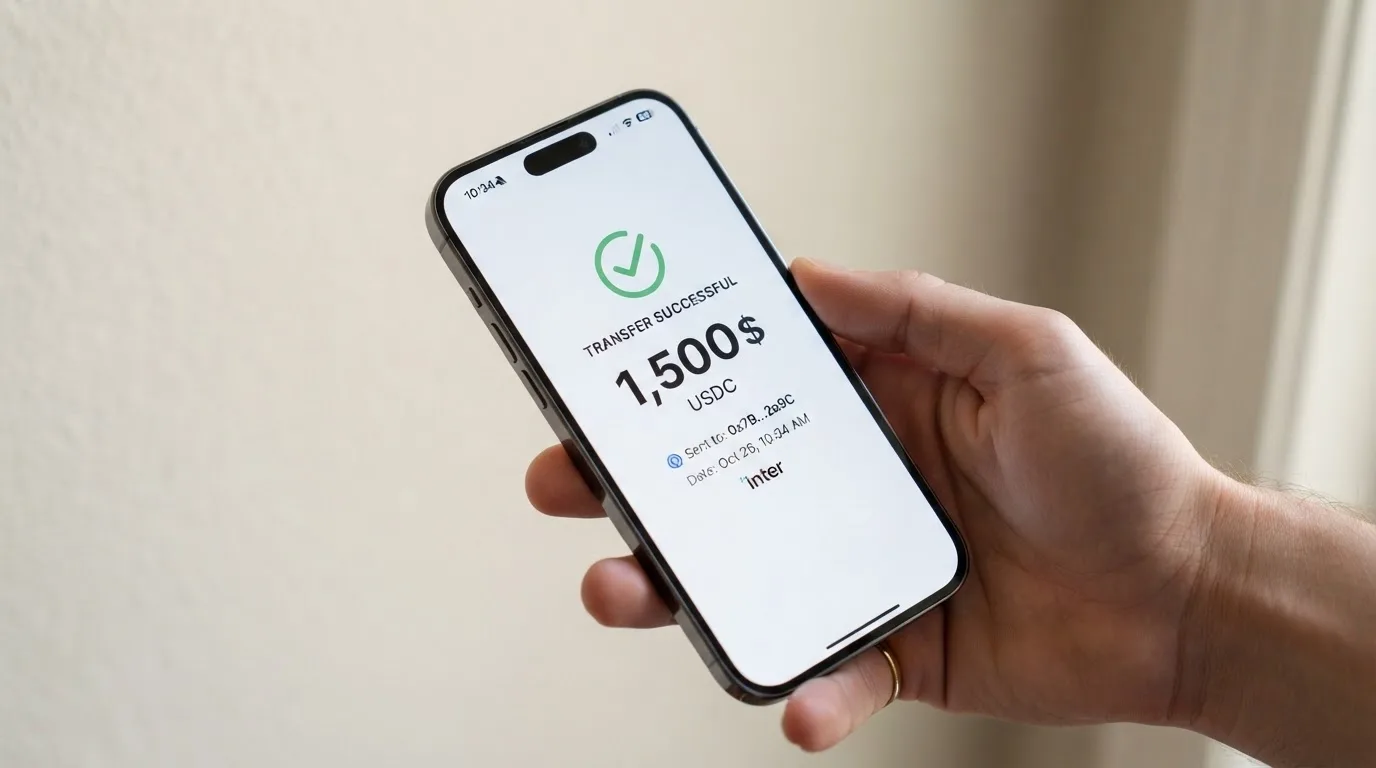
The second is the prepaid mode, where you top up a stored fiat balance from your Gate Pay or Spot account, and the card spends that balance. Prepaid mode supports a wider range of cryptocurrencies than Instant Spend Mode, but the exact list is described as “varies by card, issuer, region,” and the supported blockchain networks are not stated on the card page. If you top up in a coin other than the four Instant Spend coins, the conversion to fiat happens at the top-up step rather than at the payment step.
There is no top-up fee listed for the Standard tier, and there is no published minimum top-up for the Standard tier. Unofficial sources say a prepaid top-up carries a 0.9% charge and a 10 USDT first-load minimum, but as above that has not been confirmed on Gate’s own pages.
A practical warning that applies to almost any crypto card, and is worth saying explicitly: a stablecoin transfer sent on a blockchain the card provider does not support, or to an address on the wrong network, can be lost. Blockchain transactions are not reversible, and recovery in those cases is manual and uncertain. If you are sending USDT from an external wallet, double-check the network the card programme expects before you sign the transaction.
The card has a “Card Balance Withdrawal” headline in the help centre, pointing to an announcement that I have not read in full. The card balance is linked to a Gate Pay payment account, but the closure procedure is not stated on the pages I have seen.
Paying with it every day
Once you have the virtual card approved in three to five minutes, you can start entering its details into online checkouts. Apple Pay and Google Pay support is mentioned in a help-centre article (“Add Your Gate Card to Google Pay & Apple Pay”), but the article body is not detailed on the public pages I have seen. Unofficial sources split the picture: one says the Classic tier supports Google Pay only, while the Standard and Signature tiers support both. The official position is that there is an article covering both wallets, but the per-tier breakdown is not given.
The card supports ATM cash withdrawals with the physical card at supported ATMs. The 2% ATM fee applies, the daily limit is 5,000 USD across up to 10 withdrawals, and the monthly limit is 15,000 USD across 100 withdrawals. Pre-authorisation holds at merchants can lock part of your balance for a few days, and pre-authorisations for services (car hire, hotels) typically release only when the service ends, which can feel like a delay if you have a tight balance.
The card earns up to 8% cashback on eligible purchases, depending on the tier. The cashback is described as paid in points that you can redeem for USDT or GT, although a banner on the same page describes cashback in BTC, ETH, USDT and USDC. The cashback page is therefore inconsistent, and the per-tier caps and conditions are not given on the official pages I have read. Unofficial sources describe a tier system where the percentage and the monthly cap scale with how much you spend in a month: 1% with a 5 USDT cap at the lowest monthly spend, rising to 8% with a 400 USDT cap at the highest. The points are described as not expiring, and 100 points equal 1 USDT. None of that is confirmed in the official cashback terms, so treat the per-tier numbers as unofficial.
For disputes, the help-centre says to contact the merchant first, then start a chargeback via Gate with proof of the merchant communication. The processing fee applies regardless of outcome. The timeline is given as “sometimes up to 3 months,” which is a long window to wait, and there is no separate refund timeline. If your issue is a pre-authorisation hold, that typically clears after the service ends.
Blocked merchant categories are not stated. A number of card issuers in this space block gambling merchants (MCC 7995), but the Gate card page does not say which categories are restricted.
What can go wrong
The biggest category of risk is structural rather than operational, and it has three parts. First, the card-issuing institution is not named on the card page. Unofficial sources say the EEA issuer is Stanhope Financial UAB, an electronic-money institution authorised in Lithuania (LB002039), and the US issuer is Lead Bank, with Bridge as programme manager. The US is not on the unofficial supported-country list, so the Lead Bank relationship may apply to a US prepaid variant launched in July 2026, rather than to the main Standard card. Either way, when you use the card you are also taking on the solvency and operational risk of the named issuer, and the more clearly that is communicated, the more confident you can be about what recourse you have.
Second, Gate joined the Mastercard Crypto Partner Program, which is a positive signal for Mastercard-network products but does not replace local licensing. Whether the card programme holds the licences it needs in your country is not something the card page states, and the question matters because card programmes can be wound down by their issuer or by the network. Visa terminated its global agreements with FTX in November 2022, and the FTX US debit card was wound down by its issuer shortly after. WaveCrest, which supplied several crypto card brands, was suspended by Visa in Europe in 2018. None of this is unique to Gate, but it is a reminder that programmes end.
Third, the custodial model: when you top up a Gate card from your Gate exchange balance, you are trusting Gate to keep your crypto and your fiat. The general category risk in custodial crypto is well documented — Mt. Gox, Coincheck and Ronin are the usual reference points — and Gate publishes a proof-of-reserves report dated 22 June 2026 showing 8.182 billion USD in reserves and 115% coverage, which is a positive signal, but is not a guarantee. If you want to keep your exposure to Gate small, top up only what you need to spend over the next few weeks rather than parking a large balance on the platform.
Operationally, a few specific complaints appear in unofficial reports and reviews. The exchange as a whole scores about 1.5 out of 5 on Trustpilot from roughly 1,400 reviews, with 77% one-star ratings, mostly about account access, withdrawal checks, verification and support delays (these are exchange-wide complaints, not card-specific). Card-specific reports, mostly from 2024, mention a cashback pause from 19 June 2024, cards retained by ATMs with slow replacement, card funds inaccessible for up to six days, merchant refund delays, chargeback responses taking five to six weeks, and cards being frozen after small purchases. The samples are small and the dates are old, but they are the kind of operational pain that gets reported only when it is serious.
The dispute process itself has a small inconsistency: the fee table says 30 USD, the help-centre dispute page says 25 USD. Whichever it is, that is what you pay to start a chargeback, and the process can take up to three months, so a chargeback is not a tool for an urgent refund.
Card security is described in standard terms. You can freeze a lost or stolen card in the app, the PIN is changeable in the app, and several wrong PIN entries will freeze the card. A negative card balance is described as risking a permanent block. Two-factor authentication, custody insurance and other typical safeguards are not described on the pages I have read.
Support is reached at [email protected], with a help centre. Hours and supported languages are not stated on the card page.
What to take instead
The Gate card is one option in a small field, and three peers in the same space give a useful reference.
MSX scores 6.4 out of 10. Country availability, card form, fees, top-up and rewards were not stated on the official page I could read, which is itself a transparency issue. If you are choosing between Gate and MSX, the deciding factor is probably how much you already use the underlying exchange and how clearly the fee and country list is published.
Bybit Card scores 6.0 out of 10. The card is available in Argentina, AIFC (Kazakhstan), Georgia, Kazakhstan, Australia, Mexico, Brazil, Peru and Asia Pacific, with a Mastercard or Visa product depending on the region, and a clear differentiation between virtual and physical. The fiat currency depends on the country. Crypto conversion is 0.9% over the One-Click Sell rate in most regions (0.5% in Argentina, not supported in Peru), and the foreign-exchange fee ranges from 1% to 2% (7% in Argentina, where taxes add further). Cashback runs from 2% at the base tier to 10% at the top tier, with monthly caps and minimum spends to unlock each tier; only crypto-funded transactions earn points from 5 October 2026, and the welcome offer is 10% cashback up to 110 USDT in the first 30 days. Bybit is explicit that the product is not for European Economic Area customers, which is the opposite of the Gate card’s apparent European focus. If you are in Latin America, Australia, Kazakhstan, Georgia or Asia Pacific, the Bybit card is a more transparent option than Gate; if you are in Europe, it is not available.
MEXC scores 5.6 out of 10. MEXC’s card is virtual-only (no physical card yet), the issuance fee is shown as 20 USD on the page (with a possible 0 USD discounted price, which the page does not explain), and the published list of supported countries starts with the Philippines, Taiwan and Thailand. Cashback is by M-Score tier, paid by the 15th of the next month, with 4% at the Standard tier (capped at 100 USDT a month), 6% at the Premier tier (300 USDT) and 10% at the Elite tier (800 USDT). The fee page does not list a crypto conversion or foreign-exchange fee on its own, which is its own kind of transparency gap. The MEXC card is a useful alternative if you are in South-East Asia and prefer a virtual-only product, but it is not a real competitor to Gate in Europe.
The cleanest cross-comparison is:
| Card | Score | Where it works | Virtual / physical | Crypto conversion | FX fee | ATM fee |
|---|---|---|---|---|---|---|
| Gate | 6.8 / 10 | “Non-restricted” countries (officially unlisted); unofficial list is 24 European countries | Both | 0.90% | 1.00% (non-USD) | 2% |
| MSX | 6.4 / 10 | Not stated officially | Not stated officially | Not stated | Not stated | Not stated |
| Bybit Card | 6.0 / 10 | Argentina, AIFC, Georgia, Kazakhstan, Australia, Mexico, Brazil, Peru, Asia Pacific (not EEA) | Both | 0.9% (0.5% Argentina) | 1%–2% (7% Argentina) | Not stated on this comparison |
| MEXC | 5.6 / 10 | Philippines, Taiwan, Thailand and others (full list not shown) | Virtual only | Not stated | Not stated | Not stated |
If you are in Europe and already a Gate user, the Gate card is the natural pick. If you want a more transparent card with published country support and you live in one of Bybit’s regions, the Bybit card edges ahead on clarity even though its score is slightly lower. MEXC is a step behind on cost transparency, and MSX is too thin on public information to compare fairly.
Who I would recommend it to
The Gate card is a good fit for an existing Gate customer who holds USDT, BTC, ETH or GT and wants to spend that balance directly. The Standard tier is free to issue in both forms, free to hold, and the conversion fee is competitive. The 1.00% foreign-exchange fee for non-USD transactions is in the same range as the field, and the ATM fee is on the higher side but not unusual.
It is a poor fit for someone whose country is not on the unofficial supported list, since the official page does not say where the card works. It is also a poor fit for someone who needs a clear chargeback process, because the fee and the timeline are both unfriendly, and for someone who needs a household-name issuer, because the issuing institution is not named on the public pages.
The practical steps before you commit are short. First, confirm your country is supported in the app, because that is the only place the answer is unambiguous. Second, check the fee table for the specific tier you are applying for, because the Standard card and the prepaid variant have different fee structures and the prepaid variant’s per-tier fees are largely unofficial at this point. Third, if you need Apple Pay or Google Pay, confirm support for your tier rather than assuming. Fourth, decide how much of your crypto balance you actually want to keep with Gate; the card programme depends on Gate as a custodian, and the smaller the balance you keep with the exchange, the smaller your counterparty risk.
If those four checks pass, the Gate card is a reasonable way to convert crypto into everyday spending. If any of them does not, the Bybit card is a useful alternative in its regions, and the MEXC card is a virtual-only option worth a look in South-East Asia.
Frequently asked questions
What is the Gate card?
The Gate card is a payment card offered by the Gate cryptocurrency exchange, branded either Visa or Mastercard, that lets you spend from your Gate crypto balance. The card itself is issued by a licensed institution, not by Gate directly, and the issuing bank is not named on the card’s public pages. In practice, the card converts your USDT, BTC, ETH or GT into local currency at the moment of payment and runs the transaction through the card network like any other Visa or Mastercard transaction.
Is Gate a bank?
No. Gate is a cryptocurrency exchange, not a bank. The card is described on the card page as “a digital assets credit card offered by Gate,” and the actual card-issuing institution is handled separately and is not named on the public page. Unofficial sources identify the EEA issuer as Stanhope Financial UAB and the US issuer as Lead Bank, but those identifications have not been confirmed by Gate’s own pages. Treating Gate as a custodian rather than as a bank is the safer mental model.
How does the Gate card work?
The card runs in two modes. In Instant Spend Mode, when you make a payment, Gate converts the right amount of your USDT, BTC, ETH or GT into the merchant’s currency and routes the payment through Visa or Mastercard. In prepaid mode, you first top up a stored fiat balance from your Gate Pay or Spot account, and the card spends from that balance. The 0.90% crypto conversion fee applies in both modes, and a 1.00% foreign-exchange fee applies for non-USD transactions on the Standard tier.
Who owns Gate?
Gate is the cryptocurrency exchange behind the card programme. The card is described as offered by Gate, with the card-issuing institution handled separately. The exchanges that run the card programmes in this space are usually programme managers rather than the legal issuer, which is why the issuing bank is shown on the card itself but not always on the public marketing page.
Is the Gate card available in my country?
The card page says “Gate Card is only available to users in non-restricted countries or regions” and does not publish a list. Unofficial sources list 24 European countries as supported, including most EU and EEA states, and list the United States, United Kingdom, Germany, France and Canada as not supported. The cleanest way to confirm is to start a Gate account, reach Level 2 KYC, and see whether the card application is open in your country.
How do I get a Gate card?
Open a Gate account, complete Level 2 identity verification, then apply for the card in the Gate app. The virtual card is typically reviewed within three to five minutes. The physical card, if ordered, is dispatched to your confirmed address and takes between seven and 45 days depending on country. Some card types also ask for a proof-of-address document dated within the last three months.
Does the Gate card require KYC?
Yes. The card requires Level 2 identity verification on Gate, which involves uploading identification documents. The information you enter in the card application has to match the ID you used for Gate KYC, so the two need to stay consistent. Some card types also require a proof-of-address document dated within the last three months.
Is the Gate card free?
The Standard-tier card has no issuance fee for either the virtual or physical form, no monthly fee, and no inactivity fee. You pay the 0.90% crypto conversion fee when you spend, the 1.00% foreign-exchange fee on non-USD transactions, and the 2% ATM fee on cash withdrawals. A replacement card costs 25 USD, and a chargeback carries a processing fee of 25 to 30 USD. The prepaid variant of the card is reported by unofficial sources to have additional fees, including a top-up charge and a first-load minimum, but those have not been confirmed on Gate’s own pages.
How do I add the Gate card to Apple Pay or Google Pay?
Gate has a help-centre article titled “Add Your Gate Card to Google Pay & Apple Pay,” which covers the basic flow. Unofficial sources split the picture by tier, with the Classic tier reported as Google Pay only and the Standard and Signature tiers reported as supporting both. The cleanest approach is to check the help-centre article for your specific tier rather than assuming.
Is the Gate card safe to use?
The card uses standard card-security features: you can freeze a lost or stolen card in the app, the PIN is changeable, and several wrong PIN entries freeze the card. The structural risk is that the issuing institution is not named on the public page, and you are also trusting Gate as the custodian of the underlying crypto. Gate publishes a proof-of-reserves report, but that is not a guarantee. A useful mitigation is to keep only the balance you intend to spend over the next few weeks on the platform rather than parking a larger long-term balance there.
Highest-scored exchange cards – cryptocardbest.com
Content created by the «cryptocardbest.com» team