
BitFree card review
 Available in US
BitFree is a virtual prepaid card managed from a mobile app and topped up with crypto. The pitch is straightforward enough: you move digital assets in, you get a card number you can spend with online. In practice, BitFree is one of the more opaque products in this corner of the market. Public information about the issuer, the network, the fees, the supported coins, the daily limits and the dispute process is thin, and what little there is, often amounts to “not stated”. This review walks through what is actually known, what is missing, and where that leaves you as a cardholder.
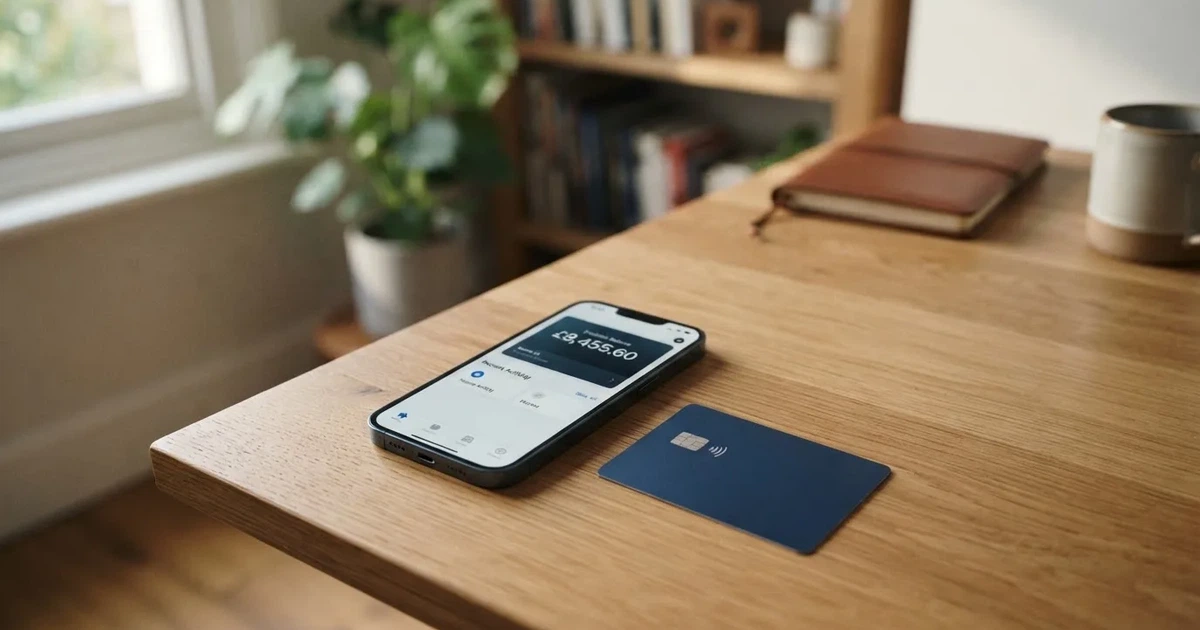
The conditions described here are current as of October 28, 2026.
Verdict
I am giving BitFree a score of 5.2 out of 10. That is a middling mark, and the reason is the asymmetry between what the app does and what the public pages disclose. The card itself is functional in the most basic sense: it is a prepaid virtual card that you can top up from the BitFree app and use to pay online. But for a card you would put real money behind, the gaps in disclosure are too wide to ignore. There is no public list of supported countries beyond the App Store caveat, no list of supported coins or networks, no published fee schedule, no named issuer, no third-party reviews to cross-check, and no clear explanation of the dispute process if a payment goes wrong. The card is at the very early end of the “things you can do with a phone and some crypto” spectrum, and that is reflected in the breakdown below.
If you are the kind of user who already lives inside one app, never moves large balances, and is comfortable filling in the blanks yourself, BitFree can do a small job. If you need a card with a published fee table, a customer-support team you can find outside the app, and a named regulated issuer, you will want to look elsewhere.
Score breakdown
| Criterion | Mark | Reason |
|---|---|---|
| Who can get it | 7 / 10 | Available in supported App Store regions, with mainland China, Hong Kong, Macau and the US excluded. |
| Cost | 5 / 10 | Fees are not disclosed; the partner’s conversion rate is shown only at the moment you top up. |
| Top-up options | 4 / 10 | Only “supported digital assets” can be used, and the actual coins and networks are not named. |
| Reliability and complaints | 5 / 10 | The company is Bitfree Limited / BITFREE INC.; the card-issuing partner is unnamed, and no third-party reviews were found. |
| Everyday use | 4 / 10 | Virtual prepaid card only, in-app; no wallet support, no ATM, no public card-network details. |
| Total | 5.2 / 10 | A usable but very lightly documented prepaid product. |
Who will they give you the card
BitFree is available in what the App Store text describes as “supported App Store regions (excluding mainland China)”. On top of that geographic carve-out, the company also says the card is not available in Hong Kong, Macau and the US. Beyond that, the public pages do not list a country-by-country table, and the way the rules actually apply depends on the issuing partner’s terms and on local regulations. So in plain language: you can probably get the card if your Apple ID or Google Play account is in a country that is not in the exclusion list, and if the issuing partner accepts your identity documents. The card is for adults; the App Store listing sets the standard rating, and prepaid cards in this category are generally 18+.
The card itself is a virtual prepaid card. That means there is no plastic to send you, and no ATM use, and no physical wallet. The card details live inside the BitFree app, and you can copy them into checkout forms for online purchases, or tokenise them into a mobile wallet if the issuer allows it. The card is described in the App Store listing as issued by a “licensed card issuing partner operating under its own financial licenses”, but the partner is not named on the public pages, and the card network (Visa, Mastercard, or otherwise) is not stated either. The currency the card holds is also not stated.
If you live in a sanctioned jurisdiction, you should treat that as a separate question. The standard KYC step checks identity and screens against sanctions lists, and an issuer can decline a relationship or close it later if circumstances change. The card’s general “we are not in these places” list and the issuer’s own country policy are not the same thing, and the second one is the one that ultimately decides whether you receive a card.
How to get it
Getting BitFree is an in-app process. You install the BitFree app from the App Store or Google Play, create an account, and the card is provisioned inside the app. Because it is a virtual prepaid product, there is no shipping, no courier and no delivery address. Once KYC is complete, the card details are visible inside the app.
KYC is required before the card can be used. The public material describes this as a check of “government-issued ID and liveness checks” — in other words, a photo of an ID document and a selfie or short video to confirm that the person holding the document is the person on it. The App Store listing also mentions ongoing AML monitoring and device checks. What is not spelled out is whether proof of address is required, what counts as a valid address document, and whether the KYC flow is tiered (different limits at different levels of verification). A version note in the app mentions improvements to the document upload flow, which is a hint that the KYC step is something the team has been actively tuning.
The issuer behind the card is described in the listing only as a “licensed card issuing partner”. That is enough to tell you the card is being run through a regulated entity, but not enough to tell you which one, under which country’s licence, or with which card network. If you are the kind of person who likes to know that before you load money, you will not find that information on the public site. The closest you can get is the support email at [email protected] and a separate legal address at [email protected], listed for media and regulatory inquiries. Languages and support hours are not stated.
The Android app is published under the name BITFREE INC. and the iOS app is published under Bitfree Limited. That is the level of corporate detail you have to work with, and the legal entity behind the licensed issuing partner is not given.
What it really costs: Fees
This is the section where the gaps in BitFree’s public information hurt the most. There is no fee schedule on the public site, no monthly fee listed, no ATM fee, no FX fee, no issuance fee, and no daily or monthly limit. The only fee-related statement I can point to is that “conversion is done by the partner” and that the reference rate can be reviewed before confirming a top-up. In other words, you will see a rate in the app right before you press confirm, but the company is not telling you in advance what the spread is, what the loading fee is, or whether a separate fee is layered on top.
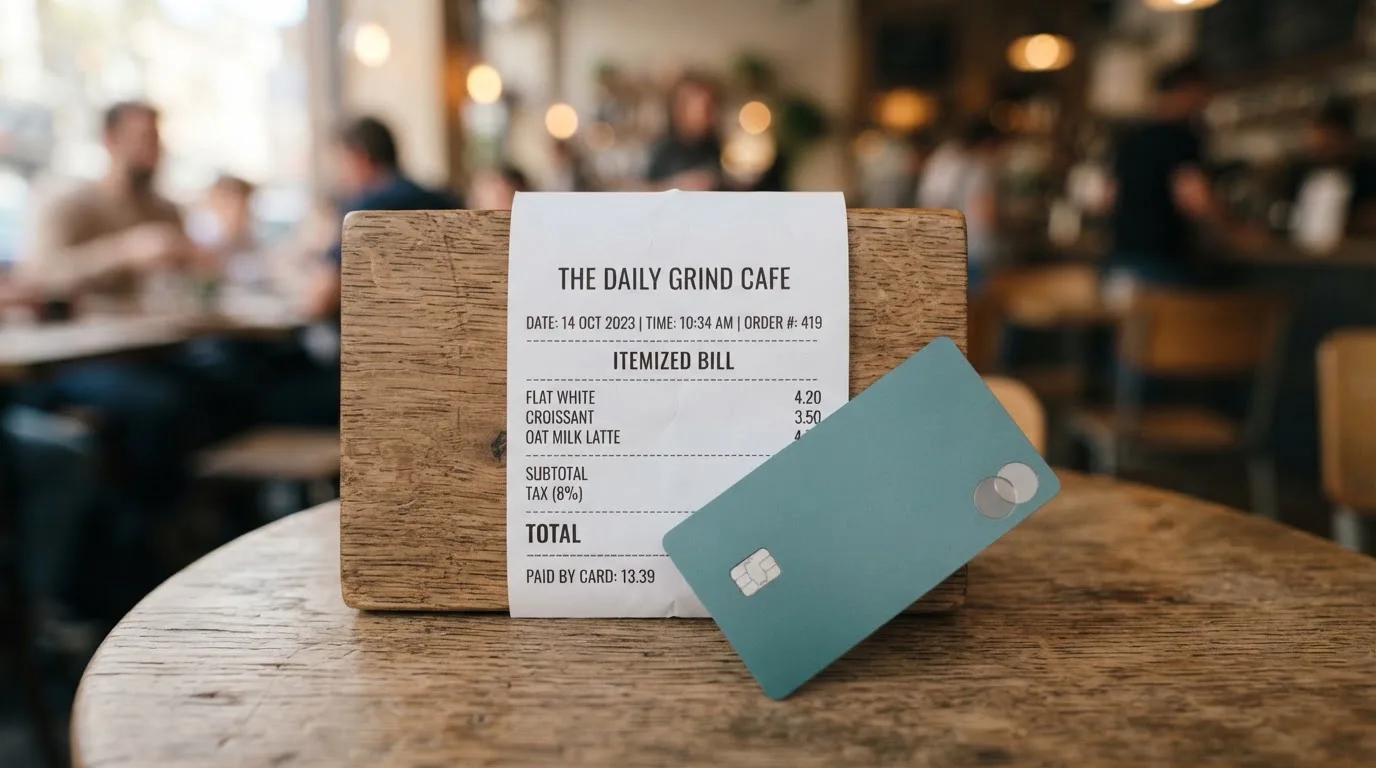
That matters more here than with a regular bank card, because the cost of spending crypto through a card is usually a combination of several things: the network fee you pay on-chain when you deposit, the loading or top-up fee the card provider charges to convert, the FX fee if the merchant’s currency differs from the card’s currency, and a small margin hidden inside the conversion rate. Without a published fee table, you can only see the total of all of those things at the moment you top up, and only because the rate is shown then. The cash register is the only price tag.
Costs at a glance
| Fee or limit | BitFree |
|---|---|
| Issuance fee | not stated |
| Monthly fee | not stated |
| Conversion fee | not stated (rate shown before top-up confirmation) |
| FX fee | not stated |
| ATM fee | not stated |
| Daily / monthly limits | not stated |
| Card currency | not stated |
| Tiered pricing | not stated |
The limits, where they exist, are described as “determined by the issuing partner and applicable network rules”. That is correct for any card programme, but it leaves the cardholder without a concrete number to plan around. If you are budgeting for groceries, subscriptions, or recurring online payments, you will have to test the card at small amounts and see what the app reports as your remaining limit.
Three everyday scenarios
Picture how this plays out in practice. You want to buy a USD 50 domain name from an overseas registrar that bills in euros, and the card is in your home currency. You will hit three unknown costs: the conversion from your crypto to the card’s currency, the FX conversion from that currency to euros, and the merchant’s view of a foreign-issued card. The first two are unstated, and the third is outside BitFree’s control but is a common reason small foreign cards are declined. If you want to buy a USD 10 subscription from a US streaming service, the same picture applies but with a much smaller amount at stake; small foreign-card declines here are also common. And if you want to top up USD 200 of stablecoin onto the card on a Friday evening to use over the weekend, you will see a conversion rate in the app, but you will not know what the rate was yesterday or last week, so there is no way to tell whether the rate is fair without comparing it yourself against a public reference.
These are not problems unique to BitFree. They are problems that any lightly disclosed card programme shares. The point is that BitFree offers almost none of the small disclosures (an explicit loading fee, an explicit FX margin, a stated daily cap) that would let you answer them without testing.
How to top it up: Top up
The official line on funding is that “supported digital assets may be used only for prepaid card top-up requests”. That is the entire sentence. The cards and networks are not named on the public pages, and the help articles I could find do not list which coins are supported or which networks the deposit address belongs to.
This is a meaningful gap. In this category, the things you normally want to know are: which coins can I send, on which network, and to what address. Send USDT on the wrong network, for example, and the funds are typically lost or stuck in manual recovery. Crypto transfers are irreversible on the blockchain, and a custodian cannot reverse a deposit that arrived on an unsupported chain. A clear “send USDT on TRC-20 to this address” line, in the app and on the support site, is the bare minimum you would want, and BitFree does not publish that in the materials I read. The app itself presumably surfaces a deposit address and a network choice when you go through the top-up flow, because the App Store text says the reference rate is shown before confirmation, but those are not part of the public material.
The funding flow also implies that the top-up is a one-way pipe: you send crypto in, the card balance goes up, and that balance is what you spend. There is no published withdrawal path in the public material, which is worth knowing in advance: if you change your mind, or if a payment fails and you want your balance back out, there is no clear answer in the public help content. Cards in this category often support a “cash out to a bank account” path, but that depends on the issuer and is not documented for BitFree.
The practical advice is the same as with any lightly disclosed card: top up a small amount first, send it on the network the app tells you to, and confirm the balance has arrived before sending a larger amount. If the app does not name the network, that is itself a red flag to take seriously.
Paying with it every day
In daily life, BitFree is a virtual prepaid card. That is a useful thing to be, and it is also a fairly limited thing to be. You can use the card number at online checkouts that accept the card network, and you can presumably tokenise the card into a mobile wallet if the issuer allows it, but neither of those is confirmed in the public material. The networks and the wallet support are not stated, and the App Store listing does not mention Google Pay or Apple Pay by name.
What that means in practice is that you should expect the card to work at online merchants that accept the underlying network, and to be uncertain about everything else. There is no ATM access, because there is no physical card. There is no contactless tap-to-pay at a café, because there is no physical card or tokenised wallet to tap. Subscriptions are possible, as long as the merchant accepts the network and is willing to charge a foreign-issued prepaid card. Hotels and car rentals, which often place a hold and then a final charge, are where prepaid cards from small issuers tend to stumble: a hold that exceeds the card balance can be declined, and the merchant’s system can take days to release the hold.
Rewards, cashback, or any kind of programme for spending are not stated, and the App Store listing does not mention them. If there is a rewards mechanic in the app, it is not part of the public material. The mobile app is published under com.yykj.bitfree.en on Google Play (rating not read) and as Bitfree Limited, id1453815920, on the iOS App Store, where it has 3.3 from 99 ratings on the Japan App Store as of the time of writing. That is a small sample and one regional store, but it is the only public third-party signal of how the app is received, and it is mixed.
If a payment goes wrong — a duplicate charge, an undelivered order, a merchant that took the money and did not ship — the dispute process is not stated in the public material. Standard card schemes have a chargeback process, and a licensed issuer is supposed to offer one, but the time window, the contact channel, the documents you need and the outcome are not explained on BitFree’s public pages. That is something to test with a tiny transaction before you trust the card with anything you cannot afford to lose.
What can go wrong
The main risks with BitFree are the ones you would expect from a lightly disclosed card programme, and they fall into a few rough buckets.
The first is operational risk on the company side. The card is run by a small team (Bitfree Limited / BITFREE INC.) and the issuing partner is unnamed, so it is not easy to see who actually holds the money and under which regulatory regime. If the issuer loses its licence, the card network can wind down the programme with a notice period, after which loading stops and existing balances have to be withdrawn. There is no public news about BitFree hitting trouble, and the App Store listing does not flag any operational issues, but “no public news” is a low bar.
The second is custody risk. The standard model for a prepaid card is that you load fiat onto a balance held by the issuer, and you spend from that balance. The crypto side is handled by the same company before the top-up. There is no published custody model — no “we use Fireblocks”, no “we hold 1:1”, no audit link — so you have to take the safety of the crypto side on trust. That is a normal position for a custodial product, but it is worth naming.
The third is the sanctions and country risk. The card is not available in mainland China, Hong Kong, Macau or the US, and a regulated issuer can decline a customer or close an account if a name matches a sanctions list, or if the customer’s circumstances change. If you are in a sanctioned jurisdiction, the application is unlikely to succeed, and if you are later screened and matched, the account can be frozen. Nationality and country of birth are usually screened as well as residence, so the rules that apply to you can be stricter than the country you are currently in.
The fourth is the practical risk of a foreign-issued prepaid card being declined. This is a category-level issue, not a BitFree-specific one, but it matters: a small number of foreign card BINs, and especially prepaid BINs, are declined by merchants who do not recognise the issuer, or who apply extra checks because the issuer country differs from the billing country. The result is a payment that fails at the checkout, often with a generic error and no clear reason.
The fifth is support. Public contact details are [email protected] and [email protected], and the BitFree site is available in Russian. Languages and hours of operation are not stated, and the team does not appear to have a public Trustpilot page, so there is no third-party record of how responsive support is when something goes wrong. If your card is declined on a Saturday night and you need help, you have an email address and not much more.
Finally, there is a small but real category risk on the crypto side: a stablecoin depeg. Stablecoins aim to hold a stable value against a fiat currency, but they are not always stable. If the asset you top up with loses its peg in between sending the deposit and the conversion settling, the card balance you receive can be worth less than the amount you sent. That risk lives with whichever coin BitFree supports, and it is one reason it is sensible to top up only what you intend to spend soon, rather than parking a large balance on the card.
What to take instead
If you are in the market for a virtual crypto card and BitFree feels too lightly documented, three alternatives show up in the same corner of the market. They each have their own trade-offs, and the comparison below is meant to be read as a starting point, not a final ranking.
Cardex is a debit crypto card aimed at a global audience (“200+ countries” in its marketing, with no published country list or exclusions). The App Store listing is Naira-focused, which is a hint at where its current user base sits. Cardex supports USDT, USDC and BTC, on networks that are not stated in the public material, and advertises an “AI-Powered Conversion Rate” that picks the best exchange rate at the moment of payment. The fee percentages are not stated. Cardex is a single card, on a list of networks that includes VERVE, Visa, Mastercard and UnionPay, and you can get a virtual or a physical card. The score in our internal table is 5.6 out of 10.
TakeCard is a virtual and physical card from the Takenos wallet. The physical card is available only to Bolivian users for now, and the virtual card is described in the help material as available immediately; the Takenos site says the wallet can receive payments from any country, but a full country list is not in the help articles. TakeCard is prepaid, denominated in USD (other currencies settle at the official Visa rate of the transaction day), and the network is Visa. The virtual card has a USD 5 issuance fee, and the physical card costs USD 20 in issuance plus USD 20 in shipping, with one help article putting the physical price at USD 10 instead of USD 20, which is a small disclosure gap of its own. There is a 1% commission per purchase, and crypto conversion fees are not stated. You top up TakeCard from the Takenos balance. The score in our internal table is 5.5 out of 10.
OkiCard is a virtual card (and mentions a physical card without details) with a stated reach of “150+ countries” (some pages say “200+”) and a stated policy of “no geo-blocking based on your passport”. Users still have to confirm they are not in a sanctioned jurisdiction. The card is on a Visa/Mastercard network, with card currency pegged to USD/EUR. Pricing on the public page is USD 0 issuance, USD 0 monthly, and a starting price of USD 15 for a virtual card, although the FAQ also mentions a one-time issuance fee, so the published numbers do not fully agree. The initial deposit is 100 USDT. Fees include a 3% load fee, a 0% transaction fee in USD, and no stated FX fee. Funding is via USDT on BSC (BEP-20), Ethereum (ERC-20), Tron (TRC-20) and Solana (SPL), with USDC marked “soon” and BTC plus other coins marked “coming soon”. The score in our internal table is 6.0 out of 10.
| Alternative | Score | Geography | Card type | Network | Stated issuance | Stated fees | Top-up assets |
|---|---|---|---|---|---|---|---|
| BitFree | 5.2 / 10 | App Store regions, excluding mainland China, Hong Kong, Macau, US | Virtual prepaid | not stated | not stated | not stated | “supported digital assets” |
| Cardex | 5.6 / 10 | “200+ countries” (no public list) | Virtual and physical debit | VERVE, Visa, Mastercard, UnionPay | not stated | not stated | USDT, USDC, BTC (networks not stated) |
| TakeCard | 5.5 / 10 | Physical Bolivia only; virtual broader; full list not published | Virtual and physical prepaid (Bolivia) | Visa | USD 5 virtual, USD 20 + USD 20 shipping physical (one help article says USD 10 physical) | 1% per purchase | Takenos balance |
| OkiCard | 6.0 / 10 | “150+ countries” (some pages “200+”) | Virtual (physical mentioned) | Visa / Mastercard | USD 0 (FAQ mentions a one-time issuance fee) | 3% load, 0% USD transaction | USDT on BSC, Ethereum, Tron, Solana |
The honest summary is that all four products sit in roughly the same place on the disclosure scale, and the differences are in what each one chooses to publish. Cardex leans on a smart-sounding conversion mechanic. TakeCard publishes a price for the card but keeps the country list narrow. OkiCard publishes a fee structure and a funding list but contradicts itself on the issuance fee. BitFree publishes the least, which is the main reason it scores below the rest.
Who I would recommend it to
BitFree is a reasonable product for a narrow kind of user: someone who already has crypto in a wallet they trust, who wants a small virtual card for online purchases, who is willing to send a test transaction before committing real money, and who does not need a published fee table to feel comfortable. The card is prepaid, the balance cannot overdraw, and the conversion rate is shown before you top up, which are real features.
It is not a card I would suggest for someone who needs a primary payment card, who moves large balances, who relies on chargebacks, who needs to put the card in Apple Pay or Google Pay with confidence, or who wants a published, named regulated issuer behind the card. The combination of an unnamed issuing partner, no published fees, no published limits, no published supported coins, no published network, and no third-party reviews means that almost any meaningful question about how the card will behave in your situation does not have a public answer.
If you are choosing between BitFree and one of the alternatives in the previous section, the deciding question is not the score difference but what you want to be able to read on the website before you sign up. If you want a published fee structure, OkiCard is closer to that. If you want a card with a published price and a Visa network, TakeCard is closer, with the caveat that the physical card is Bolivian-only. If you want the broadest “we are not blocking your passport” reach and you are comfortable with an AI-branded conversion rate, Cardex is the option. BitFree is the option for users who already know what they want and just need a card-shaped thing in their phone to spend from.
A short checklist before you commit any meaningful balance:
- Confirm in the app which coins and networks the top-up address supports, and do not assume a coin on the wrong network will arrive.
- Test the card with a small purchase at a merchant that accepts the underlying network, and a separate test in a different currency, before relying on it.
- Check whether the card can be tokenised into Apple Pay or Google Pay, because this is not stated in the public material.
- Keep the balance small. A prepaid card is not a savings account, and the safety of the underlying balance depends on the unnamed issuing partner and the unnamed custody model.
- Keep your KYC documents current, so the account is not paused later for a missing proof of address.
Frequently asked questions
What is BitFree card?
BitFree is a virtual prepaid card managed from the BitFree mobile app and funded with crypto. You install the app, complete KYC, and the card number is provisioned inside the app, ready to be used at online checkouts that accept the underlying card network. It is a single product, not a tiered programme, and it lives entirely on your phone.
How does BitFree card work?
You top up the card from your BitFree balance by sending a supported digital asset to a deposit address. The app converts it to a fiat balance, shows you the reference rate, and you confirm. The card spends that balance, and because it is prepaid, it cannot overdraw. The network, the card currency, and the conversion margin are not disclosed in the public material.
Is BitFree a bank?
No. BitFree is a programme that runs on top of a “licensed card issuing partner operating under its own financial licenses”, in the language of the App Store listing. The partner is not named on the public pages, and BitFree itself (Bitfree Limited / BITFREE INC.) is the app and front-end layer, not the regulated bank or e-money institution behind the card.
Who owns BitFree?
The iOS app is published under Bitfree Limited and the Android app under BITFREE INC. The card itself is issued by a licensed partner that is not named. Beyond that, the public material does not name founders, investors, or a parent company, so the ownership chain above the app publisher is not disclosed.
Is BitFree card available in my country?
The card is described as available in “supported App Store regions (excluding mainland China)”, with the additional exclusions of Hong Kong, Macau and the US. There is no full country list, and the issuer can refuse customers in places it does not support, so the safe approach is to install the app, attempt sign-up, and see whether your country is accepted at the KYC step. The card is not available in sanctioned jurisdictions.
How do I get BitFree card?
Install the BitFree app from the App Store or Google Play, create an account, complete the KYC step (a government-issued ID and a liveness check, as described in the public material), and the virtual card is provisioned inside the app. There is no physical card and no shipping.
Does BitFree card require KYC?
Yes. The public material describes a check of “government-issued ID and liveness checks”, and the listing also mentions AML monitoring and device checks. Whether proof of address is required, and whether the KYC flow has tiers with different limits, is not stated in the public material.
How do I top up BitFree card?
You open the app, choose to top up the card, and send a “supported digital asset” to the deposit address the app shows you. The exact coins and networks are not listed in the public material, so the practical answer is to follow what the app tells you on the top-up screen, and to send a test amount before sending anything larger.
Is BitFree card free?
The public material does not publish a fee schedule, so there is no way to confirm whether the card is “free” in the sense of having no issuance, monthly, loading, or FX fees. The only fee-related statement is that the reference conversion rate is shown before you confirm a top-up. To know the true cost, you have to compare the rate in the app against a public reference like the spot USD price at the same moment.
Is BitFree card safe?
The card requires KYC with AML monitoring and device checks, which is the baseline for a regulated product. What is not publicly disclosed is the custody model behind the crypto side, the identity of the licensed issuing partner, the card network, the dispute and chargeback process, and the customer support hours. Treating the card as a small prepaid balance, rather than a long-term store of funds, is the conservative reading of those gaps.
Highest-scored virtual cards – cryptocardbest.com
Content created by the «cryptocardbest.com» team