
An honest look at the Plasma One card, its three tiers and its collateral-backed model
 Available in US
The Plasma One card scores 7.1 out of 10 in my assessment. That is a solid card with real strengths — a genuinely free entry tier, clear cashback in XPL, a virtual card you can add to Apple Pay or Google Pay in minutes, and a fee structure the company repeatedly says carries no extra charges of its own. It is not a perfect card. The physical card story is muddled, the ATM position is unexplained, the published limits are missing, and the whole account is built on a collateral model that can end badly if you fall behind on a payment. If you want a bank card and cannot get one, or if you are a dollar-account user who likes being paid back in XPL, this is worth your attention. If you want the reassurance of a regulated bank account, or you plan to live on cash withdrawals, look elsewhere.
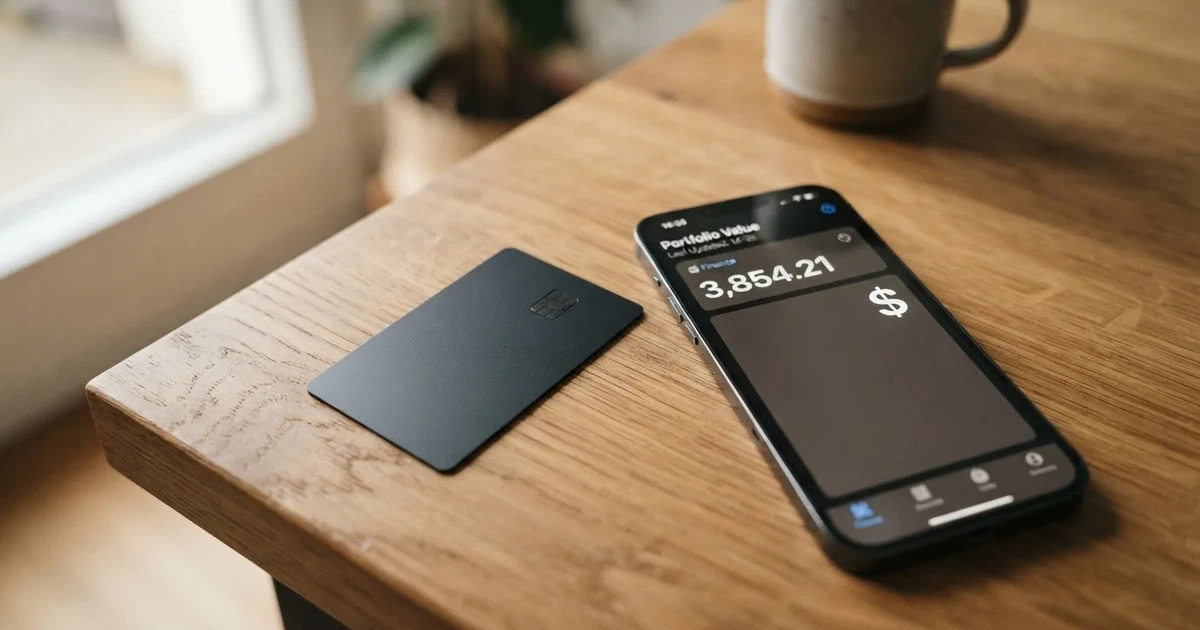
Here is what I checked, what I found and where I would push back.
The conditions described here are current as of October 28, 2026.
The score in detail
Here is how the 7.1 breaks down. Each line is the mark I gave that criterion and the reason behind it.
| Criterion | Mark | Why |
|---|---|---|
| Who can get it | 7 / 10 | Residence decides everything, and a long list of countries is restricted — including Belarus, India, Israel, China, Russia, Turkey, Ukraine and Vietnam — plus Cuba, Iran and North Korea. The list is explicitly not exhaustive. |
| Cost | 8 / 10 | Lite costs nothing to open and the card is free. Plasma states it “does not charge any additional fees”. Foreign exchange outside USD runs up to 1%, cross-border is 0%. Core and Platinum are either paid or unlocked by locking XPL. |
| Top-up options | 7 / 10 | You add local currency and receive dollars. Unofficial sources list USDT, USDC and USDG on named networks, plus USD, EUR, GBP, MXN, BRL and COP accounts, and withdrawals to a bank or wallet. |
| Reliability and complaints | 6 / 10 | Rain issues the card, Visa runs the network, Bridge provides the services. Plasma is not a bank. Collateral on the card can be liquidated after a missed payment. Trustpilot sits around 3.4–3.5 from just two reviews, one of them a complaint about terms changing. |
| Everyday use | 7 / 10 | Virtual and physical Visa, Apple Pay and Google Pay. Unofficial reports say the physical card is a Platinum-tier item and say nothing about ATMs. |
| Total | 7.1 / 10 | A card that does the basics well for crypto users, with real caveats around custody, limits and the physical tier. |
The audience note that runs through my whole assessment: this suits dollar-account users who like cashback in XPL. That is not a small niche and it is not a large one. It is a specific person — someone already holding stablecoins or dollars on a crypto platform who wants a card to spend them without opening a traditional bank account.
Who will give you the card
Availability here turns on where you live, not on who you are as a person — as far as I can tell.
Plasma’s own terms put it plainly: “Geographic, regulatory, and other eligibility limits apply, and are subject to change”. There is no published country list on the public pages. What there is, is a restricted-jurisdictions appendix.
The Terms of Service Appendix I lists jurisdictions where users “located in or connected to” them may be restricted, and the list is explicitly not exhaustive. It names Afghanistan, Belarus, Bosnia and Herzegovina, the Central African Republic, China (Mainland), the DR Congo, Guinea, Guinea-Bissau, Haiti, India, Iraq, Israel, Libya, Mali, Myanmar, Nepal, Nicaragua, Russia, Somalia, South Sudan, Sudan, Syria, Turkey, Ukraine (with a carve-out for Crimea, Donetsk, Luhansk, Kherson and Zaporizhzhia), Venezuela, Vietnam, Yemen and Zimbabwe. Cuba, Iran and North Korea are added separately.
Two details matter. First, the terms refer to being “located in or ordinarily resident in” these places — so it is residence that counts, not citizenship. Second, the International Card Terms ask you to attest that you are not a US citizen. That is a nationality attestation layered on top of a residence-based rule, and it is the only citizenship language I found.
Here is the part that should make you cautious. Third-party sites say the card is available in 188 countries and restricted in only seven — Cuba, Iran, North Korea, Russia, Syria, Ukraine and Venezuela. Some say Belarus, China, India, Turkey, Vietnam and Nigeria can still qualify with proof of residence in a supported country. Some say it is invite-only, or that it covers 31 US states. DefiLlama lists only the United States. Bleap says 150+ countries excluding the US. None of that is official, the sources flatly contradict one another, and the official terms list Russia, Belarus and Turkey as restricted — which directly contradicts the “restricted in seven” claim.
So: treat the official list as the real one and treat every third-party country count as unofficial and unconfirmed. Before you spend time on an application, read Appendix I yourself.
How to get it
Plasma sells this on speed. The card page promises you “a card you can add to your wallet in minutes”. The sign-up is verification, a tier choice, and adding the card to a phone wallet.
The card itself is a Visa — virtual and physical, “issued by Rain, a Visa Principal Member” — accepted in 180+ countries. The account is a US dollar account; the pitch is “Add local currency. Get dollars”.
What is not stated anywhere on the public pages: the identity verification itself. The card says only “Complete identity verification”. It does not say what documents you need, what the verification levels are, how long processing takes, or why an application might be refused. One Card Account per person, 18+, and you must not be under US, UK or EU sanctions.
Unofficial sources fill in some gaps — legal name, date of birth, government ID, address, sometimes proof of address, a liveness video, automated checks usually inside five minutes with human review on request — but none of that is confirmed by the card and I would not plan a trip around it.
The physical card is the murkiest part of the whole offer. The public pages never describe delivery: not which countries, not how long, not what it costs, not a replacement fee. The terms do say cards are activated through the Plasma One app and that a replacement card may carry a new number. Unofficial reports say the physical card is a Platinum-only feature, that the Core physical card is not confirmed live, and that no delivery or replacement fees are published. Given a July 2026 user review also noted having no physical card, I would treat “physical card” as something to confirm for your own tier rather than assume.
Fees and what a payment actually costs
The headline is a good one: “Plasma One does not charge any additional fees”. There are three tiers — Lite, Core and Platinum — and the fee level moves from standard to reduced to none added. The tier prices themselves are not stated on the public pages.

| Fee or limit | What the card says |
|---|---|
| Lite card cost | $0 |
| Monthly fee | Not stated |
| Conversion fee | “Plasma One does not charge any additional fees”; partner fees shown in the app before you confirm |
| FX, non-USD spend | Up to 1%; cross-border 0%; Platinum covers the FX fee; 0% APR on purchases |
| ATM | Not stated in the terms; ATM withdrawals earn no Rewards and Spending Credit cannot be applied to them |
| Daily limits | Not stated |
| Monthly limits | Not stated |
| Spending limits in practice | Set by Plasma based on collateral; can be changed or reduced to $0 at any time; no dollar maximums published |
| Stablecoin transfers | Zero-fee USDT transfers; third-party fees may apply |
Now the everyday arithmetic, using only the published numbers.
A USD purchase on the Lite card. Zero fees on the Plasma side. If you paid nothing in foreign exchange because you spend dollars, the payment costs the price.
The same purchase in euros. Foreign exchange outside USD is up to 1%, and cross-border is 0%. So the cost is the price plus up to 1%. On Platinum, the FX fee is covered.
An ATM withdrawal. This is the one I cannot cost for you. The ATM fee and allowance are not stated in the terms. Two things are stated: ATM withdrawals earn no Rewards, and Spending Credit cannot be applied to them. So you pay a fee we cannot name, and you earn nothing back.
Everything above the free tier is where the numbers stop being published. Unofficial sources suggest Core at $199 a year or a 20,000 XPL lock for twelve months, and Platinum at a 100,000 XPL lock, with the help centre calling that a launch rate rising to 150,000 XPL. Another source says an annual fee of $0–$120 or an XPL lock. Sources differ on the Core price. I am not going to pick one. The lock mechanics, though, are stated: locked XPL cannot be unlocked early, and your account cannot be closed while a lock is active.
That last point is worth pausing on. Choosing a higher tier is not choosing a cheaper month; it is making a one-year commitment to a token whose price moves.
Top up options
The official story is short: add local currency, receive dollars. Withdrawals go to a bank or a wallet “anytime” through in-app off-ramps where available, and the rails depend on your region. USDT is mentioned for transfers, but the networks are not stated.
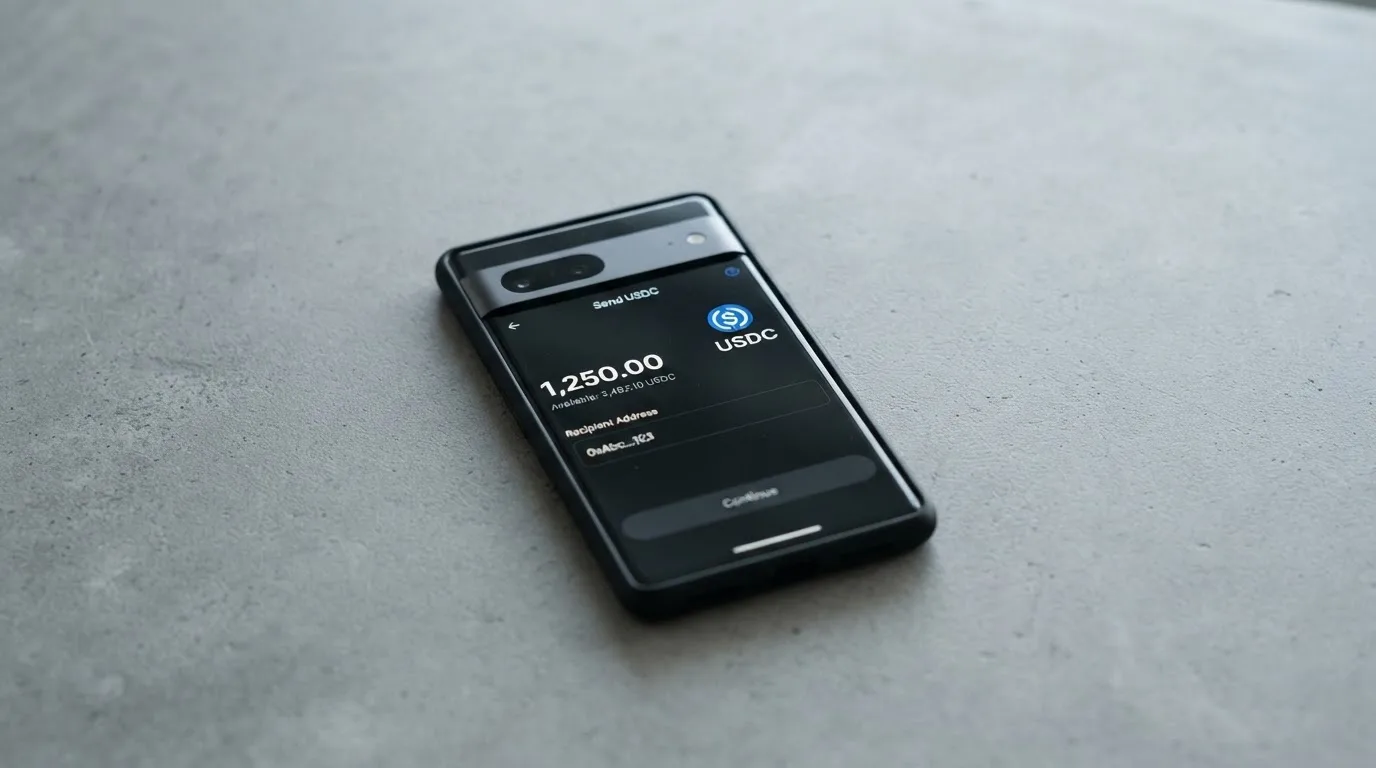
What is not stated: top-up fees, minimum amounts, and the specific amounts behind the warning that Cash Out “may carry processing fees and minimums”. Partner fees for some foreign exchange and bank withdrawal transactions are shown in the app before you confirm.
The unofficial picture is fuller. Deposits in USDT, USDC and USDG on listed networks, usually landing within five minutes. Fiat virtual accounts in USD, EUR, GBP, MXN, BRL and COP that convert to USDT. New York residents cannot use the fiat rails. None of that is confirmed by the card.
Two warnings that apply to any crypto top-up, not just this one. Sending on a network the provider does not support, or to an address belonging to a different network, can lose the money or need manual recovery with no guarantee — transfers are irreversible. And if you send USDT on Ethereum you need ETH in the wallet for the fee; a wallet full of USDT with no ETH cannot send.
On withdrawals, two things are stated that are easy to skim past. The issuer may suspend or cancel the account at any time. And withdrawing your collateral does not end your outstanding obligations — Spending Credit is not cash, and it is forfeited if the account closes.
Paying with it every day
This is the part that works. You get a virtual and a physical Visa, both good at Apple Pay on iPhone and Google Pay on Android, subject to region. That is the everyday path: add the card to a phone wallet once and pay by phone.
The rewards are the reason many people would stay. Cashback comes back in XPL: Lite 2% base; Core 3% base and 5% on AI spend; Platinum 4% base, 10% on AI, plus up to USD 600 a year in flight cashback. Rates vary by tier and may change.
The app is on iOS and Android. Store ratings and the number of ratings are not stated on the site, and I could not find them.
If something goes wrong with a payment, the team helps dispute an unauthorised charge and issues a replacement card. One hard deadline: a disputed charge must be reported within 60 days after it posts to your statement.
A few things about daily payment life that no one here will warn you about, because they are category-wide. A card issued in one country can look foreign to a shop in another, and some merchants decline prepaid or foreign BINs as a matter of policy. Address verification is mostly a US, Canada and UK thing and is generally unavailable for foreign-issued cards, which can cause declines that look like your card is broken. A declined authorisation can leave a hold on your funds for several days. And gambling is a category many issuers block on specific cards — not by law, but by policy.
What can go wrong
Let me take this section seriously, because the failure modes here are not hypothetical.
Plasma is not a bank. It describes itself as a financial technology company and states plainly that it is “not a regulated financial institution, bank”. Account services are powered by Bridge. The card is issued by Rain, a Visa Principal Member. Three different parties, and your money sits somewhere in that chain.
The account is collateral-backed. Your balance is collateral against the card, and that collateral can be liquidated after a non-payment. Miss a payment and the thing you were spending is not there any more.
Your balance is not a bank deposit. Stablecoin balances are not covered by FSCS or FDIC. There is no deposit guarantee scheme behind this.
Terms can change. This is not a general worry; it is a specific, documented complaint. The one critical Trustpilot review on plasma.org says the terms and the arbitration body changed after the reviewer raised issues — the arbitration body moved to the LCIA — and that advertised Platinum-tier benefits are not in the currently published tier. The Terms themselves are effective 26 February 2026, with the issuer named as Third National in the defined terms and Rain in a footnote.
The complaint record is thin, in both directions. Trustpilot shows roughly 3.4–3.5 out of 5 from only two reviews, and the company has not invited reviews. One critical review, one positive from July 2026 praising cashback, low fees and the virtual card but noting there was no physical card yet and that it was a private beta with an access key. No Reddit threads, no store-rating data found.
Self-custody cuts both ways. The FAQ says “You do” custody — Plasma does not custody assets. That means key loss, phishing and clipboard malware that swaps a copied address are entirely your problem. And the network cannot freeze or return funds.
Support is thinner than the marketing. Support is advertised as available 24/7 at [email protected], with standard, priority and VIP levels by tier. The site’s language selector shows English only.
Precedents from the category. Card programmes do close. Visa terminated its global agreements with FTX on 13 November 2022 and the FTX US debit card was wound down. Visa suspended WaveCrest in Europe in 2018, closing all WaveCrest-issued Visa programmes. The pattern is usually a notice period, then spending and loading stop, then you are asked to withdraw what is left. One 2026 closure reported by a secondary source — unconfirmed — ended new loads on 8 July 2026 and stopped spending on 8 August 2026.
Taxes. In the US the IRS treats digital assets as property, so exchanging them for goods, services or dollars generally produces a taxable gain or loss. Each card payment funded from crypto may be a separate disposal. This is a matter for a tax professional in your own country, not for me.
One last detail. A promo that gave six months of Core free on Android ended 21 July 2026. And the Platinum lock amount sat at a launch rate for the first 30 days before being set in the help centre — so the number you read today may not be the number you lock at.
What to take instead
Three alternatives came up in my research, and none of them beats Plasma One on the score — BloFin Wallet Card at 6.9, Decaf at 6.2, SafePal at 6.2. What they offer is a different shape of trade-off.
| Plasma One | BloFin Wallet Card | Decaf | SafePal | |
|---|---|---|---|---|
| Score | 7.1 | 6.9 | 6.2 | 6.2 |
| Card | Visa, virtual and physical | Visa Platinum, virtual/physical not stated | Visa, virtual or physical with tracked delivery | Virtual Mastercard debit |
| Card cost | Lite $0 | Activation, annual, issuance, dormancy $0.00 each | Virtual $5; physical $10 US / $90 rest of world; no annual fee | No account or management fees; issuance not stated |
| Spend fee | “No additional fees” | 1% or lower by VIP tier, down to 0% | Not stated | Not stated |
| FX | Up to 1% non-USD; cross-border 0%; Platinum covers it | Not stated | Visa’s own rate; Decaf adds none | 1% on Mastercard non-USD settlement |
| Cashback | 2%–10% in XPL | None — a reduced spend rate instead | Not stated | None |
| Top-up | Local currency to dollars; USDT, USDC, USDG unofficial | USDT and USDC on Arbitrum and Base | Card, bank transfer or USDC, on Solana and Stellar | Crypto from 40+ chains to USDC or fiat, via Arbitrum |
| Where it fits | Cashback seekers with dollars | Zero-fee users who want a straight spend rate | People who want no added FX | Simple USDC spending |
A note on what these do not tell you. BloFin’s country list is not published; the starting data mentions 35 countries including the US, Australia, Japan, the UAE, Brazil, Mexico, Malaysia and New Zealand, and it is not stated whether the test is citizenship or residence. Decaf publishes a restricted list — Belarus, China, North Korea, India, Iran, Iraq, Israel, Myanmar, Nepal, Russia, Syria, Turkey, Cuba, Ukraine, Venezuela, Vietnam, Nicaragua, Puerto Rico and Nigeria, plus restricted US states — and again does not say whether that is a citizenship or residence rule. SafePal says “citizens of supported regions who live in supported areas” and the regions page was empty when fetched.
If your priority is not being paid cashback but simply spending stablecoins with the smallest possible markup, Decaf’s “we add nothing on top of Visa’s rate” is the cleanest statement any of these makes. If you want a free card with no annual charge and no lock, BloFin’s $0 across the board is the plainest.
Who I would recommend it to
I would recommend Plasma One to you if all of the following are true. You already hold dollars or stablecoins and want a card that spends them. You are in a country the terms do not restrict, or you can genuinely show residence elsewhere. You want cashback paid in XPL and you understand what that token is. You are comfortable that the balance is collateral, not a bank deposit, and that a missed payment can liquidate it. And you will live primarily by phone wallet rather than by cash.
I would point you elsewhere if you need a physical card today, or if cash is central to your life — the ATM position is simply not documented. I would also steer away if you are in any of the restricted jurisdictions I listed earlier, until you have read Appendix I and confirmed your own situation against it. And if what you want is a regulated bank account, this is not one, by the company’s own description.
My honest summary: this is a good card for a specific person, with a specific set of unanswered questions that the public pages do not fill. Rate the tier you are in, not the marketing above it.
Frequently asked questions
What is the Plasma One card?
The Plasma One card is a Visa payment card that spends a balance you hold in dollars. You add local currency and receive dollars, or convert stablecoins into a spendable balance, and then pay with a virtual or physical card, in a phone wallet, or at a merchant. It is issued by Rain, a Visa Principal Member, with account services powered by Bridge. Plasma itself describes itself as a financial technology company, not a bank.
How does the Plasma One card work?
You top up a balance, and the card spends only that balance — the model is closer to a prepaid card than a current-account debit card. A merchant or your bank takes the payment, and the issuer converts or settles it. Spending limits are set by Plasma based on your collateral and can be changed or reduced to $0 at any time. Cashback comes back as XPL: 2% on Lite, 3% base and 5% AI on Core, 4% base and 10% AI on Platinum.
Is Plasma One a bank?
No. Plasma states it is “not a regulated financial institution, bank”. Rain issues the card and Bridge provides the account services, so three separate parties sit behind the product. Your balance is collateral-backed rather than a bank deposit, which means it is not covered by FSCS or FDIC, and the collateral can be liquidated after a missed payment.
Who owns Plasma One?
Plasma is the company behind the app and the programme; it is the brand, not the issuer. Rain holds the Visa programme as a Visa Principal Member. Bridge, described as a Stripe company, provides the regulated account services underneath. Visa and Mastercard do not issue crypto cards themselves — they license issuers, and they can suspend a programme, as they did with FTX in November 2022 and WaveCrest in Europe in 2018.
Is Plasma One available in my country?
Availability turns on residence, and the public pages do not publish a country list. The Terms of Service Appendix I names restricted jurisdictions including Belarus, China (Mainland), India, Israel, Russia, Turkey, Ukraine and Vietnam, plus Cuba, Iran and North Korea, and says the list is not exhaustive. Third-party sites claim 188 countries or 150+ countries and contradict each other, so read Appendix I yourself before applying.
Does Plasma One require KYC?
Yes. The card says “Complete identity verification”, sets the minimum age at 18, allows one Card Account per person, and excludes anyone under US, UK or EU sanctions. What it does not publish is what documents are needed, what the verification levels are, how long it takes or why an application might be refused. Unofficial sources suggest ID, address, liveness video and proof of address in some countries — unconfirmed.
Is the Plasma One card free?
Lite is: $0 for the card, with 2% base cashback, one free virtual card and standard support. Core and Platinum are not free — they are unlocked by an annual USD subscription or a 12-month XPL lock, and the amounts sit in the help centre rather than on public pages. Unofficial figures suggest Core around $199 a year or a 20,000 XPL lock, and Platinum a 100,000 XPL lock. Locked XPL cannot be unlocked early.
Can I use the Plasma One card at ATMs?
Nobody has published the answer. The terms do not state an ATM fee or allowance, which is unusual. They do say ATM withdrawals earn no Rewards and that Spending Credit cannot be applied to them. One unofficial source says a virtual-only Lite tier cannot be used at ATMs at all. If cash is central to how you live, this is the card’s biggest unanswered question.
How do I add the Plasma One card to Apple Wallet?
You add the virtual card through the Plasma One app, and Apple Pay supports it on iPhone, subject to region. Google Pay does the same on Android. The card number in your wallet is a device-specific token stored in the phone’s Secure Element, not on Apple’s servers, and each payment uses a one-time code. The card is described as addable to your wallet in minutes, but availability depends on your region.
Is the Plasma One card safe?
Safer than a custodial exchange balance, but not risk-free. The FAQ says you hold custody, so key loss, phishing and clipboard malware are your responsibility and blockchain transfers cannot be reversed. Balances are not deposit-guaranteed, collateral can be liquidated after non-payment, and the issuer may suspend or cancel the account at any time. There is instant card freeze and account lock in the app, and the provider states PCI DSS v4.0.1 Level 1 Service Provider — SAQ D.
Highest-scored wallet cards – cryptocardbest.com
Content created by the «cryptocardbest.com» team