
The Visa card attached to KuCoin, read carefully
 Available in US
KuCard is a Visa debit card that lives inside the KuCoin exchange account. You verify your identity on KuCoin, apply for a card, and from then on the card spends whatever balance sits in your KuCard account — crypto in, euros out, at a Visa terminal in a shop. That is the whole idea, and on paper it is a good one for anyone who holds stablecoins and wants to spend them like ordinary money without selling them at a separate exchange first.
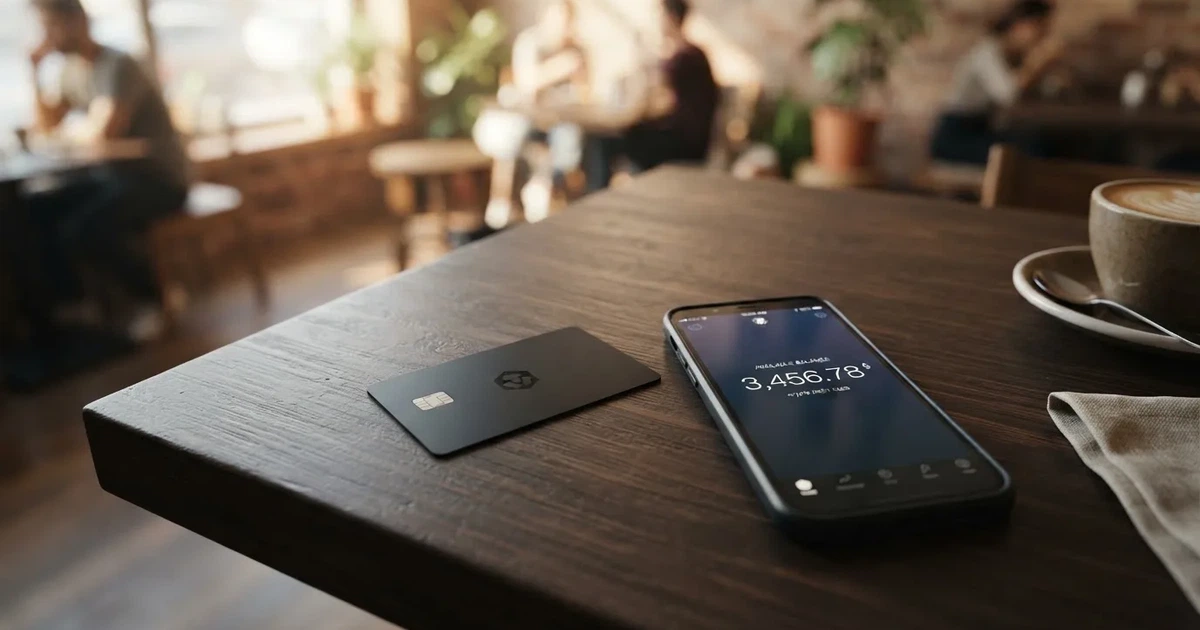
I went through the card’s public terms, the help pages, the fee schedule and what is publicly reported about the issuer, and this is where I landed. KuCard scores 6.0 out of 10. It is not a bad card. It is a card whose public paperwork is patchy in exactly the places where you would want precision — card fees, spending and ATM limits, which coins and networks are accepted, what happens to your balance if the programme shuts — and that combination is hard to ignore for anyone planning to lean on it for daily spending.
Who it suits: residents of the European Economic Area who already have a verified KuCoin EU account and whose money already sits in stablecoins. If you are in that group, this is a reasonable bridge between holding USDT and spending it in a café.
Who it does not suit: anyone outside the EEA, anyone in Malta, anyone who cannot get an EEA-issued identity document, and anyone who needs to see their limits, fees and rewards in one clear table before they commit. If you are comparing cards because you cannot get a normal bank card easily — the situation most people arrive here in — then the missing numbers matter twice as much.
Conditions are current as of October 28, 2026
| Criterion | Mark | Why |
|---|---|---|
| Who can get it | 5 / 10 | Only citizens and residents of the EEA plus Iceland, Liechtenstein and Norway; not available in Malta |
| Cost | 6 / 10 | First virtual card free, further ones 9.90 euros, physical 9.90 euros (the first); euro payments free, other currencies 2%, ATM in Europe 2 euros |
| Top-up options | 4 / 10 | Main source is cryptocurrency held in the KuCard account, USDT by default; list of coins and networks not disclosed |
| Reliability and complaints | 7 / 10 | Issuer is Wallester AS (Estonia, supervised by the Estonian FSA); almost no card complaints, one card review on Trustpilot, but complaints about the KuCoin exchange itself — withdrawal limits |
| Everyday use | 8 / 10 | Visa, virtual immediately and physical Chip&Pin; unofficial: Apple Pay and Google Pay exist; ATM 2 euros; the virtual card expires at the end of the month |
| Total | 6.0 / 10 | Strong for a specific audience, vague on the details that decide whether it works for you |
Who will they give you the card to
The eligibility rule is narrow and it is stated plainly in the terms: the card is “only available to citizens and residents of the European Economic Area (EEA)”. The permitted jurisdictions listed in the terms are the EU states plus Iceland, Liechtenstein and Norway, and the help page adds one exclusion — not available in Malta.
Beyond geography there is a document requirement: you need an EEA-issued ID. So the test is not simply “does my address sit in Europe”. It is citizenship or residence inside the listed jurisdictions, combined with an identity document issued inside the EEA.
Let me be careful about one thing people ask constantly, because the answer here is genuinely narrower than it looks. Residence is not enough on its own if the document is from outside the EEA, and citizenship of an EEA country is not enough on its own if you live somewhere the card is not permitted. Both legs have to hold. For a reader outside the EEA entirely — and this includes most people who ask whether KuCard works in their country — the answer is simply no, and no workaround changes it.
One more condition belongs in this section because people trip over it later: you also need a valid KuCoin EU account with full identity verification before you can apply for a card. That is covered in the next section.
How to get it
The route is three steps, and none of them is optional:
- Open and verify a KuCoin EU account, with full KYC completed against a supported EEA-issued identity document. Your address is verified too, and you must be 18 or older.
- Apply for a virtual or physical card inside the KuCoin platform.
- If you want the physical card, activate it in the KuCoin site or app once it arrives.
There is a single verification level here — no tiered system to climb. Full KYC with an EEA-issued ID or passport, address verified, age 18 or above. The terms also list the reasons an application gets rejected, which is a more honest page than most: an invalid phone number, an incorrect name or date of birth, an invalid 3-D Secure password, an insufficient balance to cover the card fee, and risk control. The processing time is not stated, so do not plan around a specific number of days.
On the card itself: it is a Visa debit card. You choose between a virtual card, which is usable immediately but expires at the end of the month and must be reapplied for, and a physical card with chip and PIN. You can hold a maximum of five cards.
Physical cards are posted to the address you give (Terms 5.5) and are activated in the KuCoin site or app. Express delivery is 30 euros per card. Replacing a card costs 9.90 euros. The standard delivery time and cost are not stated. And to repeat the geography from the previous section, because it is easy to miss: countries of issue are the EEA excluding Malta.
The monthly expiry of the virtual card is the detail that most changes how you would actually use this card, and I will come back to it in the everyday-use section.
What it really costs: Fees
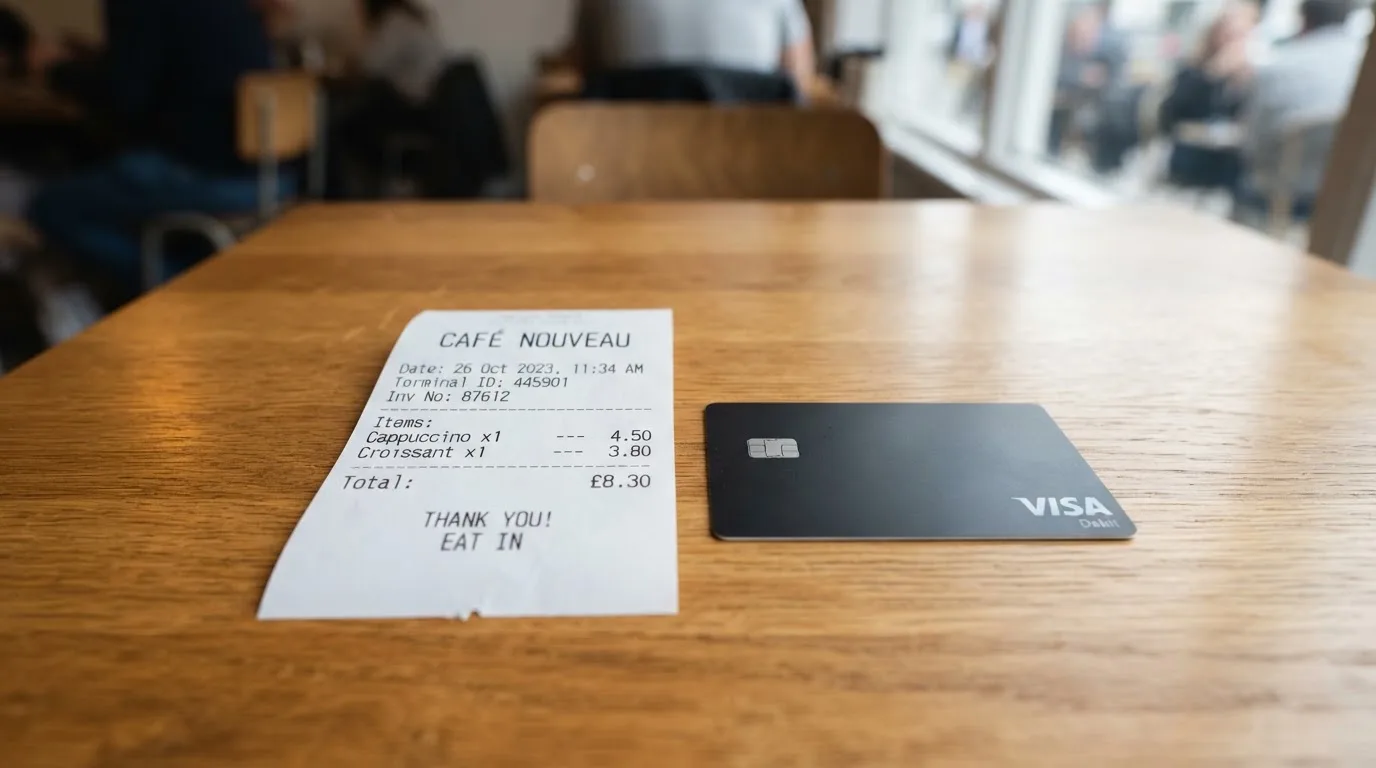
Here is the honest summary: the card is cheap if you keep it in euros and never touch an ATM, and it gets expensive the moment you do either of those things in a different currency or outside Europe. The euro is free. Everything else is charged.
But before that table, you should know the state of the documentation. The terms refer to a separate Fee Schedule, and the figures below come from that schedule plus the help pages. Some of them are inconsistent between sources — I flag that where it happens rather than picking one and moving on. And several figures that most cards publish simply are not there: a single list of the coins and networks accepted, a universal spending or ATM limit table. Where the card’s public pages don’t say something, I say so, once, and then move on rather than filling the gap with a guess.
| Fee or limit | Value | Notes |
|---|---|---|
| First virtual card | Free | Per the fee schedule |
| Each further virtual card | 9.90 euros / 9.99 euros | Two different values: the fee schedule says 9.90, an older support article says 9.99 |
| Physical card | 9.90 euros (the first) / 19.90 euros | Written ambiguously on the schedule; the 9.90 refers to the first card |
| Replacing a card | 9.90 euros | — |
| Cancelling a card | Free | — |
| Express card delivery | 30 euros per card | — |
| Standard delivery | Not stated | Time and cost both absent from the public pages |
| Payment in euros | Free | — |
| Payment in another currency | 2% of the transaction total | — |
| Refunds | Always in euros | Valued at the euro amount at the time of the transaction |
| Declined payment for insufficient funds | Free | — |
| Overdraft | Not available | — |
| ATM withdrawal in Europe | 2 euros per withdrawal | ATM operators may add their own fees |
| ATM withdrawal outside Europe | 2% of the transaction total plus 2 euros | Operators may add their own fees |
| Other charges that may apply | Local fees, third-party fees, network fees, a conversion spread, and IOF fees | Quoted from the terms; none is quantified |
| Crypto-to-euro rate | Set solely by KuCoin | Terms 10.2 |
| Daily spending / ATM limits | Not stated | The terms point to a FAQ; the issuer may set daily limits |
| Tiers | None | One Visa debit product, virtual and physical, maximum 5 cards |
Now three everyday payments, walked through, because percentages are easy to misjudge without an amount in front of you.
Coffee in a euro country. Say 4 euros in a café in Amsterdam. The card is a euro card, the terminal settles in euros, and euro transactions are free. Nothing is deducted beyond the 4 euros. This is the case the card is built for, and it is genuinely frictionless.
A 40-euro purchase in a non-euro country. The same transaction costs 2% of the transaction total, which is 0.80 euros on top of the 40. The euro is still the currency the crypto is converted into and the currency refunds are paid in, so you are not choosing a second currency here — you are paying a surcharge for the conversion on the merchant’s side.
Withdrawing 200 euros (an unofficial example figure) at an ATM in Europe. The fee is 2 euros per withdrawal. Now factor in two things the schedule does not quantify: ATM operators may add their own fees, and a declined authorisation can leave a hold on your funds for several days. A single withdrawal of a small amount, with a local fee and a hold on top, is the most expensive way to use this card.
One number deserves a flag of its own because it is the one that changes real behaviour most: the conversion spread. The terms say a spread may apply and that the crypto-to-euro rate is “solely determined by” KuCoin. That is a blank space with a percentage next to it. The 2% figure covers non-euro currency payments, not the crypto conversion. If you are spending crypto, this is the cost the card’s own pages do not quantify, and it is worth asking support about before you commit to a month of use.
How to top it up
The primary source of funds is supported cryptocurrency held in the KuCard account. The default spending currency is USDT. Beyond that, the card’s public pages say almost nothing: which coins are supported, which networks are supported, and whether you can top up in fiat are not stated.
There is no top-up fee row in the fee schedule, but the same “conversion spread” caveat applies, and the crypto-to-euro rate is set solely by KuCoin under Terms 10.2. So the practical shape of a top-up is: you have crypto in the account, the card converts it to euros when you spend, and the rate at which that happens is the provider’s choice rather than a published figure.
Nothing beyond the USDT default was found in the card’s own material, which is why this section scores lowest of all the operational ones. Two questions I could not get answered from public sources — whether fiat top-up exists at all, and who pays the network fee on a deposit — are worth putting to support before you try.
Getting money back out is a related question people ask and the answer is equally unstated: moving card balance back to crypto or to a bank account is not described on the public pages. What is stated is that cancelling a card is free, that refunds always come back in fiat, and the closure rules. An unactivated card may be closed after three months with no refund of service charges. A card may be terminated after four consecutive months closed or blocked, or six months of non-use. What happens to a remaining balance when a card is closed is not stated.
Paying with it every day
Everyday use is where this card scores best, and it is worth being clear about why before I complicate it. It is a Visa debit card, so it works at Visa-accepting terminals, and the terms limit use to purchases that are not prohibited by law. That is the ordinary, unremarkable case: a card that pays for things in shops. There is no published merchant category list, so you will not find a table telling you which categories are blocked.
The practical pleasures are real. The virtual card is available at once, which means you can be spending before any plastic arrives. The physical card has chip and PIN, so it is usable in terminals that do not accept contactless. And third-party reporting (SpendNode, October 2026, and a 2024 PYMNTS item) indicates that Apple Pay and Google Pay are both supported — but that is unofficial, and the card’s own public pages do not confirm it, so treat it as likely rather than certain.
The catch, and it is not a small one, is the virtual card’s lifetime. It expires at the end of the month and must be reapplied for. So the card that appears to be your instant answer is in fact a card you reissue roughly monthly, and you should plan your payment methods around that rhythm rather than treating the virtual card as your only card. The physical card is the one that stays.
Rewards are the last piece, and they are the weakest part of this review. The terms mention only “different benefits or rewards” from time to time, with no rates at all. A separate benefits article exists but was not readable from the public pages, so I cannot give you a verified number there. What third-party reporting describes is an EU programme with tiers from L0 (below 500 USDC monthly eligible spend, 1% cashback, capped at 5 USDC) up to L6 (30,000+ USDC, 8%, capped at 200 USDC), points becoming available after 15 days and expiring after 90 days, and 1,000 points worth 1 USDC. SpendNode notes that KuCoin has no single published reward table. Unofficial throughout, so read it as a shape rather than a promise. The same source reports a 2-euro monthly inactivity fee on a virtual card after 90 days without a transaction — relevant given that the virtual card expires at month end anyway, but it applies to the physical card too.
What can go wrong
No complaints specific to KuCard were found: no Reddit threads, no official incident, and on the complaint front this card is unusually quiet. The issuer is Wallester AS, registered in Estonia (11812882), a Visa principal member supervised by the Estonian financial authority. UAB EURLITA, in Lithuania, operates the virtual currency exchange side, and KuCoin operates the platform. Wallester describes itself as KuCoin’s card-issuing partner for Visa cards in the EU, and the fee schedule page was last updated 29 September 2026. No licence loss or fine was found.
Here is the part that deserves a closer look. The Trustpilot profile for kucoin.com is the exchange profile, not a card-only page, and it is grim: no TrustScore displayed, 1,597 reviews, 78% one-star, with recurring themes of withdrawal and account restrictions (August to October 2026), dormancy fees and repeated ID demands to log in (September to October 2026), P2P disputes, and deposits not credited. The card-specific evidence is thinner — one review, from July 2026, about roughly 120 dollars stuck after the card on file expired, with KuCoin asking for an old bank PDF statement and slow replies.
So the risk is not that KuCard is broken. It is that the card sits inside an exchange account, and when something goes wrong at the exchange level — a restriction, a repeated document request, a support queue — the card inherits the problem. If your card is your everyday payment method, that coupling is a consideration.
The more mechanical risks are these. Your money is in a custodial arrangement: the card draws on the KuCard account on the KuCoin platform, which in practice means the platform holds it. The terms do not use the word “custodial”, and I am not going to put it in their mouth — but the structure is the structure, and so is the risk that comes with it. If the account is frozen for compliance reasons, the card balance is unavailable to you.
Disputes have a hard deadline. Unauthorised transactions must be reported “within 60 days of the date of the transaction” or they are treated as correct. That is a long window, but it is the only one you get. Refunds are valued at the euro amount at the time of the transaction and arrive in fiat, and fees are not refundable; the refund processing time is not stated.
Loss or theft means freezing your account immediately on the platform — the card is not frozen in isolation. Strong Authentication is required, defined as two independent elements. Your liability for unauthorised use is capped at 50 euros unless there is fraud or gross negligence on your part. Two-factor authentication is not specifically mentioned in the terms, and insurance is not stated.
Help runs through the KuCoin EU Help Center and a “Submit a Ticket” function. Help articles exist in Russian. Chat, Telegram channel and support hours are not stated — and given the complaint themes above, if you are outside European working hours, that gap is worth thinking about before you depend on the card.
What to take instead
I want to be careful here, because these alternatives are not all comparable and none of them is straightforwardly better for you. Two of the three are aimed at people who are not in the EEA, so if that is you, they are the relevant comparison; if you are in the EEA and already on KuCoin, your realistic choice is between KuCard and an ordinary bank card.
Bybit Card (6.0 / 10) is the closest competitor for spend. It is virtual and physical, rolled out by region, and the card currency depends on your country of Advanced Identity Verification. It is explicitly not for the EEA: the cards page states that “this product is not meant for European Economic Area customers. All European Economic Area customer participation is strictly prohibited.” Regions listed include Argentina, AIFC (Kazakhstan), Georgia, Kazakhstan, Australia, Mexico, Brazil, Peru and Asia Pacific, and where a country is unsupported Bybit registers your interest rather than opening the account. Its transparency is better than KuCard’s on the things I care about: the fee schedule is per region and explicit — virtual issuance free “until further notice”, physical issuance 29.99 USD in Australia, 5 USD or USDT in Argentina, 29.99 USDT in Georgia and Kazakhstan (AIFC), 5 USDT in Asia Pacific, free in Brazil and Mexico. The FX fee is 2% on top of the network rate in the Australia, Asia Pacific, Georgia and Mexico group, 2% “International Fee” in Kazakhstan, 7% in Argentina, 1.5% in Brazil and 1% in Peru. The reward structure is published by month: Base 2.00% capped at 5 USD, up to Infinite at 10% capped at 600 USD, with points pending four days and cashback in USDT at points × 0.002. One detail worth knowing if you compare: from 5 October 2026, only crypto-funded transactions earn points or cashback.
MEXC Card (5.6 / 10) is the thinner option. It lists the Philippines, Taiwan, Thailand among available countries with the full list behind a link. It is a virtual card only — physical cards are not yet available — and the network and card currency are not stated. Issuance is 20 USD with a possible discounted 0 USD price shown next to it, service fee 0%, and fees vary by card type per a linked guide. You fund it by transferring USDT to the fiat account and adding it on the card page. Cashback is by M-Score tier: Standard 4% capped at 100 USDT a month, Premier 6% capped at 300, Elite 10% capped at 800.
An ordinary bank debit card is the option I would actually weigh first if you are in the EEA and can get one. You get published limits, published fees, published chargeback rights, a deposit guarantee scheme where one applies, and none of the exchange-coupling risk described above. The whole premise of a crypto card is that it solves an access problem — and if you do not have that problem, you are paying a percentage here and there to hold risk you could simply not take.
| KuCard | Bybit Card | MEXC Card | |
|---|---|---|---|
| Score | 6.0 / 10 | 6.0 / 10 | 5.6 / 10 |
| Who can get it | EEA citizens and residents, plus Iceland, Liechtenstein, Norway; not Malta | Not for the EEA; listed regions include Argentina, AIFC, Georgia, Kazakhstan, Australia, Mexico, Brazil, Peru, Asia Pacific | Philippines, Taiwan, Thailand and more listed |
| Card form | Virtual (expires at month end) and physical Chip&Pin | Virtual first, then physical; not available in Peru | Virtual only |
| Network | Visa | Mastercard or Visa depending on region | Not stated |
| Card currency | EUR | USD, ARS, MXN, BRL, PEN or USD by region | Not stated |
| Fee transparency | Patchy; two conflicting values for further virtual cards | Explicit per region | Partial; a linked guide was not readable |
| Rewards | Terms say only “benefits or rewards”, no rates | Published tiered cashback by month | Cashback by M-Score tier |
Who I would recommend it to
I would recommend KuCard to a resident of the EEA who already holds stablecoins on KuCoin, already has a verified account, and wants to spend them at a shop without a separate exchange step. For that person the card does a real job at a reasonable cost: euro payments cost nothing, the virtual card is instant, and the physical card is a normal chip-and-PIN Visa.
I would recommend it more cautiously if you need the card to be your primary or only payment method, because of the monthly expiry of the virtual card, the unstated spending limits, the 2-euro ATM fee, the unquantified conversion spread, and the way the card inherits any friction in the exchange account above it.
I would not recommend it at all if you are outside the EEA or in Malta, if you cannot produce an EEA-issued identity document, or if you want to see your limits, your rewards rate and your total cost on one page before committing — because on this card, those three things are not on one page, or on any page.
Frequently asked questions
What is KuCard?
KuCard is a Visa debit card issued through the KuCoin exchange platform in Europe. You apply for it inside your verified KuCoin account and it spends a balance held there, with USDT as the default spending currency converted to euros. It comes in virtual form, usable immediately, and as a physical chip-and-PIN card posted to your address.
Who can get a KuCard?
Citizens and residents of the European Economic Area, plus Iceland, Liechtenstein and Norway, with an EEA-issued identity document, a verified address and an age of 18 or over. Malta is explicitly excluded on the help page. You also need a valid KuCoin EU account with full KYC completed. If you live outside the EEA, the answer is no.
How do I apply for a KuCard?
Three steps: open and fully verify a KuCoin EU account using a supported EEA-issued identity document, then apply for a virtual or physical card inside the platform. A physical card is posted to the address you give and is activated in the KuCoin site or app. Rejections are listed as an invalid phone number, wrong name or date of birth, invalid 3-D Secure password, insufficient balance for the fee, and risk control.
What does KuCard cost?
The first virtual card is free. Further virtual cards are 9.90 euros on the fee schedule, though an older support article says 9.99. A physical card is 9.90 euros for the first, with 19.90 euros also written on the schedule ambiguously. Replacement costs 9.90 euros and cancelling is free. Express delivery is 30 euros per card. Euro payments are free; other currencies cost 2% of the transaction total.
Is KuCard free to use?
It is free in the sense that euro payments cost nothing and the first virtual card has no fee, and it is not free in the sense that several other things are chargeable: further virtual cards, physical cards, express delivery, non-euro payments at 2%, and ATM withdrawals at 2 euros inside Europe or 2% plus 2 euros outside it. The terms also warn that a conversion spread, network fees and IOF fees may apply, without quantifying them.
How do I top up a KuCard?
The primary source is supported cryptocurrency held in the KuCard account, with USDT as the default spending currency. There is no top-up fee row in the fee schedule, but a conversion spread may apply and the crypto-to-euro rate is set solely by KuCoin under Terms 10.2. Whether you can top up in fiat, what the minimum is, and who pays network fees are all not stated on the public pages.
Can I use KuCard with Apple Pay and Google Pay?
Third-party reporting from SpendNode in October 2026, and a 2024 PYMNTS item, both indicate that Apple Pay and Google Pay are supported. That is unofficial and the card’s own public pages do not confirm it, so treat it as likely rather than certain. What the terms do cover is use at Visa-accepting terminals for purchases not prohibited by law, with no published merchant category list.
Is KuCard safe?
It is issued by Wallester AS, an Estonian Visa principal member supervised by the Estonian financial authority, which is a real institution rather than an unknown name — and I found no card-specific complaints, incidents or regulatory action. The trade-offs are structural: the balance is held on the exchange platform, so account freezes or document requests affect the card too, and the issuer’s unauthorised-use liability is capped at 50 euros. Report anything unauthorised within 60 days or it is treated as correct.
Why does the virtual card expire every month?
The virtual card is designed for immediate use and expires at the end of the month, after which you reapply for it. That makes it a short-term instrument rather than your everyday card, and it is the main practical reason to take the physical version. Note also that third-party reporting describes a 2-euro monthly inactivity fee after 90 days without a transaction, which applies to the physical card too.
Is KuCard worth it?
Worth it if you already keep stablecoins on KuCoin, live in the EEA, and spend mostly in euros — the euro path is genuinely free. Worth weighing carefully if you depend on ATM withdrawals, pay in other currencies, or need published limits, because the limits are not published, the ATM fee is 2 euros, non-euro payments cost 2%, the conversion spread is unquantified, and the card’s figures for card fees even differ between the fee schedule and an older support article.
Highest-scored exchange cards – cryptocardbest.com
Content created by the «cryptocardbest.com» team