
Lemon card review for anyone who's been turned down for a regular bank card
 Available in US
If you’ve ever been told “no” by a regular bank — because you’re new to the country, your paperwork is unusual, or you just don’t fit a standard profile — the Lemon card will probably come up in your search. It’s pitched as a way to spend from a crypto balance using a VISA, and it has real users in Latin America. The interesting question isn’t whether Lemon exists; it’s whether it actually works for someone in your situation, what it really costs, and where the rough edges are.

I’ve gone through Lemon’s official pages, the public registry entries, the user reports that exist in English and Spanish, and the background that applies to any crypto card. The card is real, it does what it says in Argentina, and outside Argentina the picture thins out fast. The single most important number to keep in your head: 4.7 out of 10. That’s the score I’d give it for a general reader weighing it against alternatives, and I’ll explain how I got there. The short version is that the cost story is unusually clean for this category, but the eligibility story, the top-up story and the user-experience story each carry significant gaps.
Before going further, the conditions I describe are current as of October 28, 2026. A card like this is a moving target — card programmes get paused, fees change, supported networks expand — so treat the specifics as a snapshot, and double-check anything that would actually cost you money.
Verdict: 4.7 out of 10
That single number comes from a balanced look at five areas. Two areas pull the score down, two areas keep it from collapsing, and one sits in the middle. Here’s the breakdown:
| Criterion | Mark | Why it lands there |
|---|---|---|
| Who can get it | 2 / 10 | Only Argentina is named on the official pages; everything else is unofficial or unconfirmed |
| Cost | 8 / 10 | No shipping fee, no maintenance fee, and a publicly stated cashback rate |
| Top-up options | 3 / 10 | Only Bitcoin is named; the networks and other coins aren’t stated on the card pages |
| Reliability and complaints | 5 / 10 | A named local company with a registry entry, but a small and unhappy set of user reviews |
| Everyday use | 5 / 10 | Real Visa card with a virtual option, but mobile-wallet support and dispute handling aren’t disclosed |
The case for Lemon is narrow and specific. If you live in Argentina, want to pay in foreign currency without the country’s 30% RG5617 tax at the merchant, and you like the idea of earning up to 2% cashback in Bitcoin on what you spend, Lemon is a real, working option with a clean fee structure on the headline items. If you live anywhere else, the official pages don’t tell you what happens — the card isn’t marketed to you, and the only public sign of expansion is a waitlist in Colombia that hasn’t been confirmed by Lemon.
The case against Lemon, in plain terms: eligibility is opaque, top-up is opaque, and the company behind it has had to publicly defend itself against claims of birthplace-based refusals. None of these are deal-breakers on their own, but together they mean you should not sign up assuming things will be the way they are in Argentina.
Who Lemon will actually give the card to
The honest answer is: Lemon’s official pages only describe Argentina. The site talks about “Buy and sell cryptocurrencies in Argentina” and a virtual VISA card that you can create in seconds, and it markets the card as a way for Argentines to pay abroad in foreign currency “no pagan el impuesto RG5617 del 30%” — meaning the 30% RG5617 tax doesn’t apply to those payments. The site also mentions QR payments in Argentina and Brazil, which is a separate product (paying at a QR code with a Lemon balance), not the card itself.
What the official pages don’t say is just as important. There’s no statement about whether the rule is based on citizenship or on residence. There’s no list of supported countries beyond Argentina. The card pages don’t say what level of identity verification is needed to activate it; they just claim “4M validated users” without describing what “validated” means in practice.
The only official sign of expansion outside Argentina is a mention that QR payments also work in Brazil, and that’s a separate product from the card. Beyond that, the only public signal of expansion is unofficial: Colombian news outlet Noticias RCN reported Lemon opened a waitlist for the card in Colombia, but the date wasn’t given in the public record and Lemon hasn’t confirmed it on its own pages. Treat that waitlist as unconfirmed — interesting, but not a commitment.
If you’re reading this from outside Argentina, the practical question is: what would happen if you tried to sign up? The card pages don’t tell you, and the answer could be a clean “no”, a “yes but only for the QR product”, or an indefinite wait. The safest move is to check the help centre or contact [email protected] before you put effort into the application.
For Argentines, the picture is clearer. The card is built around you. It is offered by a registered company, Bay Treasure Caramel S.A. (Tax ID 30-71753495-2), which holds VASP No. 162 in Argentina’s CNV registry of virtual asset service providers. That registry entry is the difference between “an app you found online” and “a registered crypto business in your country”. The card itself is a VISA, and there’s a separate VISA Lemon Credit Card that’s backed by Bitcoin — Lemon announced a credit card that takes 0.01 Bitcoin as collateral and gives a $1,000,000 credit line, though the announcement wasn’t dated in the public record.
How to sign up
Lemon doesn’t publish a step-by-step on its card pages. What it does say is the headline: “creá tu tarjeta virtual para empezar a usarla en segundos” — create your virtual card and start using it in seconds. The card you get is a VISA Lemon Card with a virtual option, and there’s a separate credit-card product that’s also a VISA. Both are described as international prepaid VISA cards; the card’s billing currency isn’t stated on the page.
What the site doesn’t say: how long full identity verification takes, what documents you’ll need to upload, what counts as a valid address, whether the virtual and physical cards require different levels of verification, or how long the physical card takes to arrive. It also doesn’t state what the KYC “levels” are — many crypto cards tier the verification so a basic check gets you a low-limit virtual card and a deeper check unlocks the physical one with higher limits. Lemon may well do something similar, but it isn’t documented publicly.
Shipping is the one signup cost the company does address: “sin costo de envío” — no shipping cost. The replacement cost for a lost or stolen card isn’t stated, and delivery time isn’t stated either.
So the practical path, given what’s public: install the app, start the registration, and see what the app actually asks for. The things that will probably matter are a government ID, a selfie, a proof of address, and a working phone number or email. If the app asks for something you don’t have, that’s the moment to decide whether to push through or stop.
What the Lemon card really costs: the Fees section
This is the part of the review that surprised me in Lemon’s favour, and it’s also the part with the most “unofficial” caveats. The card is unusual in this category for putting its main costs in plain language on the page. Here’s what the costs look like, with the source of each line:

| Fee or limit | What Lemon says | What the page does not say |
|---|---|---|
| Issuance (virtual) | “create your virtual card in seconds” | Whether a one-time fee is charged when the physical card is sent |
| Shipping | “sin costo de envío” | Delivery time |
| Maintenance | “sin costo de mantenimiento” | — |
| Crypto conversion at point of sale | Not stated officially; UNOFFICIAL: 0.5% commission when crypto is auto-sold at the till | Whether the rate includes a spread on top of the commission |
| Foreign exchange | “no pagan el impuesto RG5617 del 30%” (Argentines paying abroad) | The card’s billing currency, or any FX margin on non-ARS spending |
| ATM withdrawal | Cash withdrawal at “comercios adheridos” (partner shops), shown on a map | Whether this is at ATMs or at shop counters; the fee |
| Daily purchase limits | User-configurable (“Configurá límites de compras diarias”) | The default limits, and the maximum |
| Cashback | Up to 2% in Bitcoin on every purchase | Whether tiers or caps apply |
The honest read: the two fees the company has put in writing (no shipping, no maintenance) are unusually clean for a crypto card. The fees that would actually cost you money day-to-day — the conversion fee when the card sells your crypto at the till, the FX margin on foreign spending, the cash withdrawal fee — are not stated on the official pages. The 0.5% conversion fee is a single unofficial source and isn’t confirmed by Lemon.
To make this concrete, here are three everyday payments and how the fees apply.
- Buying coffee with crypto balance in Argentina. You tap the card at a café. Lemon converts your crypto to pesos at the till and pays the merchant. The official site does not state a fee for this conversion. Unofficial reporting puts the commission at 0.5% when crypto is auto-sold at the point of sale; that number is not confirmed by Lemon, so treat it as a working estimate.
- Paying a foreign subscription in dollars from Argentina. The card is marketed as a way to do exactly this without the 30% RG5617 tax. The card’s billing currency isn’t stated, so whether the amount is converted from pesos at an FX margin isn’t clear from the public pages. Cashback of up to 2% in Bitcoin is the official offset.
- Withdrawing cash at a partner shop. The site describes cash withdrawal at “comercios adheridos” — partner shops, with a map. It’s not described as ATM withdrawal, and the fee isn’t stated. If you need regular ATM access, the lack of a disclosed fee schedule is a real gap.
What you should check first: before loading any meaningful amount, look for a fee schedule inside the app, in the help centre, or in the terms of service you agree to on signup. The app is the place where the real numbers live.
Top up: how to fund the Lemon card
This is the section where Lemon says the least, and where the gap between “real” and “stated” is widest. The public card page names only one funding story: Bitcoin. Cashback is paid in Bitcoin, the separate credit card is “respaldada en Bitcoin” — backed by Bitcoin — and the headline is that you earn Bitcoin on what you spend. The site does not name any other cryptocurrency, does not name any blockchain network, and does not describe how to top up a balance.
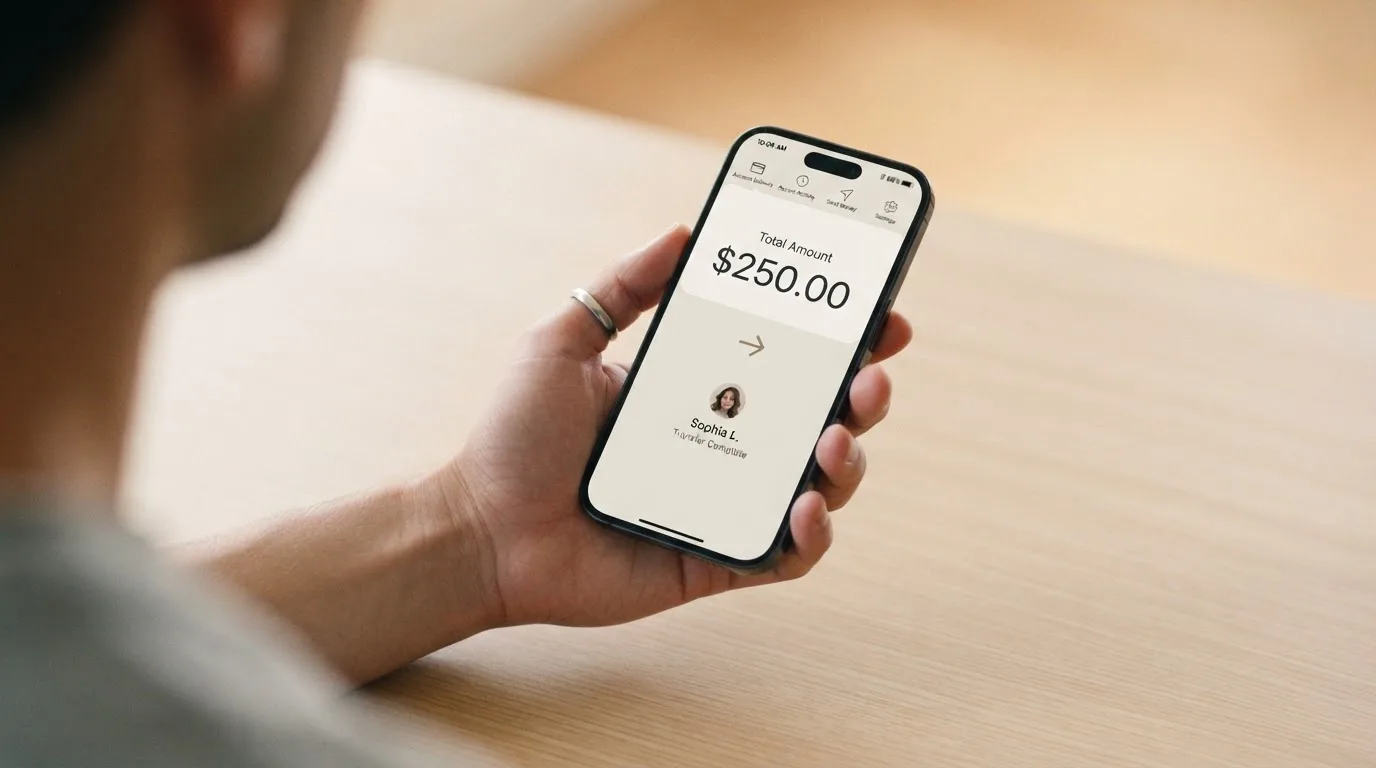
What this means for you:
- If you only hold Bitcoin and you trust the Bitcoin network, Lemon is a natural fit. You’ll be paid in Bitcoin, you’ll spend in Bitcoin, and the rewards loop is internally consistent.
- If you hold stablecoins like USDT or USDC, or other coins, Lemon’s official pages don’t tell you whether you can top up with them. That’s not the same as “you can’t” — many apps support more coins than they advertise — but it does mean you can’t rely on the marketing for an answer.
- If you need to send crypto on a specific network (Ethereum, Tron, Base, Solana, Lightning), the card page does not state which network to use. Sending on the wrong network is one of the most common ways people lose crypto: blockchain transfers are irreversible, and a deposit on an unsupported network can be unrecoverable. Stablecoins have a specific twist here — Circle stopped supporting USDC on Tron in February 2024, so USDC on TRC20 is no longer a native option anywhere — so the network choice matters for both the coin and the chain.
In practice, the safest path is to start with a small test deposit from the app, see what the app shows as a supported coin and a supported network, and only then move a meaningful amount. If the app is silent on the question, contact [email protected] before sending.
One more thing on funding: the site does not state whether you can fund the card with fiat from a bank account, whether direct debits are supported, or whether there’s a third-party on-ramp inside the app. Many crypto cards do support bank transfers, but again, Lemon’s card pages don’t say so.
Paying with the card every day
The card is a VISA, and that’s the everyday-use headline. VISA is accepted at tens of millions of merchants worldwide, and the card exists in two forms: a virtual card you can create “in seconds” and use for online purchases, and a physical card that can be shipped. The site explicitly says “tarjeta virtual para empezar a usarla en segundos” and also offers a delivered card with no shipping fee.
Cashback is the everyday carrot: “Earn up to 2% cashback in Bitcoin on every purchase”. The site also mentions that payments over a certain amount (given as $10,000, which is presumably in pesos given the Argentina focus) earn raffle tickets. The full terms of the cashback — whether the 2% has caps, whether some categories earn less, whether the 2% is a promotional rate — are not detailed on the public pages.
Three things that affect daily use and aren’t stated:
- Mobile wallet support. The site does not state whether the card works with Apple Pay or Google Pay. That’s a real gap if you wanted to leave the physical card at home and pay with your phone. With VISA cards, tokenisation is technically straightforward, but the issuer has to enable it.
- Disputes and chargebacks. The card page does not describe a dispute process. A chargeback is a refund ordered by the card issuer to settle a dispute, with reason codes such as fraud, duplicate billing or goods not received. If something goes wrong with a purchase, Lemon’s process isn’t publicly documented.
- App store ratings. The site does not show app store ratings, and the store pages weren’t read for this review. So I can’t tell you whether the app crashes on Android, has a clean interface, or is widely loved.
What the card does say: you can configure your own daily purchase limits (“Configure your own daily purchase limits”), which is a sensible safety feature, and you can pause the card at any time (“pause the card at any time”). Both are exactly the kind of controls you’d want.
A background note that applies here: card payments go through several parties, and the network (Visa) sets the rules, the issuer (a bank or e-money institution licensed to issue under the network’s licence) holds the programme, and the crypto brand is often only a programme manager or front-end that markets the card. Lemon’s card pages do not name the issuing bank. That’s not unusual in the category, but it does mean Lemon is the front you interact with, while someone else holds the regulatory liability for the card itself.
What can go wrong
Three things matter here, and they sit in different places.
The user reports are short and unhappy. Trustpilot shows Lemon at 2.5 out of 5 from a sample of 5 reviews — too small to be statistically meaningful, but worth reading. The themes that come up:
- *Poor customer support.* “El peor soporte del mundo” — the worst support in the world — is the kind of quote you don’t want to see, and the help centre is in Spanish, which matters if you don’t read it.
- *Rejected transfers.* Lemon Cash has stopped accepting SEPA IBAN transfers from online betting sites because Lemon’s banking partner rejects them. That’s a category issue (gambling is a sensitive merchant category for many issuers), not a Lemon policy, but it affects users.
- *Birthplace-based refusals.* One user report claims Lemon has refused customers from certain birthplaces. If true, this would be unusual and would warrant a direct question to the company; if not, it’s a single anecdote in a five-review sample. Either way, ask before assuming.
The company behind the card is real, but small. Bay Treasure Caramel S.A. (Tax ID 30-71753495-2) is registered in Argentina as a virtual asset service provider, VASP No. 162 in the CNV registry. The company also notes that “Digifin S.A. is not a financial institution”, and that “Lemon is not a bank”. The issuing bank for the card is not stated. That distinction matters: Lemon is the programme manager and the front-end, and a separate, unnamed bank actually issues the card. If something goes wrong with the card programme, the contract is with the issuer, not with Lemon directly.
The custody model is custodial. Your crypto is held by Lemon (the company) rather than by you, in your own wallet. With a custodial wallet the provider holds the credentials, so you must trust the provider completely. Custodial platforms have a record of failures — Mt. Gox, Coincheck, Ronin — and holding funds with a custodian carries counterparty and hack risk. The card pages don’t describe how customer funds are safeguarded; in the EU, EMIs must safeguard customer funds by segregating them or insuring them, but those funds are not the same as bank deposits and may not be covered by deposit guarantee schemes. Argentina’s regulatory framework is different, and the card pages don’t describe Lemon’s specific safeguards.
Other practical risks:
- *Programme closure.* Card programmes can be suspended. The category has examples: Visa terminated its global agreements with FTX in November 2022, and WaveCrest (a Visa issuer that supplied several crypto card brands) was suspended by Visa in Europe in 2018, closing all WaveCrest-issued Visa programmes. Programme closures typically give a notice period, then stop spending and loading, then ask users to withdraw remaining balances.
- *Decline patterns.* Some merchants decline prepaid or foreign-issued cards because the BIN lookup reveals the card type and issuer country. Address Verification Service (AVS), which compares numeric parts of the billing address, is mainly offered in the US, Canada and the UK, and is generally unavailable for foreign-issued cards, which can cause declines. Argentina is a foreign issuer from the perspective of most non-Argentine merchants, so this is worth knowing in advance.
- *Sanctions exposure.* Tether says it disables tokens in wallets on the OFAC sanctions list and has frozen funds tied to illicit activity. Stablecoins are not censorship-proof, and a custodial platform that screens wallets is part of the category, not a Lemon-specific feature.
- *Irreversible blockchain transfers.* If you top up by sending crypto on the wrong network, the funds can be lost or require manual support recovery with no guarantee. This is the most common way individuals lose money with crypto cards.
A small administrative detail: Lemon publishes a theft-and-loss reporting page at report.lemon.me, a help centre at help.lemon.me/es (Spanish), an email at [email protected], and a status page at status.lemon.me. The help centre is Spanish-only, support hours are not stated, and that combination matters if you don’t read Spanish.
What to take instead
Lemon’s narrow Argentina focus is the main reason to look elsewhere. Three alternatives worth knowing about, in rough order of overall fit.
Lava — 7.1 / 10. The strongest general-purpose alternative in this set. Lava markets the Lava Card with no annual fees, no FX fees, and no FX spread; deposits can be made in local currency or stablecoins; and the card spends at 150 million merchants in 150+ countries. The headline reward is up to 5% back in Bitcoin on every purchase, with conditions not stated. The card’s network, form factor (virtual/physical) and supported stablecoin networks are not stated on the public page. For someone outside Argentina who wants a multi-currency crypto card with a clean fee story, Lava is the more flexible of the three.
Gemini — 4.9 / 10. Gemini’s card is a Mastercard World Elite credit card, not a prepaid card, so the model is different: you spend on credit and pay off a fiat balance, with rewards paid instantly in Bitcoin or 50+ cryptos on Gemini. No annual fee and no foreign transaction fees are stated. The rewards structure is concrete: 4% on gas, EV charging and transit (on the first $300 per month), 3% on dining, 2% on groceries, 1% on other spending, plus 10% Vault Rewards at some merchants (capped, varying) and a referral bonus. For someone who spends heavily in those categories and is happy to manage a credit card, the cashback is unusually rich. Eligibility on the public card page is not stated.
Trastra — 4.1 / 10. A prepaid debit card accepted at Visa merchants worldwide, topped up using cryptocurrencies in a “Mover wallet” — Trastra doesn’t name which coins or networks on the card page. Available in 31 listed countries (including Germany, France and the UK), with a stated intention to roll out across the EEA; non-European residents are currently told “Not at the moment.” The rule appears to be residence-based. Fees and rewards are not stated on the public page.
A quick read across the three:
| Lava | Gemini | Trastra | |
|---|---|---|---|
| Score | 7.1 / 10 | 4.9 / 10 | 4.1 / 10 |
| Card form | “Lava Card”, network not stated | Mastercard World Elite credit | Visa prepaid debit |
| Annual fee | None stated | None stated | Not stated |
| FX fees | None, no FX spread | None stated | Not stated |
| Funding | Local currency or stablecoins | Fiat credit, rewards in crypto | Crypto from a Mover wallet |
| Rewards | Up to 5% in BTC | 1–4% in crypto, 10% Vault Rewards at some merchants | Not stated |
| Where | 150+ countries | Not stated | 31 listed countries; EEA planned |
Lemon’s natural competitor in this list is Lava, not Gemini or Trastra. Lemon wins on the Bitcoin-native cashback angle in Argentina; Lava wins on flexibility and on being marketed to more than one country.
Who I’d actually recommend Lemon to
The audience for this card is small and specific, and it’s worth naming honestly.
Lemon makes sense if you live in Argentina, want to pay abroad in foreign currency without the 30% RG5617 tax hitting the merchant, hold or are happy to hold Bitcoin, and you value up to 2% cashback in Bitcoin on every purchase. The fee story on the headline items is unusually clean, the company is locally registered as a VASP, and the card is a VISA, which is the right network for a real-life card.
Lemon does not make sense if you live outside Argentina, the network you want to send from isn’t documented in the app, you don’t hold or want to hold Bitcoin, you need a card that works with Apple Pay or Google Pay today, or you want a clear, public fee schedule for conversion, FX and cash withdrawal. For any of those cases, Lava is the more general-purpose option, and Gemini is worth a look if you’re credit-card-comfortable and want richer category rewards.
Before you sign up, check these three things:
- *In the app:* the actual fee schedule for crypto conversion, FX, and any cash withdrawal. The public page leaves gaps; the app shouldn’t.
- *In the help centre or by email:* whether your country and your residency status are supported for the card product specifically (not just for the QR product).
- *In your own setup:* the network you’ll send from, and whether Lemon supports it. A small test deposit is cheap insurance.
If those three checks come back clean, Lemon is a reasonable option for the audience it’s built for. If any of them comes back unclear, the safer move is to keep your money in a wallet you control, on a network you understand, and use a more broadly documented card.
Frequently asked questions
What is the Lemon card?
The Lemon card is a VISA payment card offered by Lemon, an Argentina-based crypto app. It comes in a virtual form that you can create in seconds and a physical form that is shipped at no cost, and it draws on a crypto balance to pay merchants. There’s also a separate VISA Lemon Credit Card that is backed by Bitcoin.
How does the Lemon card work?
You load the card from your Lemon crypto balance, and Lemon converts the crypto to fiat at the point of sale to pay the merchant. The site markets the card as a way for Argentines to pay abroad in foreign currency without the 30% RG5617 tax applying to the merchant, and offers up to 2% cashback in Bitcoin on every purchase.
Is Lemon a bank?
No. Lemon is a virtual asset service provider registered as VASP No. 162 in Argentina’s CNV registry, operated by Bay Treasure Caramel S.A. The card pages state that “Digifin S.A. is not a financial institution” and that “Lemon is not a bank”, and they do not name the bank that actually issues the VISA.
Who owns Lemon?
Lemon’s operating company in Argentina is Bay Treasure Caramel S.A., with Tax ID 30-71753495-2. The card pages do not name individual owners or parent companies beyond that.
Is the Lemon card available in my country?
The official card pages only mention Argentina. The site also mentions QR payments in Argentina and Brazil, which is a separate product. Beyond that, an unofficial waitlist in Colombia has been reported by Noticias RCN but isn’t confirmed by Lemon. If you’re outside Argentina, the only way to find out is to start the signup or contact [email protected].
How do I get the Lemon card?
The card pages say you can create the virtual card in seconds. The full process isn’t publicly described, and the level of identity verification (KYC) needed isn’t stated. Shipping the physical card is free, but the delivery time and replacement cost aren’t stated either.
Does the Lemon card require KYC?
The card pages don’t say what verification is required. The site claims “4M validated users” without describing what “validated” means. In practice, expect to provide a government ID, a selfie, a proof of address, and a working phone number or email — but the specific requirements aren’t public.
How do I top up the Lemon card?
The card pages only describe Bitcoin. The site does not name other coins, does not name supported blockchain networks, and does not describe how to send a deposit. The safest approach is to do a small test deposit from inside the app, see what the app shows as supported, and only then load a meaningful amount.
Is the Lemon card free?
The card pages state there is no shipping fee and no maintenance fee. Other potential costs — crypto conversion at the till, FX on foreign spending, cash withdrawal — are not stated officially. An unofficial source puts the conversion commission at 0.5% when crypto is auto-sold at the point of sale, but that figure isn’t confirmed by Lemon.
Is the Lemon card safe?
The card is offered by a locally registered VASP in Argentina, and the site describes controls like configurable daily purchase limits and the ability to pause the card at any time. The custody model is custodial (Lemon holds the crypto on your behalf), and the card pages don’t describe how customer funds are safeguarded. The issuing bank is not named. User reviews on Trustpilot give Lemon 2.5 out of 5 from a small sample, with complaints about support and a birthplace-based refusal claim.
Highest-scored credit and cashback cards – cryptocardbest.com
Content created by the «cryptocardbest.com» team