
Wallib loads crypto into a peso balance and spends it like an ordinary Visa — small fees, but a Colombian bank you cannot inspect
 Available in US
Wallib is a Visa debit card that you load with bitcoin, USDT or Colombian pesos and then spend like any other card, with the balance held in pesos. Creating and activating the card is free, there is no monthly fee, and spending pesos costs nothing extra. What you pay for is reloading: 0.1% plus 1,000 COP plus VAT each time, and a 1.2% Visa fee whenever you spend in a currency other than pesos. It launched for Colombian residents, its site also names Mexico, and it is a small fintech rather than a bank you have heard of.
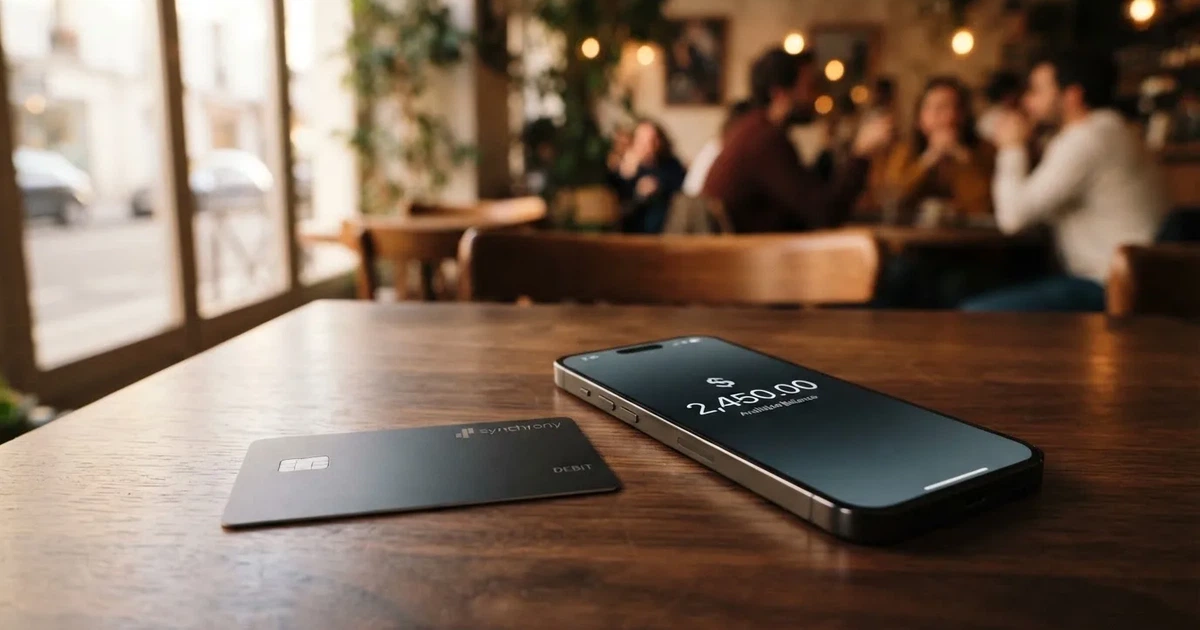
I gave it 5.4 out of 10. That is not a dismissal — the price is genuinely good for what it does — it is a verdict on how little you can verify. The card works inside a narrow lane: paying Colombian merchants, in pesos, from crypto you already hold. The moment you ask questions a bank would answer, the company’s public pages go quiet: the issuing bank is not named, licences are not named, the ATM situation is not stated, the networks for USDT are not stated, and there is no independent review page anywhere to compare notes with other users.
The conditions described here are current as of October 28, 2026.
What the score is made of
| Criterion | Mark | Why |
|---|---|---|
| Who can get it | 2 / 10 | Launch market Colombia for domestic purchases, Mexico also named on the site; international purchases work anywhere Visa is accepted |
| Cost | 8 / 10 | Card creation and activation 0 USD, no monthly fee; top-up 0.1% + 1,000 COP + VAT, COP purchases 0%, Visa takes 1.2% abroad |
| Top-up options | 5 / 10 | Top up from BTC, USDT or COP, converted to COP at reload; networks not disclosed |
| Reliability and complaints | 6 / 10 | Wallib, a Colombian fintech in Bogotá; issuing bank and licences not named, no complaints or Trustpilot page found |
| Everyday use | 6 / 10 | Virtual card immediately, Apple Pay and Google Pay at no extra cost; plastic mentioned without ordering steps, ATM not disclosed |
| Total | 5.4 / 10 | Cheap to hold, hard to verify, built for one market |
Who this suits, in one line: a Colombian resident who wants to spend crypto in pesos on everyday purchases without opening a second bank account. Who it does not suit: anyone who needs cash from ATMs, who lives outside Latin America, or who plans to hold a meaningful balance on a service that will not tell you which bank stands behind it.
Will they give you the card?
They will, if the launch market covers you. Wallib started in Colombia, and the site frames it that way: domestic purchases at merchants in Colombia are the case it is built for. International purchases work at any merchant that accepts Visa. The site also names Mexico, and says transfers go to “cualquier banco, billetera o tarjeta en Latinoamérica” — any bank, wallet or card in Latin America.
That is the whole eligibility story as the card states it. It does not publish a list of countries in the way some competitors do, so if you are reading this outside Colombia or Mexico, you are outside what I can verify.
There is one general point worth holding on to, because it explains a lot of friction that has nothing to do with Wallib specifically. A card number begins with a six- or eight-digit issuer identification number, and merchants can look that number up to see which institution and country issued the card. When the issuer country does not match the billing address the customer gave, some merchants apply extra scrutiny, and some simply decline. That is the mechanical reason a card issued in one country can look foreign to a shop in another, and it is worth remembering before you decide a decline means something is wrong with your account.
Prepaid and debit cards are generally available to adults aged 18 and over, and some issuers set higher minimums, but Wallib’s own age rule is not stated on its public pages.
How to get it
Three steps, in this order:
- Create your Wallib account and get identity verification (KYC) approved.
- Activate the virtual card in the app — it is ready immediately.
- Recharge it from BTC, USDT or COP.
Identity verification is not optional and it is not a formality you can skip: the account must be verified before activation. Wallib mentions a “verificación de primer nivel” — a first-level verification — but does not state what the levels are, how long processing takes, or what the rejection reasons are. The required documents, whether proof of address is needed, and the age rule are all not stated on the public pages, which means you will find out at the app rather than on the website.
The one hard number in the signup process is the first deposit: at least 20,000 COP. That is a small amount, roughly the price of an ordinary meal, so the barrier here is not money but the identity check itself.
On the card itself: it is a rechargeable Visa debit card, virtual and available right away. A physical card is mentioned only in passing, with no ordering steps, no delivery timeline and no statement of whether it costs anything. Virtual delivery is instant; physical delivery is not described at all. If you are someone who taps a card on a terminal rather than a phone, that gap matters.
Fees: what it really costs
The headline numbers are good. Card creation is $0, activation is free, and no monthly or annual fee is listed. The costs arrive when you move money, not when you hold the card.
| Fee or limit | Value |
|---|---|
| Card creation | $0 |
| Activation | free |
| Monthly or annual fee | none listed |
| Recharge (top-up) | 0.1% (sale rate) + 1,000 COP + VAT per recharge |
| First deposit, minimum | 20,000 COP |
| Purchase in COP | 0% |
| Purchase in a foreign currency | Visa charges 1.2% of the purchase value |
| Withdrawal from card to Wallib balance | 0%, no fixed fee |
| Daily purchase limit | up to 10,000 USD or COP equivalent |
| ATM limit | not stated |
| Monthly limit | not stated |
| ATM fee | not stated |
| Tiers | single card, no tiers stated |
Now three everyday payments, so you can see which lines actually bite.
Coffee in Bogotá, paid in pesos. You buy at 8,000 COP. Nothing is added on top: domestic COP purchases are 0%. But the coffee did not come from nowhere — you loaded the balance earlier at 0.1% plus 1,000 COP plus VAT, so that fixed 1,000 COP is spread across however much you loaded. Load 200,000 COP and it is a rounding error. Load 20,000 COP twice in a month and it is not.
A subscription billed in dollars. You pay a design tool or a hosting bill in USD. Two charges stack. The reload fee applies again at 0.1% plus 1,000 COP plus VAT, and on top of the purchase value Visa charges 1.2%. The card balance is always in COP, so the conversion to dollars happens on Visa’s side and that 1.2% is the visible part; how the conversion rate itself is struck is not stated.
An online purchase from a merchant outside Colombia. Same shape as above: reload fee, plus the 1.2% Visa foreign-currency fee. On a small purchase the fixed 1,000 COP reload charge can exceed the Visa fee, which is the practical argument for loading less often rather than more often.
Two things you should know about the fee structure that the card does not spell out. Who pays the blockchain network fee for a crypto top-up is not stated — on-chain fees are normally charged by the network rather than by the card provider, but whether Wallib passes that on, absorbs it or builds it into the 0.1% is not said. And the 0.1% is described as a sale rate, which reads as a spread rather than a flat processing fee: you are selling your crypto to the platform at its rate, so the rate itself moves with the market.
A general caution on the category: on-chain network fees for your deposit are charged by the blockchain, not by the card company. That is one more cost line to look for in a provider’s documentation, and here the documentation is thin.
How to Top up
Recharge from BTC, USDT or COP balances. Whatever you send is converted to COP at reload, and the card balance is always in COP. The reload fee is 0.1% plus 1,000 COP plus VAT, with 20,000 COP as the minimum first deposit. Fiat top-ups come from your COP balance inside Wallib. Who pays the network fee is not stated.
The one word missing from all of this is networks. Which chain your USDT must arrive on is not disclosed. That is not a detail. Blockchain transfers are irreversible, so a deposit sent on a network the provider does not support, or to an address belonging to a different network, can simply be lost or need manual support recovery with no guarantee of success. Before your first top-up, get the network and the deposit address from the app itself and check them character by character.
Two examples of why that matters. USDT has been issued on networks including Ethereum, Tron, Solana, Polygon, Avalanche and others, and on Ethereum the gas fee must be paid in ETH — a wallet holding USDT but no ETH cannot send at all. Tron prices transactions through bandwidth and energy resources, often burning TRX, so a Tron transfer can fail for a reason that has nothing to do with your balance. And stablecoins exist on networks that providers drop: Circle stopped supporting USDC on Tron in February 2024, so “USDC over TRC20” is not a native option.
On the way back out: withdrawal from the card to your Wallib balance is 0% with no fixed fee. Closing balance and bank withdrawal are not stated, so the exit path from a Wallib balance to a bank account is one of the things I could not verify.
Paying with it every day
Apple Pay and Google Pay work with no additional cost. That is the most practical single fact for daily use, because it means you can leave the virtual card in your phone and pay by tapping.
The card is described for online merchants, for subscriptions, and for any merchant accepting COP payments with Visa. Blocked merchant categories are not stated — and blocked categories matter more than they sound, because a merchant category code is a four-digit number classifying a business, and codes such as 7995 for gambling are blocked by many issuers as policy rather than by law, with the list varying by issuer. If gambling or some other category matters to you, ask before you assume.
There is one cashback offer: 1% in bitcoin on eligible purchases over 10,000 COP, capped at 20 cashback transactions and 3,000,000 COP of eligible purchases per month, paid into your Wallib BTC wallet once the payment is confirmed. Paid in bitcoin, not pesos — so it is a small crypto position, not a discount on your shopping. Eligible purchases and eligibility rules are not defined further.
Apps exist for iPhone and Android. I did not read the store ratings, so I cannot tell you how the app behaves in practice, how fast support replies inside it, or whether people are uninstalling it.
Dispute handling is not stated: how a chargeback works here, whether a purchase you did not authorise can be refunded, and what evidence you need are all open questions. In this category a chargeback is a refund ordered by the card issuer to settle a dispute, with reason codes for fraud, duplicate billing or goods not received. Prepaid-card coverage varies by scheme and should not be assumed — which matters, because this is a card funded from a stored balance.
What can go wrong
Nothing has gone publicly wrong that I could find, and that is different from something going well.
Searches for Wallib reviews on Trustpilot and Reddit returned no pages about Wallib. The site displays a 4.5/5 rating from its own testimonials. So the absence of complaints here reflects the absence of a public footprint, not a track record: there are no complaint themes, because there is nowhere for users to complain in a way you can read. The card’s own launch announcement, on 7 May 2024, described a Visa debit card launch with the first 1,000 cards free through a referral campaign, a target of 1 million cards by the end of 2025, and expansion planned to Mexico, the US and Peru. Whether those numbers were met is not something I can tell you from the card’s pages.
The bigger risks sit in the structure rather than in reports.
Who is actually issuing this? Wallib is a Colombian fintech company based in Bogotá, a member of Colombia Fintech, with CEO Cristian Peñaranda and the legal entity given in the starting data as Wallib SAS. The issuing bank and the licences are not named. A crypto card usually has two regulators attached: the crypto side (custody, exchange, transfer) and the card itself, which is a payment service regulated separately. Without the issuer name you cannot check a register, and registers exist. Under MiCA, for instance, ESMA keeps an interim register of authorised crypto-asset service providers, white papers and non-compliant entities, and a user can look a provider up there.
Where is your money while it sits there? Safeguarding and custody are not stated. Two-factor authentication is available, and you can freeze, block and unblock the card in the app, which is a genuine convenience. But crypto held with a custodial provider carries counterparty and hack risk, and the category has a record of it: Mt. Gox (about US$350 million reported stolen, 2011–2014), Coincheck (about US$400 million, 2018), Ronin Network (US$625 million, 2022). Irreversibility compounds it — blockchain transfers do not have a built-in recovery, and a stolen key cannot be frozen or returned by the network.
Can the programme simply stop? Yes, and it has happened. Visa terminated its global agreements with FTX on 13 November 2022 and the FTX US debit card was wound down by its issuer. WaveCrest, a Visa issuer that supplied crypto card brands, was suspended by Visa in Europe in 2018, closing all its Visa programmes. Closures typically run in a predictable order: a notice period, then loading and spending stop, then you are asked to withdraw what is left. Since Wallib’s withdrawal path to a bank is not stated, that last step is the one you would be least prepared for.
Can a payment sit as a hold? A declined authorisation can leave a hold on your funds that stays for several days, typically up to seven. With a limit of 10,000 USD a day, a single hold can occupy a meaningful slice of a modest balance.
Are stablecoins actually stable? No, and the name is aspirational. TerraUSD collapsed in May 2022 and USDC temporarily lost its peg in March 2023 during the US banking crisis. Tether also says it disables tokens in wallets on the OFAC sanctions list and has frozen funds tied to illicit activity, so these assets are not censorship-proof.
Help when you need it. There is an Intercom help centre (“Habla con nosotros”) and an FAQ, with social accounts on Instagram, Telegram and Facebook. The site is in Spanish, though English help articles exist. I have not tested response times.
What to take instead
If Wallib’s core idea is right for you — crypto in, ordinary card out — the question is which of the alternatives answers more of the questions Wallib leaves open.
| Alternative | Score | Card | Cost detail | Funding |
|---|---|---|---|---|
| Wallib | 5.4 / 10 | Virtual Visa, balance in COP, physical mentioned only in passing | Creation $0, activation free, no monthly fee; reload 0.1% + 1,000 COP + VAT; 1.2% Visa fee abroad | BTC, USDT or COP, converted to COP; networks not stated |
| Stella | 6.5 / 10 | Virtual and physical VISA, works at over 40 million merchants | Fees “described under this User Agreement and/or on the App”; amounts not stated | Deposit crypto into the account, which tops up the card automatically (custodial in-app wallet) |
| Whop Cards | 5.2 / 10 | Visa, works anywhere Visa is accepted; virtual/physical type not stated | Page says “No extra fees”; no amounts listed | Spends from a Whop balance, backed by stablecoin collateral from a linked wallet; coins and networks not stated |
| UniFi Card | 4.7 / 10 | Prepaid Debit Visa Card issued by Lead Bank, USD balance, Apple Pay supported | “Fees may apply. See UniFi website for more details.” | ACH, wire, SEPA (IBAN), SPEI (CLABE); can be paid to a USDC wallet |
Stella scores higher and is the closest thing to a like-for-like alternative, with the important difference that it publishes its fee structure by reference to a user agreement rather than leaving it implicit. Its eligibility rules are also sharper: its terms bar users under economic sanctions programmes and route US and European users through affiliates, while its official site does not state a country list. It has no cashback stated on the card page, and its in-app wallet is custodial. If you are in Colombia specifically, its country position is not something I could confirm from official pages.
Whop Cards states its consumer reach precisely — 31 US states including California, Texas, Florida and New York, and 41 states for businesses, with a named list of unsupported consumer countries — which is the kind of clarity Wallib lacks. It says “No extra fees” but lists no amounts, so the total cost of a reload is not discoverable. Its 5% cashback at select merchants, currently Uber, is more generous than Wallib’s 1%, though payout currency and conditions are not stated. Note that a Whop balance behaves differently: a pending balance is usable as soon as a payment arrives, while standard withdrawals use settled funds.
UniFi Card is the weakest of the four on documentation but names its issuer, Lead Bank, which is exactly the fact Wallib withholds. Its country position is not confirmed from official pages — the App Store lists send-money routes to the Philippines, Mexico, the eurozone and, in recent release notes, Colombia, Brazil and the UK. Fees are a sentence pointing at another page.
The honest summary: none of these four publishes everything. Whop and Stella at least state their eligibility position; UniFi at least names its bank; Wallib at least prices itself clearly. You are choosing which gap you can live with.
Who I would recommend it to
I would recommend Wallib to a Colombian resident who already holds BTC or USDT and wants to pay ordinary Colombian merchants in pesos without opening another bank relationship. For that person the value proposition is real and unusually transparent on the numbers: no monthly fee, free activation, zero cost on domestic purchases, 1% bitcoin back above 10,000 COP, and Apple Pay and Google Pay included.
I would not recommend it as a place to keep money you cannot replace, and I would not recommend it at all if you need cash from an ATM, if you need a physical card in hand, or if you want a phone number you can call about a problem. Nor would I recommend loading more than you need for the week, purely because of the fixed 1,000 COP on every recharge — that charge punishes small, frequent top-ups, and the card’s own structure pushes toward batching.
Before your first deposit, three checks, in this order: confirm the network and deposit address inside the app; find out which entity issues the card and whether you can look it up in a public register; and ask support what happens to your balance at closure, in writing.
Two wider cautions that apply whatever you pick. If your money is moved by a card programme, that programme can be switched off underneath you — FTX and WaveCrest both are precedents — and a card backed by a stored balance is not the same as a bank deposit, with deposit-guarantee schemes often not covering e-money balances. And if you are in the EU or UK, remember that a crypto card generally depends on two licences: MiCA covers the crypto side, and payment-services law covers the card. Under MiCA, e-money tokens may be issued only by a credit institution or an electronic money institution (Article 48), and e-money institutions must safeguard customer funds by segregating them or insuring them — which is not the same as a bank deposit.
I am not qualified to advise on your taxes, and this is not advice of any kind. One factual point to check where it applies to you: the IRS treats digital assets as property, so exchanging them for goods or services generally produces a taxable gain or loss measured in local fiat currency at the fair market value on the transaction date. Spending from a crypto-funded card balance may therefore be a separate disposal each time, depending on your jurisdiction. Ask a professional about your own position.
Frequently asked questions
What is the Wallib card?
Wallib is a rechargeable Visa debit card from a Colombian fintech company based in Bogotá. You load it with bitcoin, USDT or Colombian pesos, the balance is converted to and held in pesos, and you spend it like an ordinary card in stores or online, in Colombia or anywhere Visa is accepted. It launched on 7 May 2024 with a free referral campaign for the first 1,000 cards.
How does the Wallib card work?
Three steps: create your Wallib account, pass identity verification, then activate the virtual card in the app, which is available immediately. After that you reload it from BTC, USDT or your COP balance, the amount is converted to COP at reload, and the card spends that stored balance. It behaves like a prepaid card rather than a bank debit card, so it cannot overdraw.
Is Wallib a bank?
No. Wallib is described as a Colombian fintech company and a member of Colombia Fintech, with CEO Cristian Peñaranda and the legal entity given as Wallib SAS. The issuing bank behind the Visa card is not named on the card’s public pages, and neither are its licences. Without that name you cannot check the company in a public register.
Do I need to pass KYC to get a Wallib card?
Yes — the account must be created and identity verification approved before activation, and a first deposit of at least 20,000 COP is required. Wallib mentions a first-level verification, but the required documents, whether proof of address applies, the age rule, processing times and rejection reasons are all not stated on the public pages. You will find out inside the app.
Is the Wallib card free?
Card creation is $0 and activation is free, with no monthly or annual fee listed. What costs money is reloading: 0.1% plus 1,000 COP plus VAT per recharge. Purchases in COP cost 0%, but a purchase in a foreign currency carries a 1.2% Visa fee on the purchase value.
How do I top up the Wallib card?
You recharge from BTC, USDT or COP balances, and the amount is converted to COP at reload, with a minimum first deposit of 20,000 COP. The important gap is that the networks are not disclosed. Transfers are irreversible, so send only on a network the app confirms it supports, and check the deposit address carefully before sending.
Which countries can use the Wallib card?
Colombia is the launch market, with domestic purchases at Colombian merchants the case it is built for, and Mexico is also named on the site. International purchases work at any merchant that accepts Visa. The card does not publish a full country list, so eligibility outside Latin America is not something I could confirm from its own pages.
Can I use the Wallib card in Apple Wallet?
Apple Pay and Google Pay both work at no additional cost, according to the card’s pages, which makes the virtual card practical for everyday payments on a phone. A physical card is mentioned only in passing: no ordering steps, no delivery timeline and no statement of whether it costs anything. ATM availability is not stated at all.
Is the Wallib card safe?
Safety here has two halves. The app offers two-factor authentication and instant freeze, block and unblock, which are sensible safeguards. But the issuing bank and licences are not named, custody and safeguarding are not stated, and searches for independent reviews returned no Trustpilot or Reddit page about Wallib, so there is no public track record either way.
Is the Wallib card worth it?
For a Colombian resident spending crypto in pesos on everyday purchases, the price is hard to argue with — no monthly fee, free activation, 0% domestic purchases and 1% bitcoin back above 10,000 COP. The reasons for hesitation are structural: an unnamed issuing bank, undisclosed top-up networks, no stated ATM or closure withdrawal process, and a 1,000 COP fixed fee that punishes frequent small reloads.
Highest-scored app and neobank cards – cryptocardbest.com
Content created by the «cryptocardbest.com» team