
A virtual Visa Prepaid card funded from stablecoins, built mainly for Ukrainians, with a small handful of things to know before you order it
 Available in US
Trustee Plus is a crypto wallet with a Visa Prepaid card attached, and the card is what most people are actually interested in. The pitch is simple: load stablecoins into the wallet, top up the card balance in dollars, spend wherever Visa is taken, including through Apple Pay and Google Pay. The reality is a little narrower. The card only comes as a virtual product right now, with a physical version on a waitlist, and the published eligibility points strongly at Ukrainians living anywhere in the world. That is useful, but it is not the same thing as a card anyone in any country can order.
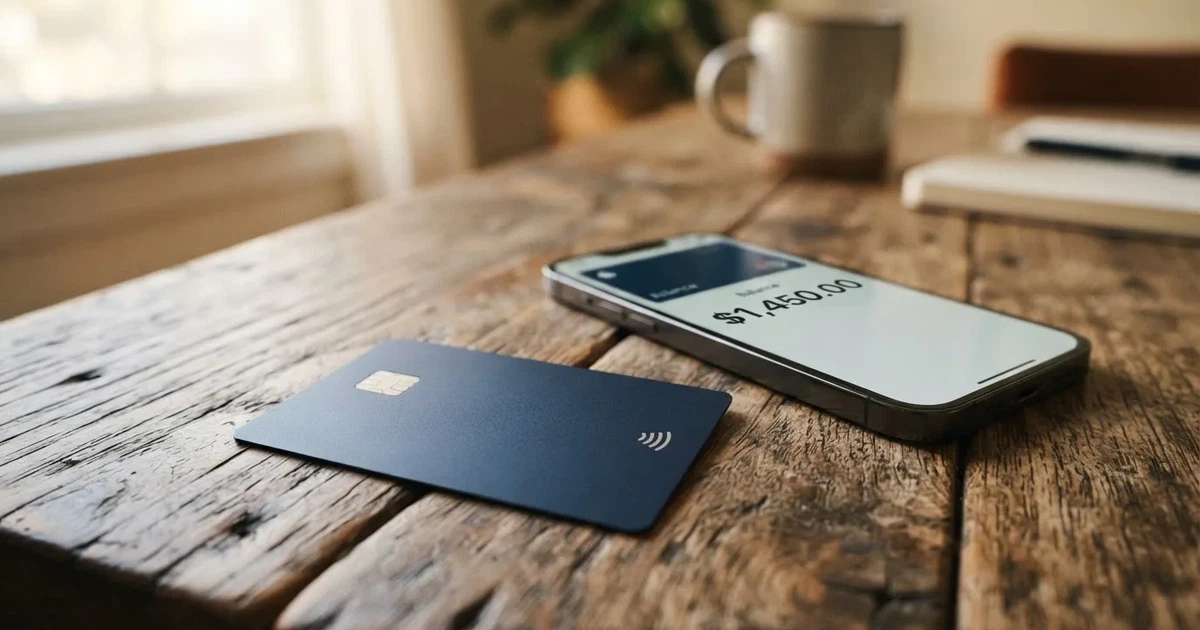
I went through the card’s own pages, the terms of service, recent regulatory news and user reports to put this review together. The conditions are current as of October 28, 2026. If you are deciding whether Trustee Plus is the card to solve a payments problem for you, here is what I found.
Verdict: 5.7 out of 10
Trustee Plus earns a 5.7 out of 10. It is not a bad product on its own terms, but the score reflects how narrow its reach is. The cost structure is genuinely competitive: 10 dollars to open a virtual card, no monthly fee, no payment fees, and a half-percent top-up fee. The problem is that the card works for a specific reader in a specific situation, and the documentation is uneven about everything else. Eligibility leans heavily towards Ukrainians. The physical card is not available. Cash at an ATM is not available. A user report on Trustpilot from June 2026 describes a slow USDT transfer, an unclear AML review, and an unclear complaint procedure, which is the kind of thing that matters when your money is on the line. And a 2025 decision by the National Bank of Ukraine against the card’s Lithuanian operator, with new sign-ups in Ukraine halted since then, is a real-world regulatory signal you should not ignore.
Score breakdown
| Criterion | Mark | Why it scored that way |
|---|---|---|
| Who can get it | 3/10 | Officially aimed at Ukrainians regardless of residence; full country list not published; sign-ups in Ukraine have been halted since late May; unofficial third-party pages say EEA residents can get it, but that conflicts with the company’s own pages. |
| Cost | 8/10 | 10 USD to issue the virtual card, 0 USD maintenance, 0% on payments, 0.5% to top up the card balance; conversion happens at the Visa rate but any markup on top is not disclosed; an inactivity fee kicks in after a year. |
| Top-up options | 9/10 | The wallet takes 30+ coins and networks including TRC20, ERC20, SOL and NEAR, plus fiat on-ramps through Smart P2P and a personal SEPA IBAN. |
| Reliability and complaints | 5/10 | The card is issued by Wirex Limited in the UK and operated by MIKEPAY INC. in Panama; user reports describe funds frozen after source-of-funds reviews; news points to a regulator action in Ukraine. |
| Everyday use | 4/10 | Apple Pay and Google Pay are present and the card works online; the physical card is on a waitlist and ATM cash is unavailable. |
| Total | 5.7/10 |
The card is most useful for a Ukrainian topping up a virtual USD balance with stablecoins, who is comfortable with crypto custody and wants a simple way to spend that balance online or via a phone wallet. If that is not your situation, the score is more like 4 than 6.
Will they give you the card
Trustee Plus’s own Ukrainian FAQ says Ukrainians can get the card regardless of where they live, and that there is no public list of issuing or excluded countries. The Terms of Service take a different tone: the user must reside or be incorporated in countries and territories the company supports, and must not be a citizen or resident of any country on a sanctions list. The card’s English page has no eligibility FAQ at all, so the practical answer is in two parts. The card is built for Ukrainians, the terms require a supported country you cannot see, and people in sanctioned jurisdictions are out, whether by citizenship or by residence. A few things follow from that:
- The terms cover both citizenship and residence. Even if you live in a permitted country, a sanctioned citizenship can disqualify you.
- A third-party listing (updated February 2026, marked unofficial) says the card is offered to residents of the EEA and is run through a Polish payment institution. That contradicts the official pages and I would not rely on it.
- News from September 2025: the National Bank of Ukraine barred the card’s Lithuanian operator from offering payment services in Ukraine, and a Trustee Plus director said existing clients were unaffected, but new registrations in Ukraine were halted on 22 May.
In short, the card is for Ukrainians, broadly speaking. Anyone else has to rely on the unofficial EEA claim, which is not confirmed by the company.
How to get it
The signup path is straightforward. You install the Trustee Plus app, complete KYC through the company’s identity partner Kycaid, order a virtual card, then top it up. A Trustee Plus guide mentions a passport or ID card photo plus a selfie, and the Terms set the age at 18 or whatever the legal age is where you live. Beyond that, several things are not stated on the public pages: proof of address, the KYC levels, how long verification takes, and the reasons the company might reject an application. The card you get is a Visa Prepaid in USD, valid for three years, and it has its own balance separate from the wallet. A physical card is not orderable; the company has a waitlist for it. There is no stated delivery country, time, cost or replacement policy, because no one can order the physical version yet.
Fees: what it really costs
This is where Trustee Plus scores well, with one asterisk. The published numbers are easy to read and most of them are zero.
| Fee or limit | Amount |
|---|---|
| Virtual card issuance | 10 USD |
| Card maintenance | 0 USD |
| Payments | 0% |
| Card balance top-up | 0.5% (Ukrainian page) |
| Wallet inactivity | 20 USDT equivalent per month after one year with no transactions |
| Conversion (EUR, PLN, GBP payments) | Automatic at the Visa rate; any markup not stated |
| ATM withdrawal | Unavailable |
| Monthly operations limit | 30,000 USD (or 30,000 USDC per FAQ) |
| Per-transaction and daily limits | Not stated |
Three everyday examples show how the costs actually play out.
- A 50-dollar online subscription paid in USD from a topped-up card balance. You pay 0% in card fees. You already paid 0.5% to move the money from the wallet to the card balance, so your all-in cost on that 50 dollars is 25 cents. The card price is a separate 10 dollars you paid once at issue.
- A 30-euro payment at a foreign site. The card is in USD, so Visa converts at its rate. Trustee Plus says the conversion is automatic, but the company does not state whether it adds a markup on top of the Visa rate. That is the asterisk: you cannot see the full conversion cost in the published fee schedule.
- A year of leaving the wallet untouched after funding it. The inactivity fee is 20 USDT per month after twelve months without transactions, so it would chew through a small balance fast. Use it or move the funds out.
The Terms also say the Payment Card service “may be subject to fees”, which is the kind of language you only want to read once. The company does not list those fees on the pages I checked, so they are either rare, negotiable, or simply not public.
How to top it up
Topping up the card starts with topping up the wallet. You can fund the wallet with USDC, and a Trustee Plus guide also names USDT for the English version. The wallet itself supports more than 30 coins and networks, including TRC20, ERC20, SOL and NEAR, so you have plenty of routes in. From the wallet you open the card section and tap Top up to move funds onto the card balance; the fee for that step is 0.5%. For fiat there are two paths: Smart P2P, where you buy crypto with a bank card from a counterparty, and a personal IBAN you can receive SEPA transfers on.
A few details the public pages do not cover: which side pays the on-chain network fee when you send stablecoins in, what the minimum top-up is, and what happens when you try to move the card balance back to crypto or to a bank account. Those are the kinds of questions worth asking support before you load a large amount.
Paying with it every day
For a virtual USD card, the day-to-day experience is decent. The card works online, including for subscriptions, and the company says it works at more than 60 million merchants worldwide. Apple Pay and Google Pay are supported, which is the way most people will end up tapping or paying in apps. The card page does not list blocked merchant categories, so the usual gambling MCC 7995 question is left unanswered, and the company’s policy on gambling or other restricted categories is not stated. There is no cashback on the card page; the company runs separate loyalty and referral programmes.
The bigger limitations are the ones that come from the card form factor. There is no physical card to insert at a terminal, so you cannot pay where a phone wallet is not accepted. Cash at an ATM is listed as a physical-card benefit, and the physical card is on a waitlist, so for now there is no way to get banknotes from the card. The app is also distributed as an APK directly from the company site, and the App Store listing I could find was for a separate product, the Trustee Wallet app, with a 2.86 rating from 36 reviews as of March 2026. That rating is not for the card app, and the company has not published ratings for the Trustee Plus app on the pages I checked. It is also worth knowing that the card is a custodial wallet, so the company holds the credentials on your behalf. If you want self-custody, the separate Trustee Wallet product is the non-custodial option.
What can go wrong
Three things to keep in mind before you commit real money.
Regulatory pressure. The card is operated by MIKEPAY INC., a company registered in Panama. The card itself is issued by Wirex Limited in England (company number 09334596, 9th Floor, 107 Cheapside, London EC2V 6DN). The card page says the card is “issued in Great Britain”, but I did not find a stated regulator or licence on the pages I read. In September 2025 the National Bank of Ukraine barred the Lithuanian operator from offering payment services in Ukraine, and the company has said new registrations in Ukraine were halted on 22 May. A news report in August 2026 said availability for residents of Ukraine was “still being checked”. None of this means the card is unsafe, but the regulatory ground under it is shifting.
Freezes and slow reviews. A user report on Trustpilot from June 2026 describes a slow USDT transfer, an unclear AML review and an unclear complaint procedure. Other user reports, on a related Trustee Global page, describe cards being moved to a merged platform, failures to withdraw or pay, and funds frozen after a source-of-funds check. The Trustpilot rating for that page is currently shown as unavailable because the page is in breach of Trustpilot’s guidelines, so the volume of complaints is hard to verify, but the pattern is familiar for any custodial product: source-of-funds reviews can freeze funds, and the company controls the timeline.
Custodial risk and security. The card side is a custodial wallet, meaning the company holds the keys. Trustee Plus points to 2FA, Face ID, AML Check, a bug bounty through HackenProof and Hacken audits of the apps (February 2025). The card-freeze and insurance options are not stated. Crypto transfers are irreversible, and a custodian has both hack risk and counterparty risk, so loading only what you are comfortable with the company holding is the simplest rule.
Support is in the usual places for a crypto product: a wiki, an Academy, Telegram, YouTube, X, Facebook and LinkedIn. A formal dispute or chargeback procedure is not stated on the public pages.
What to take instead
Trustee Plus is not the only virtual card aimed at people with a hard time getting a normal bank card. Here is how three other products compare, based on their own pages and the scorecards published alongside them.
- Whop Cards (5.2/10). Whop issues Visa cards to consumers in 31 US states and to businesses in 41, and it does not serve residents of Belarus, China (mainland), Cuba, Hong Kong, India, Iran, Iraq, Israel, Myanmar, Nepal, Nicaragua, North Korea, Russia, Syria, Turkey, Ukraine, Venezuela or Vietnam. Ukraine is on the unsupported list, which is worth noting if you are Ukrainian. The card spends from a Whop balance that is backed by stablecoin collateral, and you get 5% cashback at select merchants, currently Uber, with more planned. Costs and conversion fees are not stated.
- Stella (6.5/10). Stella offers virtual and physical Visa cards, works at more than 40 million Visa merchants globally, and lets you deposit crypto straight into the account that tops the card. The Terms bar users under sanctions programmes and route US and European users through affiliates, so the country story is similar to Trustee Plus in spirit. Fees are not stated officially; the card page lists no cashback, and the Earn product is a separate yield programme.
- UniFi Card (4.7/10). UniFi is a prepaid debit Visa card issued by Lead Bank, spends from a USD balance, and supports Apple Pay. App Store release notes point to send-money routes in the Philippines, Mexico, the eurozone, Colombia, Brazil and the UK, so the geographic focus is different. Top-up routes include ACH, wire, SEPA via IBAN, SPEI via CLABE, and a USDC wallet. The listing claims 3% rewards on balances, but card cashback and most fees are not stated on the page I read.
| Card | Score | Type | Best for | Notable gap |
|---|---|---|---|---|
| Trustee Plus | 5.7/10 | Virtual Visa Prepaid, USD | Ukrainians with stablecoins | Physical card and ATM are not available |
| Whop Cards | 5.2/10 | Visa (type not stated) | US residents in 31 states, business use | Ukraine is on the unsupported list, fees not stated |
| Stella | 6.5/10 | Virtual and physical Visa | Crypto users, sanctions-aware | Country list not stated, fees not stated |
| UniFi Card | 4.7/10 | Prepaid debit Visa, USD | Cross-border workers in PH, MX, EU, CO, BR, UK | Most fees not stated, eligibility not confirmed |
Who I would recommend it to
Trustee Plus is worth considering if you are Ukrainian, regardless of where you live, and you want a virtual USD Visa that you can top up with stablecoins. The fee structure is the strongest reason to pick it: 10 dollars to issue, no monthly cost, no payment fees, and a half-percent to move money from the wallet to the card. Apple Pay and Google Pay make it usable for most online and in-store contactless situations, and the wallet supports a long list of coins and networks if you want flexibility in how you fund it.
If you are not Ukrainian, the answer is more cautious. The company has not published a list of supported countries, the unofficial EEA claim is not confirmed, and the Terms require a country the company “supports” without naming it. If you are in Ukraine, new sign-ups have been halted, and the regulator has acted against the operator, so even Ukrainians should check the current status before they start. The card does not give you cash, and the physical version is on a waitlist, so if you need either of those, the product is not there yet. And because it is a custodial product, the usual advice applies: load only what you need for the next few weeks, and do not treat the card balance as a savings account.
The honest summary is that Trustee Plus is a competent, narrowly aimed product. It solves a real problem for its intended reader and is priced for that reader. For anyone else, the score is closer to 4, and one of the alternatives above will likely be a better fit.
Frequently asked questions
What is Trustee Plus card?
Trustee Plus is a crypto wallet application with a Visa Prepaid card attached. The card is a virtual USD card you can top up from the wallet, which holds stablecoins and other crypto. It is built mainly for Ukrainians, with Apple Pay and Google Pay support, and the physical card is currently on a waitlist.
How does Trustee Plus card work?
You install the app, complete identity verification, order the virtual card, then top up the card balance from the wallet. When you pay, the card balance is drawn down in USD, and any non-USD payment is converted at the Visa rate. Apple Pay and Google Pay are supported for contactless and in-app payments.
Is Trustee Plus a bank?
No. Trustee Plus is a wallet-and-card product. The card is issued by Wirex Limited, a UK company, and the service is operated by MIKEPAY INC., registered in Panama. The card balance is not a bank deposit, and the Terms say the Payment Card service “may be subject to fees”, so the relationship is not a banking one.
Who owns Trustee Plus?
The card page identifies the card issuer as Wirex Limited (England, company 09334596) and the service provider as MIKEPAY INC. (Panama). The card page says the card is “issued in Great Britain”. I did not find a stated regulator or licence on the pages I read.
How do I get Trustee Plus card?
Install the Trustee Plus app, complete KYC through Kycaid, order a virtual card, then top it up. The company says a passport or ID photo plus a selfie is the typical document set, and the Terms set 18 as the minimum age. A physical card is on a waitlist and is not orderable today.
Does Trustee Plus card require KYC?
Yes, KYC is required before you can order the card. The company works with Kycaid for identity verification. The KYC levels, processing time, and rejection criteria are not stated on the public pages, so the practical experience can vary.
How do I top up Trustee Plus card?
You fund the wallet first, in USDC or USDT, on any of the supported networks (TRC20, ERC20, SOL, NEAR and others). You then move money from the wallet to the card balance; that step costs 0.5%. Fiat routes are available through Smart P2P and a personal SEPA IBAN.
Is Trustee Plus card free?
The virtual card costs 10 USD to issue, and the card has no monthly maintenance fee. Payments are 0%, the top-up from wallet to card is 0.5%, and a 20 USDT-per-month inactivity fee applies after a year without transactions. Conversion of non-USD payments happens at the Visa rate, but any markup on top is not disclosed.
How do I add Trustee Plus card to Apple Wallet?
Once your virtual card is issued in the app, you add it through the standard Apple Wallet or Google Wallet flow. The card is tokenised on your device, so the card number is not stored on Apple’s servers. If the issuer restricts the token, for example to in-store use only, that can limit where the card works.
Is Trustee Plus card safe?
The wallet has 2FA, Face ID, AML checks, a bug bounty through HackenProof and Hacken audits from February 2025. The card is custodial, so the company holds the keys, and user reports describe funds frozen after source-of-funds reviews. Treat the card balance like a payment float, not a savings account, and load only what you need.
Highest-scored app and neobank cards – cryptocardbest.com
Content created by the «cryptocardbest.com» team