
A custodial crypto account with a Mastercard attached, scored 6.2 out of 10
 Available in US
The Nebeus card is a Mastercard, virtual or physical, that spends the balance of a crypto-and-fiat account rather than a bank account. On paper it is well built: a MiCA authorisation from Spain’s regulator, a licensed card issuer in Poland, a free SEPA top-up in euros, and two card currencies you would actually use. What stops it scoring higher is not the licensing. It is how much the company does not publish — no conversion fee, no foreign-exchange fee, no spending limits, no delivery terms, no monthly fee — and a stream of 2025 user complaints about card refusals without explanation and unanswered email.
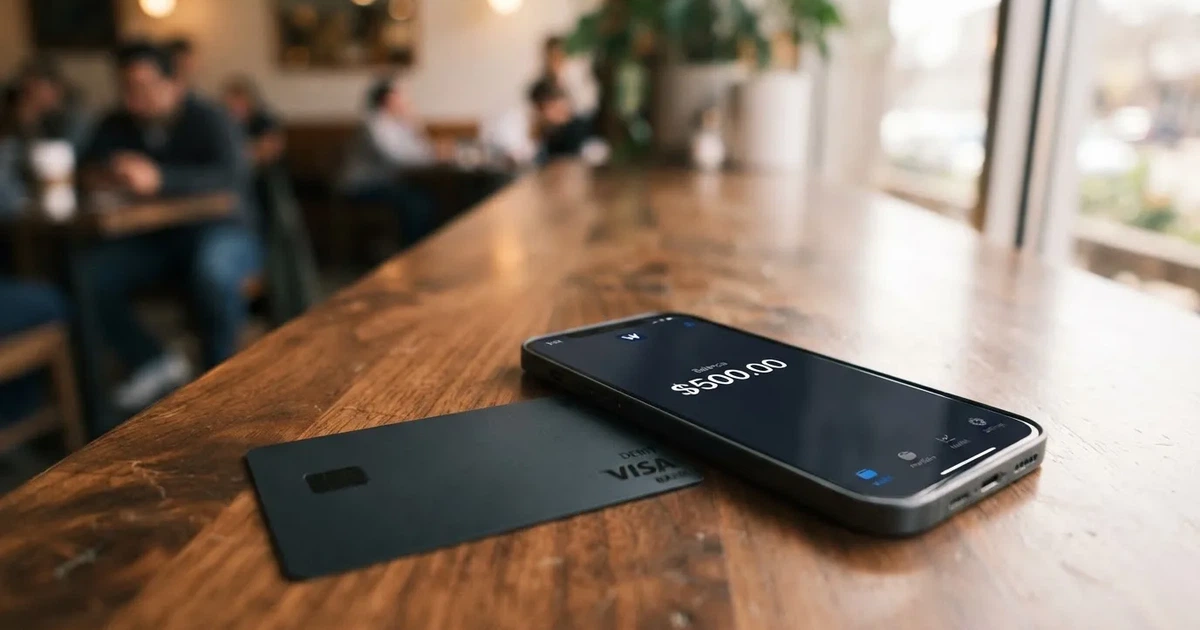
So who is it for? In my reading, the card suits a resident of Europe who wants a card and an IBAN-style account, already holds some crypto, and is comfortable with a custodial platform deciding what happens to their money. It does not suit someone shopping for the cheapest way to spend a few dollars of USDT, someone who wants a self-custody wallet, or anyone planning around ATM withdrawals above 2,000 a month.
The conditions described here are current as of October 28, 2026.
Verdict: 6.2 out of 10, with the deductions taken out on reliability and fees
The single most useful thing I can tell you is that this card’s weak spot is disclosure, not structure. Nebeus has done the parts that are hard to fake — a regulator’s authorisation, an insurance policy, a named issuer, a named custody provider. What it has not done is publish the numbers a shopper actually compares cards on.

| Criterion | Mark | Why |
|---|---|---|
| Who can get it | 5 / 10 | Restricted to 128 countries including the United States, the United Kingdom, the Netherlands, Israel and Hungary; access is decided by where you live, not by citizenship alone. |
| Cost | 8 / 10 | Issuance is free of charge. Unofficial sources put the currency fee at 0% and the crypto loading fee at 0%, but no monthly fee is published. |
| Top-up options | 6 / 10 | BTC, ETH, USDT, USDC, LTC, BCH, XRP on the Bitcoin, Ethereum, Tron and Litecoin networks, plus free SEPA. Since 5 April 2026, USDT and USDC deposits are halted for personal accounts. |
| Reliability and complaints | 4 / 10 | MiCA licence from the CNMV and a Polish issuer are real strengths, offset by reports of card refusals without explanation and silence from support, and a Google Play rating of 3.5. |
| Everyday use | 8 / 10 | Virtual and physical Mastercard, up to 2,000 EUR, USD or GBP a month from ATMs. Apple Pay and Google Pay are reported by unofficial sources, not confirmed by the card. |
That table is the review in miniature. The everyday-use and cost marks are high because the card does what a card should do and the on-ramp is cheap. The reliability mark is low, and it is low because of what users wrote in 2025, not because I found an incident: my search turned up no official record of a hack or a shutdown. A single Google Play rating of 3.5 out of 5 across 448 reviews is weak, and it is the kind of number a support-desk problem produces.
Before you decide, here is the short version of who this suits and who it does not.
It suits you if you live in one of the permitted countries, you can complete a passport-plus-video-selfie identity check, you want a euro-denominated IBAN-style account as well as a card, and you are not going to be frightened by a custodial platform.
It does not suit you if you want to hold your own keys, you want published spending limits, you want to know the exact conversion spread before your first purchase, or you need more than 2,000 a month in cash.
Will they give you the card?
They will not give it to everyone, and the gate is your place of residence rather than your passport. The platform lists 128 restricted countries. Named among them are Belarus, the Russian Federation, Ukraine, the United States, the United Kingdom, the Netherlands, Israel and Hungary. The rule the platform states is that access is permitted only to natural persons or legal entities residing in jurisdictions not subject to international sanctions.
That last clause is doing most of the work, and it is worth reading carefully. Residence is the test, which means a citizen of one country living in another should look at where they actually live. The flip side is that a restricted country is not a safe harbour for a resident of an allowed one, because the restriction attaches to the address.
There is a second gate specific to identity documents, and this is the one most applicants will miss. The KYC article states that if you are a resident or citizen outside Europe, the only accepted identity document is a valid passport. A national ID card is not enough for you if you are living outside Europe. That is a hard rule with a practical consequence: your passport has to be current, undamaged, and legible in a video selfie, and if it has expired you are waiting for a new one before you can start.
There is also no tiered entry. The platform has a single verification level: government ID — passport or national ID card — proof of address, and a video selfie, minimum age 18. There is no reduced tier for people who only want to read a balance.
The stated reasons for a refusal are worth knowing before you apply rather than after: appearance on international sanctions lists, a high-risk classification under the company’s internal compliance rules, incomplete or inconsistent documentation, and a failure to provide updated information. Only the third of those is really in your control.
How to get it
The route is short. You register on the platform, you complete the identity check, and then you order either a virtual or a physical card in the app. The physical card is a Mastercard debit card in EUR, GBP or USD; the virtual one is the same idea without the plastic. There is no metal card, and no paid tier structure is published on the consumer site.
Two things about verification you should plan around. The first is that a support article titled “How Long Does Verification Take?” exists, but its content was not available to me — so I cannot tell you how long it takes, and neither, from the public pages, can you. The second is that the app is where everything happens. There is no branch, no paper application, and no phone number that solves a problem for you.
The app exists on both platforms: iOS through the App Store, and Android through Google Play. On Google Play it sits at 3.5 stars from 448 reviews and 100K+ downloads, last updated 11 February 2026.
Fees and limits: what it really costs
Issuance is free of charge — that is stated on the card landing page. Beyond that, the card’s public pages are quiet in a way that will frustrate you if you try to budget. The monthly or annual subscription fee is not published on the consumer site. The crypto conversion fee and spread are not stated. The foreign-exchange fee for paying in a currency other than the card’s own is not stated; the page mentions “automatic foreign currency exchange” without naming a percentage. The fee for ATM withdrawals beyond the free allowance is not stated. Spending limits, daily and monthly, are not stated.
Unofficial sources, one of them a comparison site writing in July 2026, report an FX fee of 0% and a crypto loading fee of 0%, and say that issuance and monthly fees are not transparently published and should be verified in the app. I have not confirmed any of that with Nebeus, so treat those zeros as a lead, not a fact.
| Fee or limit | What the card states |
|---|---|
| Card issuance | Free of charge |
| Monthly or annual fee | Not published on the consumer site |
| Crypto conversion fee or spread | Not stated |
| Foreign-exchange fee | Not stated; the page mentions automatic currency exchange without a percentage |
| Crypto loading fee | None stated; unofficial sources report 0% |
| ATM fee beyond the free limit | Not stated |
| ATM withdrawal limit | 2,000 EUR, USD or GBP per month |
| Daily and monthly spending limits | Not stated |
| SEPA deposit in EUR | Free |
| Blockchain network or gas fees | Paid by you, on your crypto deposit |
Let me walk three everyday payments through that table, because the shape of the cost is different in each.
Paying for coffee in a country that uses the euro, from a balance that holds euros. This is the cheapest path and the one the card is genuinely good at. No conversion happens because there is nothing to convert. The only fee this could attract is one nobody has published, which is precisely the problem: you cannot check.
Paying for something priced in dollars while your card is in euros. Here the automatic foreign currency exchange does the work, and the rate at which it converts is the single number that decides what the purchase costs you. The card does not name it. If a third-party source says 0%, that would make this free, but I could not confirm it, and a card that does not publish its FX rate is asking you to discover the cost after the sale is done.
Buying a subscription priced in another currency again, month after month. This is where an unpublished spread hurts most, because it compounds silently across a dozen small charges, each individually too small to notice and collectively not.
There is one more fee that is not the card’s at all and that catches newcomers out: blockchain network fees. When you deposit crypto, the network charges you for the transfer. The card does not charge it, and it does not disappear because you are using a card.
How to top it up
The card spends the balance of the Nebeus account, which holds crypto and fiat side by side. Two ways in, and that is all the card documents: a crypto deposit, or a SEPA bank transfer in euros.
The crypto list is BTC, ETH, USDT, USDC, LTC, BCH and XRP, on the Bitcoin, Ethereum, Tron and Litecoin networks. The SEPA transfer in euros is free, by your personal IBAN or by a reference-based deposit.
Two warnings that belong at this point rather than in a footnote. The first is the April 2026 change: on 5 April 2026, USDT and USDC deposits and withdrawals were halted for personal accounts, with EURC still working and business accounts unaffected. So the two stablecoins most people would reach for are, for an individual, no longer a straightforward option — read that as the top-up menu having narrowed, not as a temporary outage. The second is network fees and network choice, which I come back to below.
A minimum top-up is not stated. Card-to-card top-up is not stated. Crypto withdrawal goes out to an external wallet over the Bitcoin, Ethereum, Tron or Litecoin networks, and fiat withdrawal goes out by SEPA from your IBAN. If you ever close the account, the card points you at support; there is a closure policy but its fee and balance-handling details are not publicly displayed.
Paying with it every day
In normal use it behaves like a straightforward debit card. You spend what is in the balance; the card converts to fiat at the point of sale if what you hold is not fiat. The account is multi-currency, and the card switches currency at the till.
Apple Pay and Google Pay are not mentioned on Nebeus’s own site. Unofficial sources say both work. If being able to tap your phone is important to you, that is the kind of thing to confirm in the app before you rely on it, because the official pages do not commit either way.
What is genuinely useful: cash. ATM withdrawals are available on the physical card only — the virtual card will not get you cash — up to 2,000 EUR, USD or GBP in a month, depending on the currency.
What you will not find stated anywhere on the official pages is the list of blocked merchant categories. There is no MCC blocklist published, so you cannot check before you try whether gambling, adult content or any other category your card declines is on it. There is also no cashback, on the official site or on any source I reviewed. If you are choosing this card for rewards, that reason does not exist.
One useful thing about how it works: a balance-based card cannot overdraw. You spend only what is loaded, so a declined payment is a balance problem, not a debt problem.
What can go wrong
The first risk is the one the complaints describe. Across reviews in 2025, three themes recur: card applications refused with no reason and without the company asking for more information; support that stops answering, with reports that chasing them goes nowhere; and an app full of bugs. Those are user reports on Trustpilot, and I am presenting them as such — but they are consistent enough across months, from August through December 2025, to be a pattern rather than one bad week.
The second risk is structural, and it is the one that comes with any custodial platform. Your crypto is held by Nebeus, in segregated accounts under Article 75 of MiCA, with BitGo named as the institutional-grade custody provider and insurance coverage of $250M through Lloyd’s of London. That is a serious answer to the custody question, and it is still a promise by a company rather than a key in your pocket. Transfers are irreversible; nobody can claw a sent transaction back.
The third risk is that the account can be frozen. Nebeus may block an account preventively on detection of suspicious activity, and it “strongly recommends, and may in certain cases require” two-factor authentication. Fiat funds are held in segregated safeguarding accounts in accordance with applicable regulation — note the wording: safeguarded, not bank deposits. If you are in a situation where a card is your only access to money, this is worth thinking about hard.
And there is the one-off risk that catches people out of nowhere: the USDT and USDC halt for personal accounts. Balances that existed and were fine became unusable for a category of user on a date. That is what a regulated platform’s permissions can do.
Chargebacks exist but are the wrong tool for most problems. They follow Nebeus’s Chargeback Policy and the card network’s rules, you must try to resolve the dispute with Nebeus first, and valid grounds are narrow: unauthorised charges, technical errors, confirmed fraud. Unjustified chargebacks can cost you processing fees, acquirer penalties and investigation costs. And on refunds, the wording is stark — operations are considered final once confirmed and are not eligible for a refund, except at Nebeus’s sole discretion for a demonstrated technical error attributable to Nebeus.
What to take instead
I looked at three other cards in the same space so you can see where Nebeus sits rather than taking my word for it.
| Nebeus | Whop Cards | Stella | UniFi Card | |
|---|---|---|---|---|
| My score | 6.2 / 10 | 5.2 / 10 | 6.5 / 10 | 4.7 / 10 |
| Card network | Mastercard, virtual and physical | Visa; type and currency not stated | VISA, virtual and physical | Prepaid debit Visa, issued by Lead Bank |
| Who it is for | 128 restricted countries, residence-based | 31 US states for consumers, 41 for businesses; unsupported countries include Russia, Belarus, Ukraine, Israel, India, China and others | Terms bar users under sanctions; US and European users routed through affiliates | Not confirmed from official pages; app routes point to the Philippines, Mexico, eurozone, Colombia, Brazil and the UK |
| What it costs | Issuance free; monthly fee not published | “No extra fees”, no amounts listed | Not stated | Not stated |
| Cashback | None mentioned | 5% at select merchants, currently Uber | None stated on the card page | “3% rewards on balances” claimed in the listing; card cashback not stated |
Stella scores slightly higher, and if you are comparing on paper alone that is worth a look: it is a virtual and physical Visa working at over 40 million merchants, funded by depositing crypto into a custodial in-app wallet that tops the card up automatically. Its weakness is the same shape as Nebeus’s — countries and fees are not stated officially.
Whop Cards has the most specific cashback of the three, 5% at select merchants with Uber named, but it is a much narrower door: 31 US states for consumers, with a long unsupported-country list.
UniFi is the one I would treat most carefully. Its country reach is not confirmed from official pages, it receives funds by ACH, wire, SEPA or SPEI, and its “3% rewards on balances” is a listing claim rather than a card benefit.
Where does that leave Nebeus? It is not the cheapest on paper — it does not publish prices. It is not the most open — 128 countries is narrower than it sounds once the sanctions clause is read. What it does have, and the others mostly do not, is a named regulator, a named issuer, custody segregation and a $250M insurance figure stated publicly. For a reader whose priority is legitimacy rather than headline rewards, that is a reasonable trade.
Who I would recommend it to
I would recommend the Nebeus card to a resident of a permitted European country who already holds crypto, wants a Mastercard and a euro account with an IBAN, and can live with the rule that the company holds the keys.
I would not recommend it to someone whose main reason is cheap card spending. You cannot verify you are getting a good deal, because the fees are not on the page. I would not recommend it to anyone planning on cash — 2,000 a month is the ceiling and the fee above it is unpublished. And I would not recommend it to a non-European resident with only a national ID card, or to anyone whose plan depends on USDT or USDC deposits into a personal account after 5 April 2026.
The check I would make first, before anything else, is this: open the app and look at the fees screen, because that is where the answers are that the website does not give you. If the numbers there are not clear, walk away. A card that will not tell you its costs before you sign up is telling you something about how much it values your trust.
Frequently asked questions
What is the Nebeus card?
It is a Mastercard debit card, available virtual or physical, that spends the balance of a Nebeus account that holds both crypto and fiat money. In EUR, GBP or USD, you pay with the balance, and if the balance is in crypto the card converts at the point of sale. It comes with an IBAN-style euro account and is issued by Quicko Sp. z o.o., a licensed institution registered in Poland.
How does the Nebeus card work?
You fund the account — by crypto deposit or a free SEPA transfer in euros — and the card spends that balance. Many cards of this type behave like prepaid cards rather than bank debits, which means the card cannot overdraw: a declined payment means an empty balance, not a debt. Nebeus’s account holds crypto and fiat balances at once, and the card switches currency automatically when you pay in a currency other than the card’s own.
Is Nebeus a bank?
No, and this distinction matters. Nebeus is authorised under the EU’s MiCA framework by Spain’s CNMV, and is registered with the Bank of Spain under number D664. It is also licensed as an EMI in the UK by the FCA, registered as an SRO in Switzerland, and as a VASP and PI in Argentina. The card itself comes from a separate licensed issuer. So it is a regulated financial business, not a bank, and safeguarded funds are not bank deposits.
Who owns Nebeus?
Nebeus is owned by Rintral Trading SLU, incorporated in Spain at C/ de la Llacuna 11, 08005 Barcelona. The card issuer is a different company entirely — Quicko Sp. z o.o. in Poland, registered under REGON 142004870. Custody is with BitGo, with insurance coverage of $250M through Lloyd’s of London.
Who can get the Nebeus card?
Access depends on where you live. The platform lists 128 restricted countries, including Belarus, Russia, Ukraine, the United States, the United Kingdom, the Netherlands, Israel and Hungary. The stated rule is that only people or entities residing in jurisdictions not subject to international sanctions may access the platform. You need to be 18 or over and pass a single KYC level: ID, proof of address, video selfie.
How do I get the Nebeus card?
You register on the platform, complete KYC with a passport or national ID, proof of address and a video selfie, then order the virtual or physical card in the app. Non-European residents and citizens must use a passport; a national ID card is not accepted for them. Refusals happen for reasons including sanctions-list appearance, internal high-risk classification, and incomplete or inconsistent documents. Delivery times and cost are not stated publicly.
What does the Nebeus card cost?
Issuance is free of charge. Beyond that, the public pages do not state the monthly fee, the crypto conversion fee or spread, the foreign-exchange fee, or the fee for ATM withdrawals beyond the free allowance — none of those are published. Unofficial sources report a 0% FX fee and a 0% crypto loading fee, but I could not confirm that with Nebeus. You pay the blockchain network fee yourself on any crypto deposit.
How do I top up the Nebeus card?
Two ways: a crypto deposit — BTC, ETH, USDT, USDC, LTC, BCH and XRP on the Bitcoin, Ethereum, Tron and Litecoin networks — or a free SEPA bank transfer in euros by your personal IBAN or by reference. One important catch: since 5 April 2026, USDT and USDC deposits and withdrawals are halted for personal accounts. EURC still works and business accounts are unaffected, so if you were planning around USDT, that plan needs rethinking.
Is the Nebeus card safe, and can I use Apple Pay?
Safety has two halves. The regulatory half is genuinely good: MiCA authorisation, segregated accounts under Article 75, BitGo custody, $250M of Lloyd’s insurance, and safeguarded fiat. The other half is that it is all custodial — the company holds the keys, and transfers cannot be reversed. On Apple Pay and Google Pay, the official site states nothing; unofficial sources report that both work, so verify in the app before you rely on it.
Is the Nebeus card worth it?
Worth it if you want a Mastercard plus a euro IBAN account, you already hold crypto, you live in a permitted country and you tolerate a custodial platform. Not worth it if you are shopping on cost, because the fees are unpublished; if you need more than 2,000 EUR, USD or GBP a month in cash; or if you want your own keys. Before you commit, open the app and read the fee screen — that is the one document I could not review for you.
Highest-scored app and neobank cards – cryptocardbest.com
Content created by the «cryptocardbest.com» team