
A payroll-funded virtual Visa, narrow on access and quiet on fees
 Available in US
The Thera Wallet card is a virtual Visa that draws on a crypto balance funded by Thera payroll payouts, and it sits in an unusual spot in the crypto-card market: it is not sold to the general public, the issuing bank and licence are not named in the public pages, and the costs page is essentially empty. If you are a freelancer or contractor who is paid through Thera in one of the ten countries where the card is currently supported, the card is a tidy way to spend your USDC or USDT balance online. If you are anyone else, the door is closed. That narrow remit shapes every other part of this review, from who can apply to what happens when something goes wrong.
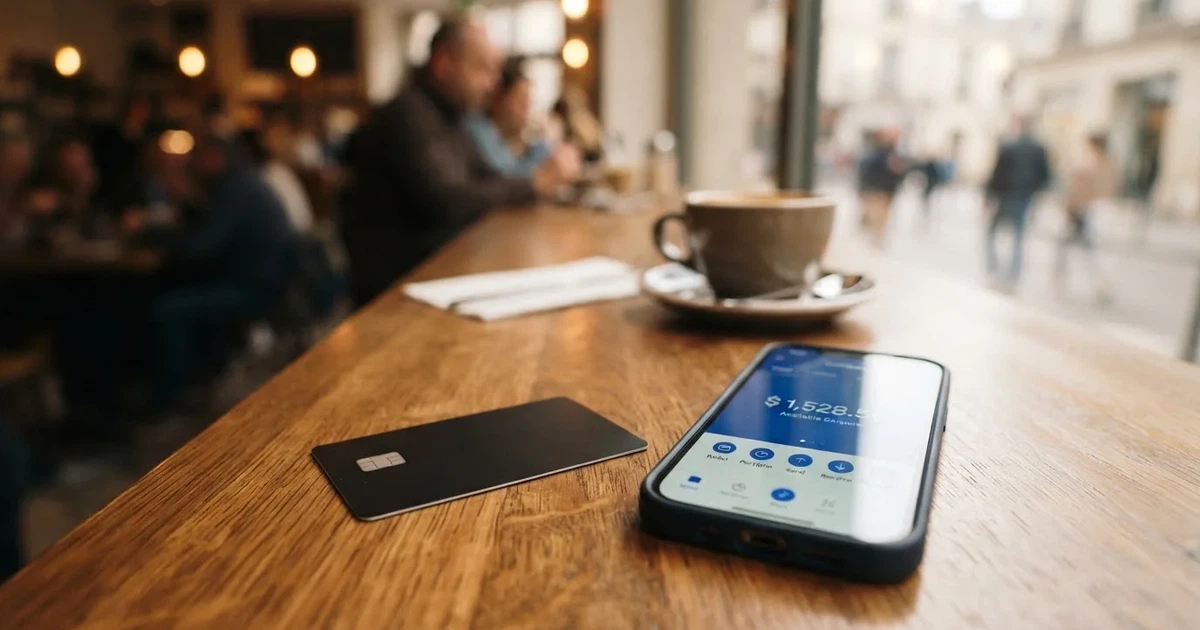
Conditions are current as of October 28, 2026.
Verdict
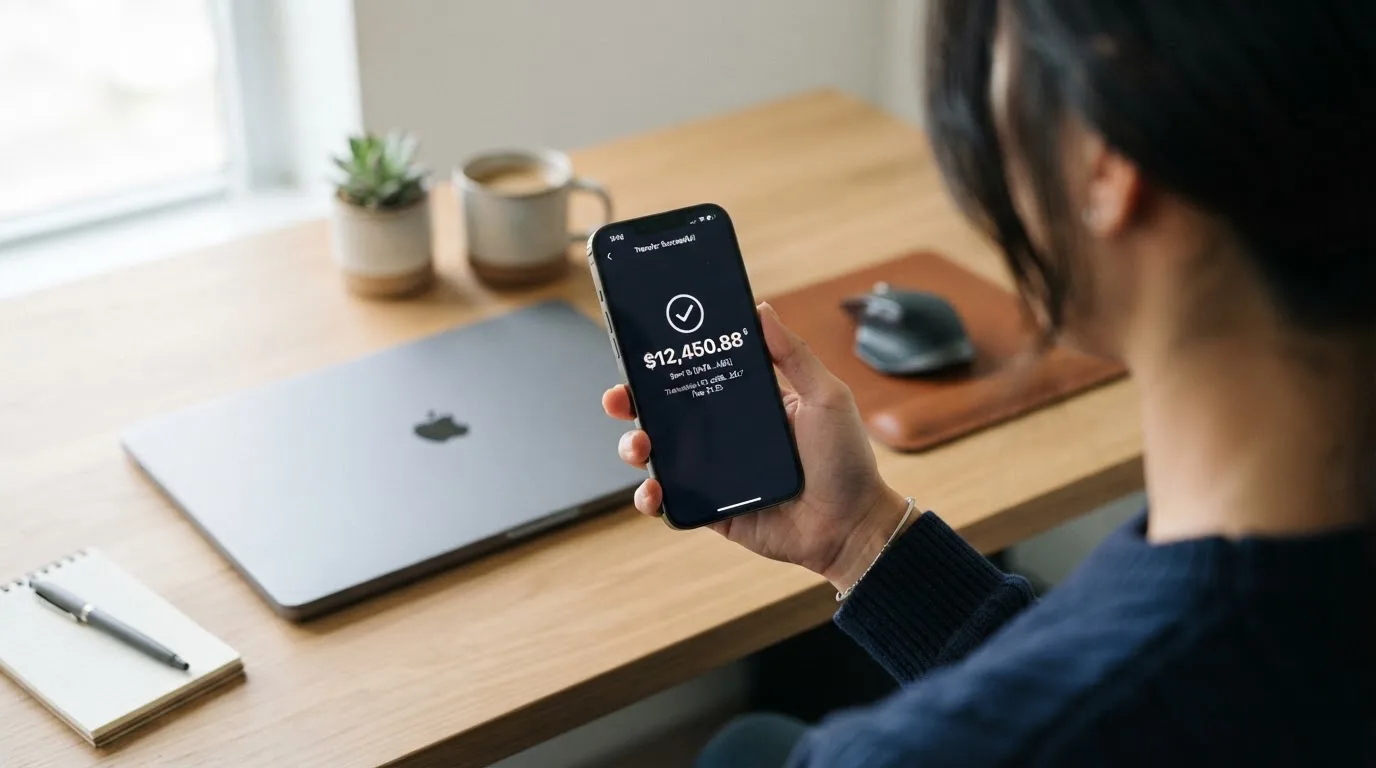
Thera Wallet earns 4.9 out of 10 in this review. The score is built from five criteria, each with its own mark and a short reason.
| Criterion | Mark | Reason |
|---|---|---|
| Who can get it | 3 / 10 | Only ten countries, and only people paid through Thera payroll |
| Cost | 5 / 10 | No published fees or limits; FX fees are mentioned without a number |
| Top-up options | 6 / 10 | Internal transfer from Thera account to wallet to card; USDC and USDT on Ethereum and Tron only |
| Reliability and complaints | 6 / 10 | Issuer and legal entity not named; one Trustpilot complaint about a missing withdrawal |
| Everyday use | 5 / 10 | Virtual Visa, online only, Apple Pay and Google Pay supported, no ATM or in-store spending |
The card suits a small, specific reader: a freelancer in Latin America who already receives Thera payroll, wants to spend that balance online without manually converting and withdrawing to a local bank, and is comfortable with the fact that the card is virtual only, that the fee schedule is not on the website, and that the issuing bank is not publicly identified. If that is you, the card solves a real problem: a payroll-funded Visa that you can put into Apple Pay or Google Pay in minutes.
If you are not paid through Thera, you cannot get the card, so the rest of this review is academic for you. If you are paid through Thera but want a card that you can also tap in a shop or use at an ATM, this is not the card for you — it is online only today, and the physical version is described in the public material as planned rather than shipped. And if a published fee schedule, a named issuer and a clear complaints channel matter to you before you load money, the absence of those in the public Thera pages is the reason the cost and reliability marks sit where they do.
Who they will give the card to
The card is currently supported in ten countries: Argentina, Bolivia, Brazil, Colombia, the Dominican Republic, Ecuador, Guatemala, Mexico, Peru and the United States. The official pages frame availability as depending on local banking and regulatory factors, so the country list is a current snapshot rather than a permanent promise, and the list itself can change.
Eligibility is narrower than the country list suggests. The card is positioned as part of the Thera payroll product, which means it is aimed at employees and contractors who are paid through Thera, not at the general retail market. If you are not on a Thera payroll, you cannot open a wallet, and if you cannot open a wallet you cannot get a card. That is a meaningful difference from cards such as the ones compared in the alternatives section, which anyone in the supported countries can apply for directly. With Thera, your employer or contracting platform is the gatekeeper.
The official pages do not state a minimum age, do not ask for proof of address as part of the application, and do not list a list of accepted residential statuses. Citizenship versus residence is also not spelled out. The public material says support is “based on local banking and regulatory availability”, which in practice means a US person, a Brazilian person, a Mexican person and so on, in their home country, with a Thera payroll relationship in place. If you are a citizen of one of the ten supported countries living in a sixteenth, the public pages do not tell you what happens, and that is worth raising with Thera support before you start an application.
A few practical consequences follow. You will not find a marketing page that lets you “buy” the card, no matter how many times you search. The entry point is the Thera payroll product, and the card is a feature of that product rather than a standalone item. For most readers, the question “can I get it?” is really two questions: “is my country on the list?” and “is my income routed through Thera?” If either answer is no, the rest of this review is not for you, and the alternatives section below is the more useful place to read.
How to get the card
The application path has two parts: opening a Thera Wallet and completing identity verification. The wallet is created under Payroll > Wallet in the Thera dashboard, and approval is described in the public material as typically taking a few business days. That delay is the first thing to know: you cannot get the card in an afternoon.
KYC is handled by a partner called AiPrise, and it is mobile-only. You scan a QR code, choose the type of ID you are going to submit, photograph the front and back, and take a selfie. The accepted documents are a driver’s licence, a resident ID, a voter ID, a national ID and a passport. The result is either Verified or Declined; there is no middle ground and no public list of what causes a decline. The standard review takes a few minutes, and reviews that need extra checks take 24 to 48 hours. If Thera’s employer side requires KYC for withdrawals, your withdrawals are blocked until KYC is approved, so this step is not optional in practice.
US tax residents also have to file a W-9, and non-US residents have to file a W-8BEN or W-8BEN-E, before they can withdraw. That is a tax form, not a tax payment, and it is required of US persons and foreign persons respectively under US tax law. It is worth being ready for that step, because the public pages do not always make clear when in the flow it appears.
Once the wallet is approved, the card itself is virtual. It is a Visa, it works at online merchants that accept Visa, and it is not accepted in physical stores. A physical card is described in the public material as planned rather than available, so if you need a piece of plastic today, this is not it. The card currency is not stated in the public material, which matters when you read about FX fees below: if you do not know which currency the card settles in, the phrase “foreign transactions may incur FX fees” is harder to translate into a real-world cost.
Fees
The honest summary of Thera Wallet’s published costs is that there is almost no schedule to copy. The card’s own pages do not state an issuance fee, a monthly fee, a crypto conversion fee or an ATM fee, and the only published cost note is that “foreign transactions may incur foreign exchange (FX) fees” with no figure attached. Several everyday costs are not stated at all: the fee to convert USDC or USDT into a spendable balance, the minimum top-up, the cost of funding the card from the Thera wallet, and the cost of paying the card back out to an external address.
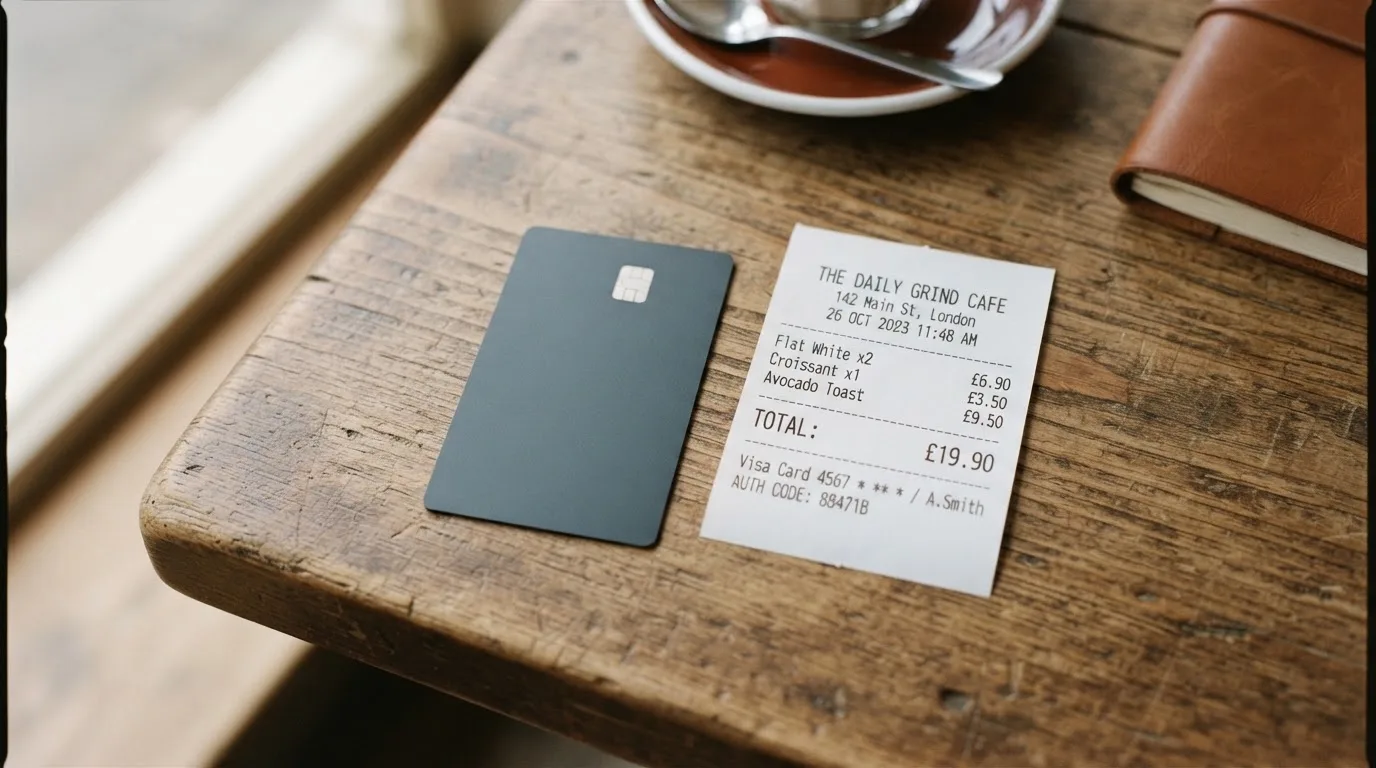
What is published sits in the table below. Where the cell says “not stated”, the card’s public pages do not give a number, and you should treat that as a real gap rather than as zero.
| Fee or limit | What the public material says |
|---|---|
| Card issuance | Not stated |
| Monthly or annual fee | Not stated |
| Crypto conversion (USDC/USDT to spendable balance) | Not stated |
| FX fee on foreign transactions | “May incur foreign exchange (FX) fees”, no figure |
| ATM withdrawal | Not stated (the card is online-only today) |
| Card spending limits | Not stated |
| Maximum wallet withdrawals | 10 withdrawals in any rolling 30-day period |
To make that less abstract, here are three everyday payments and what the published material does and does not tell you about each. None of these are estimates: they describe what the official pages commit to.
- Paying for a US-based subscription in US dollars. This is the cleanest case. You are spending the card in its likely base currency, no FX conversion is involved, and the only fee that could apply is the unstated crypto conversion fee when your USDC or USDT is loaded onto the card. Since that fee is not published, the only way to find it is to load a small amount and watch the difference between what you sent and what reached the card.
- Paying for a European subscription in euros. The card converts euros into the card’s base currency at the Visa rate, and the official material warns that a foreign transaction “may” trigger an FX fee. The size of that fee is not on the page, so the practical answer is that you will only see the real cost on your statement after the payment clears. If you can, prefer paying in dollars on the same merchant’s site; if you cannot, build a small buffer for the unknown fee.
- Paying for a Brazilian subscription in reais with a US-funded balance. This is the same case as the European subscription, plus a domestic-versus-foreign-issuer wrinkle. Because the card is not a Brazilian-issued card, the merchant’s bank may treat it as a foreign-issued card, which can in turn affect the merchant’s own willingness to accept the payment. That is a category-wide effect rather than a Thera-specific one, but it is worth knowing about, and it is exactly the kind of thing the published fee schedule would normally warn you about in advance.
The withdrawal limit deserves a separate mention, because it is the only quantitative cost-like figure that the public material does publish. Wallets are limited to 10 withdrawals in any rolling 30-day period. That is a count, not a sum, so the limit is on how often you can move money out, not how much. If you receive weekly Thera payouts, 10 withdrawals a month is enough for most users, but it bites quickly if you try to use Thera Wallet as a day-to-day payout account.
How to top it up
Top-up happens in two steps inside the Thera product. First, money moves from your Thera account into your Thera Wallet through a step labelled Transfer to Wallet. Then, inside the Wallet section, you click Add Funds to push that balance onto the virtual card. The official material says the balance reflects on the card within 5 to 10 minutes. In practice, that is a short window, but it is not instant, and a payment that goes through in the first minute or two after a top-up can fail if the balance has not yet settled.
The funds that move through this path are USDC and USDT, and the wallet accepts those stablecoins only on two networks: Ethereum and Tron. That is a narrower set of networks than USDC is available on more generally, and it is also a narrower set than the alternatives in this review support, so if you are paid in a stablecoin on, say, Solana or Polygon, you will need to bridge or swap before the funds can land in a Thera Wallet. The official pages do not publish a minimum top-up, a maximum top-up or a fee for the internal transfer, which is a recurring theme in this review: the operation works, but the public cost is not on the page.
The other direction, getting money out of the wallet, is governed by the same network constraint. Wallet payouts go to an external crypto address in USDC or USDT on Ethereum or Tron, set up under Add Method. Fees are not published. A practical warning is worth repeating: blockchain transfers are irreversible, and a wrong address or a wrong network can mean the funds are lost with no guaranteed recovery path, so this is the part of the flow where care matters most.
Paying with it every day
The card is a virtual Visa that works at online merchants that accept Visa, and it can be added to Apple Pay and Google Pay through the card settings. Once it is in your mobile wallet, you can use it on a phone at any contactless terminal, which is the closest you can get to in-store use today. Online subscriptions, app store purchases, recurring bills paid by card and online shopping all work in principle.
What does not work, today, is the rest. There is no physical card, so no swiping, no inserting a chip at a terminal and no ATM. Cash, in particular, is simply not in scope: the official material does not address ATMs, and the card cannot be used in-store. There is no published list of blocked merchant categories, and the card cannot be used to send peer-to-peer payments via payment links.
The day-to-day experience has a few moving parts worth knowing. Card details (number, expiry, CVV) are visible in the Wallet section of the dashboard and auto-hide when you leave the page, which is a useful security default. The public material describes an identity-verification step at sign-in, and the actual custody model for your USDC and USDT — whether Thera holds the keys, whether a partner does, or whether the funds are segregated in some other way — is not stated on the pages read. Reward programmes, cashback, sign-up bonuses, and staking or yield on the balance are also not stated, so the only economic upside to using the card is being able to spend the payroll balance without an extra manual step. If you were hoping for any cashback, the public material does not promise one.
A few payment-method realities that are not Thera-specific but bite anyway:
- 3-D Secure. Most online card payments go through 3-D Secure at some point, which is the issuer’s identity check that may send you a one-time code or a biometric prompt. With Thera, the relevant support channel for those prompts is the same email support described in the public KYC guide.
- Address Verification Service (AVS). This is mainly a US, Canadian and UK system, and cards issued outside those markets often do not get full AVS support, which can produce declines on sites that hard-require it.
- Foreign-issuer scrutiny. Some merchants decline prepaid or foreign-issued cards outright because the card-issuer country does not match the customer’s billing country. The Thera card’s issuing country is not stated publicly, so if a checkout page rejects the card, that is one possible cause.
What can go wrong
Two kinds of risk matter here: risks that come from the way the product is set up, and risks that come from gaps in the public information.
Setup risks. The card is online-only and virtual-only, so a phone that breaks or a wallet that is locked can leave you unable to spend. USDC and USDT only, on Ethereum and Tron only, so a payroll paid in a different stablecoin or on a different network has to be bridged or swapped before the funds are usable. Withdrawals are capped at 10 per rolling 30 days, which makes the wallet unsuitable as a frequent payout destination. The fee schedule is not published, so you cannot predict the cost of a top-up, a conversion or an FX transaction in advance.
Information gaps. The card’s public pages do not name the legal entity behind Thera, the card issuer, the issuer’s licence, or the regulator. KYC is performed by a partner called AiPrise, which is a normal arrangement, but it is the only governance link on the public page. There is no published dispute process and no published support channel for cardholders — the KYC guide refers to email support, and the card article does not name a channel at all. There is no published incident log.
What users say. The public Trustpilot page for Thera, read on 2026-10-21, carries a 4.7 average across 100 reviews, all of them in the last 12 months. That is a small sample, and the company has not replied to negative reviews, but it is also a single-platform view, so it should be read as a signal rather than a verdict. The one visible complaint describes a withdrawal that the platform marked as completed but that never reached the user, with slow, repetitive support. That matches the broader concern: a thin published support channel and no published dispute process make the consequences of an outage or a missing withdrawal worse than they would be with a card that has a named issuer and a published complaint route.
Counterparty risk. The wallet is custodial in practice, because the public material does not describe a self-custody option. That means your USDC and USDT sit with the Thera product, and if the company runs into trouble, the recovery path is whatever the platform’s own process is, not a private key under your control. The card programme itself depends on the issuer’s licence: if the issuer loses that licence, the card programme can be paused or wound down on a notice, and the pattern of crypto-card programme closures in recent years (most famously FTX in November 2022) is the reason this risk is worth thinking about before you load meaningful balances.
A small thing that is easy to miss. Stablecoins themselves carry depeg risk: USDT and USDC have held their peg through recent stress, but TerraUSD collapsed in May 2022 and USDC briefly lost its peg in March 2023 during the US banking crisis. The dollar balance on the Thera card is a stablecoin balance, and a depeg event would change the value of what is sitting in your wallet. The card does not protect you from that, and the public pages do not address it.
What to take instead
Three cards make a useful comparison set for a reader who is at the edge of Thera’s eligibility, or who is paid through Thera but wants a more general-purpose card. None of them is a perfect substitute, and each trades off a different thing.
| Card | Score | Who can get it | Card | Rewards | What it is best at |
|---|---|---|---|---|---|
| Thera Wallet | 4.9 / 10 | Thera payroll users in 10 countries (AR, BO, BR, CO, DO, EC, GT, MX, PE, US) | Virtual Visa, online only | None published | Spending a Thera payroll balance online with a Visa |
| Whop Cards | 5.2 / 10 | Consumers in 31 US states; businesses in 41 US states | Visa, online and in-store | 5% cashback at select merchants (Uber, more planned) | US-based cardholders who want a US-style Visa with merchant cashback |
| Stella | 6.5 / 10 | Global barring sanctioned jurisdictions; US and European users via affiliates | Virtual and physical Visa, 40m+ merchants | No card cashback published (yield is a separate product) | A broader-coverage crypto Visa with both virtual and physical cards |
| UniFi Card | 4.7 / 10 | Send-money routes confirmed for the Philippines, Mexico, eurozone, Colombia, Brazil and the UK (unofficial) | Prepaid debit Visa, issued by Lead Bank, USD balance | Listing claims 3% rewards on balances (unofficial) | Receiving money in multiple currencies and spending in dollars |
The Whop Cards score of 5.2 is the highest of the three alternatives but it is a US-only product for consumers, and it leans on stablecoin collateral from a linked wallet rather than on a payroll relationship. The Stella score of 6.5 reflects a wider geographic and product scope — virtual and physical, accepted at over 40 million Visa merchants — but the public pages do not state a fee schedule either, and US and European users are routed through affiliates. The UniFi Card score of 4.7 reflects a product whose country list is not officially published, whose fees are not stated, and whose “3% rewards on balances” figure is from a listing rather than from the card’s own page. The “UNOFFICIAL” tag is worth keeping in mind for the UniFi and Whop details that are not on the cards’ own pages.
If you are a Thera-paid freelancer who mainly spends online and is happy to live inside the Thera product, Thera Wallet is a reasonable fit. If you want a physical card, a published fee schedule or a named issuer, Stella is the closer of the three alternatives, on the public material that is available. If you are US-based and want merchant cashback, Whop is the relevant comparison. And if you mainly want to receive money in several currencies and convert to USD, UniFi is the more relevant comparison — but with the caveat that several of its public-facing facts are from the app listing rather than from the card’s own site.
Who I would recommend it to
I would recommend the Thera Wallet card to a fairly specific reader. You are a freelancer or contractor paid through Thera in one of the ten supported countries. You are comfortable with crypto balances, with the fact that your USDC and USDT sit on Ethereum and Tron, and with a virtual-only card. You mainly spend online — on subscriptions, on app store purchases, on online shopping — and you would rather have a Visa in your phone’s mobile wallet than convert to local currency and route through a local bank. You are willing to accept that the fee schedule is not on the website, and you treat the published Trustpilot score and the one visible complaint as a reason to keep your balance small rather than as a reason to walk away.
I would not recommend it to a reader who is not on a Thera payroll, because the card is not available to you. I would not recommend it to a reader who needs a physical card, an ATM or in-store contactless use, because the card is online-only today. I would not recommend it to a reader who plans to keep a large balance on it for a long time, because the public information about the issuer, the legal entity, the support channel and the dispute process is thin, and the only quantitative cost-like limit on the wallet is the 10-withdrawals-per-30-days cap, which is a count, not a sum, and which is the kind of limit that bites when you do not expect it. This card is also not a suitable choice if you are not comfortable with the stablecoin-counterparty picture, because the balance is a USDC or USDT balance, and a depeg event would change what that balance is worth in a way the card does not protect against.
A reasonable starting position, if you do fit the profile, is to load a small amount, run a few payments through Apple Pay or Google Pay, make one test withdrawal to an external address, and watch the actual fees against the published “not stated” cells. That is the only way, on the public material available, to fill in the parts of the cost picture that Thera’s own pages leave blank.
Frequently asked questions
What is the Thera Wallet card?
The Thera Wallet card is a virtual Visa that draws on a crypto balance funded by Thera payroll payouts. It works at online merchants that accept Visa and can be added to Apple Pay and Google Pay. It is not a general retail card: it is positioned as part of the Thera payroll product, for employees and contractors paid through Thera.
How does the Thera Wallet card work?
You receive your Thera payroll in the Thera product, transfer it from your Thera account into Thera Wallet, then click Add Funds to push the balance onto the virtual card. The card balance reflects in 5 to 10 minutes. At payment time, the card is treated as a Visa, and the merchant sees a Visa authorisation rather than a crypto transfer.
Is Thera Wallet a bank?
The public pages do not describe Thera Wallet as a bank, and the card issuer, the legal entity and the licence are not named. KYC is performed by a partner called AiPrise, and the wallet is custodial in practice. Treat it as a payments product, not as a bank account, until the company publishes the relevant entity and licence information.
Who owns Thera Wallet?
Thera is the company behind the product, which is available on the Thera website. The public pages do not name a parent company, a card issuer or a licence. That information gap is one of the reasons the cost and reliability marks in this review are what they are.
Is the Thera Wallet card available in my country?
The card is currently supported in Argentina, Bolivia, Brazil, Colombia, the Dominican Republic, Ecuador, Guatemala, Mexico, Peru and the United States. The official pages describe availability as depending on local banking and regulatory factors, so the list can change. If you are a citizen of one of these countries but resident elsewhere, the public pages do not spell out the position, and you should check with Thera support before applying.
How do I get the Thera Wallet card?
You open a Thera Wallet under Payroll > Wallet in the Thera dashboard, complete KYC via the AiPrise mobile flow (ID type, photos of front and back, selfie), and, if relevant, file a W-8BEN, W-8BEN-E or W-9 for tax purposes. Once the wallet is approved, the virtual card is available in the dashboard. The whole flow typically takes a few business days.
Does the Thera Wallet card require KYC?
Yes. KYC is mobile-only, via a QR code, and the accepted documents are a driver’s licence, a resident ID, a voter ID, a national ID and a passport. The standard review takes a few minutes, longer reviews take 24 to 48 hours, and the result is either Verified or Declined. Withdrawals can be blocked until KYC is approved.
How do I top up the Thera Wallet card?
You top it up by transferring from your Thera account to your Thera Wallet (the Transfer to Wallet step) and then clicking Add Funds to push the balance onto the card. The balance reflects in 5 to 10 minutes. The wallet accepts USDC and USDT only, on Ethereum and Tron only, and the public material does not state a fee, a minimum or a maximum.
How do I add the Thera Wallet card to Apple Wallet or Google Pay?
You add it through the card settings in the Thera Wallet dashboard. Once added, the card can be used for contactless payments at any terminal that accepts Apple Pay or Google Pay, which is the closest the card currently gets to in-store use, since there is no physical card yet.
Is the Thera Wallet card safe to use?
The card uses standard safeguards: identity verification at sign-in, an auto-hide on card details when you leave the page, and tokenisation through Apple Pay and Google Pay. The published Trustpilot score is 4.7 across 100 reviews, with one visible complaint about a missing withdrawal and slow support. Treat the card as a small-balance product rather than a primary account, and remember that the issuing bank and legal entity are not named in the public pages.
Highest-scored app and neobank cards – cryptocardbest.com
Content created by the «cryptocardbest.com» team