A Visa card you order in an app, from a company that tells you very little
 Available in US
SkyDAO is a crypto wallet that hands you a physical Visa card you order from the app and spend from the wallet balance. That is the whole pitch, and on paper it is a familiar one. What makes this card unusual is how little the people behind it publish about the things you would need in order to decide whether to rely on it: no country list, no fee schedule, no limits, no named issuer, no licence. My score is 5.3 out of 10 — not because the product sounds bad, but because so much of the decision is currently being made blind.
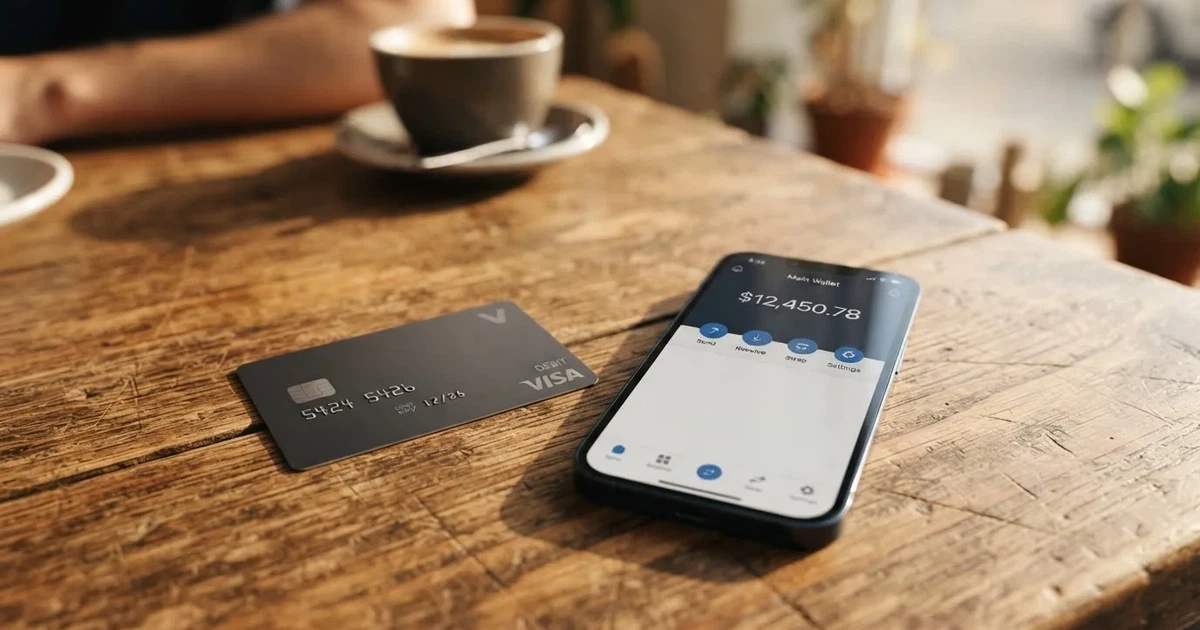
If you already hold crypto, want a physical Visa with ATM access, and you are comfortable reading what is absent as carefully as what is present, the card is worth putting on a shortlist. If you need to know what a coffee costs, whether a payment will clear at a shop in your country, or what happens to your money if the company folds, you cannot get those answers from the published pages at all.
The conditions described here are current as of October 28, 2026.
Verdict: 5.3 out of 10
The score breaks down the way you would expect when a product is well described on the surface and thin underneath.
| Criterion | Mark | Why |
|---|---|---|
| Who can get it | 5 / 10 | The readable pages name no countries; earlier data said everywhere except 49 restricted countries, unconfirmed here |
| Cost | 5 / 10 | Issuance, fees and servicing are not disclosed |
| Top-up options | 5 / 10 | Wallet-to-card transfer, multichain; coins and networks unnamed |
| Reliability and complaints | 4 / 10 | SKYDAO TRUST LTD, country of registration, issuer and licences all unnamed; no complaints or reviews found, too few App Store ratings to rate |
| Everyday use | 8 / 10 | Physical Visa ordered in the app, Apple Pay and Google Pay, ATM withdrawals; the virtual card is not described |
That last row is the real story. On the narrow question of “can I pay for things with this”, SkyDAO does well — it is a Visa, you can order the plastic from the phone, tap it against a terminal, load it into a mobile wallet and get cash out of an ATM. Everything that would make it dependable in daily life over months or years is the part the public pages skip.
The audience this suits, plainly: wallet users who want a physical Visa with ATM access and already know how crypto settlement works. The audience it does not suit: anyone whose first question is what it costs, anyone who needs a specific country listed before they apply, anyone who wants to know which institution actually issues the card.
Will they give you the card?
The honest answer is that I cannot tell you, because the pages that could be read do not name a single eligible country. Earlier material suggested worldwide availability except 49 restricted countries, but that is not confirmed on the pages I checked, so I am not going to repeat it to you as though it were a fact.
This matters more than it sounds. Sanctions screening and issuer risk policy are applied to citizenship and country of birth, not just to the address you live at. A card that works in one country can be refused to a citizen of another, and no marketing page will tell you that in advance unless it publishes a list. This is the single cheapest thing you could ask support before you upload anything, and it is worth asking before you upload anything.
Age: prepaid and debit cards are generally available to adults (18 and over), and some issuers set higher limits. SkyDAO’s own verification level requirements are not stated.
How to get it
The path is short, and that is genuinely all the pages give:
- Download the SkyDAO app and complete identity verification to apply for a physical card online.
- The Visa card is linked to your SkyDAO wallet, so value moves from the wallet to the card. The card currency is not stated.
- The physical card is ordered online in the app after verification. Once your order is placed, the card is shipped to your specified address.
What documents you will be asked for is not stated, how long shipping takes is not stated, and what shipping costs is not stated. Those three gaps sit right on the critical path. If the card takes three weeks to arrive and you have no idea what it costs, or if verification asks for a document you do not have, the app is where you find out — not this page, and probably not support either.
One practical note on what you are verifying for: in the EU, customer due diligence covers name, address, date of birth, nationality and identity documentation, a sanctions check, the purpose of the relationship, and whether you are a politically exposed person. In the US, the customer identification programme requires name, date of birth, address and an identification number, and electronic systems also check proof of address against records. A wallet app that asks for your identity documents is doing what the law asks of it; the question is whether the issuer behind it is one you would want holding that file.
Fees: what it really costs
Here is the honest table. Most cells are empty, and the emptiness is the finding.
| Fee or limit | What the pages say |
|---|---|
| Card issuance | Not stated |
| Monthly or servicing fee | Not stated |
| Conversion fee | Not stated |
| Foreign exchange fee | Not stated |
| ATM withdrawal fee and allowance | ATM withdrawals available; fee and allowance not stated |
| Daily limits | Not stated; the App Store text says the VIP service offers “higher limits” |
| Monthly limits | Not stated |
| Card currency | Not stated |
Let us take three ordinary payments and run them through what is actually known.
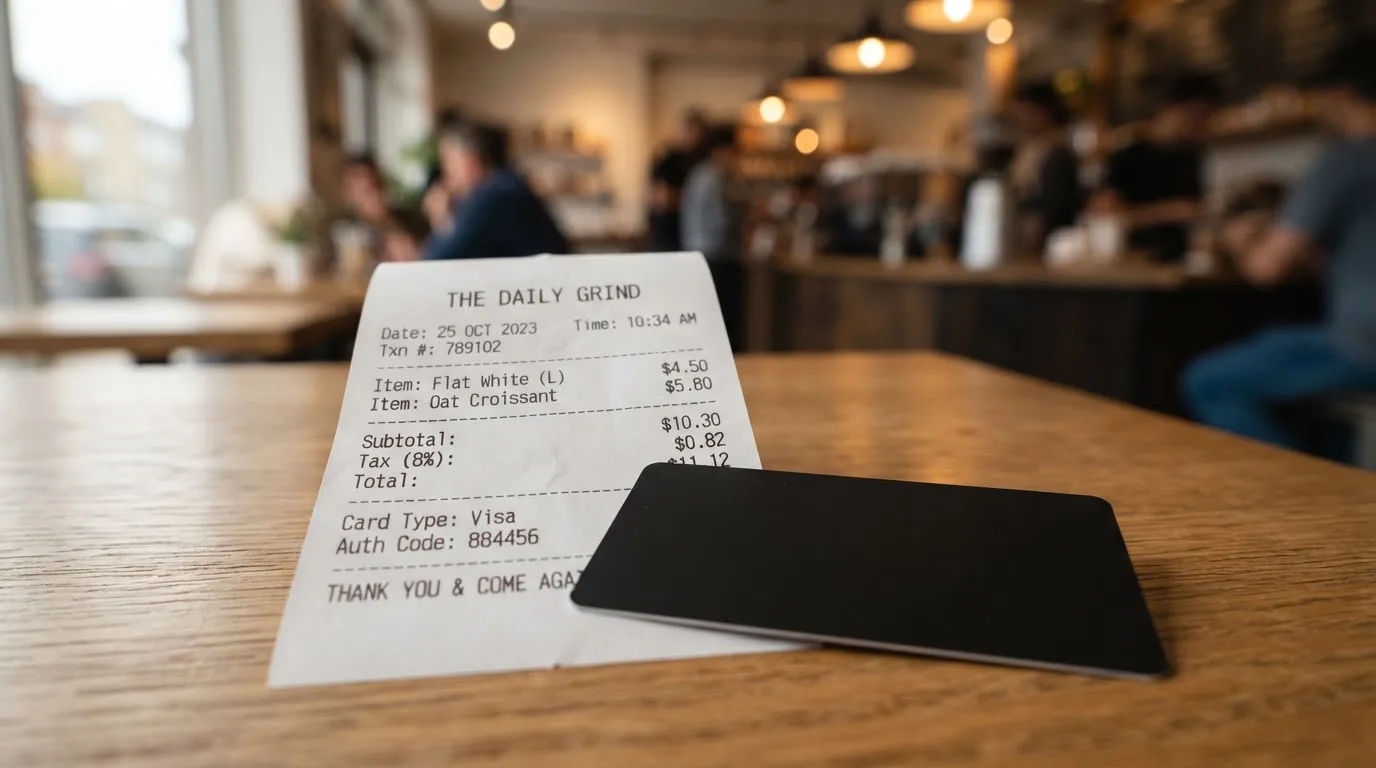
A coffee at a local café. Suppose the card balance holds euros and the till wants euros. If the balance is in a stablecoin instead, the payment needs a conversion, and the conversion fee is not published — so the amount you pay is unknown in advance, and so is the exchange rate applied. If the balance is already in the right currency, the cost may simply be the merchant’s own. You cannot tell which case you are in before you hold the card.
An online subscription in dollars. This is the payment most likely to trip over a mismatch. The card’s currency is not stated, and a foreign-exchange fee is not stated. Merchants can also decline prepaid or foreign-issued card numbers, because a lookup on the number reveals the issuer’s country, and a number issued under a different billing address can attract extra scrutiny or fail address verification outright.
Cash from an ATM. Withdrawals are available. The fee is not stated, the allowance is not stated, and the monthly limit is not stated. This is the feature people most often want a crypto card for, and it is the one with the least information behind it.
What you can rule out is overdrawing: in the pre-loaded balance model, the card spends only what you loaded, so it cannot go negative. What you cannot rule out is that a single withdrawal, conversion or FX operation carries a charge you did not know about.
One category fact worth keeping separate from the card’s own fees: on-chain network fees for your deposit are charged by the blockchain, not by the card provider. So the cost of getting money in can include a network fee that never appears in any card fee schedule, because it is not a card fee.
How to top it up
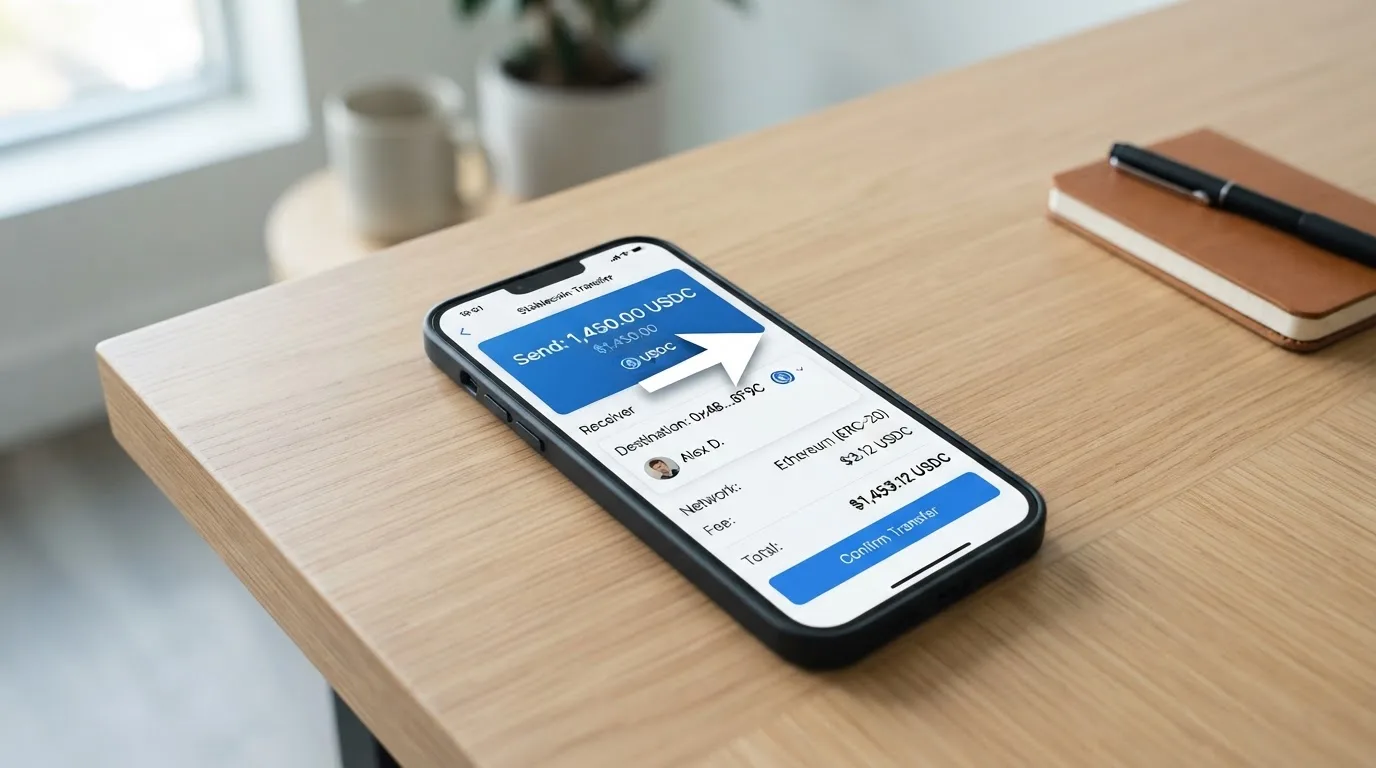
Topping up is the wallet-to-card transfer, and the app describes a unified account for fiat and digital assets. The transfer is multichain.
What is not there is the part that decides whether it works: no coins named, no networks named, no fee, no minimum. This is where the risk concentrates rather than where it feels like it does. A stablecoin transfer sent on a network the provider does not support, or to an address belonging to a different network, can be lost outright or need manual recovery with no guarantee. Blockchain transfers do not reverse.
So before your first transfer, check three things in the app itself: which networks are accepted, which asset you are sending, and whether the receiving address is network-specific. The risk of a wrong-network deposit is much higher than the risk of a fee you did not know about.
Withdrawals are not stated at all — not the route, not the fee, not the timing. If cashing out to your own bank account is part of your plan, that is an open question.
Paying with it every day
Day-to-day, the card behaves the way you would hope:
- A physical Visa, ordered from the app.
- Apple Pay and Google Pay, so you can leave the card at home.
- ATM withdrawals.
- Spending from the wallet balance through to the card.
The App Store listing is for iPhone and iPad, free, rated 18+, version 2.4.8 from 10 October. It also carries a line worth reading carefully rather than skipping: the app has not received enough ratings or reviews to display an overview, as read on 21 October 2026 in the Canadian storefront. The Google Play listing was not checked. An app with too few public ratings tells you nothing about how many people actually use it.
Rewards are not stated. Blocked merchant categories are not stated — which is more consequential than it sounds, because certain category codes, such as the one covering gambling, are commonly blocked by policy at the issuer’s discretion, and the list varies from issuer to issuer. If gambling, adult content or fuel is part of your spending, you need that list in writing.
Dispute handling is not stated either. There is a difference between a card where a chargeback process exists and one where your only route is a support message, and nothing on the pages tells you which you would get.
What can go wrong
Beyond the missing numbers, four structural risks sit under this card.
Who is actually behind it. The website shows a line reading “Hong Kong – regional access, United States – global standards, License”. The App Store seller is SKYDAO TRUST LTD. The registered country, the name of the issuing institution and the licence numbers are all not stated. “License” with nothing after it is the thinnest possible disclosure. A crypto card typically depends on two licences — one on the crypto side and one on the payment side — and here you cannot see either.
Whether the provider holds your money. Control of crypto belongs to whoever holds the key. With a custodial wallet the provider holds it, and you trust them completely; with a self-custody-linked card the funds stay in your wallet until the moment of payment, and the risk shifts to key loss, phishing and clipboard-hijacking malware that silently swaps a copied address. Which model SkyDAO uses is not stated, so you do not currently know who bears which risk.
That programmes end. Card networks do not issue crypto cards themselves; they license issuers, and they can suspend a programme. Visa terminated its global agreements with FTX on 13 November 2022, and the FTX US debit card was wound down by its issuer. WaveCrest, a Visa issuer that supplied several crypto card brands, was suspended by Visa in Europe in 2018, closing every programme it had issued. When programmes close, there is a notice period, spending and loading stop, and users are asked to withdraw remaining balances.
That stablecoins are not what the name promises. A stablecoin aims to hold its value against a fiat currency, and the BIS put about 90% of stablecoin market capitalisation into USDT and USDC in July 2025. TerraUSD collapsed in May 2022; USDC temporarily lost its peg in March 2023 during the US banking crisis. Circle stopped supporting USDC on Tron in February 2024, so the chain you pick changes what is even available. And Tether says it disables tokens on wallets on the OFAC sanctions list and has frozen funds tied to illicit activity — these are not censorship-proof assets.
On complaints, I found essentially nothing either way. No official incidents, no Trustpilot page for SkyDAO itself, no Reddit threads. A Trustpilot page for sky.money carries two one-star reviews and it is unclear whether it is the same business, so I have not used it. Absence of complaints on a card with this little public history is not reassurance.
The developer claims encryption and multi-layer risk controls in the App Store text; that is unverified. Dedicated support is described as a VIP benefit, and the help centre at skydao.zendesk.com is closed, so the support channel you would rely on is not the one that is open.
One last thing you should check with a specialist rather than take from any review, including this one: in the US the IRS treats digital assets as property, so spending crypto through a card is generally a taxable disposal measured at fair market value on the date of the transaction. Each card payment funded from crypto can be a separate disposal. I am not giving you tax advice — I am telling you that this line item exists and that a per-payment disposal question deserves a professional answer in your own jurisdiction.
What to take instead
If the gaps above are disqualifying, the honest comparison is against other cards in the same category, judged on the same criteria.
| Alternative | Score | Card | Who it is for |
|---|---|---|---|
| Whop Cards | 5.2 / 10 | Visa, virtual and physical type not stated | Consumers in 31 US states, businesses in 41 |
| Stella | 6.5 / 10 | Virtual and physical Visa, “over 40 million VISA merchants globally” | Country list not stated; US and European users routed through affiliates |
| UniFi Card | 4.7 / 10 | Prepaid Debit Visa, issued by Lead Bank, USD | Send-money routes to the Philippines, Mexico, eurozone, and recent notes mention Colombia, Brazil and UK |
Whop is the near-twin of SkyDAO on paper and scores almost identically. It publishes a state list — 31 consumer states including California, Texas, New York, Washington is absent but Florida, Illinois and Pennsylvania are there — and names unsupported countries including Belarus, mainland China, Hong Kong, India, Russia, Turkey, Ukraine and Vietnam. Its page says “No extra fees” while listing no issuance or monthly amounts, so it is not more transparent, just differently silent. It adds 5% cashback at select merchants, currently Uber. It spends from a Whop balance, backed by stablecoin collateral from a linked wallet.
Stella scores higher, at 6.5. It publishes a card page, supports both virtual and physical, and its terms bar users under economic sanctions programmes. But its country list is not stated, and fees are deferred to a user agreement and the app — the same trick. Its funding model is explicit, though: you deposit crypto into the account and it automatically tops up the card. No cashback is stated on the card itself.
UniFi is the most concrete of the three and the lowest-scoring, at 4.7. It names its issuer, Lead Bank, calls itself a prepaid debit Visa in USD, and lists concrete funding routes: ACH, wire, SEPA, SPEI, and getting paid to a USDC wallet. It also says “Fees may apply. See UniFi website for more details” — again, no amounts. Its app-store listing claims 3% rewards on balances, not on card spend.
The pattern across all four is worth naming: this category publishes cards better than it publishes terms. If your decision depends on a specific number, none of them is currently the card that will hand it to you.
Who I would recommend it to
I would recommend SkyDAO to someone in a fairly specific position: you already hold crypto, you want a physical Visa you can tap and an ATM, you are comfortable with a provider that will not publish its fee schedule, and you would not be devastated to move your balance elsewhere in a year’s time. In that situation the card’s day-to-day ergonomics are good, the score of 8 out of 10 on everyday use is the part that is genuinely solid, and the absence of complaints reflects a short history rather than a clean one.
I would not recommend it as your only card, and I would not recommend it to anyone who cannot answer “what does a conversion cost me” from what SkyDAO publishes — because neither can I. Anyone who needs a clear answer about their country, about chargebacks, or about who holds the funds should pick a card that publishes those things, even if its rewards are thinner.
Frequently asked questions
What is the SkyDAO card?
SkyDAO is a crypto wallet with a Visa card attached. You order a physical card in the app after identity verification, and it draws on your wallet balance. The card is a Visa, so it works wherever Visa is accepted, and the app also supports Apple Pay, Google Pay and ATM withdrawals. The card currency is not stated.
How does the SkyDAO card work?
You move value from your SkyDAO wallet to the card, then spend it as you would any Visa. The app describes a unified account for fiat and digital assets, and the wallet-to-card transfer is multichain. Because the card spends only what you have loaded, it cannot overdraw. Conversion fees and the card currency are not stated.
Is SkyDAO a bank?
Not on the published pages. The App Store seller is SKYDAO TRUST LTD, and the website shows “Hong Kong – regional access, United States – global standards, License”. The registered country, the issuing institution and the licence names are not stated. A crypto card normally depends on both a crypto-side and a payment-side licence, and neither is named here.
Who owns SkyDAO?
The pages name SKYDAO TRUST LTD as the App Store seller, with developer name “SkydaoTrust”, and describe a Hong Kong regional presence alongside United States global standards. Ownership structure and beneficial owners are not stated, and the “License” line on the site carries no number.
Does the SkyDAO card require KYC?
Yes. The stated route is to download the app and complete identity verification before applying for the physical card online. The documents required are not stated. Expect the standard: identity document, address, date of birth, and a sanctions screening that is applied to citizenship as well as residence.
What countries is the SkyDAO card available in?
The readable pages do not name any. Earlier material suggested worldwide availability except 49 restricted countries, but that is not confirmed there. Sanctions and issuer risk policy are applied to citizenship and country of birth, not just your address, so ask support directly before you apply.
How much does the SkyDAO card cost?
Nobody publicly says. Issuance, monthly servicing, conversion, foreign exchange, ATM fees and allowances, and daily and monthly limits are all not stated. The App Store text mentions “higher limits” as a VIP benefit without figures. On-chain network fees for deposits are separate, charged by the blockchain.
Is the SkyDAO card safe?
Too little is published to answer. Whether your crypto is custodial or self-custodied is not stated, and that determines who bears the risk of key loss or provider failure. The developer claims encryption and multi-layer controls, unverified. No complaints were found, but with this little public history that reflects a short record, not a clean one.
Can I use the SkyDAO card in my country?
Probably not for everyone, and the pages will not tell you. Nationality is screened separately from residence, so a resident of a supported country with citizenship elsewhere can still be refused. The visa network works widely, but merchants can decline prepaid or foreign-issued card numbers, and address verification is often unavailable for foreign-issued cards, which causes declines.
Is the SkyDAO card worth it?
For its stated purpose — spending crypto from a wallet through a physical Visa with ATM access — the everyday mechanics rate well. Whether it is worth trusting with money you cannot easily price depends on figures the company does not publish. If cost transparency matters to you, the answer is not yet; if a physical Visa and ATM access is the requirement, it is on the list.
Highest-scored app and neobank cards – cryptocardbest.com
Content created by the «cryptocardbest.com» team