
A prepaid Visa that spends 300+ assets from your wallet, but the price depends on which tier you pick
 Available in US
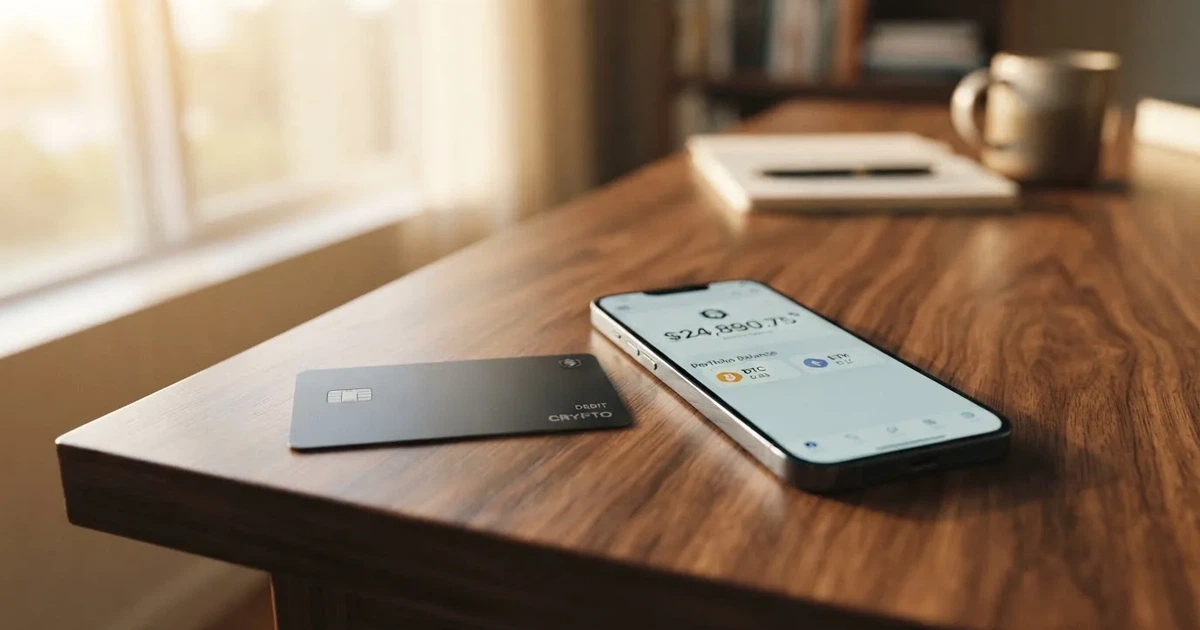
The Uphold card is a prepaid Visa that draws on the balance inside your Uphold wallet, so the same card that holds your bitcoin can also hold dollars and stablecoins and pay for a coffee without a separate “top up” step in the middle. The marketing makes a virtue of that simplicity, and in everyday use the card behaves like a fairly ordinary debit card. What separates a good experience from a bad one on Uphold is which of the two tiers you sit on and which country you call home, because the underlying card is only sold in the United States, the pricing swings hard between Essential and Elite, and the trustpilot story splits sharply between people who never had a problem and people whose account froze for three months with no reply.
Conditions are current as of October 28, 2026.
Verdict
I give the Uphold card 5.8 out of 10. The product itself is competent: a Visa, virtual and physical, Apple Pay and Google Pay when available, a wallet that lists more than 300 tradable assets, stablecoins highlighted, and an issuer (Cross River Bank, Member FDIC) that gives the USD side the cover of a real US bank. The everyday mechanics score high. The score loses ground on two things that aren’t really about the card. First, eligibility: the card page is for US residents in eligible states, and explicitly excludes Louisiana, New York and the US territories, so a large share of the world is reading about a product they cannot buy. Second, the public reviews: Trustpilot is generally favourable at 4.6 out of 5 across 27,602 reviews, but the negative reviews cluster around account freezes that last weeks to three months, slow bot-driven email support, and unexplained account closures. The price isn’t unreasonable for a prepaid Visa once you decide which tier you want, but it isn’t obviously cheaper than its rivals either, and on the conversion spread for bitcoin and ethereum the card is in the 2.05 to 2.20 percent band, which is on the high side for the category.
| Criterion | Mark | Why it matters |
|---|---|---|
| Who can get it | 2 / 10 | US-only and state-restricted; the rest of the world is locked out at the door |
| Cost | 6 / 10 | Essential is cheap to try, Elite is competitive, but BTC/ETH spreads run 2.05–2.20% |
| Top-up options | 8 / 10 | Spends from a 300-asset wallet, stablecoins included, funded by bank, PayPal or crypto |
| Reliability and complaints | 6 / 10 | Strong Trustpilot headline, but account-freeze stories are common and slow to resolve |
| Everyday use | 9 / 10 | Virtual and physical Visa, mobile wallets where supported, ATM access on both tiers |
| Total | 5.8 / 10 | A workable US prepaid Visa, priced fairly, but bounded by geography and by freeze risk |
The card suits you if you live in an eligible US state, you already use Uphold as a wallet or exchange, you want to spend from balances in many assets rather than just dollars, and you can pick the tier that matches your spend. It does not suit you if you are outside the US, you sit in Louisiana or New York, you need a credit card rather than a prepaid, you cannot tolerate the possibility of an account review freezing your funds for a few weeks, or you were hoping to keep your spending fully anonymous: the card sits inside a KYC’d wallet and reports to the same authorities any US bank would.
Will they give you the card
The eligibility rules are short and worth reading in full because they rule out more people than the marketing suggests. The card page is for US residents in US states and in the District of Columbia; it is not available in Louisiana, in New York, or in any US territory. “Resident” is the operative word, not “citizen”: Uphold is looking at where you live and where the card can be mailed, and the card is mailed to a US address only. There is no credit check, but you do need an Uphold wallet to apply, and the card terms require an accurate real name, a valid US mailing address, a date of birth, and personal use only — so a business card under a company name, a card sent to a freight forwarder, or a card used by anyone other than you is outside the terms.
What the page does not say is also worth knowing once. The card terms do not publish a KYC tier structure or a processing time, and the public material does not say which documents you will be asked for or what “proof of address” Uphold accepts. In practice, opening the underlying Uphold wallet is described as taking under five minutes, and the card rides on top of that. The card is in US dollars; the card terms do not describe a multi-currency balance for the card itself.
If any of those boxes is open — you are abroad, you live in New York, you want to be a joint account holder, you want a corporate card — the answer at this writing is no, the card is not for you, and reading the rest of this review won’t change that.
How to get it
The signup path is the same shape as the underlying wallet, which is the point: the card is essentially a feature on top of an Uphold account, not a separate product. The card is a Visa, in virtual and physical form; the Elite physical is metal, the Essential physical is plastic. You need a US mailing address to receive the physical card, and the page does not state the delivery time or the shipping cost, which means I cannot tell you how many business days to budget before the card lands. There is no expedited replacement; if you lose the card, a replacement costs $4.99 on Essential and $29.99 on Elite, with one free replacement per year for Elite.
The terms require an accurate real name, a valid US mailing address and a date of birth, and the card is for personal use only. Beyond that, the card’s own pages do not describe tiered KYC, processing time, or the documents you will be asked for, so treat those as “not stated” rather than something I am withholding from you. The general flow — open or sign in to the wallet, complete identity verification to the level Uphold requires, request the card, fund the wallet, spend — is the same flow Uphold’s help centre walks you through.
The card is a prepaid Visa and the cardholder agreement is the legal document; you should read it before you fund the card, because it sets the FX rule, the ATM rule, and the dispute window in a way the marketing page does not.
Fees and what it really costs
Two tiers, two price points, and the gap between them is large enough that picking the wrong one is the single most expensive mistake on this product. Essential is the entry tier: $0 annual, $0 virtual card, $4.99 for a plastic physical card, 1.50 percent on foreign transactions, and a $2.95 ATM fee. Elite is the paid tier: $99.99 a year, $0 virtual, $0 metal physical, 0 percent on foreign transactions, $0 ATM, higher limits, and richer rewards. You can upgrade from Essential to Elite for $0.

Two things in the price structure are not what they look like at first glance. The first is the foreign-transaction fee, where the line on the card terms is a $1.50 fee per foreign transaction on Essential, with the debit-card page quoting 1.50 percent — these read as the same fee expressed two ways, and either way Elite’s 0 percent is a meaningful saving for anyone who travels. The second is the spread on crypto-to-USD conversion, which is the real cost when you pay from a non-stablecoin balance. The card terms do not put a single “crypto conversion fee” line on the page, but Uphold’s published conversion spreads (US, UK and Europe) are 0 percent for USD and US-dollar stablecoins up to a $20,000 monthly cap per customer, under 0.25 percent for other stablecoins, about 0.3 percent for major FX, 2.05 to 2.20 percent for BTC/ETH, 2.85 to 3.80 percent for altcoins, and 2.35 to 3.40 percent for precious metals. “Preview Trade” inside the app shows the all-in price before you commit. The bank does not reimburse exchange-rate losses or foreign fees.
For the everyday numbers you can quote at a friend, the table below uses the official figures only.
| Fee or limit | Essential | Elite |
|---|---|---|
| Annual fee | $0 | $99.99 |
| Virtual card | $0 | $0 |
| Physical card | $4.99 (plastic) | $0 (metal) |
| Foreign-transaction fee | 1.50% (or $1.50 line per card terms) | 0% |
| ATM withdrawal (in- or out-of-network) | $2.95 | $0 |
| Foreign ATM transaction fee | $1.50 | $0 |
| ATM balance inquiry | not available | not available |
| POS purchase | $0 | $0 |
| Card replacement | $4.99 | $29.99 (one free per year) |
| Close card | $0 | $0 |
| Customer service | $0 | $0 |
| Crypto conversion spread (BTC/ETH) | 2.05–2.20% | 2.05–2.20% |
| Stablecoin-to-USD (USD-pegged) | 0% up to $20,000/month | 0% up to $20,000/month |
| Max card balance | $25,000 | $25,000 |
| Daily purchases and withdrawals | $2,500 | $25,000 |
| Monthly purchases and withdrawals | $10,000 | $100,000 |
| Daily ATM | $500 | $2,000 |
| Monthly ATM | $2,000 | $10,000 |
| ATM transactions | 3 per day, 10 per month | 3 per day, 30 per month |
| Bank-teller cash (same as ATM) | matches ATM limits | matches ATM limits |
Three worked examples make the abstract numbers concrete. A $40 dinner in a US city paid in USD from a USD balance, on either tier: no foreign-transaction fee, no conversion spread, no POS fee, so the only cost is whatever your bank would have charged you for a normal debit card — nothing extra. A €60 dinner in Paris paid from a US-dollar balance on Essential, settled in euros by Visa at the processing-day rate, with the 1.50 percent foreign-transaction fee added by the issuer: you lose the FX margin between Visa’s rate and the mid-market rate (a Visa cost, not a Uphold cost) plus 1.50 percent on top, and on Elite you lose only the FX margin because the issuer’s foreign-transaction fee is zero. A $100 purchase paid from a bitcoin balance, with the conversion done in-app at the time of payment: you eat the BTC/ETH spread, which the page puts at 2.05 to 2.20 percent, and a small gas fee on the underlying network if Uphold routes the conversion on-chain; the same $100 paid from a USDC balance, if you are under the $20,000 monthly cap, costs you essentially nothing on the conversion line, only the network fee for the deposit.
The wraparound rule is the one I would put on a Post-it: the spread is the only fee that scales with how much you spend, and it scales with what you spend, not which tier you are on. Choosing Elite saves you 1.50 percent on every foreign purchase and $2.95 on every ATM withdrawal, and it raises your limits and your rewards, but it does not save you a basis point of the crypto spread.
Top up
Top-up is not a separate step in the way it is on a lot of prepaid cards. The Uphold card spends from wallet balances, and the wallet holds 300+ digital assets plus USD, with stablecoins highlighted in the interface. The wallet can be funded by bank transfer, by direct deposit, by PayPal, or by a crypto deposit from another wallet. The per-method deposit fees, the per-method minimums, and the supported networks are not stated on the card page, which is a small frustration: if you intend to top up with USDT, you need to know in advance which network to send on, and the official material is silent on that.
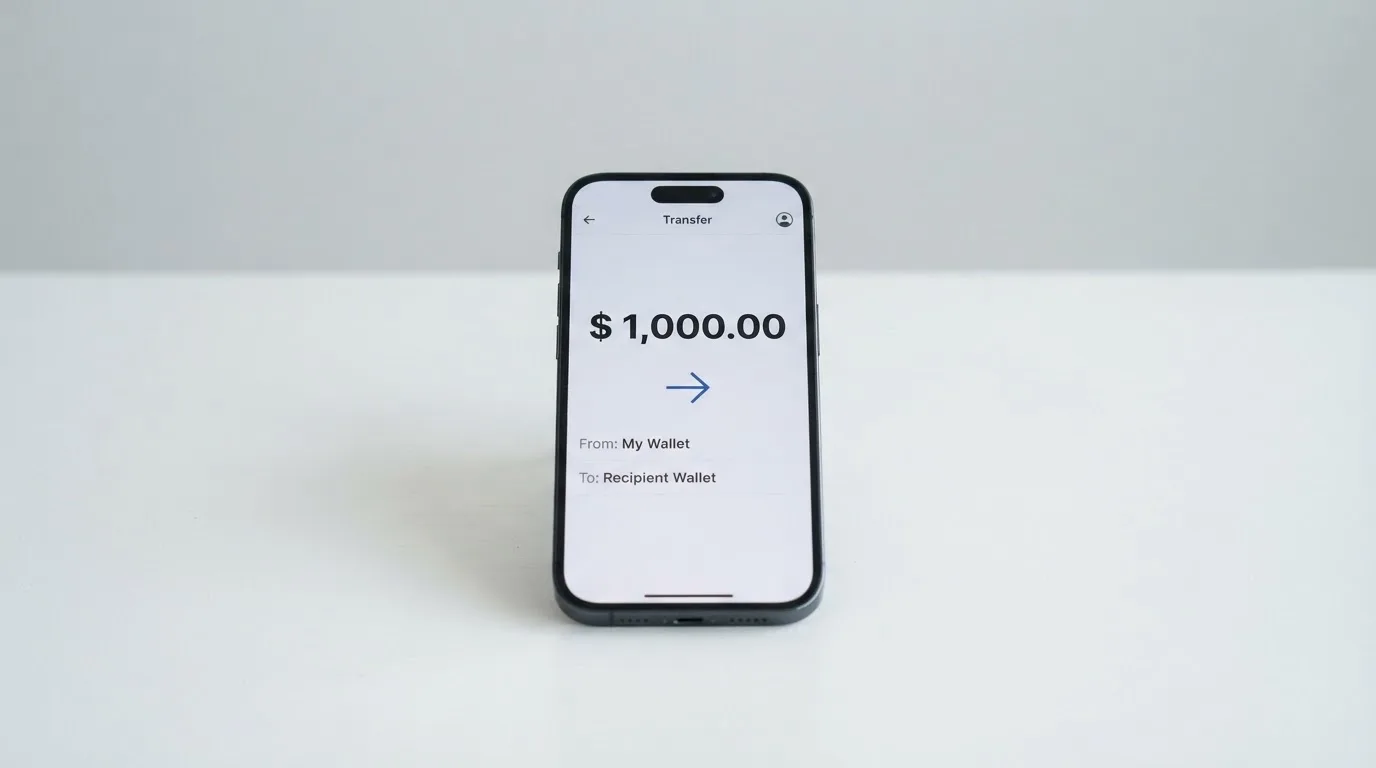
A few things are worth pinning down. First, the card has a maximum balance of $25,000 on both tiers, so the card itself is a mid-sized spending tool rather than a treasury account. Second, the 0 percent stablecoin-to-USD conversion is capped at $20,000 of conversion per customer per month, which is generous for a personal card and limiting for a business. Third, “funds in the card account do not expire” is the line Uphold uses, but the bank may cancel the card at any time and only the USD fiat account is FDIC-insured — crypto and precious-metals balances on the platform are not insured by the FDIC, which is the normal state of affairs in this category and worth saying out loud.
Withdrawal-to-bank fees are not stated on the card page, so ask Uphold support or check the wallet’s withdrawal screen before you push money back out. Closing the card is $0 and is done by contacting customer service.
Paying with it every day
In day-to-day use the card behaves like a prepaid Visa. You tap to pay in a shop, the merchant is paid in the local currency, Visa converts the amount to USD at the rate in effect on the processing day, and Uphold takes the dollars (or runs the conversion if you paid from a non-USD balance). Apple Pay and Google Pay are listed as available “when available”, which is the issuer’s way of saying: where your bank, your phone and the merchant’s terminal all support tokenisation, you can add the card to your phone’s wallet; where any one of those doesn’t, you can’t. The card terms do not publish a list of blocked merchant categories, so gambling, adult content, crypto purchases and the usual edge categories are governed by the cardholder agreement and by Visa’s own rules rather than by an obvious block list.
The rewards program is the most distinctive everyday feature. Elite pays 4 percent back in XRP on crypto- or metals-funded spend, or 3 percent in XRP on fiat- or stablecoin-funded spend, with a monthly cap of up to $300; Essential pays 2 percent in XRP with a monthly cap of up to $120. The rewards currency is currently XRP, and rewards are available for three months after activation for cards activated on or after 1 January 2026. Two things follow from that. If you do not already hold or want XRP, the rewards are a small speculative position you didn’t choose to take, and they will sit in your wallet subject to the same spreads on the way out. And the higher rate is paid when you fund the card from crypto or metals, which is also when your conversion spread is the highest — so the 4 percent is partly Uphold giving you back some of what it took at conversion, not pure upside.
The Uphold iOS app scores 4.7 out of 5 across about 91,000 ratings in the App Store at the time of reading, and the Google Play rating was not read for this review. The card dispute process runs through the Uphold platform: you start a dispute in the app, you report errors within 60 days, phone reports need written confirmation within 10 business days, the bank decides within 10 business days and may take up to 45 days, with provisional credit within 10 business days, and up to 90 days for new cards, point-of-sale or foreign-initiated transactions; unauthorised Visa transactions are investigated in 5 business days, with a possible 5-day extension. If your card is lost or stolen, your liability is capped at $50 if you report within 2 business days and up to $500 if you report later. The card terms do not use the word “chargeback” at any point, which is unusual and worth knowing if you are used to a standard chargeback flow on a bank card.
What can go wrong
The cleanest summary of the risk picture is the one the public reviews give you. Trustpilot reads 4.6 out of 5 across 27,602 reviews, with 67 percent of reviewers at 5 stars and 17 percent at 1 star; of the negative reviews, the reply rate from Uphold is 0 percent, which is a louder signal than the headline number. (Trustpilot figures cited elsewhere in the press vary by source and are not used here.) ComplaintsBoard, a separate site, sits at 1.9 out of 5 across 13 reviews. The themes in the one-star reviews from the last couple of months are consistent: account freezes or restrictions without explanation that last from weeks to 3 months, often triggered by a first deposit, a card link, a withdrawal or a location mismatch; slow, bot-driven email support; identity-verification problems such as expired links and lockouts after a phone change; and unexpected charges, often the spread-based pricing being higher than the user expected in a volatile market. A Reddit user reports holding more than $9,000 in an account that was closed without explanation; that is a single anecdote, but it sits inside a pattern.
The other risk surface is more institutional. Uphold holds USD balances at Cross River Bank, Member FDIC, and the card programme is managed by Uphold HQ Inc. with Cross River as the issuer on the Visa network. The card terms are explicit that Uphold is not itself an FDIC-insured bank, and only the USD fiat account is FDIC-insured; crypto and metals are not. Uphold recommends two-factor authentication, uses email verification for unusual activity, and describes a “Reserveledger/Reservechain” solvency proof, but the security page does not describe in-app card freeze, spending controls, or insurance, so you should not assume any of those exist. Visa Zero Liability does not cover ATM transactions outside Visa and PLUS networks, which matters at any non-bank ATM abroad.
A separately reported incident that is now closed: Uphold’s status page reported a Mastercard-related issue freezing some UK cards, resolved on 19 May 2026 — that affected UK cards, not the US Visa programme reviewed here, but it is the kind of programme-level event that explains why the complaints landscape is the way it is. A UK Financial Ombudsman decision (DRN-5127266) on a closed wallet and card is on the public record; that card was issued by Optimus Cards UK, again a different programme. There is no public regulatory action against the US card programme at the time of writing.
The support channels, for the record: phone +1 888-977-7217 (or the number on the back of the card), mail Uphold Card, 228 Park Ave. S., #50458, New York, NY 10003-1502, the Uphold app, the platform, and the support centre at support.uphold.com. The CFPB complaints line is 1-855-411-2372. Languages and hours are not stated.
The honest way to read all this is: most users do not hit a freeze, the freeze that does hit is the one you read about in the one-star reviews, and the cost of a freeze is your money being unavailable for weeks. If your only card is the Uphold card and your rent goes through it, that is a risk you are pricing in. If it is one of several cards, the same risk is annoying but not catastrophic.
What to take instead
The Uphold card’s score sits in the middle of a small group of crypto cards, and the alternatives below are the ones a US-based reader is most likely to be weighing. None of them are identical to Uphold, because Uphold’s distinctive feature is the 300-asset wallet, and the alternatives are each a different trade.
| Card | Score | What it does well | Where it falls short |
|---|---|---|---|
| Uphold (this review) | 5.8 / 10 | 300+ assets in the wallet, US prepaid Visa, FDIC-insured USD | US-only, state exclusions, BTC/ETH spread 2.05–2.20% |
| MSX | 6.4 / 10 | Stronger overall score; details on the official page I could read are limited | Eligibility, costs, rewards and top-up mechanics are not stated on the page I could read |
| Bybit Card | 6.0 / 10 | No annual or virtual-card fees, 0.9% crypto conversion, up to 10% cashback at top tier (USDT, from 5 Oct 2026) | FX fee 2% on top of network rate; cashback paid on crypto-funded spend only; not for European Economic Area customers; United States not in the supported card region list |
| MEXC | 5.6 / 10 | Up to 10% cashback at top M-Score tier, referral bonus | Virtual only, network and card currency not stated, $20 issuance fee unclear, supported country list partly hidden |
A few points of comparison, in case you are choosing between them rather than choosing one. Bybit is a Mastercard or Visa programme depending on region, with no annual fee and no virtual-card issuance fee “until further notice”, and a 0.9 percent crypto-conversion fee on top of the One-Click Sell rate in the major regions; its FX fee is 2 percent on top of the network rate in the regions I read. Its rewards are points-based, paid in USDT, with a 4-day pending period and a 10 percent welcome cashback capped at 110 USDT. It is not for European Economic Area customers, and the US is on Bybit’s fiat-service restricted list. MEXC is virtual-only, the issuance fee on its card page is shown as 20 USD with a possible 0 USD discounted line that I could not fully verify, and rewards run up to 10 percent in USDT at the top M-Score tier. MSX sits a little higher in the score column for the reviewer who rated it, but the public pages do not state the card’s cost, fee, eligibility or reward structure, so the score is a verdict on a product whose details are not on the page I could read.
If you are outside the US, all three of these alternatives may or may not be available to you depending on your country; eligibility is per-region on every card in this category, and the only honest answer to “is X available in country Y” is to check the card’s own country list at sign-up. The Uphold card is a particularly hard sell outside the US, because the card programme is not on offer to non-US residents at all.
Who I would recommend it to
The card earns its place on three narrow use cases, and falls short of a fourth one a lot of readers will assume it covers.
It is the right card if you are a US resident in an eligible state who already uses Uphold as a multi-asset wallet or exchange, and you want a single Visa that lets you tap a balance of bitcoin, ethereum, a stablecoin, USDC, an altcoin or a precious metal at the checkout without manually converting first. The fact that the card spends from the wallet and the wallet holds 300+ assets is the genuine product, and the convenience is real. On Elite, the 0 percent foreign-transaction fee and the $0 ATM fee also make this a workable travel card for someone whose wallet is already on Uphold. The rewards — up to 4 percent back in XRP on Elite, 2 percent on Essential — are decent, with the caveat that the rewards currency is XRP and the higher rate is paid when you fund from crypto, where the spread is also higher.
It is also the right card if you want a prepaid Visa whose USD balance sits in a Member FDIC bank, with the issuer’s licence behind it and a published dispute process. Cross River Bank is a real US bank; the USD balance has the cover that implies. The cardholder agreement is the legal document, and the dispute windows are spelled out, which is more than a lot of crypto cards offer.
It is the right card for an Essential-tier trial. The annual fee is zero, the virtual card is free, and $4.99 for the plastic physical is a small price to find out whether the freeze risk and the support experience are acceptable to you. If you spend a lot in stablecoins, the 0 percent conversion up to a $20,000 monthly cap makes the Essential card a reasonable low-cost way to do that.
It is the wrong card if you live in Louisiana, New York or a US territory; if you want a credit card rather than a prepaid; if you need a corporate or joint card; if you are outside the US; if you cannot afford a multi-week freeze on the balance that pays your rent; or if you were hoping for a privacy-friendly crypto card. The card is inside a fully KYC’d US wallet and the rewards are paid in a volatile asset by default, so neither anonymity nor stability is on offer.
Between the tiers, the rule of thumb is simple. If you spend mostly in the US, mostly in stablecoins or dollars, and the foreign-transaction fee and ATM fee are not big lines in your budget, Essential is the right pick. If you travel, take out cash, hold crypto in your wallet and want to fund the card from it, or run close to the Essential spending limits, Elite is the right pick and the $99.99 pays for itself. The upgrade fee between the two is $0, so you can change your mind.
Frequently asked questions
What is the Uphold card?
The Uphold card is a prepaid Visa — virtual and physical — that spends from the balance of your Uphold wallet. The wallet holds more than 300 tradable assets, including US dollars and stablecoins, so the same card can be backed by a dollar balance, a USDC balance, a bitcoin balance, or a mix. The US card is issued by Cross River Bank (Member FDIC) with Uphold HQ Inc. as programme manager. It comes in two tiers, Essential and Elite, with different annual fees, foreign-transaction fees, ATM fees, limits and rewards.
How does the Uphold card work?
You open an Uphold wallet, complete the wallet’s identity verification, request the card and fund the wallet by bank transfer, direct deposit, PayPal, or a crypto deposit. When you pay, the card settles the purchase in dollars (or the local currency, converted to dollars by Visa) and draws on your wallet balance; if you paid from a non-USD balance, the wallet runs the conversion at the prevailing spread, which is 0 percent for USD-pegged stablecoins up to $20,000 per customer per month, and 2.05–2.20 percent for BTC/ETH. There is no separate “top up” step between the wallet and the card; the card is a view onto the wallet.
Is Uphold a bank?
Uphold is not itself a bank. Uphold HQ Inc. is the programme manager for the US card, and Cross River Bank, which is a Member FDIC bank, is the card issuer and holds USD balances for Uphold. The card terms are explicit that only the USD fiat account is FDIC-insured, and that crypto and precious-metals balances on the platform are not insured by the FDIC. Treat Uphold as a wallet and exchange that partners with a US bank for the dollar side.
Who owns Uphold?
Uphold is run by Uphold HQ Inc. as programme manager of the US card programme. The card itself is issued by Cross River Bank, Member FDIC, on the Visa network. Licences held by Uphold in specific jurisdictions are not stated on the card page I read.
Is the Uphold card available in my country?
The US card is for US residents in US states and the District of Columbia, and is not available in Louisiana, New York or any US territory. The card page does not list non-US availability. A separate UK card programme has existed; Uphold’s status page reported a UK card freeze related to Mastercard, resolved on 19 May 2026. If you are outside the US, check Uphold’s current country list at sign-up, because the answer changes with the programme.
How do I get the Uphold card?
You open or sign in to your Uphold wallet, complete the wallet’s identity verification to the level Uphold requires, request the card inside the app, and wait for it to be issued. The virtual card is available immediately on both tiers; the physical card is mailed to a US address. The page does not state the delivery time or shipping cost. The card terms require an accurate real name, a valid US mailing address, a date of birth, and personal use only.
Does the Uphold card require KYC?
Yes. The card is attached to a Uphold wallet, and the wallet is a regulated financial account that requires identity verification under US anti-money-laundering rules. The card’s own pages do not describe a KYC tier structure, processing time, or the specific documents asked for, so “what gets asked” is a function of the wallet, not the card. There is no credit check.
How do I top up the Uphold card?
You fund the underlying Uphold wallet, not the card directly. The wallet can be funded by bank transfer, by direct deposit (such as a salary), by PayPal, or by a crypto deposit from another wallet. The per-method deposit fees, the per-method minimums, and the supported networks are not stated on the card page. The card has a maximum balance of $25,000, and the 0 percent stablecoin-to-USD conversion is capped at $20,000 of conversion per customer per month.
Is the Uphold card safe?
It is as safe as the wallet and the issuer behind it, with the usual caveats of the category. USD balances sit at Cross River Bank, Member FDIC; crypto and metals are not FDIC-insured. Uphold recommends two-factor authentication and uses email verification for unusual activity, and describes a Reserveledger/Reservechain solvency proof, but the security page does not describe in-app card freeze or spending controls, so do not assume they exist. Trustpilot reads 4.6 out of 5 across 27,602 reviews, but a recurring theme in the negative reviews is account freezes that last weeks to 3 months, often without explanation, with slow email support and a 0 percent reply rate on negative reviews. Plan accordingly.
Is the Uphold card worth it?
For a US resident in an eligible state who already uses the Uphold wallet and wants to spend from balances in many assets, yes, with eyes open: pick the tier that matches your spend (Essential for low-volume US spend, Elite for travel, ATM use and higher limits), fund from stablecoins to avoid the 2.05–2.20 percent BTC/ETH spread, and keep a backup card in case of a freeze. For everyone else — outside the US, in Louisiana or New York, looking for a credit card, unwilling to KYC, or unwilling to accept freeze risk — the honest answer is no.
Highest-scored exchange cards – cryptocardbest.com
Content created by the «cryptocardbest.com» team