
What the Solid card actually does with your crypto
 Available in US
The Solid card is not a bank account with a plastic lid on it. It is a virtual Visa card, described by the company as issued on the Visa Platinum tier, that draws its money from a balance you control yourself. The card itself is free, the monthly fee is nothing, and topping up carries a 0% fee at every tier. What you pay for, in practice, is conversion when you spend outside the United States, network costs when you move crypto in, and the trade-offs of holding your own keys.
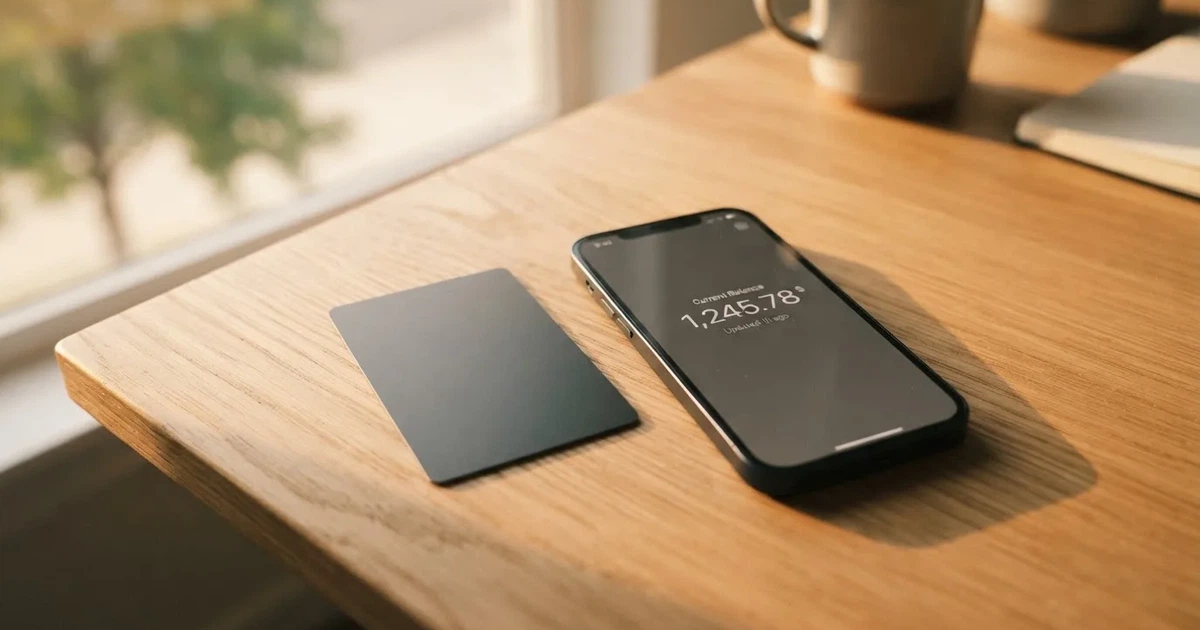
I scored it 7.8 out of 10. Not because it is reckless — I found no incident, no programme change and no user complaints in anything I read — but because the day-to-day picture is thin: no physical card described, no ATM story, and a limit structure that is set per user rather than published. For anyone already running a self-custody wallet who wants a free virtual card to spend from, that thinness is not a problem. For anyone who needs cash, a card in the post, or a set of limits printed somewhere, it is.
The conditions described here are current as of October 28, 2026.
Who the card is for, and who it will disappoint
Solid says it is offered in 105 countries across most major world regions. What it does not publish is the list. There is no country table, no list of exclusions, nothing to check before you download the app. The company’s own guidance is to look in the app for your country, and to join the waitlist if you are not supported. So if your question is whether you qualify, the honest answer is that you cannot read the answer off a web page — you have to install the app and find out, and that is the first thing I would do.
The rule that does exist publicly is by residence, not citizenship. The issuing bank is assigned according to the country you live in: Rain in some places, Wirex in others. Two things follow from that. First, the terms that bind you are the Fuse Network LTD Card Terms, in separate versions for US consumers and for international consumers, so the exact rules depend on which program you land in. Second, since the issuer changes with your address, moving countries changes your card issuer rather than carrying the card across.
One point deserves a clear flag. An affiliate site, SpendNode, reported in September 2026 that cards cannot be issued to residents of a list of countries that it says includes India, Turkey and Russia. That is not official. Solid has not published such a list, and I am not treating that report as confirmed. I mention it only because it is the kind of thing that will show up in your own search, and because if you live in one of those countries the app itself is the authority.
For the reader I had in mind here — someone who cannot get an ordinary bank card, or who would rather not hand over their keys — the fit is genuinely good. What you get is a payment card number on Visa’s network, funded from crypto you still own. For the person who wants a physical card in the post, this is the wrong product: the card described is virtual, delivered in the app.
Getting the card
The path the company describes is short. You install the app, you verify your identity, and the virtual card appears in it — the marketing line is that you get a free virtual Solid Card directly in the app. The identity check is described as brief, and the app says your card activates when it is done.
What the public pages do not tell you is which documents you need. Whether proof of address is required, what age is enforced, what the rejection reasons would be, whether there are verification tiers — none of that is stated. Do not read the two-minute figure as “two minutes and no paperwork”. It is a description of the check, not of the documents behind it. You are still going to be asked for identification, and you should expect to be asked for a selfie or a document scan; anything more specific than that would be my guess, not the card’s statement.
Two practical details do matter at this stage:
- Deposit at least $10 before your first purchases. The account exists before the balance does.
- The card is USD-denominated. Any purchase in another currency carries the foreign-exchange cost described below, and that is a fact of the card, not of the shop you are standing in.
The Visa Platinum tier appears in a page footnote as “a Visa credit card issued by Rain”. Platinum tier naming is a marketing label rather than a promise of a particular benefit package, so treat the purchase protection separately, in the daily-use section, where the company states a figure.
Fees: what it really costs
The headline numbers are genuinely good. The card is free to issue, the monthly fee is free, and the top-up fee is 0% at all three tiers. That is a stronger starting position than most cards in this category manage. The costs show up in three other places: currency conversion, crypto deposit networks, and the tier system if you want the cashback rates.

| Fee or limit | What the card states |
|---|---|
| Card issuance | Free |
| Monthly fee | Free |
| Top-up fee | 0% at all tiers (Core, Prime, Ultra) |
| Spending in USD | No fee |
| Spending in non-USD | 1.5% FX cost in the rate: 1% card provider + 0.5% Solid |
| Crypto deposit, Fuse network | Free |
| Crypto deposit, Ethereum | 0.1% |
| Crypto deposit, other networks | 0.03% bridge fee |
| Minimum crypto deposit | $10 |
| Swaps | 0.5% Core / 0.25% Prime / free Ultra |
| Apple Pay and Google Pay | 0% |
| Virtual Account opening | $10, one time |
| ATM withdrawal | Not stated |
| Daily and monthly spending limits | No fixed figure; based on available balance and collateral, adjustable per user |
Now the everyday version of that table, because a fee schedule read on its own does not tell you what a Tuesday costs.
A coffee in your own currency. Say you are spending outside the US. The 1.5% comes out of the exchange rate rather than appearing as a line item, which means you will not see it on a receipt — you see slightly worse than the mid-market rate. On a small purchase that is invisible; on a large one it is a number you can add up. This is the single cost that will matter most to you if you are not in the US.
A subscription bought online in dollars. No fee at all, at least from the card’s side. But this is where the foreign-issued BIN question comes up, and it is not Solid-specific: merchants can look up the issuer country from the card’s first digits, and some decline prepaid or foreign cards as a result. If a purchase is refused, that is the first thing to suspect, not the other one.
Swapping crypto into the balance before you spend. This is where the tier bites. At Core you pay 0.5% on a swap; at Prime 0.25%; at Ultra nothing. If you swap often, that difference is larger than the FX cost you are avoiding.
What is not on the card’s own pages: ATM fees, and whether cash withdrawal is possible at all. That is a genuine gap, not a zero. If you need cash regularly, treat this card as not covering that need until you have confirmed it yourself.
The tier structure is worth reading once, because the cashback rates people quote are the top tier’s:
- Core — automatic when you opt in: 3% cashback capped at $50 a month, 0.5% on bank deposits and swaps, standard support.
- Prime — 4% capped at $100 a month, plus 10% back on AI, streaming and music, 8% on rides, 2% extra APY on the first $10,000 of savings, 0.25% swap fee, priority support. Unlocked by a $199 per year subscription, or by locking 50,000 FUSE for 12 months.
- Ultra — 5% capped at $200 a month, 20% on AI, streaming and music, 10% on rides and airlines, 3% extra APY on the first $25,000, no deposit or swap fee. Lock of 400,000 FUSE for 12 months only.
From 12 October 2026 the lock amounts rise to 70,000 FUSE for Prime and 600,000 for Ultra. There is no metal card at any tier. I would read those FUSE figures the way you read any lock: as an exposure, not as a discount.
Top up: dollars or stablecoins
The account is funded “with dollars or stablecoins”, with USDC and USDT named. Two routes, and they behave differently.
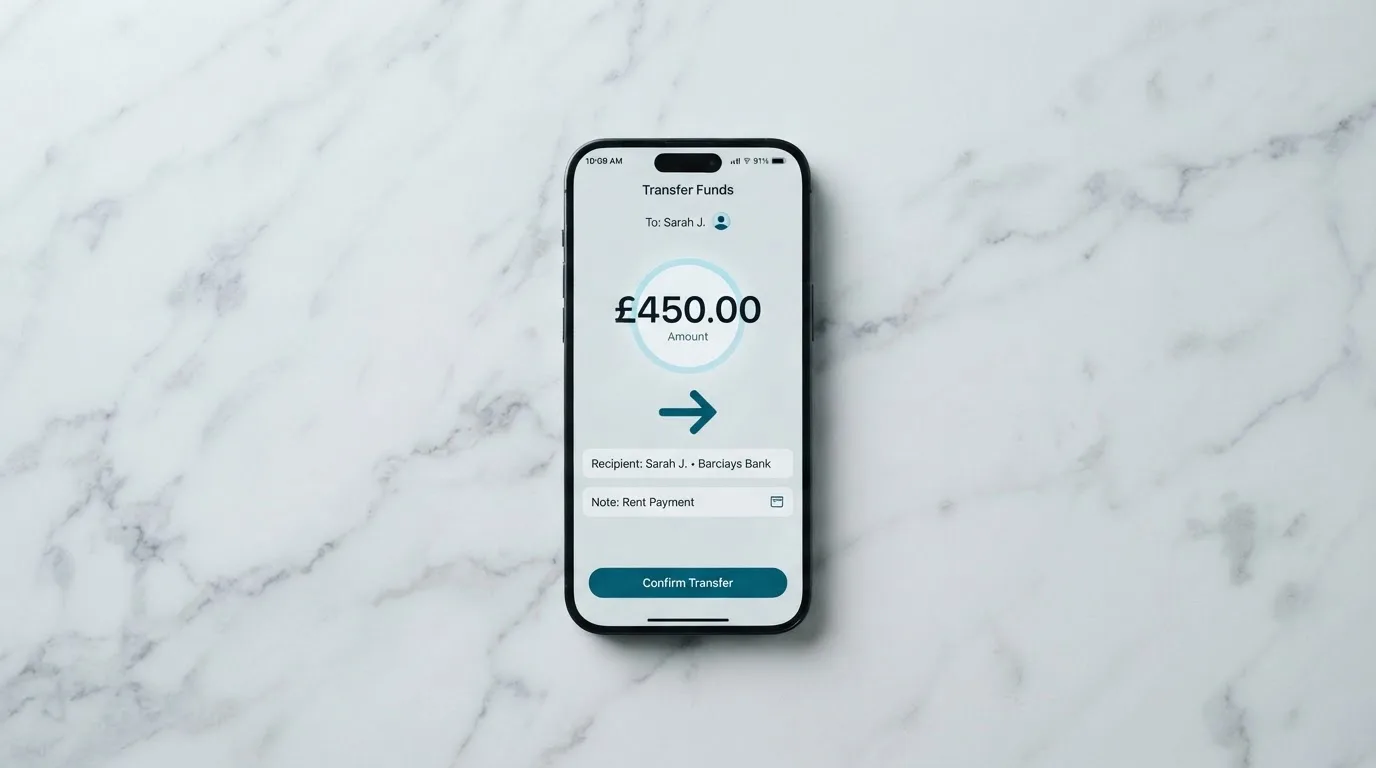
Bank transfer. Dollars in, and the Virtual Account is the mechanism — but opening it costs $10, once. If you are moving money this way repeatedly, that is a fair trade; if you are funding it once and sitting on it, it is 10% of a $100 first deposit gone on day one. ACH and wire both arrive as dollars in the wallet.
Crypto. This is the direct route for anyone already holding stablecoins, and the network you pick decides the cost. The card names Fuse, Ethereum and Base (EURC) explicitly, and says other networks go through a bridge. So:
- Fuse — free
- Ethereum — 0.1%
- Everything else — 0.03% bridge fee
- Minimum deposit $10
Two cautions belong here even though they are general facts about crypto rather than claims about Solid. First, send on the network the card expects; a transfer to an address belonging to a different chain can be lost or need manual recovery, and blockchain transfers cannot be reversed. Second, gas is charged by the network for your deposit, not by the card — that is a separate cost the table above does not include.
There are two spending modes. Cash mode is the default and simply spends your balance. Credit mode is described as beta and, importantly, only on Wirex cards — it borrows against soUSD. If you are issued a Rain card, that mode is not part of your card.
On the way out, the homepage promises “instant withdrawals” of earnings and cash out to a bank account. What is not stated: the withdrawal fees, and what happens to your balance if you close the card. Those are the two questions I would put to support before committing meaningful money, and I would put them in writing.
Paying with it day to day
Apple Pay and Google Pay are supported, described as one-tap integration on mobile; on the web app you add the card details manually. The mobile wallets cost 0%. That matters more than it sounds: tokenising the card number into the phone’s secure hardware is a normal payment habit and costs you nothing extra here.
Cashback is paid in USDC, not dollars — Core 3% capped at $50 a month, Prime 4% capped at $100, Ultra 5% capped at $200, and credited 14 days after the transaction settles. The homepage summary is “up to 5% cashback”. So the reward is in a crypto asset, arrives two weeks late, and is capped monthly. If you were reading “up to 5%” as a flat rate on everything you spend, that is not what it describes.
Apps exist for iOS and Android plus a web app. No aggregate rating or review count is shown on the site’s pages.
Three things about everyday use are simply not documented, and you should know their names:
- Blocked merchant categories. Not stated. Some categories, gas stations among them, are flagged as carrying extra safeguards.
- Disputes and chargebacks. The process and the time frames are not stated.
- Purchase protection. Visa Platinum purchase protection up to USD 10,000, claimed through Visa’s benefits portal.
That last one is worth reading as what it is: a limit figure from the network, not a promise from the card issuer about how your claim will be handled. If a purchase goes wrong, you are relying on a process the company has not described.
What can go wrong
Let me start with what is solid — the word does no work here, but you asked what can go wrong and the answer is not all negative.
The company. Solid describes itself as “a financial technology company, not a bank”. Banking services come from SSB, a Member FDIC, so deposits are insured up to $250,000 per depositor per insured bank. That insurance covers the banking part. It does not cover your crypto wallet, and it should not be read as if it did. Licence numbers are not stated on the pages I read.
Key loss. The card is self-custodial: “only you hold the keys”, with passkey support, and funds “remain in your non-custodial wallet until used for transactions”. That is a real strength against a provider being hacked or failing — exchanges have a documented history of exactly that. It is also a transfer of risk to you. A seed phrase is typically 12 to 24 words, and anyone who obtains it can restore the wallet and spend what is in it. There is no customer service that reverses a crypto transfer, because the network has no reverse.
The virtual-only shape. SpendNode reported in September 2026 that there is “no physical card and no ATM access” — unofficial, not confirmed by the card, and consistent with everything Solid’s own pages say. If cash is part of your life, work out how you will handle it before you rely on this.
Limits. Spending is bounded by “available balance / collateral”, and Solid can apply limits per transaction, daily, weekly, monthly, yearly or lifetime, adjustable per user. A single transaction is capped at roughly $750,000, and above roughly $250,000 may require extra Visa verification. No fixed daily or monthly figure is published. What that means practically: there is no published ceiling you can plan a month against. Ask.
Programme risk. Card programmes do get wound down. Visa terminated its global agreements with FTX on 13 November 2022 and the US debit programme was closed by its issuer; WaveCrest, a Visa issuer that supplied several crypto card brands, was suspended in Europe in 2018 and all its Visa programmes closed. In both cases the pattern was a notice period, then spending and loading stop, then a request that users withdraw remaining balances. Nothing like that has happened to Solid as far as I could find — but the issuer is a bank that can be wound down or restricted, and that is a structural feature of this kind of card, not a suspicion about this company.
Rules changing. The Prime and Ultra lock amounts change on 12 October 2026. The company also states that members who reached a tier before 25 September 2026 keep it, with at least 30 days’ notice. That is the behaviour you want to see from a programme manager, and it is stated plainly.
Complaints. Here my finding is a null result, and you should read it as one. I looked for user reports and found none — no Trustpilot page, no App Store score, no Reddit thread naming Solid. The one dedicated search returned unrelated brands. And I found no incident or programme change on the official pages. Absence of complaints on a young product with a small user base is weak evidence, not strong. It is also the reason this section is short.
Support. help center at support.solid.xyz, [email protected], Telegram and X at SolidYield. Standard support on Core, priority on Prime and Ultra. Visa’s own customer service centre is 24/7 for digital and phone.
What to take instead
If Solid’s shape does not fit — you want a physical card, you need cash, or you want published limits — the alternatives are worth looking at. I scored each of these; the numbers are mine, on the same scale as the Solid score.
| Alternative | Score | Card | Who it is for | Main gap |
|---|---|---|---|---|
| Solid | 7.8 / 10 | Virtual, Visa Platinum tier | Self-custody users wanting a free virtual card | No physical card, no stated ATM or fixed limits |
| Stella | 6.5 / 10 | Virtual and physical, VISA | People who want a physical card as well as a virtual one | Fees not stated officially; custodial wallet |
| Whop Cards | 5.2 / 10 | Visa, type not stated | US consumers in 31 states and businesses in 41 | Balance-based, stablecoin-collateral model; fees not stated |
| UniFi Card | 4.7 / 10 | Prepaid Debit Visa Card, issued by Lead Bank | People who want bank rails rather than crypto rails | Eligibility not confirmed on official pages |
Stella is the closest thing to a like-for-like alternative with more of the ordinary banking shape. It offers virtual and physical cards and works at what it calls over 40 million VISA merchants globally. You deposit crypto into the account and it tops up the card automatically. Two cautions: the wallet is custodial, so you give up the self-custody advantage that is Solid’s main draw; and its official pages do not state fees in amounts — they point to a user agreement and the app. Its terms bar users under economic sanctions programmes and route US and European users through affiliates. Countries are not stated.
Whop Cards are a different model rather than a rival: the card spends from a Whop balance, and that balance is backed by stablecoin collateral from a linked wallet. A pending balance becomes usable as soon as a payment arrives; standard withdrawals use settled funds. It offers 5% cashback at select merchants, currently Uber, with more planned — payout currency and conditions not stated. The state list is the interesting part for anyone outside the US: consumers in 31 states, businesses in 41, and a named list of unsupported consumer countries including Belarus, China (Mainland), Cuba, Hong Kong, India, Iran, Iraq, Israel, Myanmar, Nepal, Nicaragua, North Korea, Russia, Syria, Turkey, Ukraine, Venezuela and Vietnam. Whether eligibility turns on citizenship or residence is not stated. Fees are “no extra fees” on the page, with no amounts listed.
UniFi Card is the furthest from this category’s centre. It is a prepaid Visa debit card issued by Lead Bank, funded by ACH, wire, SEPA or SPEI, and it pays out to a USDC wallet. It also supports Apple Pay. Eligibility is not confirmed on official pages; the app listing shows send-money routes to the Philippines, Mexico and the eurozone, with recent release notes mentioning Colombia, Brazil (PIX) and the UK. Fees are simply “may apply”. If what you want is bank rails rather than crypto rails, this is the shape to look at — but the material is thin.
Who I would recommend it to
I would recommend Solid to someone who already keeps their crypto in a self-custody wallet, has a stablecoin balance sitting there, and wants a free Visa number to spend it through without paying to open anything. The 0% top-up fee, the free issuance and the mobile wallet support make that specific use case cheap in a way most of this category is not. Apple Pay and Google Pay at no cost is the detail that will decide it for many people.
I would not recommend it as your only card. No physical card is described, ATM access is not stated and is reportedly absent, there are no published daily or monthly limits to plan against, dispute handling is undocumented, and the balance is USD with a 1.5% conversion cost on everything else. If you are in a country where 105-country reach does not cover you, the app is the only way to find out. And the tier system is where the fine print lives: a $199 annual subscription or a long FUSE lock buys you cashback caps and lower swap fees, and the lock amounts go up on 12 October 2026.
If you want one card and you need it to behave like a normal everyday card — plastic, a cash fallback, a limits table you can read — pick something else, and expect to pay for it. If you want your crypto to be spendable on your own terms with someone else’s money never holding the keys, Solid earns its place.
Frequently asked questions
What is Solid card?
Solid is a virtual Visa card that spends from a balance funded by dollars or stablecoins, with the crypto held in a wallet you control rather than one a provider controls. The card is described as issued on the Visa Platinum tier, is free to issue, has no monthly fee, and carries a 0% top-up fee at all tiers. It is a virtual card delivered in the app, not a plastic card in the post.
Is Solid a bank?
No. The company describes itself as “a financial technology company, not a bank”. Banking services are provided by SSB, a Member FDIC, so deposits are insured up to $250,000 per depositor per insured bank. The card issuer is either Rain or Wirex depending on your country of residence, and the governing terms are the Fuse Network LTD Card Terms.
Who owns Solid?
The public pages identify the structure rather than a founder, and I found no ownership page naming who owns the company. What is stated is the programme manager, Solid, alongside the issuing bank chosen by your country and the banking partner SSB. Licence numbers are not stated on the pages I read, and I would ask for them directly if that matters to your decision.
Does the Solid card require KYC?
Yes, one identity check. The app asks you to verify your identity, and the card activates afterwards. The company does not state which documents are needed, whether proof of address is required, or what the rejection reasons are. Because the card is issued through a regulated issuer, expect to be asked for identification documents and a selfie as part of that check.
How do I top up the Solid card?
Two ways. Bank transfer, which uses a Virtual Account that costs $10 to open once, or crypto, where USDC and USDT are named and the networks are Fuse, Ethereum and Base, with others through a bridge. Crypto deposits are free on Fuse, 0.1% on Ethereum and carry a 0.03% bridge fee elsewhere, with a $10 minimum.
What does it cost to use the Solid card?
Spending in USD costs nothing. Spending in another currency carries a 1.5% cost built into the exchange rate — 1% from the card provider and 0.5% from Solid. Swaps cost 0.5% on Core, 0.25% on Prime and nothing on Ultra. Apple Pay and Google Pay cost 0%. ATM fees and availability are not stated anywhere on the card’s own pages.
Is the Solid card safe?
It depends on what you mean. The card is self-custodial — you hold the keys, and funds stay in your non-custodial wallet until they are used — which protects you from a provider failing or being hacked, at the cost of making you responsible for seed phrases and phishing. The card can be frozen instantly in the app, and Visa Platinum purchase protection up to USD 10,000 applies.
Is the Solid card free?
The card is free to issue and has no monthly fee, and top-up fees are 0% at every tier. The costs that do exist are the $10 one-time Virtual Account opening, network fees charged by the blockchain for your deposit, and the tier system if you want the higher cashback caps — reached by a $199 a year subscription or by locking 50,000 FUSE for Prime or 400,000 for Ultra over 12 months.
Can I use the Solid card in my country?
Solid says it is offered in 105 countries across most major world regions, but publishes no country list and no list of exclusions. The eligibility rule is by country of residence, since that determines whether Rain or Wirex issues your card. If you are not covered, the app will tell you and there is a waitlist; an affiliate site has reported exclusions including India, Turkey and Russia, which the card itself has not confirmed.
How do I withdraw money from Solid?
The homepage describes instant withdrawals of earnings and cash-out to a bank account, with ACH and wire arriving as dollars in the wallet. What the public pages do not state is the withdrawal fee, or what happens to your balance if you close the card. Both are worth asking support about in writing before you hold a meaningful balance, alongside how long a dispute takes if a purchase is refused.
Highest-scored app and neobank cards – cryptocardbest.com
Content created by the «cryptocardbest.com» team