
SolCard promises a simple USD card from a crypto balance, then charges 5% to get the virtual one going
 Available in US
SolCard looks, on paper, like the answer to a plain problem. You hold crypto, you want to spend it like ordinary money at an ordinary shop, and you do not have — or cannot easily get — a normal bank card. On that promise the card scores 5.6 out of 10, and the number is not a rounding of something better. The service works where it works, but the parts a spender cares about most — what it costs to load the card, who stands behind the money, whether support answers — are thin, opaque or negative.
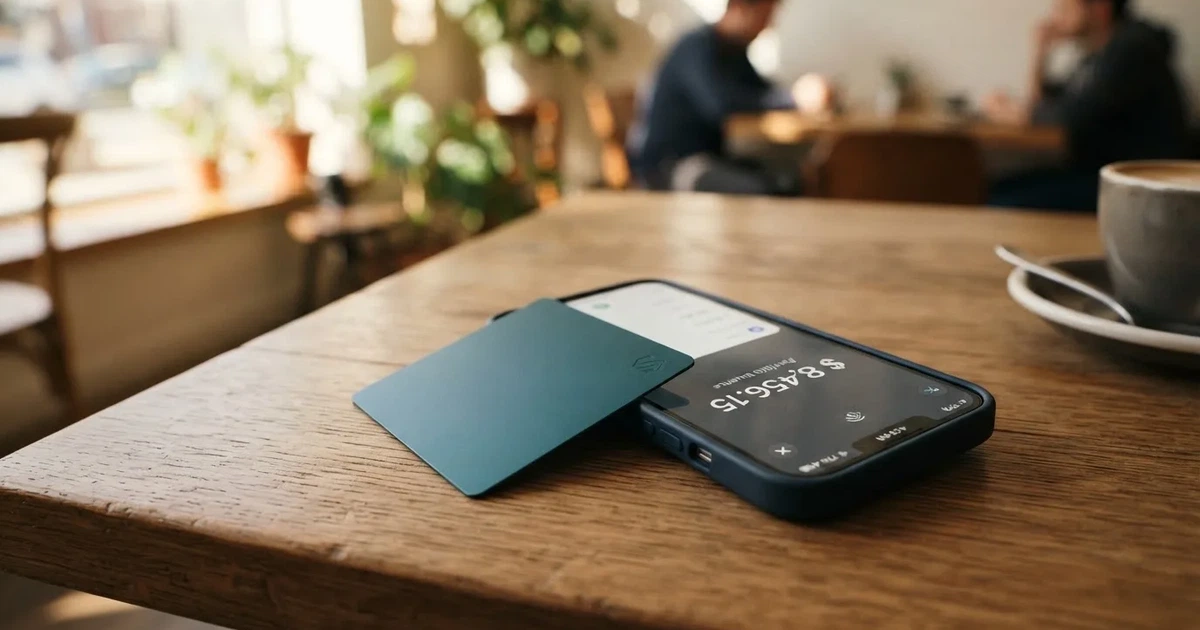
My overall mark for the card is 5.6 / 10. For someone already inside the Solana ecosystem, holding SOL or USDC and wanting a USD spending card without touching an exchange, that is a real use, and the card does it. For everyone else — and especially for anyone whose main problem is that a bank will not open an account for them — the friction moves to a different place rather than disappearing.
The conditions described here are current as of October 28, 2026.
Who will they give you the card
Worldwide, in principle. The card states worldwide acceptance with the caveat, in its own words, that “eligibility may vary by region”, which is the sort of sentence that leaves a great deal unsaid. The terms exclude residents, domiciled persons and located persons in Hong Kong, and exclude people in countries under comprehensive United Nations, US, EU or UK sanctions, along with listed persons. That is the whole of the published eligibility rule: broad, hedged, and with a named carve-out.
So the honest answer to “can I get one in my country” is: probably, unless you are in Hong Kong or a comprehensively sanctioned country — but you will find out at the point of application, not from a list. No country table is published.
How to get it
Two products, and which one you can reach depends on verification rather than on your name on an application form.
- Virtual card — online use, card details entered by hand. No Apple Pay or Google Pay.
- Platinum physical card — contactless, Apple Pay and Google Pay included, priority support.
Both are issued under a Visa licence. The card currency is USD — implied by the pricing, not stated outright on the pages I could read.
On identity checks, the card says “identity verification may be required for certain card tiers, features, or spending limits”. Documents, proof of address and an age requirement of 18+ appear in the terms, but nothing beyond that. The verification *levels* are not defined, and neither the processing time nor the reasons a check might fail are published. There is a delivery section in the terms, but it says nothing about when a physical card would arrive — so that is not stated.
Third-party reporting, which I could not confirm from the card’s own pages, adds colour and a contradiction worth knowing about: a help centre has been reported to say that no physical cards are being issued “for now”, with the virtual card arriving about 18 seconds after the first deposit confirms, and the virtual card marketed as no-KYC while Platinum requires verification. That directly contradicts the product page, which sells a physical Platinum card. Take the product page as the truth about intent and the third-party report as a warning about timing.
Fees: what it really costs
This is where the card is most exposed. The virtual product charges 5% plus USD 10 per new card to top up; the Platinum product charges 0%. There is no monthly fee for an active account, but a dormancy fee of 10% of the balance per month kicks in after 90 days of inactivity — a monthly shave, not a flat one.
| Fee or limit | Virtual | Platinum |
|---|---|---|
| Issuance | From USD 10 per new card | Not stated separately |
| Top-up fee | 5% + USD 10 per new card | 0% |
| Monthly fee, active account | None | None |
| Dormancy fee | 10% of balance per month after 90 days inactive | 10% of balance per month after 90 days inactive |
| FX rate | 1–2% | 0–1.5% |
| ATM | Not stated | Not stated |
| Monthly spending limit | USD 5,000 | No limit |
| Apple Pay / Google Pay | Not available | Included |
| Support | Standard | Priority |
Now the three everyday payments this actually touches, and which fees bite:
- A coffee in your own currency, on the virtual card. You pay 1–2% in FX, and the top-up that funded the card cost 5% plus USD 10 on the way in. The 5% is the number to stare at. On a USD 100 top-up that is USD 5 plus USD 10 — the flat ten is a fixed toll that only makes sense on a large first load.
- A subscription in USD, on Platinum. No FX at all, no top-up fee, and no monthly subscription to the card itself. This is the card at its cheapest and its calmest.
- Anything on a virtual card after 90 days of no use. The dormancy fee takes 10% of the balance, every month, until you either use the card or withdraw.
The card balance is USD. A spread may apply when you spend in a non-USD currency. Top-ups with digital assets are subject to fees and a conversion spread on top.
Top up options
Topping up is the part the card does best, on its own terms: stablecoins and crypto including SOL, USDC, ETH and BTC, with “instant top-ups from any wallet”. Which networks are supported is not stated — a detail that matters more than it sounds, because a transfer to a network the provider does not support can be lost.
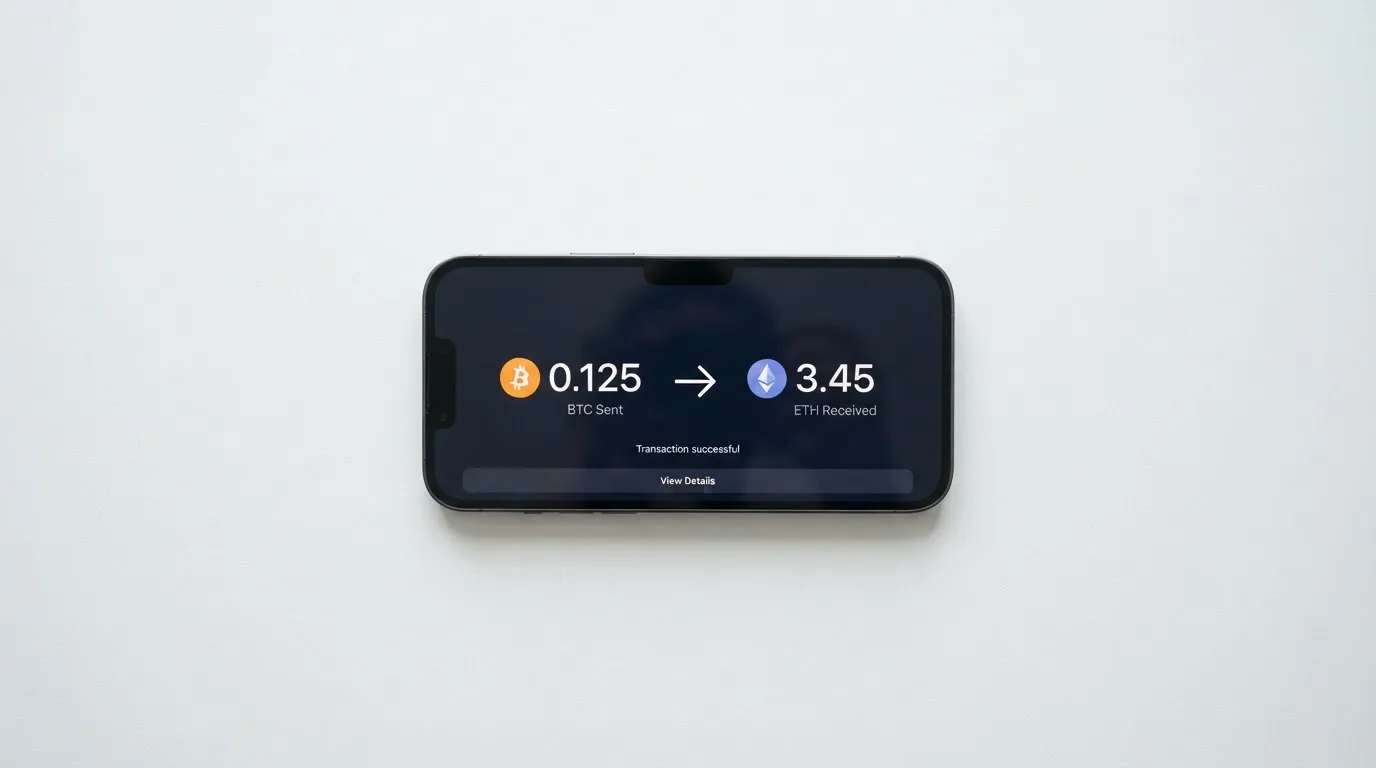
Minimum top-up amounts are published in the app and differ by card type. Crypto is credited in USD only after the blockchain confirms, at that moment’s price, less the displayed top-up fees and the conversion spread. Fiat top-up options: not stated.
Getting money back out: unused balance can be withdrawn subject to minimums, verification and processing windows shown in the app. If you cancel, a balance at or above the published refundable minimum is returned and anything below it is forfeited. On termination, eligible balances can be withdrawn except where holds, disputes, chargebacks or legal restrictions apply — and the dormancy fee still runs after 90 days.
Paying with it every day
On Platinum, day-to-day use is the card’s strongest suit: contactless, Apple Pay, Google Pay. On the virtual card, Apple Pay and Google Pay are simply not available, which removes the two wallets many people actually reach for.
There is no published list of blocked merchants, though merchants restricted by the issuer or the card network may be declined. No cashback is mentioned anywhere in the card’s material.
The app is a question mark: the product page mentions only a “Dashboard”, and I could not find stated platforms or store ratings. Nor do the terms give any timeframe for disputes or refunds — although a dispute can hold your withdrawals, and a handling fee may be charged if there are disproportionately many declines, reversals or disputes. Contract disputes go to HKIAC arbitration in Hong Kong, in English, before a single arbitrator.
One more thing for daily use: how this card is protected is not stated. No 2FA, no freeze, no insurance is described. What the terms do describe is a custodial setup — the balance is held by SolCard and your top-ups are converted to USD — and your own duty to protect the card number, CVV and PIN, report loss promptly, and accept liability for unauthorised use as the law allows.
What can go wrong
This is the section that took me longest, and it is the one that moves the score.
The issuer is not named. SC PAYMENTS LIMITED, of Unit 1603, 16/F, The L. Plaza, 367-375 Queen’s Road Central, Hong Kong (BRN 78350827), is the programme manager and technology platform and describes itself as “not a bank”. The actual issuer is an unnamed licensed financial or e-money institution under a Visa licence. So the entity whose name appears on your card is not the entity whose name appears on the terms, and neither tells you who ultimately holds your balance.
The complaints are specific and recent. Trustpilot shows 3.1 out of 5 across 29 reviews (22 in the last twelve months; 38% five-star, 52% one-star), read 2026-10-20, and Trustpilot’s notice says the company “may be associated with high-risk investments”. The themes are not vague: withdrawals and transfers stuck (September 2025, August 2026, October 2026), declined payments (October 2026), unauthorised or disputed charges (June and July 2026), support that does not answer or answers like a bot (March, August, October 2026), and a card cancelled while holding funds (September 2025). A Tradersunion trust score of 2.1 out of 5 appears as well, though it is automated. One note of caution in your favour: phishing warnings circulating under a look-alike domain, solcards.cc, concern that domain and not solcard.cc.
There is some evidence of repair. In company replies on Trustpilot from October 2026, SolCard says it removed the USD 20 minimum withdrawal, reworked withdrawals and transfers, fixed a deposit hold, and attributes card declines to stricter card-issuer rules. It also began publicly replying to old complaints in July 2026. That is worth something — a company answering is different from a company silent — but it is a promise about the future, not a record of the past.
Limits are contested. The product page says USD 5,000 monthly for the virtual card and no limit for Platinum. Unofficial reports put the virtual card at USD 10,000 a month in a July 2026 help article and Platinum at USD 100,000 in help-centre guides, with per-transaction and daily limits unpublished. Treat the product page as the conservative number.
One category-wide caution, because it applies to any card of this type: crypto balances held by a provider have a history. Mt. Gox (about US$350 million reported stolen, 2011–2014), Coincheck (about US$400 million, 2018) and Ronin Network (US$625 million, 2022) all turned on someone else holding the keys or the code. And stablecoins are not what their name promises: USDC briefly lost its peg in March 2023.
What to take instead
I looked at three cards at a similar score and compared them on the things that decide whether a card is usable.
| SolCard | Cardex | TakeCard | OkiCard | |
|---|---|---|---|---|
| Score | 5.6 / 10 | 5.6 / 10 | 5.5 / 10 | 6.0 / 10 |
| Who can get it | Worldwide, “eligibility may vary by region”; Hong Kong and sanctioned countries excluded | “One crypto card, 200+ countries”; no exclusions listed | Physical card Bolivian users only; wallet says payments from any country | “150+ countries” (some pages 200+); no passport geo-blocking; sanctioned jurisdictions refused |
| Card | Virtual + Platinum physical, Visa licence | Virtual + physical on VERVE, VISA, Mastercard, UnionPay; Naira-focused listing | Virtual; physical Bolivia only; Visa; USD 1:1 | Virtual (physical mentioned, no detail); Visa/Mastercard; USD/EUR pegged |
| Cost | Virtual 5% + USD 10; Platinum 0% | Not stated | USD 5 virtual; USD 20 + USD 20 shipping physical (other page says USD 10) | Issuance $0 / monthly $0 on pricing page, but starting price $15 and a FAQ one-time fee — pages disagree |
| Fees | FX 1–2% (virtual), 0–1.5% (Platinum) | Real-time conversion, no percentage stated | 1% per purchase; USD 1:1 | Load fee 3%; USD transaction fee 0% |
| Funding | SOL, USDC, ETH, BTC from any wallet; networks not stated | USDT, USDC, BTC; networks not stated | Takenos balance (USDC/USDT via Polygon, BNB Chain, Tron or Ethereum per unverified starting data) | USDT on BSC, Ethereum, Tron, Solana; USDC “soon”; initial deposit 100 USDT |
| Mobile wallets | Platinum only | Not stated | Not stated | Not stated |
What the comparison actually tells you:
- SolCard and Cardex sit at the same score but for opposite reasons. Cardex says nothing about cost, which is not reassuring so much as uninformative; SolCard’s 5% virtual top-up fee at least has the honesty to be printed on the page.
- TakeCard is cheaper to start (USD 5 virtual) and has a published 1% purchase commission, but its physical card is Bolivia-only and some of its funding detail comes from a starting dataset I could not verify against a live page.
- OkiCard scores highest of the four at 6.0, publishes a 3% load fee and 0% USD transaction fee, and names the networks it accepts (BSC, Ethereum, Tron, Solana) — the single most useful thing on this table, because getting the network wrong is how deposits disappear. Its pricing pages contradict each other, though, so verify before you load.
Who I would recommend it to
I would recommend SolCard to a Solana user who already holds SOL or USDC, already accepts the custodial model, and wants a plain USD card for day-to-day spending without an exchange account. For that person the Platinum tier is the one to take: 0% top-up fee, Apple Pay, Google Pay, no monthly charge, and an FX band that stays under 1.5%.
I would not recommend it as a first card for someone whose main problem is that a bank turned them down, or to anyone planning to hold a balance they would be upset to lose. The dormancy fee quietly punishes the intermittent user, the virtual tier’s 5% plus USD 10 loading cost punishes the small top-up, and the complaint record — funds stuck, a card cancelled with money on it, support that goes quiet — describes precisely the situations where you already feel stuck.
Before you commit, do three things: check the app for the current minimum top-up and the network your token will arrive on; ask support, in writing, how a dispute is handled and how long it takes, since the terms answer neither; and if you go ahead, keep only what you can afford to have a bad week with. A wallet address sent to the wrong network is not coming back on its own, and stablecoins are not censorship-proof either — Tether says it disables tokens in wallets on the OFAC sanctions list.
Frequently asked questions
What is SolCard card?
SolCard is a USD payment card that lets you spend from a crypto balance. You load it with stablecoins or crypto — SOL, USDC, ETH, BTC — and the balance is held as US dollars by the company rather than by you. It comes in two forms: a virtual card for online use and a Platinum physical card with contactless and Apple Pay and Google Pay. Both are issued under a Visa licence, by an unnamed licensed issuer.
Is SolCard a bank?
No, and the company says so itself. SC PAYMENTS LIMITED of Hong Kong is the programme manager and technology platform and describes itself as “not a bank”. The actual issuer is an unnamed licensed financial or e-money institution holding a Visa licence. That means your balance sits with a custodial provider, not a bank deposit, so any deposit-guarantee scheme you might expect does not apply.
Does SolCard card require KYC?
Possibly, depending on the tier. The card states that identity verification may be required for certain card tiers, features, or spending limits, and the terms set an age of 18+. Third-party reporting suggests the virtual card is marketed as no-KYC while Platinum requires identity verification, but that is not confirmed by the card’s own pages. Prepaid cards are generally available to adults only.
How do I top up the SolCard card?
You send stablecoins or crypto — SOL, USDC, ETH and BTC are named — from any wallet, and the card credits USD after the blockchain confirms, at that moment’s price, less the top-up fee and the conversion spread. Minimum amounts are published in the app and differ by card type. The supported networks are not stated, so check the app before sending anything.
How much does SolCard cost to use?
The virtual card charges 5% plus USD 10 per new card on top-up; Platinum charges 0%. FX runs 1–2% on virtual and 0–1.5% on Platinum. There is no monthly fee while the account is active, but after 90 days of inactivity a dormancy fee of 10% of the balance applies every month. ATM fees and cash withdrawal terms are not stated.
Is SolCard card safe?
Define safe carefully. The balance is custodial, so it carries counterparty risk of the kind that has produced large losses at other providers. The card’s own material does not describe 2FA, an instant freeze, or insurance, and it does not give dispute or refund timeframes. Trustpilot reviews read 2026-10-20 sit at 3.1 out of 5, with complaints about stuck withdrawals and a card cancelled while holding funds.
Can I use SolCard in my country?
In principle, yes, and the card says acceptance is worldwide with eligibility varying by region. Hong Kong residents, domiciled persons and located persons are excluded, as are people in countries under comprehensive UN, US, EU or UK sanctions and listed persons. No country list is published, so treat the answer as “probably, subject to checks at sign-up” rather than a certainty.
How do I add SolCard to Apple Wallet?
Only with the Platinum physical card — Apple Pay and Google Pay are included there and are not available on the virtual card. On the virtual product, you enter the card details by hand instead. One unofficial caveat worth checking before you buy: reports from August 2026 say physical cards were not being issued “for now”, which would leave wallet use out of reach until that changes.
Why is my withdrawal or payment stuck?
The complaint record points to a few likely causes, and you should know them before you need them. Declined payments are blamed by the company on stricter card-issuer rules. Disputes can place holds on withdrawals. A declined authorisation can leave a hold on funds for several days, sometimes up to seven. A deposit sent on an unsupported network cannot be traced backwards on the blockchain at all.
Is SolCard worth it?
For someone already holding Solana assets who wants a simple USD spending card without an exchange account, the Platinum tier earns its place: no top-up fee, no monthly fee, Apple Pay included. For anyone else, the 5% virtual loading cost, the 10% monthly dormancy fee and the volume of unresolved complaints make it a poor first card. Decide with the complaints open, not closed.
Highest-scored virtual cards – cryptocardbest.com
Content created by the «cryptocardbest.com» team