
NAKA spends USDT from your own wallet — but the fine print is thin
 Available in US
If you have stablecoins sitting in a wallet you control and you have no ordinary bank card you are happy with, the NAKA card is interesting: it is a virtual Visa Platinum that spends USDT straight out of your own self-custody wallet, with a cryptographic signature at each payment. That is a genuinely different model from most crypto cards, which park your money in a provider’s account first.
Conditions are current as of October 28, 2026.
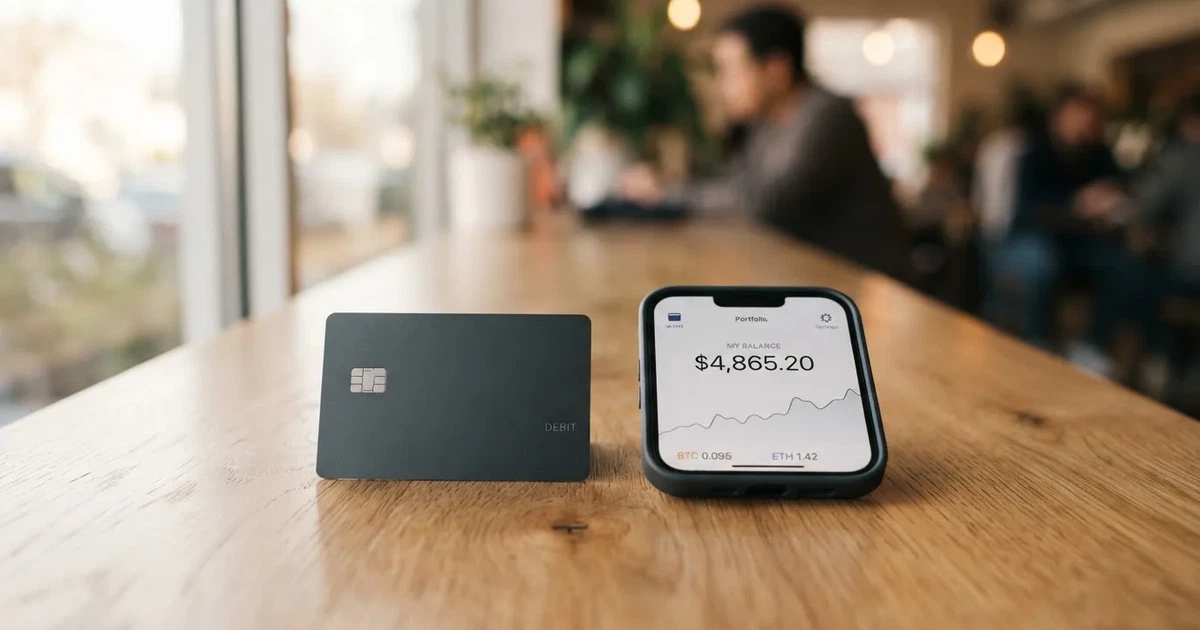
I spent a good deal of time on the card’s own pages and what it does not say turned out to matter more than what it does. NAKA gives you no fee schedule at all — the site says pricing is “per user rather than per transaction” and then stops. It does not name the card issuer or the licences behind the programme. It does not publish a country list, only a product aimed at Latin America and an app listed “worldwide”. It does not say what happens when you want to withdraw, what dispute process applies, or what the ATM allowance is. For a card that asks you to hold your own keys, that silence is the thing you have to price in.
I scored it 5.1 out of 10. That is not a scolding of an interesting product; it is a score for a card whose most important commercial details are not published. If you are the kind of person who can live with unknown costs and a self-custody key you must never lose, the underlying idea is good. If you want to know what a coffee costs before you order it, this is not the card for you yet.
The conditions described below are current as of October 20, 2026.
The score at a glance
Before I unpack any of this, here is how the marks break down and, more usefully, why each one landed where it did. The numbers are mine, the reasons are short, and the total is the honest sum.
| Criterion | Mark | Why it sits there |
|---|---|---|
| Who can get it | 5 / 10 | Aimed at Latin America, the app is listed “worldwide” with no country list, and US citizens are turned away from the start |
| Cost | 5 / 10 | No pricing or fees are disclosed; the site says pricing is “per user” and gives no figures |
| Top-up options | 3 / 10 | USDT in a self-custody wallet, and per the app store caption only USDT on Avalanche C-Chain is accepted |
| Reliability and complaints | 6 / 10 | NAKA GLOBAL d.o.o. in Ljubljana with three ISO certificates, but the issuer and licences are unnamed and I found no complaints to weigh |
| Everyday use | 6 / 10 | A virtual Visa Platinum that works with Apple Pay and Google Pay; the ATM is mentioned with no conditions attached |
| Total | 5.1 / 10 | A real idea held back by missing commercial detail |
Two things pull this up and two pull it down. Up: the company behind it is a real registered business with ISO/IEC 27001:2022, ISO 9001:2015 and ISO 22301:2019 held, and the self-custody design means a provider failure does not directly hand over your money. Down: you cannot cost the card from its own pages, and you cannot tell from them who is actually issuing it. Somewhere in the middle sit the practical things — Apple Pay works, the card is Visa Platinum, limits are adjustable — which are real but unexceptional.
Who they will give you the card to
The card’s own material says the product “targets Latin America”. That is a positioning statement, not an eligibility list. The app is described as “worldwide” but without a country list, and the starting data says “not a United States citizen”. In other words: if you are an American, the answer at the first step is no, and if you are anywhere else, the honest position is that the card does not publicly say.
There is a second layer that often decides things before you even apply. NAKA’s legal documents are split across three entities — NAKA Slovenia, NAKA Switzerland and NAKA El Salvador — and the card states that the “specific provider depends on your jurisdiction and/or the product suite”. A US-specific card agreement exists as well. So even the paper you would sign is jurisdiction-dependent. That is not automatically a red flag; many legitimate international services do this. But it does mean the terms you are shown may not be the terms you assumed you were reading, and you should read the ones attached to your own application.
Here is the honest summary of who I think this fits. It fits someone who already lives in a supported Latin American market, holds USDT rather than dollars on-chain, and has an ordinary bank card problem — a closed account, a rejected application, a country where a mainstream card simply is not offered. It does not fit someone who wants a reliable replacement for everyday spending with predictable costs, and it does not fit a US citizen, because the starting data is explicit.
One more thing about eligibility that you should not skip: the card’s requirement is a “quick KYC verification” after you set up the wallet in NAKA Pay+. Documents, proof of address and an age requirement are not stated on the pages I read. That does not mean they are not collected — the general rule for prepaid and debit cards is that they go to adults, 18 and up — it means I cannot tell you from NAKA’s own pages exactly what to have ready. Plan to have identity documents and a proof of address to hand anyway; it saves a round trip.
How to get it
The route is short, which is a point in its favour. You set up the wallet in NAKA Pay+, you complete a quick KYC verification, and no bank account is required — that last point matters for exactly the readers this card is aimed at. Once you are verified, the card itself is virtual and tokenized: a Visa Platinum, which the card’s material puts at “over 150 million locations”. There is no physical card to wait for and no delivery to track; what lands in your account is the virtual card.
That virtual form also sets the tone for everything else. A physical card you can tap, show at a counter and lose in a coat pocket behaves differently from a number that lives in an app. Apple Wallet tap-and-go is mentioned in the store listing, which partly answers that, but if you are the sort of person who prefers handing over a piece of plastic, this is not it.
What I could not find is stated plainly once here and not repeated: the card’s currency is not stated. If you are outside the dollar area, that matters, because every conversion your payment makes will happen in a currency the card does not name. And KYC levels — what triggers a step-up check, what triggers a freeze — are not stated either.
What it really costs, Fees and what a purchase costs
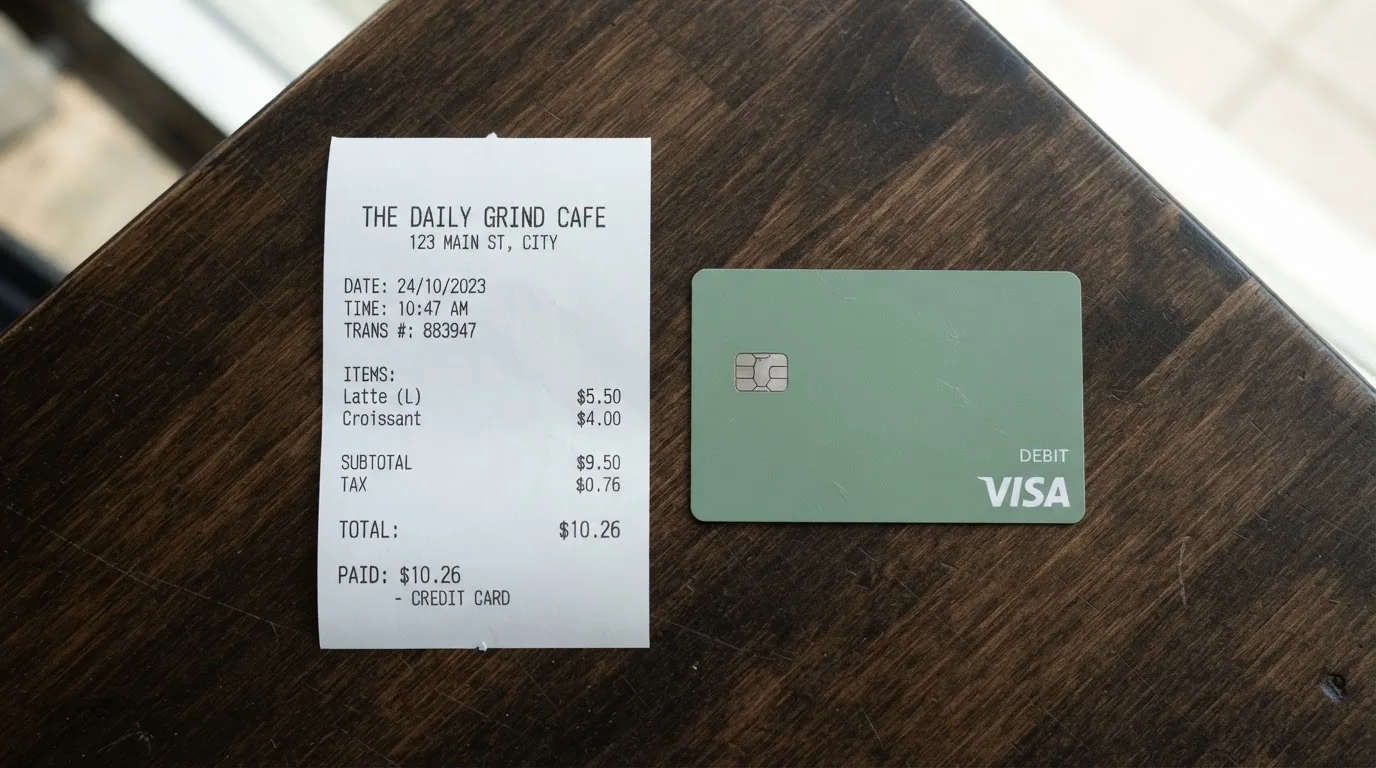
This is the section where NAKA is weakest, so I want to be precise about what “weakest” means. It is not that the card is expensive. It is that no fee is published anywhere I could find. The NAKA site says pricing is per user rather than per transaction, and gives no figures at all. The card does not state a monthly fee, an issuance fee, a conversion fee, an FX fee, an ATM fee, or any limit. I am not going to invent numbers to fill the table.
| Fee or limit | What the card states |
|---|---|
| Issuance fee | Not stated |
| Monthly fee | Not stated |
| Conversion fee | Not stated; settlement is in USDT per the NAKA site |
| FX fee | Not stated |
| ATM fee and allowance | Not stated; the self-custody page says cards work “online, in-store, and ATM use” with major card networks |
| Daily limit | Not stated; spending limits are adjustable by the user in the app, amounts not given |
| Monthly limit | Not stated; same as daily |
Let me put three ordinary payments against that table and walk you through what is unknown in each, because “no fee is published” hits different depending on what you are buying.
A coffee abroad. You have USDT in your wallet, the card converts and settles in USDT, and the merchant’s local currency is not the dollar. A foreign-issued Visa card bought in a shop that has never seen your name can also attract extra scrutiny — the merchant can look at the card’s issuing country from the number itself, which is why a card issued in one country can read as “foreign” in another. On NAKA you have no idea what the FX markup is, because no FX fee is stated. You cannot budget this payment.
A monthly subscription. Online, recurring, likely with a foreign merchant. Here the self-custody design has a consequence the card does not spell out for you: every single payment requires a cryptographic signature from your private key, which never leaves your device. A subscription that renews silently cannot sign itself. Whether NAKA handles recurring payments with stored authorisation, or whether each charge needs you present in the app, is not stated. That is a question worth asking before you commit to anything monthly, not after.
A withdrawal from an ATM. The self-custody page says the cards work at ATMs, and the app description is of a virtual card, but the fee and the allowance are both unstated. So is the daily and monthly limit — you can adjust limits in the app, but you are not told the ceiling or the floor. If cash matters to you, this is the payment type to test first and smallest.
Two everyday safeguards do apply across all three. Spending limits are adjustable by the user in the app, so you can cap your own exposure even without knowing the card’s own ceiling. And the card can be frozen or blocked in the app, which is the fastest response to a card you no longer recognise. Neither of those is a substitute for a published fee schedule; they are just the two levers that exist today.
The self-custody page says the cards work with major card networks, and the card is a single product, though partner-branded virtual cards are possible. What none of this replaces is the number you would actually want: what a payment costs. Not stated. That is the honest answer, and it is the same answer every fee row above gives.
How to Top up the card
Here NAKA is at its most distinctive and, for many readers, its most demanding. The card does not work by holding a prepaid balance with NAKA. Your USDT stays in your own self-custodial on-chain wallet, and at each payment it is “settled via smart-contract signature” — you authorise the spend yourself, cryptographically, from your own key.
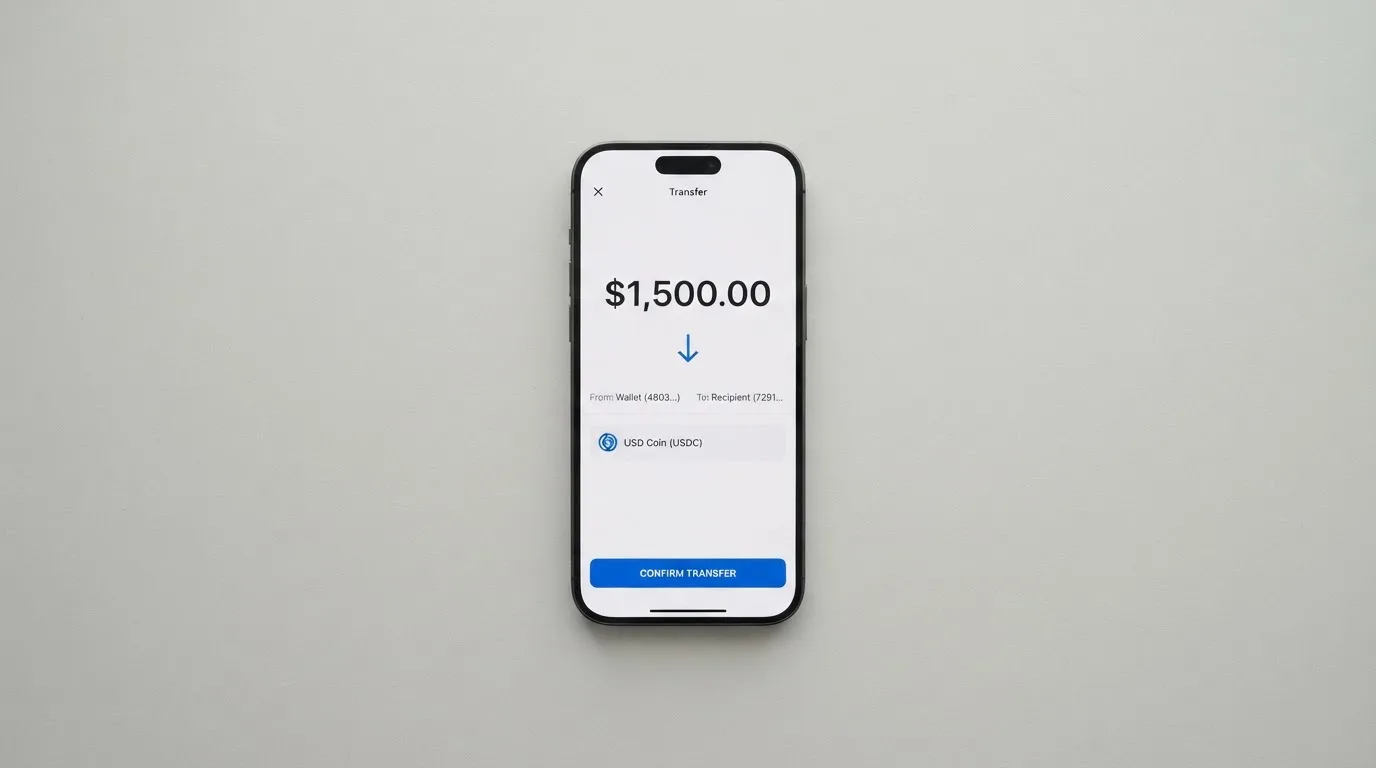
So topping up is not a thing you do with NAKA. Topping up is a thing you do with your wallet: you have USDT in a self-custodial wallet, and when you pay, the contract draws on it. There is no transfer to the card provider, because there is no balance at the provider to transfer to. Funds remain on-chain in your wallet until a payment is signed — that is where they live in between.
That design has one very specific consequence you must internalise before you try it. The app store caption for the product says only USDT on the Avalanche C-Chain network is accepted. Not USDT on Ethereum, not on Tron, not on Solana — Avalanche C-Chain, as the screenshot caption puts it. If you hold USDT somewhere else, converting it onto that network is a step the card’s pages do not walk you through, and every conversion is a trade with a spread, a network fee and a wrong-network risk that cannot be undone.
That is the whole top-up story, and it is why I marked this section 3 out of 10 — the lowest of the five. The mechanism is elegant, and it is limited to one asset on one chain. A wallet holding USDT across several networks is not, on the card’s own description, ready to use. Note also that withdrawal is not stated: there is no described “cash out” from the card, because there is nothing held to cash out. Your money was always yours, which is either the best feature or the least convenient, depending on what you wanted.
One practical warning, and it is a category-level one rather than NAKA’s: blockchain transfers are irreversible. Send on the wrong network or to an address of another network and the money can be gone or need manual recovery with no guarantee.
Paying with it every day
On the mechanics of a normal day, NAKA is fine and then some. The card integrates with Apple Pay and Google Pay, and the store listing mentions Apple Wallet tap-and-go. That is the difference between a virtual card you type numbers into and one you tap, and for everyday spending it is the feature that matters most. The wallet mechanics behind it are sound: Apple Pay replaces the card number with a device-specific number stored in the phone’s secure hardware, never on Apple’s servers, and each payment carries a one-time code. The issuer can also restrict the tokenised number — block it on phone or website use — which is a setting worth knowing exists.
Blocked categories are not stated. That is worth a moment of your attention, because it is a common issuer policy rather than a law: gambling merchants carry a specific category code, and many issuers block that code on particular cards. If gambling or similar is part of your spending, you will not find the answer on NAKA’s pages.
Two everyday things I could not pin down. Blocked or restricted merchant categories, as above. And rewards: nothing is stated for the card itself. The NAKA blog mentions “programmable rewards” as a partner feature, which is a different thing from a cashback rate you personally receive.
The app is NAKA Pay+, from developer NAKA GLOBAL d.o.o. App Store rating 5.0 from 11 ratings, version 2.2, per a third-party report read on 2026-10-21. A Google Play listing exists; its rating I could not obtain. Eleven ratings is a small sample, and a 5.0 on it is encouraging but thin — treat it as “not yet wrong”, not as “well loved”. Dispute handling is also not stated; terms called “NAKA Spend Card Terms” exist and I did not read them, so I am not going to characterise what they say.
For a general sense of the app-based tools a card like this should give you: instant freeze, spending limits, two-factor authentication and 3-D Secure confirmation are the standard safeguards, and the block and limit features here match that standard.
What can go wrong
I looked for trouble and found none — and I want to be careful about what that means. No official incidents came up. A search for reviews on the usual platforms found no reviews of this card at all, no Trustpilot page, no Reddit thread. That is not a clean bill of health; it is closer to a young product with a small footprint. In this category that cuts both ways: fewer people to have been burned, and fewer people to have confirmed it works for years.
The company’s credentials are the strongest thing here. NAKA GLOBAL, finančne tehnologije, d.o.o., at Letališka cesta 33F, 1000 Ljubljana, Slovenia, registered number 8106452000, with related entities NAKA CH SAGL in Switzerland and NAKA SLV, S.A. de C.V. in El Salvador. It holds ISO/IEC 27001:2022, ISO 9001:2015 and ISO 22301:2019 — information security, quality management, and business continuity. Those are real, checked certifications and they are not nothing. What I could not find is the card issuer and the licences behind the programme, on the pages I read. For a card product, the issuer is the entity whose name appears on your card and whose regulator answers for it, and NAKA does not put it on the pages I have.
The self-custody design cuts both ways too, and this is the trade you are really making. The upside is real: “every single transaction requires a cryptographic signature from the user’s private key”, the key “never leaves device”, and there is no shared custodial pool for a provider to raid. When a custodial platform fails, the money is often simply gone — Mt. Gox, about US$350 million reported stolen across 2011 to 2014; Coincheck, about US$400 million in 2018; Ronin Network, US$625 million in 2022. With NAKA that specific failure is not the shape of your risk. The downside is equally real: a seed phrase is typically 12 to 24 words in plain form, anyone who obtains it can restore the wallet and spend it, transfers are irreversible, and a stolen key has no recovery because the network cannot freeze or return funds. With self-custody, sole responsibility for key loss, phishing and clipboard-hijacking malware that swaps a copied address is yours alone.
Then there are the category risks that apply to any card of this kind. Visa and Mastercard do not issue crypto cards to consumers themselves; they license issuers, and they can suspend a programme — Visa terminated its global agreements with FTX in November 2022, and WaveCrest, a Visa issuer that supplied crypto card brands, was suspended in Europe in 2018, closing all its Visa programmes. Programme closures typically mean a notice period, then loading and spending stop, then you are asked to withdraw what is left. And a declined authorisation can leave a hold on your funds for up to seven days. What happens to a self-custody card specifically in a closure is not stated, because there is no balance to withdraw.
Finally, regulation. Under MiCA, which took legal effect in June 2023 with the stablecoin rules applying from 30 June 2024 and the crypto-asset service provider rules from 30 December 2024, e-money tokens may be issued only by a credit institution or an electronic money institution, providers operating under national law have a transitional period until 1 July 2026 or until a MiCA authorisation, and ESMA keeps an interim register of authorised providers that you can check. A card is a payment service regulated separately from the crypto side, so a crypto card often rests on two licences. None of this is a mark against NAKA; it is context for the missing issuer and licence information, and a reason to go and look for yourself.
Support is a thin spot too: a “Talk to our team” contact page and that is all. The launch post is dated October 24, 2025, with page metadata showing a conflicting October 6, 2026, and the app was first released on October 9, 2025 per a third-party report; the card was first shown publicly in Lugano. A product with one support route, an ambiguous launch date and no public complaint record is a young product, and you should treat it like one.
What to take instead
The comparison below is not a ranking so much as a map. Each of these cards publishes more of what you need to budget with than NAKA does, which is why each scored above it in my testing. What none of them give you is the self-custody model NAKA offers; they are custodial or semi-custodial by design.
| Card | Score | Cost and fees | Who can get it | Top-up |
|---|---|---|---|---|
| BloFin Wallet Card | 6.9 / 10 | Activation, annual, issuance and dormancy fees $0.00 each, cancellation free; spend fee 1% or lower by tier (VIP 0 at 1.00% down to VIP 5 at 0.00%); FX fee not stated | 35 countries listed as starting data including US, Australia, Japan, UAE, Brazil, Mexico, Malaysia, New Zealand; citizenship versus residence not stated; country list not published on the card page | USDT and USDC on Arbitrum and Base |
| Decaf | 6.2 / 10 | Activation $5 virtual worldwide, $10 physical US only, $90 physical rest of world; no annual or monthly fee; no FX fee added, the Visa rate is used; crypto conversion fee not stated | Not issued in a long list of restricted countries and a list of restricted US states; whether the rule is citizenship or residence is not stated | Card payment link or account details by card, bank transfer or USDC; app runs on Solana and Stellar; which coins top up the card is not stated |
| SafePal | 6.2 / 10 | No account or management fees; issuance fee not stated; standard top-up 0%; 1% FX fee for Mastercard non-USD settlement; refunds 1 USD/EUR/CHF/7 CNH; swaps include an unquantified spread; crypto top-up “as low as 0.4%” on top tier | “Citizens of supported regions who live in supported areas”; the regions page was empty when fetched | Crypto from 40+ blockchains converted to USDC or fiat, transactions on Arbitrum |
Read across the rows and the contrast with NAKA sharpens. BloFin publishes a full fee ladder and takes nothing for issuance, dormancy or cancellation. Decaf publishes a price for every card variant and adds nothing to the Visa exchange rate. SafePal publishes its top-up percentage, its 1% FX fee and its refund fees. Each of them still has a “not stated” somewhere — every card in this category does — but the difference is that you can cost a BloFin coffee before you order it, and you cannot cost a NAKA one.
Two of them also handle restrictions differently. Decaf is the most explicit about where it will not issue, naming both restricted countries and restricted US states, while noting it does not say whether the test is citizenship or residence. SafePal’s language is the most careful: citizens of supported regions who live in supported areas, which is two conditions, not one. NAKA, by contrast, gives you “targets Latin America”, “worldwide”, and “not a United States citizen” — three fragments that do not add up to an eligibility rule.
If your priority is self-custody specifically, none of these three is that. If your priority is knowing what you pay, all three are better documented than NAKA.
Who I would recommend it to
I would recommend this card to a narrow and specific person: someone in a supported Latin American market who already lives in crypto, holds USDT on Avalanche C-Chain, and wants a Visa to spend it without handing the keys to an exchange. If that is you, the idea is genuinely good, the company behind it has real certifications and a real registered address, the card is Visa Platinum, and it works with Apple Pay and Google Pay.
I would not recommend it to someone replacing a primary everyday card, to anyone who cannot state in advance what a payment will cost them, to anyone who relies on chargebacks or dispute resolution, or to anyone who does not already understand what a private key is and what losing it means. For those people the alternatives above are better documented and I would look there first.
And the question I would ask NAKA if I could ask one thing: who issues the card? Because “self-custody” answers a question about where your crypto sits, and it says nothing about who stands behind the Visa number when a payment is declined, a merchant balks at a foreign BIN, or the programme ends. A card that answers that question — with a name and a licence — and publishes a fee schedule would move a long way up my list. Until it does, 5.1 is where I leave it, with genuine respect for the concept and real caution about the paperwork around it.
Frequently asked questions
What is NAKA card?
NAKA is a virtual Visa Platinum payment card that spends USDT held in your own self-custodial on-chain wallet. Rather than a prepaid balance held by the company, your USDT stays in your wallet and each payment is settled through a smart-contract signature from your own key. The card is virtual and tokenized, and the material describes acceptance at “over 150 million locations”. It is aimed at Latin America and US citizens are turned away.
How does NAKA card work?
You set up the NAKA Pay+ wallet, complete a quick KYC verification, and no bank account is required. You receive a virtual card, and when you pay, your private key signs the transaction — the key never leaves your device and there is no shared custodial pool. There is no card balance to load, because your money never leaves your wallet; funds remain on-chain until a payment is signed.
Is NAKA a bank?
Not as far as its own pages say. The card does not name the issuing institution or the licences behind the programme on the pages I read, and the legal documents are split across NAKA Slovenia, NAKA Switzerland and NAKA El Salvador depending on your jurisdiction. The company behind the app is NAKA GLOBAL, finančne tehnologije, d.o.o. in Ljubljana, holding ISO/IEC 27001:2022, ISO 9001:2015 and ISO 22301:2019.
Who owns NAKA?
NAKA GLOBAL, finančne tehnologije, d.o.o., Letališka cesta 33F, 1000 Ljubljana, Slovenia, registered number 8106452000, with related entities NAKA CH SAGL in Switzerland and NAKA SLV, S.A. de C.V. in El Salvador. Related entities aside, the card issuer itself is not named on the pages I read, which is the piece most people asking this question are actually looking for.
Is NAKA card available in my country?
That depends on where you are, and NAKA does not publish a country list. The product “targets Latin America”, the app is listed “worldwide” without a list, and the starting data is “not a United States citizen” — so a US citizen is refused outright. For everyone else the card’s pages do not give a rule, so you would have to find out by trying.
How do I get NAKA card?
You set up a wallet in the NAKA Pay+ app and complete a quick KYC verification; no bank account is needed. After that the card is issued virtually and added to your phone, with Apple Wallet tap-and-go mentioned in the store listing. Documents, proof of address and the age requirement are not stated on the pages I read, though prepaid cards generally go to adults aged 18 and up.
Does NAKA card require KYC?
Yes, the card describes “a quick KYC verification” after the wallet is set up. What that involves in detail — which documents, whether proof of address is needed, what triggers a step-up check — is not stated, and KYC levels are not published. Standard practice in the industry is to expect identity documentation, and in the EU customer due diligence normally covers name, address, date of birth, nationality and a sanctions check.
How much does NAKA card cost?
Here is the honest answer: no figures are published. The NAKA site says pricing is per user rather than per transaction and gives no numbers, and the card states no issuance fee, monthly fee, conversion fee, FX fee or ATM fee. Spending limits are adjustable by you in the app, but the amounts are not given. I would not budget with this card until you have the fee schedule in front of you.
How do I top up NAKA card?
You do not, in the usual sense. Your USDT sits in your own self-custodial wallet and the card draws on it at each payment, so there is no card balance to top up and no transfer to the provider. The one constraint is narrow: per the app store caption, only USDT on the Avalanche C-Chain network is accepted, so USDT on other chains would need converting first.
Is NAKA card safe?
Mixed, and it depends on what “safe” means to you. The self-custody design is a genuine strength — keys never leave your device, and there is no pooled balance for a provider failure to empty — but it also makes you solely responsible for key loss, phishing and irreversible transfers. The company holds three ISO certificates and I found no complaints or reviews of this card at all, which is as much a sign of youth as of reliability.
Where can I use NAKA card and how do I add it to Apple Wallet?
The card is a Visa Platinum, which the material puts at “over 150 million locations”, and it works with Apple Pay and Google Pay; the store listing also mentions Apple Wallet tap-and-go. The self-custody page says cards work online, in-store and at ATMs with major card networks, though ATM conditions are unstated. One thing to remember: a foreign-issued card can attract extra scrutiny from merchants, since the issuing country is visible in the card number.
Is NAKA card worth it?
Worth it if you live in a supported Latin American market, hold USDT on Avalanche C-Chain, and want to spend it without giving an exchange your keys. Not worth it if you need a predictable cost per payment, a chargeback process, or a physical card — because the fees, the issuer, the withdrawal route and the dispute process are all unstated. On my scoring it came out at 5.1 out of 10, held back by missing commercial detail rather than by a bad idea.
Highest-scored wallet cards – cryptocardbest.com
Content created by the «cryptocardbest.com» team