
A crypto-funded Visa card for people outside the restricted list, with cheaper USD spending than most of the category
 Available in US
The RedotPay card is a Visa debit card you fund with cryptocurrency. Crypto is converted into a stored balance on the card, and you spend that balance anywhere Visa is taken — online, in shops, in mobile wallets, or at an ATM. It comes as a virtual card or a physical plastic card, with USD and HKD versions, and it has a wide country footprint, which is the main reason anyone outside the usual crypto-card markets would look at it. It is not a bank account, the issuer is not named in the public terms, and the price is the price of the conversion plus a small set of standing fees. This review walks through what those fees are, who can sign up, how topping up works, what everyday use looks like, and what the complaints about frozen balances and slow support actually say.
Conditions on this page are current as of October 28, 2026.
Verdict
I score the RedotPay card 6.9 out of 10. That is a “good, not great” mark: it does the basic job of a crypto-funded Visa card at a reasonable price, but it is held back by an unnamed card issuer, a fairly common stream of complaints about frozen accounts and slow support, and a country list that, while long, still excludes a few large markets. It suits crypto holders who live outside the restricted countries and want either a virtual card for online spending or a plastic card with mobile-wallet support. It does not suit people who need a credit card, people who want a high-yield cashback programme, or people in India, Indonesia, Morocco, Nepal, Singapore, Turkey or the United States, who are barred from card issuance.
Score breakdown
| Criterion | Mark | Why it lands there |
|---|---|---|
| Who can get it | 8 / 10 | Wide availability: 47 places are closed for card issuance (as of August 28, 2026), the rest of the world is open; the service claims 9 Million+ Users |
| Cost | 6 / 10 | Virtual card 10.00 USD, physical 100.00 USD, no maintenance fee; 1.00% conversion, 1.20% other currency, 2% ATM up to 10,000 USD a month |
| Top-up options | 8 / 10 | Crypto on-chain to the card, USDT-TRC20 from 1 USDT, USDC and ETH; loading the card balance is free, and the supported networks are listed on the deposit page |
| Reliability and complaints | 4 / 10 | Issuer is not named (BIN Sponsor), program manager is Redotpay Technology Pte. Ltd.; complaints about KYC and source-of-funds freezes, Trustpilot shows 778 reviews |
| Everyday use | 9 / 10 | Virtual and physical card, Apple Pay and Google Pay, ATM cash worldwide |
| Total | 6.9 / 10 |
Who will they give you the card
There are two separate official lists, and they overlap but are not identical. The first is the KYC “Unsupported Countries/Regions” list. RedotPay says that if you are a citizen of any of those places, you will not be able to complete identity verification or use the service, and that the restrictions are based on local regulations and sanction policies, not on individuals. The second is a card-issuance list, dated August 28, 2026, that adds India, Indonesia, Morocco, Nepal, Singapore and Turkey: residents of these areas are not eligible for either a virtual or a physical card, and they cannot be used as billing addresses. Citizenship is not the criterion on that second list — residence is.
The combined restricted list is: Afghanistan, Albania, Belarus, Bosnia and Herzegovina, Bouvet Island, Burkina Faso, Burundi, Central African Republic, Congo (DR), Croatia, Cuba, Eritrea, Ethiopia, Guinea-Bissau, Haiti, Iran, Iraq, Kosovo, Lebanon, Liberia, Libya, Mainland China, Mali, Montenegro, Myanmar, Netherlands Antilles, Nicaragua, North Korea, North Macedonia, Russia, Serbia, Slovenia, Somalia, South Sudan, Sudan, Syria, Ukraine, United States, Venezuela, Yemen, Zimbabwe, plus the card-issuance additions of India, Indonesia, Morocco, Nepal, Singapore and Turkey. Russia, Belarus, Ukraine and Serbia sit on both lists. Georgia, Armenia, Kazakhstan and the UAE are on neither.
For everyone else, the basic KYC rule is the same: you must be 18 or older, and you need an original physical ID, not a copy, screenshot or photo of a screen. The ID has to be valid for at least three months from the day you submit it, and if the back of the document carries data you need to scan that side too. The address you type into the app is supposed to be your “true, current address in full” — RedotPay does not ask for a separate proof-of-address document unless the system decides it needs more. The site is also explicit that any extra document the system does ask for must be a real file (JPG, PNG or PDF, up to 10 MB), not a screenshot. Physical card orders ask for a billing and shipping address written in English, and the cardholder name printed on the back of the card cannot be changed later, so it is worth getting the spelling right at sign-up.
How to get it
The flow is: install the RedotPay app, sign up with an email or with Google or Apple ID, verify your identity, fund the account, open the Card section and choose virtual or physical. The virtual card is the cheaper and faster of the two and is the version that is most useful for online payments. The physical card is the one you put in your wallet or add to Apple Pay or Google Pay. The Singapore terms describe the network as Visa debit; the public card page is less precise and only says “leading card networks”, so for most practical purposes you should assume Visa.
The card comes in two currencies: a USD card on a USD BIN and an HKD card on an HKD BIN. Which one you should pick depends on what you spend in. If most of your spending is in US dollars or in currencies that your bank converts cheaply, the USD card keeps the conversion fee down because default-currency transactions are waived. If most of your spending is in Hong Kong dollars, the HKD card is the equivalent. The currencies can be toggled inside the app, and a disabled currency is declined.
Standard Mail shipping is waived on the physical card. DHL Express is the paid option and the price “varies by country” — the exact amount is calculated at checkout. As of July 21, 2026, delivery is not available in the issuance-restricted places plus Egypt, Palestine and Tunisia, “due to logistical and customs constraints”. The official delivery time is not stated.
What it really costs
The headline fees are easier to take in as a table.
Fees
| Fee or limit | Amount |
|---|---|
| Virtual card application | 10.00 USD |
| Physical card application | 100.00 USD (not cancellable or refundable once paid) |
| Virtual card replacement | 5.00 USD first, 10.00 USD each later |
| Account maintenance | Waived (no monthly or annual fee, no inactivity fee mentioned) |
| Transaction fee (crypto conversion) | 1.00% |
| Default-currency transaction | Waived |
| Non-default currency transaction | 1.20% |
| Small authorisation (1.00 USD or less) | First 5 per card per month waived, then 0.20 USD each |
| Declined transactions | First 3 per month waived, then 0.50 USD each |
| ATM withdrawal (HKD card) | 2.00% |
| ATM withdrawal (USD card) | 2% up to 10,000 USD a month, 3% above |
| Spend per transaction | 100,000 USD |
| Spend per day | 1,000,000 USD (both BINs) |
| ATM count per day / per month | 3 / 30 |
| ATM daily limit (HKD / USD card) | 23,000 HKD / 3,750 USD |
| ATM monthly limit (HKD / USD card) | 75,000 HKD / 50,000 USD |
| Card balance limit | Unlimited |
| Per-card daily limit in some countries | 3,000 USD |
| Per-card monthly limit in some countries | 10,000 USD |
| Paid plan RedotPay Pro | 12.90 USD monthly or 129.00 USD a year (annual includes ATM fee waivers) |
These figures are the fee table that took effect on December 1, 2025. Some merchants carry an extra 1.5% (minimum 0.50 USD), with the first three such transactions per month waived: Gulf Health Counsel, Free Fire, PUBG Mobile, Brawl Stars, eFootball, Facebook Ads and Discord. The card also gives a 5 USD welcome reward, but it is only good for spending, is valid for 30 days, and cannot be used to pay the issuance fee.

To see how that lands in real life, take three everyday payments:
- A 50 USD coffee paid in US dollars with the USD card. No conversion (USD is the default currency), so the 1.00% transaction fee does not apply. The merchant is not on the 1.5% list, so the only cost is whatever the coffee itself costs. Effectively free at the card.
- A 50 EUR hotel in Europe paid with the USD card. Visa converts euros to US dollars and RedotPay charges the 1.20% non-default-currency fee. The cost is roughly 60 cents on that 50 EUR transaction, before any markup the hotel or Visa adds. With the HKD card, the same booking would still be a non-default transaction and the same 1.20% would apply.
- A 200 USD ATM withdrawal in the US with the USD card. 2% on the first 10,000 USD of monthly ATM withdrawals, so 4.00 USD on the 200 USD. Any withdrawal amount, as long as the monthly total stays at or under 10,000 USD, is charged at 2%. Push the monthly total above 10,000 USD and the rate jumps to 3%.
Top up
Topping up the card is a two-stage operation: you fund the account first, then load the card balance from it. The card balance itself is free to load. The funding step is where the fees and the choices sit.
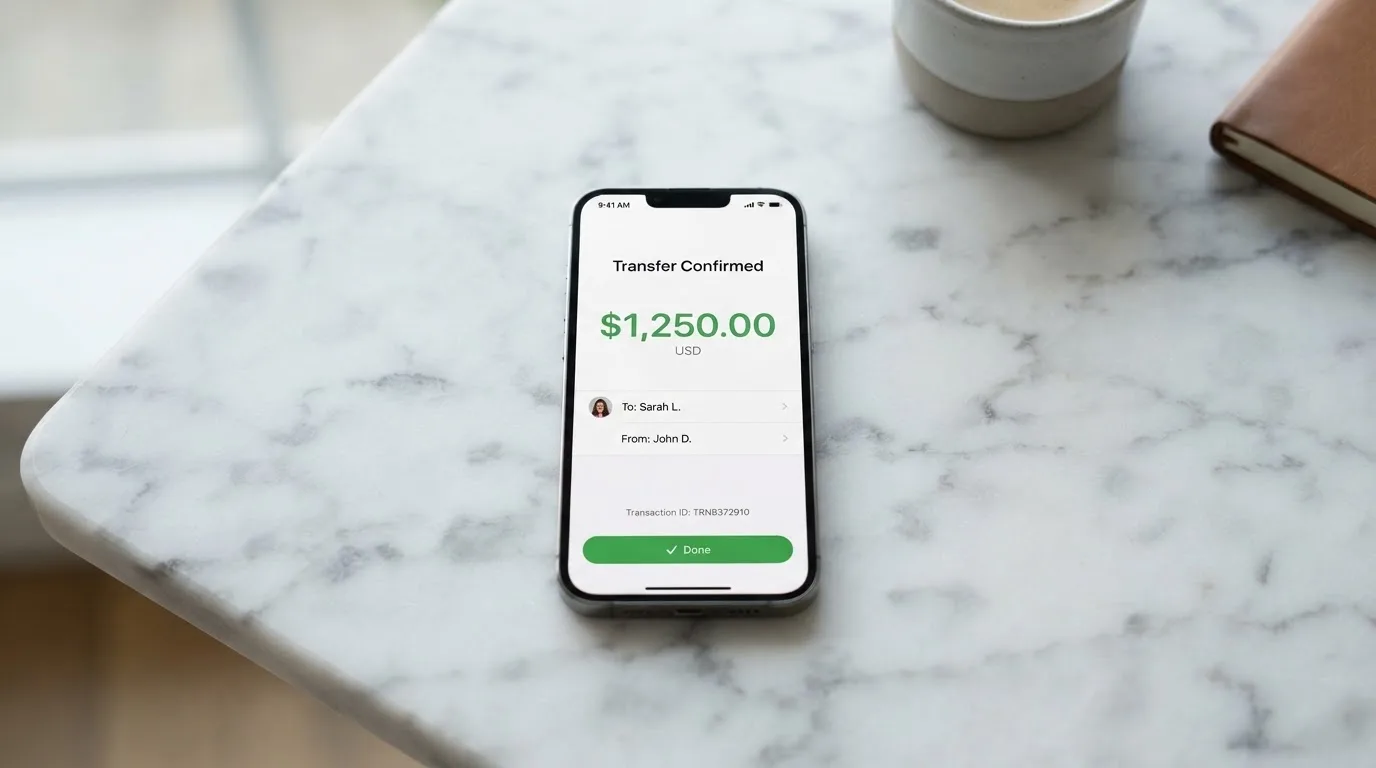
The main route is on-chain crypto deposit. USDT on TRC20 (Tron) is accepted from a minimum of 1 USDT after network fees, and USDC and ETH are also accepted. Each asset is only accepted on the networks that are listed on the Deposit page, and RedotPay reserves the right to change those networks. The network fee (gas or bandwidth) is paid by the sender, on top of the deposit amount, and is counted before the minimum — which is why a “1 USDT” deposit can fail if you forget to add a small buffer for the Tron fee. The second route is buying crypto with a credit or debit card inside the app (ETH, USDC, USDT, depending on region), and that route charges a 3% fee with a 1 USD minimum. The card balance itself has no stated withdrawal path back to your bank; the official “withdraw” details are not stated.
A practical note on stablecoins: Circle stopped supporting USDC on the Tron network in February 2024, so “USDC over TRC20” is not a native option, even though USDT-TRC20 is. If you want to send USDC to RedotPay, send it on a network that RedotPay lists for USDC, not on the cheapest network you happen to have. Blockchain transfers are irreversible, so a deposit sent on the wrong network or to an address of another network can be lost or need manual support recovery with no guarantee.
Paying with it every day
The virtual card is built for online spending. The physical card is the plastic and works on contactless and on swipe. Both card types support Apple Pay and Google Pay. The mobile-wallet integration matters more than it sounds: tokenised payments through a wallet go through with a one-time dynamic security code and avoid the AVS mismatches that sometimes hit foreign-issued cards at US and UK merchants, and the issuer can restrict a tokenised card separately from the underlying number (for example, blocking magnetic-stripe fallback on a phone).
Inside the app, you have a useful set of controls: per-card spend limits, separate toggles for online, in-store and ATM use, and currency toggles. Currency toggles matter because a card set to USD will decline a charge in a disabled currency, and a non-default-currency transaction costs 1.20%. Where you are matters here: the site notes that “in some countries and regions, daily limits are 3,000 USD and monthly limits are 10,000 USD” for the USD card, which is well below the 1,000,000 USD card-level limit. The site also points out that some individual merchants apply their own policies to prepaid or crypto-funded cards, and that illegal use is banned; RedotPay does not publish a formal merchant-category-code blocklist, and the gambling MCC 7995 in particular is not mentioned as a rule on the RedotPay card.
The card cannot be used in sanctioned countries, regardless of where the user lives, and the Singapore terms let RedotPay freeze accounts. App feedback on the iOS App Store is strong: 4.75 from 4,312 ratings, last updated on September 28, 2026 and read on October 20, 2026. The Android rating is not stated.
There is no published card cashback rate. A 5 USD welcome reward is given, but it is a one-off, valid for 30 days and only on spending. The “Points & Rewards” and “RedotPay Pro” programmes are separate from the card. RedotPay Pro is a paid plan (12.90 USD a month or 129 USD a year, with the annual plan including ATM fee waivers) and is best thought of as a subscription rather than a cashback tier. The dispute and chargeback process is not stated.
What can go wrong
The reliability score on this card is the lowest in the table, and the reason is the user reports. Trustpilot shows 778 reviews (as of 2026), and the dominant themes are KYC-related holds on funds, support escalations that go unanswered for days, and what users describe as a low cap on daily payments. A review-analysis site, in material that is unofficial and not confirmed by RedotPay, calls freezes that last weeks pending source-of-funds reviews the most serious complaint in the set. RedotPay’s own communication on the issue is that account freezes are linked to P2P orders and dispute handling, and that they are the kind of intervention you would expect from a regulated card programme, not a bug.
There are three structural risks worth naming on their own:
- The issuer is not named in the public terms. The Singapore terms list “BIN Sponsor” as the actual issuer and name Redotpay Technology Pte. Ltd. as the programme manager. The App Store seller is “Red Dot Technology Limited”. For a user, the practical effect is that the company behind the card is several steps removed from the regulated entity that actually issues it, and the user has to trust both.
- Funds are not described as safeguarded. The Singapore terms say fees are non-refundable (clause 16.3) and let RedotPay freeze accounts, but insurance, safeguarding or statutory segregation of customer funds is not stated. Two-factor authentication is also not described in the materials.
- The country list is a moving target. Card-issuance restrictions were last updated on August 28, 2026, and delivery restrictions on July 21, 2026. The fee table itself took effect on December 1, 2025. The card can become more restricted or more expensive without much warning.
Programme-level risk is not unique to RedotPay. Visa terminated its global agreements with FTX on November 13, 2022, and the FTX US debit card was wound down by its issuer. WaveCrest, a Visa card issuer that supplied several crypto card brands, was suspended by Visa in Europe in 2018, and all WaveCrest-issued Visa programmes closed. These are not RedotPay-specific problems, but they are the shape of the risk you take when your card sits on top of a single Visa relationship.
What to take instead
The three alternatives below are useful comparisons rather than direct substitutes. The Whop card is for US-resident users only; the Stella card is closer in feature set to RedotPay but has less public information; the UniFi card is centred on US-issued accounts and USDC funding. Pick by where you live and what you want to spend in.
| Card | Score | Where it works | Card type | Cashback or reward | Main funding route |
|---|---|---|---|---|---|
| RedotPay | 6.9 / 10 | Wide (47 places restricted) | Virtual + physical Visa, USD and HKD | 5 USD welcome reward; no card cashback rate | On-chain crypto; in-app credit-card buy (3%, 1 USD min) |
| Whop Cards | 5.2 / 10 | 31 US states for consumers, 41 for businesses | Visa, virtual/physical type not stated | 5% cashback at select merchants (Uber and more planned) | Whop balance backed by stablecoin collateral from a linked wallet |
| Stella | 6.5 / 10 | Not stated; US and EU users routed through affiliates | Virtual + physical Visa | No card cashback; Earn yield is a separate product | Crypto deposit into in-app custodial wallet, auto top-up |
| UniFi Card | 4.7 / 10 | Not confirmed officially; send-money routes to PH, MX, EUR, CO, BR, UK | Prepaid Visa debit, USD, issued by Lead Bank | “3% rewards on balances” claim, card cashback not stated | ACH, wire, SEPA, SPEI; USDC wallet |
Whop Cards are an option for US-resident consumers in 31 states and US businesses in 41 states, and the unsupported country list (Belarus, Mainland China, Cuba, Hong Kong, India, Iran, Iraq, Israel, Myanmar, Nepal, Nicaragua, North Korea, Russia, Syria, Turkey, Ukraine, Venezuela, Vietnam) overlaps heavily with RedotPay’s. The reward is 5% cashback at select merchants (Uber at launch, with more planned). Spends draw from a Whop balance that is backed by stablecoin collateral from a linked wallet. Pricing says “no extra fees” but does not list a conversion or FX amount, and the cashback and balance mechanics are not fully described on the public page.
Stella is a virtual + physical Visa card that works at “over 40 million VISA merchants globally”. The site does not publish an unsupported-country list, and the terms bar users under economic sanctions programmes and route US and European users through affiliates. Funding is a custodial in-app wallet, topped up with crypto. There is no card cashback, and the Earn product on the side is a yield programme, not a spending reward.
UniFi Card is a prepaid Visa debit card issued by Lead Bank, denominated in USD, with Apple Pay support. The listing claims 3% rewards on balances but does not state a card cashback rate. Funding is via ACH, wire, SEPA (IBAN) or SPEI (CLABE) and a USDC wallet, with no other coins or networks stated. The app also supports send-money routes to the Philippines, Mexico, the eurozone and (in recent release notes) Colombia, Brazil (PIX) and the UK, which is more of a remittance feature than a card feature.
Who I would recommend it to
I would recommend the RedotPay card to a crypto holder who lives outside the restricted list and wants to spend stablecoins in the real world without first going through a bank. The 1.00% conversion is competitive for the category, the 1.20% non-default currency fee is also competitive, and the 2% ATM rate up to 10,000 USD a month is reasonable if you do not live on ATM cash. The USD and HKD card options let you cut FX out of the equation if your spending is in either currency, and the Apple Pay and Google Pay support makes it usable in shops that are wary of foreign-issued card numbers.
I would not recommend it to people who are in one of the 47 restricted places, who are looking for a high cashback rate, who need a credit card, who want a clearly named regulated issuer on day one, or who plan to use the card heavily at the kinds of merchants (some of them named above) that carry an extra 1.5% fee. The complaint pattern around KYC holds and slow support is the kind of thing that hurts most when you actually need the card to work, and there is no published dispute or chargeback process to fall back on. The same advice applies in spades if your plan is to keep a large balance on the card, because fund safeguarding, two-factor authentication and the dispute process are not stated in the public terms. Treat the card as a spending tool, not as a place to park money.
Frequently asked questions
What is the RedotPay card?
The RedotPay card is a Visa debit card, available as a virtual or physical card, that you fund with cryptocurrency. Crypto is converted into a stored balance on the card and you spend that balance anywhere Visa is taken online, in shops, in mobile wallets or at an ATM.
How does the RedotPay card work?
You fund the account with on-chain crypto (USDT, USDC or ETH, on the networks shown on the Deposit page) or by buying crypto in the app with a credit or debit card. The app loads the resulting fiat balance onto the card, and the card spends that balance. The 1.00% fee is the crypto conversion cost; the 1.20% fee applies when you pay in a non-default currency.
Is RedotPay a bank?
No. The Singapore terms name Redotpay Technology Pte. Ltd. as the programme manager and an unnamed “BIN Sponsor” as the actual card issuer. The card is a Visa debit card on top of that issuer, not a bank account, and the funds on the card are not described as safeguarded in the public terms.
Who owns RedotPay?
The iOS App Store lists the seller as “Red Dot Technology Limited”. The Singapore terms list the programme manager as “Redotpay Technology Pte. Ltd.”, registered in Singapore. The website footer cites “N° 144 en el Registro de PSAV de la CNV (República Argentina)” and states “9 Million+ Users” on the marketing pages. The actual card issuer (the BIN Sponsor) is not named publicly.
Is the RedotPay card available in the United States?
No. The United States is on both the KYC restricted list and the card-issuance restricted list, so US citizens cannot complete identity verification and US residents are not eligible for either the virtual or the physical card. The card is also not available in India, Indonesia, Morocco, Nepal, Singapore and Turkey for card issuance, and delivery is unavailable in those places plus Egypt, Palestine and Tunisia.
How do I apply for the RedotPay card?
Install the app, sign up with email or with Google or Apple ID, complete KYC with an original physical ID valid for at least three months, fund the account and open the Card section. Choose virtual (10.00 USD) or physical (100.00 USD), and for the physical card enter a billing and shipping address in English. The cardholder name printed on the back cannot be changed later.
Does the RedotPay card require KYC?
Yes. The minimum age is 18, and you must upload an original physical ID, not a copy, screenshot or photo of a screen. The app asks for your “true, current address in full” and may request extra documents (JPG, PNG or PDF, up to 10 MB) if it decides it needs more. One verification level is described; processing time and the official reasons for rejection are not stated.
How do I top up the RedotPay card?
Send on-chain crypto to the address shown on the Deposit page. USDT-TRC20 is accepted from a minimum of 1 USDT after network fees, and USDC and ETH are accepted on the networks the app lists. Loading the card balance from the funded account is free. Buying crypto with a credit or debit card in the app costs 3% with a 1 USD minimum.
How do I add the RedotPay card to Apple Wallet?
From the card detail screen, choose “Add to Apple Wallet” and follow the on-screen authentication. Apple Pay replaces the card number with a device-specific Device Account Number stored in the Secure Element, and each payment uses a one-time dynamic security code. Google Pay works the same way on Android. The 4.75 average on the iOS App Store (4,312 ratings, last updated September 28, 2026) is the public signal that the integration works for most users.
Is the RedotPay card safe?
The published safety story is partial. The card supports tokenised mobile wallets, 3-D Secure online confirmation, per-card limits and online, POS and ATM toggles. The Singapore terms let RedotPay freeze accounts and say fees are non-refundable, but safeguarding of customer funds, insurance and two-factor authentication are not stated. Trustpilot shows 778 reviews (as of 2026), and the recurring complaint theme is KYC-related holds on funds and slow support.
Highest-scored app and neobank cards – cryptocardbest.com
Content created by the «cryptocardbest.com» team