
A naira-and-stablecoin card that works on Verve, and leaves a lot unsaid
 Available in US
Payrit is not a Visa or Mastercard product. It is a fintech card from Nigeria that runs on the Verve and Interswitch networks, holds naira alongside USDC or USDT in one balance, and is aimed squarely at people in seven West African countries who want to spend stablecoins in ordinary shops without opening a foreign bank account. That is a real gap in the market, and Payrit fills part of it. What it does not do — at least not on its public pages — is tell you much about what it charges, what its limits are, or who is actually behind the plastic. I scored it 4.7 out of 10, and the reason is not that it is a bad card. It is that you have to make a financial decision with a lot of the decision still missing.

The conditions described here are current as of October 28, 2026.
Verdict: 4.7 out of 10, and why
The score is not a verdict on whether the technology works. It is a measure of how confident I can be, as a reader, that this card will do what I need on the day I need it. Payrit passes that bar in a narrow place — Nigeria and its neighbours, spending naira or USDT from one card — and fails it everywhere else.
| Criterion | Mark | Why |
|---|---|---|
| Who can get it | 2 / 10 | Works in Benin, Burkina Faso, Cote d’Ivoire, Mali, Nigeria, Senegal, Togo |
| Cost | 6 / 10 | “The Payrit Card costs ₦7,000”, monthly fee and fees not disclosed |
| Top-up options | 5 / 10 | Naira and USDC/USDT balance, one card for all; networks and fees not disclosed |
| Reliability and complaints | 5 / 10 | Tree-House Nigeria LTD, “not a bank”, partners licensed; issuer not named; App Store 4.33 from 3 ratings; no complaints found |
| Everyday use | 6 / 10 | Physical and virtual card on Verve and Interswitch, POS and ATMs in Africa; Apple Pay and Google Pay not disclosed |
| Total | 4.7 / 10 | A real product with thin documentation |
Here is who this suits. If you are in Nigeria, Benin, Burkina Faso, Cote d’Ivoire, Mali, Senegal or Togo; if you already hold or receive USDT or USDC and want to spend it in a local shop rather than sitting on it; if a Verve card is accepted where you shop, which in much of the region it is; and if you are comfortable with a provider whose own pages do not tell you the fee schedule — then Payrit is worth an afternoon of your attention.
Here is who it does not suit. If you travel regularly outside West Africa, a Verve card will not help you, because Verve acceptance outside its home market is thin and the card’s public pages say nothing about international roaming. If you are outside the seven listed countries, this is not your card. If you need Apple Pay or Google Pay, that support is not stated. If you are the kind of person who wants to know exactly what a payment will cost in fees before you make it, the absence of a published fee table is a reason to look elsewhere. And if you are a business, I found nothing about business accounts, team cards or expense tooling — the card is presented as a consumer product.
There is one more thing worth saying plainly before the sections below. Payrit is a fintech company, not a bank. Its own words: “a financial technology company and is not a bank”, working “in partnership with licensed transmitters and banking partners”. That structure is normal for this category — most crypto card brands are fronts for a licensed issuer — but it means there is at least one institution between you and the money, and that institution is not named on the card pages.
Will they give you the card?
Short answer: if you are in one of seven countries, probably yes. The card works in Benin, Burkina Faso, Cote d’Ivoire, Mali, Nigeria, Senegal and Togo.
That is the entire stated eligibility rule. There is no citizenship rule, no residency proof requirement and no income threshold on the public pages. I want to be careful here, because this is exactly where readers get hurt: the absence of a stated rule is not the same as the absence of a rule. Providers check identity and country as a matter of anti-money-laundering compliance, and the fact that Payrit’s pages do not describe its verification levels does not mean verification is not happening — it means it happens off the page.
So what you should check first, before you invest an afternoon in the app: whether the app you download is the app they intend you to use, and what documents it asks for once you are inside. Everything else can wait.
How to get it
You order the card inside the app. The flow is short: you give a card name, a delivery address and a primary balance. The card is produced immediately and shipped, and delivery is quoted as “5–14 working days within Lagos and most states in Nigeria”. That is a Nigerian-domestic delivery window; the cost of delivery is not stated.
Activation is straightforward once the card arrives: the first 6 and last 4 digits of the card, plus a new PIN. You set that PIN at activation, which is also the moment to make sure you have recorded the digits somewhere safe.
Two details here are worth dwelling on. First, “primary balance” is a real choice you make at ordering, not an afterthought — the card draws on the connected primary balance, so what you pick is what spends first. Second, nothing on the public pages says what happens if your delivery falls outside those five to fourteen working days, or outside Lagos and most Nigerian states. There is no stated replacement policy and no stated tracking promise.
For a reader who has spent years dealing with cards, the striking thing about this whole section is how much of it is solid: order, ship, activate, set a PIN. It works. What it lacks is the follow-through — no stated delivery fee, no stated failure path.
Fees: the one number you get, and the ones you don’t
This is the weakest part of the product as documented, so I want to be blunt about it before you read the table. I can tell you the card costs ₦7,000. I cannot tell you what a payment costs, what a currency conversion costs, or what a cash withdrawal costs, because those figures are not stated anywhere on the public pages. Nor are spending limits, ATM allowances, monthly fees, or card tiers.

| Fee or limit | Value |
|---|---|
| Card issuance (physical) | ₦7,000 |
| Monthly fee | Not stated |
| Conversion fee | Not stated |
| FX / foreign currency fee | Not stated |
| ATM withdrawal fee | Not stated |
| Daily spending limit | Not stated |
| Monthly spending limit | Not stated |
| Card tiers | Not stated |
The card holds two currencies in one place — naira and USDC/USDT — and works at POS terminals and ATMs across Africa. Those two facts together tell you the shape of the cost: some part of what you pay on any given transaction is a conversion, and some part of any cash withdrawal is an ATM fee. How much is the number I would want, and it is not published.
So let me run three ordinary payments against the table, because that is where the missing numbers actually bite.
Buying a phone accessory from a shop in Lagos, on a balance that is mostly naira. The card fee question barely arises here — this is the case the card is built for. The naira comes off the naira balance and the ₦7,000 you already paid is the only fee you know about with certainty.
Paying an invoice to a supplier who wants dollars, while your balance is held in USDC. Here a conversion happens, and the rate and the fee applied to it are both undisclosed. What I would do: ask support, in writing, before the payment, what rate is applied and what percentage is taken. The help centre is currently marked “Under construction”, so this may mean a direct message — the card page invites you to “speak with the founders directly”.
Taking cash out of an ATM in Abuja. The withdrawal works — ATMs in Africa are part of the stated coverage — but the fee and the daily allowance are both unstated. A modest ATM fee is normal in this category; an unknown one is not something to discover at a machine at night. If cash is part of your routine, this is the specific gap I would want closed before you rely on the card.
One category of fee does not appear on the card’s pages at all but does exist in this industry, so I will name it without attaching a number to it: the network fee for putting crypto onto a blockchain. On-chain network fees for a deposit are charged by the blockchain, not by the card provider. If you top up in USDT, you will eventually meet one.
Top up: fund it and spend
Top-up is the part of Payrit I understand best, and it is also the part with the biggest trap for newcomers.
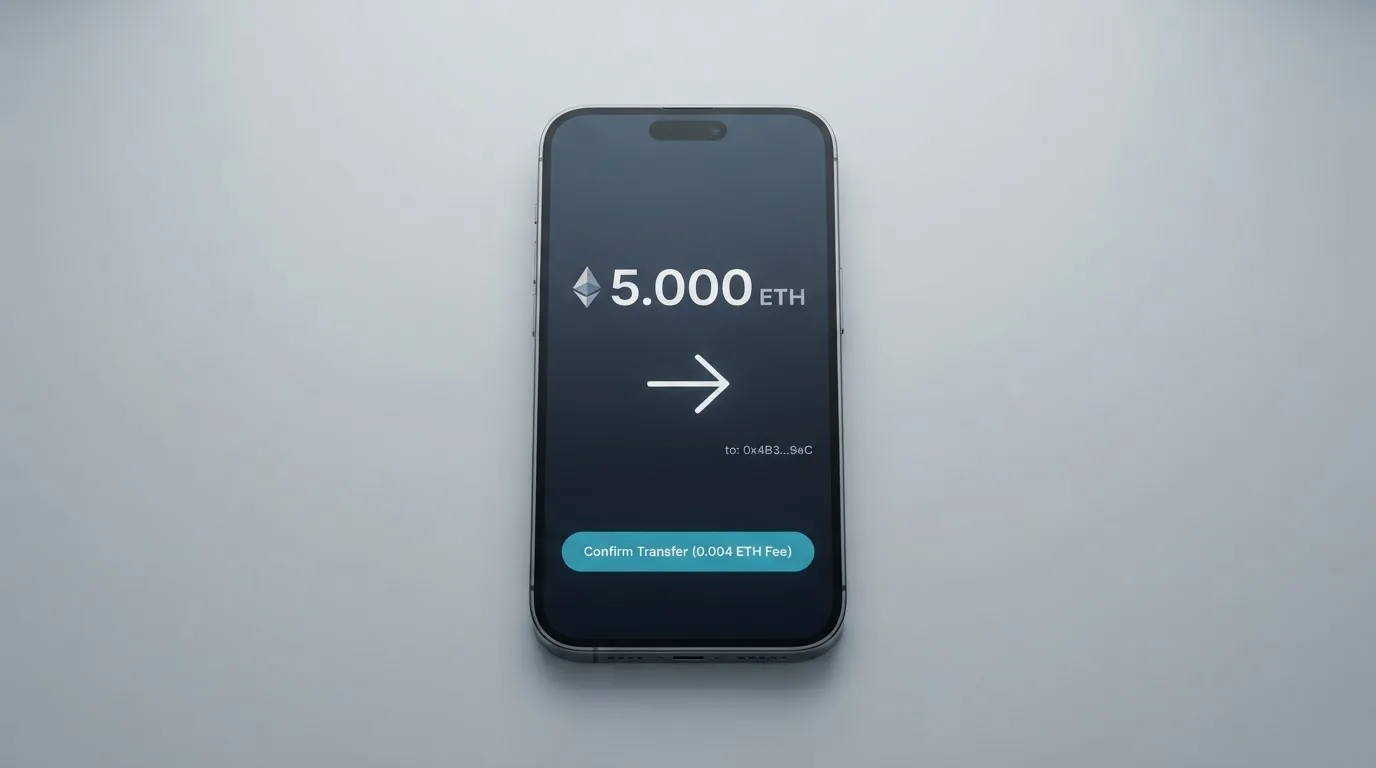
The mechanics: fund the account with any supported currency — USDC, USDT or naira — and spend right away. Naira and USDC/USDT wallets spend from one card. The card page says it plainly: “Your card works without needing to be prefunded”. That is a genuine design decision and a good one for the use case it targets. It means the card draws on the connected primary balance — naira or USDC/USDT — as you spend, rather than requiring you to load it in advance. For someone whose income arrives as a stablecoin and whose spending arrives as small daily amounts, this removes a whole category of friction.
What is not stated is how the crypto actually gets in. The networks are not disclosed. That single missing fact has a real consequence, and I want to explain it because it is the most common way people lose money with cards like this.
A stablecoin transfer is a blockchain transfer, and blockchain transfers are irreversible. If you send USDT on a network Payrit does not support, or to an address belonging to a different network, the funds can be lost or need manual support recovery with no guarantee. There is no customer service that can reverse a transaction that never happened on any ledger. And the practical difficulty is that there is no single obvious answer: USDT exists on Ethereum, Tron, Solana, Polygon, Avalanche and others; USDC is natively supported on 38 networks, including Ethereum, Solana, Base, Polygon PoS, Avalanche, Arbitrum and Stellar, but Circle stopped supporting USDC on Tron in February 2024. Choosing correctly depends entirely on what Payrit accepts, and that is the part it does not tell you.
So my advice, which is not a trick and not a workaround: before your first real transfer, send a small test amount, confirm it arrived, then send the rest. And take the network list from Payrit itself, in writing, rather than inferring it from what your exchange supports. An exchange offering a network and a card accepting that network are two different lists.
Cash withdrawal is not stated. The card pages do not say whether you can convert back to naira and take it out through the ATM function, or whether that is a separate feature. Assume nothing until you have asked.
Paying with it every day
Day to day, this is a physical and virtual card on the Verve and Interswitch networks — not Visa, not Mastercard — spending naira and USDC/USDT from one card. That combination is the whole proposition, and it is genuinely useful inside its home market.
There are things you should expect to be different from a Visa card, and I would rather you hear them from me than at a till.
A Verve and Interswitch card is not accepted everywhere. Acceptance in West Africa is broad but not universal, particularly for online merchants and for non-Nigerian storefronts. Merchants can also decline cards by policy rather than by law, and a foreign BIN is one reason a shop may look at a card twice: the first six or eight digits of a card number identify the issuing institution, and any merchant’s system can look them up. Nigeria’s is the expected issuer country here, so in Nigeria you are on home ground — which is exactly the point of the product.
Online payments may ask for a billing address that matches what the issuer has on file. Address verification is mainly offered in the US, Canada and the UK and is generally unavailable for foreign-issued cards, so an address mismatch can cause declines. If a site rejects you, that is the first thing to suspect.
Declined authorisations can leave a hold on your funds that stays for several days — typically up to seven. This is standard across cards, but on a card where your balance is a stablecoin you are watching, a temporary hold can look like a problem that is not there.
Three things that simply are not stated, which for daily use are the three things I would most want: Apple Pay and Google Pay support, whether there are rewards or cashback of any kind, and how disputes work when something goes wrong with an order. Those are not small omissions. Apple Pay in particular is how a lot of people pay now, and I would not assume it is there.
There is one genuinely reassuring control, though. You can freeze and unfreeze the card instantly in the app, a lost card can be terminated and a new one requested, and the PIN is set at activation. Freeze-on-the-go is the single most useful safety feature on any card, and having it is worth something.
The app itself: iOS app “Payrit” by TREE-HOUSE NIGERIA LIMITED, rated 4.33 from 3 ratings, version dated 2026-09-18. Three ratings is not a signal in either direction, but the version notes do tell you the product is moving: v3.0.96 (“Feb 5”), “Physical cards are now available”; v3.0.114 (“Apr 5”), “Payrit virtual dollar and crypto card now available”.
What can go wrong
The most obvious risk here is not fraud. It is opacity, and I want to name the specific things rather than a vague concern.
The issuer is not named. Payrit says it is “a product of Tree-House Nigeria LTD”, “a financial technology company and is not a bank”, with services delivered “in partnership with licensed transmitters and banking partners”. That is a category-standard description and it is honest as far as it goes — but it does not tell you which bank holds your funds or which institution stands behind the card programme. This is normal in the category and it is still a thing you are trusting without seeing.
The fee schedule does not exist publicly. No monthly fee, no conversion rate, no ATM fee, no limits, no tiers. You are asked to spend money before you know what spending costs.
The top-up network is undisclosed. Irreversible transfers meet an unstated network list. This is the practical hazard.
Compliance checks can stop you at any point. If due diligence cannot be completed, institutions are required to refrain from the transaction or relationship and, where necessary, end existing relationships — which is why accounts get closed or frozen pending documents. Payrit’s own pages do not describe its verification levels, so you cannot tell in advance what documentation you will need.
Card programmes do get wound down. This has happened across the industry: Visa terminated its global agreements with FTX on 13 November 2022 and the FTX US debit card was wound down by its issuer; WaveCrest, a Visa issuer that supplied crypto card brands, was suspended by Visa in Europe in 2018, closing all WaveCrest-issued Visa programmes. Closures typically follow a pattern — a notice period, then spending and loading stop, then users are asked to withdraw remaining balances. If you hold a balance here, that is the scenario to keep in mind. It is not a prediction; it is the standard ending for this kind of arrangement.
Stablecoins are not perfectly stable. The name overpromises: stablecoins are not necessarily stable. TerraUSD collapsed in May 2022 and USDC temporarily lost its peg in March 2023 during the US banking crisis. If your balance sits in USDT or USDC, a depeg is a loss that happens to you through the card without the card being at fault.
No complaints is not the same as no problems. I found no official incidents or user reports about Payrit, and no Trustpilot page either. For a young product with three app ratings, a thin complaint record tells you the product is small, not that it is flawless.
Support is thin. “Speak with the founders directly” is offered, and there is a community link on the card page — which suggests the people who built it are reachable. The help centre is marked “Under construction”, and hours and languages are not stated.
What to take instead
If Payrit’s gaps bother you, they are not unusual gaps — other products in this space make different trade-offs. Here is how the alternatives compare, on the same criteria I used above.
| Payrit | Whop Cards | Stella | UniFi Card | |
|---|---|---|---|---|
| Score | 4.7 / 10 | 5.2 / 10 | 6.5 / 10 | 4.7 / 10 |
| Networks | Verve and Interswitch | Visa | VISA | Visa |
| Region focus | Benin, Burkina Faso, Cote d’Ivoire, Mali, Nigeria, Senegal, Togo | 31 US states for consumers, 41 for businesses | Not stated; US and European users routed through affiliates | US-centric, with send-money routes to Philippines, Mexico, eurozone, Colombia, Brazil, UK |
| Cost | ₦7,000 for the physical card | “No extra fees”, no amounts listed | Not stated | Not stated (“Fees may apply”) |
| Funding | Naira, USDC, USDT | Whop balance, backed by stablecoin collateral from a linked wallet | Crypto deposit tops up the card automatically | ACH, wire, SEPA (IBAN), SPEI (CLABE), USDC wallet |
| Rewards | Not stated | 5% cashback at select merchants, currently Uber | No cashback stated; separate Earn product | “3% rewards on balances” claimed; card cashback not stated |
Whop Cards score 5.2 / 10 and solve the network problem entirely — Visa, works anywhere Visa is accepted online and in stores. Consumer availability covers 31 US states, and businesses 41. If you are in the US and want a card that simply works, that is the pitch. The catch is geography: consumer applications are unsupported in a long list of countries including Russia, Belarus, China (Mainland), Cuba, Hong Kong, India, Iran, Iraq, Israel, Myanmar, Nepal, Nicaragua, North Korea, Syria, Turkey, Ukraine, Venezuela and Vietnam. Whether eligibility runs on citizenship or residence is not stated, which is exactly the kind of detail that decides your application. Funding runs from a Whop balance, backed by stablecoin collateral from a linked wallet, and pending balance becomes usable as soon as a payment arrives. Coins and networks are not stated. Rewards are the strongest in this group: 5% cashback at select merchants, currently Uber.
Stella scores highest of the four at 6.5 / 10. Virtual and physical, VISA, and the card page claims access at “over 40 million VISA merchants globally”. Funding is the cleanest of the group: deposit crypto into the account and it automatically tops up the card, through an in-app custodial wallet. That is a genuinely simple loop, and its custodial nature is worth naming — the provider holds the credentials, so you trust them completely, and cryptocurrency transfers are irreversible with no built-in recovery for a stolen key. Eligibility is where Stella is vaguest: countries are not stated on the official site, and the terms bar users under economic sanctions programmes while routing US and European users through affiliates. Fees are described only as being “described under this User Agreement and/or on the App”.
UniFi Card ties Payrit at 4.7 / 10 and is the most interesting alternative if your money comes from being paid rather than from crypto. It is a “Prepaid Debit Visa Card” issued by Lead Bank, USD-denominated, supports Apple Pay, and is funded by ACH, wire, SEPA (IBAN) or SPEI (CLABE) — or by getting paid to a USDC wallet. Its weak point is documentation again: fees are “may apply, see UniFi website”, and eligibility is not confirmed from official pages, though the App Store listing shows send-money routes to the Philippines, Mexico and the eurozone, with recent release notes mentioning Colombia, Brazil (PIX) and the UK. If you want a Visa card and your income arrives by bank transfer, this may serve you better than a crypto card.
My honest read of this comparison: there is no card here that discloses everything. Stella discloses the least about eligibility and wins on simplicity. Whop wins on network reach for Americans. UniFi wins for people paid into a bank account. Payrit is the only one of the four aimed at West Africa, which is either exactly what you need or irrelevant.
Who I would recommend it to
I would recommend Payrit to three kinds of person, and to nobody else.
If you live in one of the seven countries and your income or savings arrive as USDT or USDC, and you spend in local shops, and you are content to hold a card from a young provider whose fee schedule you will have to ask about rather than read — then yes. The design is right for you. A card that draws directly on your stablecoin balance without pre-funding, on a network your neighbourhood actually accepts, solves a real problem that a Visa card with an international transfer fee does not.
If you are a freelancer or small trader who deals in both naira and dollars and would rather hold one card than juggle two accounts, the multi-currency balance is the feature. Again: within the region.
If you are cautious by nature and want published fees, published limits and a named issuer before you load money — then this is not the card for you, and there is no reading of the public pages that will change that. Not because Payrit is hiding something, necessarily, but because a young product simply has not published that material yet.
And if you are anywhere else on the planet, the answer is straightforward: Verve and Interswitch will not carry you, and none of this applies.
Before you load funds, three things. Get the supported transfer network in writing, because that mistake is the one that cannot be undone. Ask what a conversion costs, in writing, because that is what determines whether the multi-currency balance is a feature or an expense. And freeze the card the moment it lands in your hand, then unfreeze it only when you are actually at a till.
Frequently asked questions
What is the Payrit card?
Payrit is a fintech payment card from Nigeria — Tree-House Nigeria LTD — that runs on the Verve and Interswitch networks rather than Visa or Mastercard. It holds naira alongside USDC or USDT in a single balance and spends either from one card. It is aimed at users in West Africa who want to spend crypto in ordinary shops. Payrit describes itself as a financial technology company, not a bank, working through licensed partners.
Is Payrit a bank, and who owns it?
No, Payrit is not a bank. Its own pages say it is “a product of Tree-House Nigeria LTD” and “a financial technology company and is not a bank”, providing services “in partnership with licensed transmitters and banking partners”. The card’s public pages do not name the bank or institution that actually issues the card, so you are at least one step removed from a bank in this arrangement.
Which countries can use the Payrit card?
The card works in seven countries: Benin, Burkina Faso, Cote d’Ivoire, Mali, Nigeria, Senegal and Togo. That is the full list stated. It is a West African card on African networks, so it is not built for international travel — and if you are outside those seven countries, this is not your card.
How do I get and activate a Payrit card?
You order inside the app, giving a card name, a delivery address and a primary balance. The card is produced immediately and shipped, with delivery quoted at “5–14 working days within Lagos and most states in Nigeria”. On arrival you activate with the first 6 and last 4 digits of the card plus a new PIN, which is also set at that moment.
What does the Payrit card cost?
The physical card costs ₦7,000. Beyond that the public pages state no monthly fee, no conversion fee, no FX fee, no ATM fee, no daily or monthly spending limit and no card tiers. That means the only fee you can price before you start is the card itself, and everything else has to be asked about directly.
How do I top up the Payrit card?
You fund the account with any supported currency — USDC, USDT or naira — and can spend right away. The card draws on your connected primary balance rather than requiring pre-funding. Critically, the supported transfer networks are not stated, so get that list in writing before your first crypto transfer, since blockchain transfers cannot be reversed.
Does the Payrit card require KYC, and can I add it to Apple Wallet?
Neither is stated on Payrit’s public pages — verification requirements and Apple Pay support are both unconfirmed, and Google Pay is unconfirmed as well. Rather than assume, treat both as open questions: expect to be asked for identity documents inside the app, and check wallet support yourself before you rely on tap-to-pay.
Is a Payrit card safe to use?
There is no published safety claim I can repeat, and I would not make one. What is documented is a useful control set: instant freeze and unfreeze in the app, card termination and reissue for a lost card, and a PIN set at activation. I found no official incidents or user reports about Payrit, but with only three app ratings that reflects a young product, not a flawless one.
How do I withdraw money from Payrit?
The public pages do not say. Cash withdrawal is not stated, so I cannot tell you whether you can convert back to naira and take it out through the ATM function or whether that is a separate feature. The card is stated to work at ATMs across Africa, but the fee and daily allowance for doing so are also not stated.
Is the Payrit card worth it?
Worth it for you if you are in one of the seven listed countries, hold or receive USDT or USDC, spend in local shops, and are comfortable asking a young provider what its fees are rather than reading them. Not worth it if you travel internationally, need Apple Pay, need published fees and limits before committing money, or live outside West Africa. The honest answer is that the card is well designed and thinly documented.
Highest-scored app and neobank cards – cryptocardbest.com
Content created by the «cryptocardbest.com» team