
HoneyCoin card review: a stablecoin-funded Visa with thin costs and a thin public record
 Available in US
The HoneyCoin card is a Visa debit card that draws on a USD balance funded by crypto or local payment rails, and it targets people who want to spend stablecoins anywhere Visa is taken. It is run by HoneyCoin, Inc., a Nairobi-based company that started in 2021 and now says it operates in 45+ countries. On paper, the card is a clean fit for that audience: no issuance fee, no monthly fee, zero cost on USD spending, and a straightforward USDC on Base top-up path. In practice, the public record around the card is thin, and a real-world outage in 2025 is the kind of thing you want to know about before you rely on it for everyday payments.

This review is written for anyone weighing a crypto-funded Visa who does not have easy access to an ordinary bank card, whether because of where they live, what their bank offers, or simply because stablecoins are how they already hold money. I walk through who the card is for, what it costs, how you actually load and spend with it, where it can hurt you, and how it stacks up against three alternatives, then finish with the questions readers tend to ask.
The conditions and figures below are current as of October 28, 2026.
Verdict
HoneyCoin lands at 6.7 out of 10. That is a credible but unremarkable score, and the reason it is not higher sits in a single observation: the card has the right shape for a stablecoin-funded Visa, but the public record around it is so thin that you are making a leap of faith on questions a normal debit card answers in the first paragraph. The card costs nothing to issue or to hold, USD spending is free, and the USDC on Base top-up is straightforward. What is missing, or missing from the public page, is also what the score reflects: no published ATM fee, no published crypto conversion fee, no named issuing bank, and an App Store rating of 1.0 from a single review.
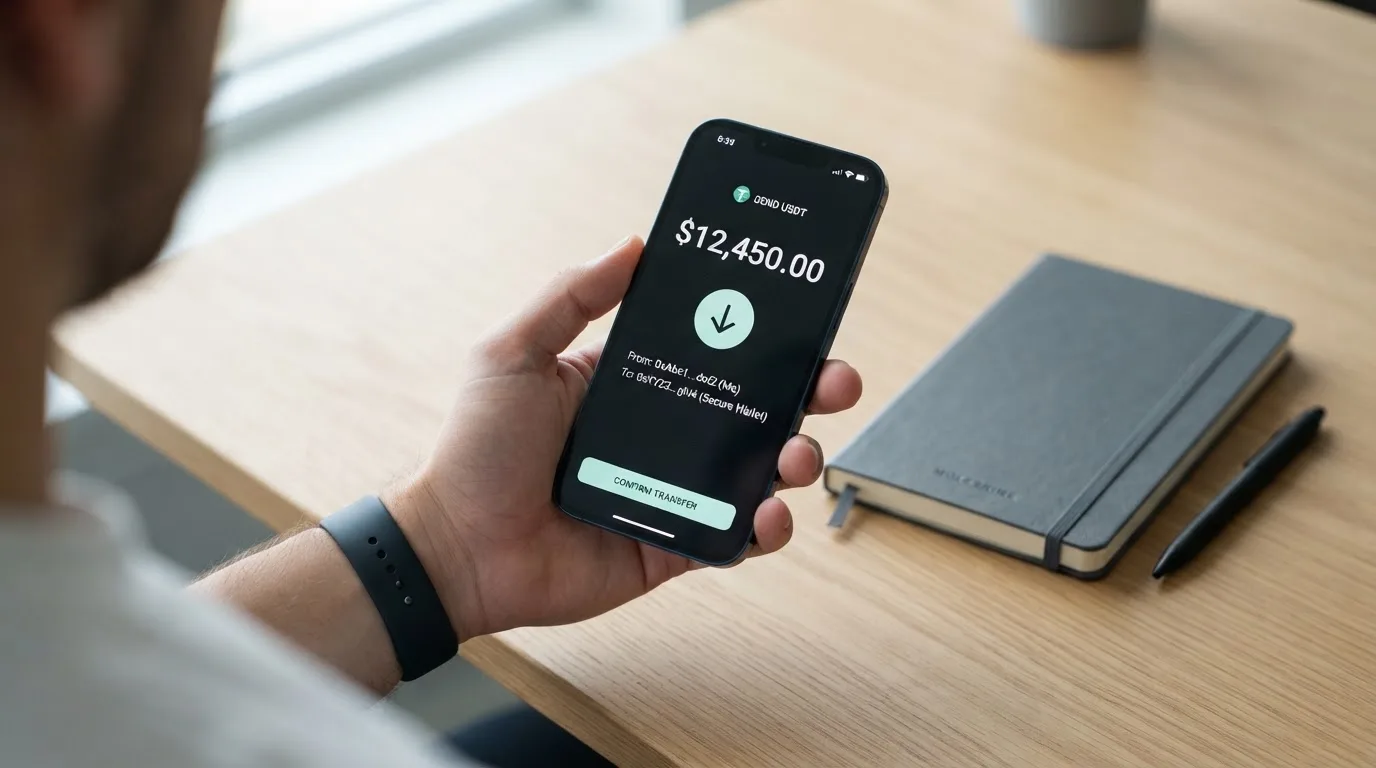
For people in Africa and other emerging markets who already hold stablecoins and want a Visa they can load with mobile money, a bank transfer, or a card, HoneyCoin does the job. For anyone who needs a card with a deep public track record, a published fee schedule, and a name-licensed issuer on the back of the plastic, it does not.
Score table
| Criterion | Mark | Why it matters |
|---|---|---|
| Who can get it | 8/10 | Accepted wherever Visa is taken; live in 45+ countries; no full country list |
| Cost | 7/10 | Issuance, monthly, and yearly are free; USD 0%; FX up to 3%; conversion fee not published |
| Top-up options | 6/10 | Mobile money, bank transfer, card, on-chain stablecoins; only USDC on Base is listed in the token table (USDT in FAQ) |
| Reliability and complaints | 5/10 | Issuer unnamed; card payments on the consumer app paused for months after 2025 card-testing attacks; App Store 1.0 from 1 rating |
| Everyday use | 7/10 | Virtual card instant, physical 2–3 weeks; Apple Pay and Google Pay; ATM fee not published |
| Total | 6.7/10 | Solid for its target audience, but a thin public record keeps the score in check |
Who will they give you the card
HoneyCoin’s headline pitch is simple: the card is accepted wherever Visa is accepted, with the usual caveat that “some countries, merchants, and MCCs may be restricted.” The company says it is live in 45+ countries, including the US, Canada, the EU, and several African jurisdictions, but it does not publish a country list, and there is no public statement of which merchant categories are blocked. That gap matters if you live somewhere a Visa programme is licensed to operate but the card has been quietly tuned to refuse specific transactions, because you will only find out by trying.
Identity verification is required before you can use the card. HoneyCoin’s onboarding asks for documents and proof of address, but the company does not publish which documents, what age it sets as the floor, or what tiers of verification it runs. In practice that means a customer-due-diligence flow in the app, the kind of check any regulated payments business has to do, but the specifics are not on the website.
The card itself is a Visa, available as a virtual card the moment you finish KYC and as a physical card shipped to you in about 2–3 weeks (cost of the physical card not stated). The balance is denominated in USD, which is why USD spending carries no FX spread in HoneyCoin’s published pricing.
If you live in one of the 45+ markets, you are over the local age of majority, and your documents are clean, you are likely to be approved. The unknowns are the list of countries HoneyCoin actually serves, the merchant categories it blocks, and the KYC tier that will land on your account after review. None of those are answered on the public page.
How to get it
The sign-up flow itself is standard for a crypto card: download the app, create an account, complete identity verification, and the virtual card activates instantly. The physical card is sent out and arrives in about 2–3 weeks; the cost of the physical card is not stated publicly.
What is missing is the detail that other issuers put front and centre. The KYC levels, the documents the company accepts, the countries it currently supports, and the issuing bank behind the Visa are all absent from the marketing pages. HoneyCoin says it works with “licensed partners” and claims licensure in key markets, but the bank whose BIN prints on the card is not named. For a card in a market where programme closures are not rare, that is a meaningful gap.
What that means for you, in plain terms: you can complete the application today, get a virtual card in minutes, and start spending once KYC clears. What you cannot do, before you sign up, is read the issuer’s name, the country list, or the fee schedule for things like ATM withdrawals.
What it really costs
The good news is that HoneyCoin’s published pricing is unusually clean: the card is free to issue, free on a monthly basis, and free on an annual basis. USD transactions cost 0%, which is exactly what you would want for a card whose balance is in USD. Other currencies carry an FX spread of up to 3%, and that is the only fee for spending that is published on the public page.
The bad news is that the fee you actually pay, the crypto-to-fiat conversion fee, is not stated. If you load the card with USDC, the company must convert that into USD to settle a payment, and the price of that conversion is the lever it can use to make money. It may be small; it may be folded into the FX spread; it is not stated on the public page. You cannot tell from the public page, and the only way to know for sure is to look at a test transaction.
ATM fees are not stated. Daily and monthly limits are stated: 10,000 USD per day for both spending and loading, with lower custom limits you can set in-app and higher limits available after review. There is a single tier: the limit rises with usage rather than with a published premium plan.
Fees
| Fee or limit | Amount |
|---|---|
| Issuance | Free |
| Monthly fee | Free |
| Yearly fee | Free |
| USD transactions | 0% |
| Other currencies | Up to 3% FX spread |
| Crypto conversion | Not stated |
| ATM | Not stated |
| Daily spending limit | 10,000 USD |
| Daily loading limit | 10,000 USD |
| Higher limits | After review, with usage |
Three everyday payments
- Coffee in a US chain, paid in USD: 0%. If your balance is already in USD and the merchant settles in USD, this is the cleanest case HoneyCoin offers. No FX spread, no conversion, no fee.
- Dinner in a eurozone city, paid in EUR: up to 3% on top of the network rate. The 3% is the worst-case published spread, so the actual cost depends on the rate HoneyCoin applies at the moment of authorisation. That is a real difference, and it is the price of spending a USD-denominated card outside the dollar bloc.
- Cash from an ATM abroad: fee not stated, FX spread up to 3% on the local currency. This is the part of the cost story the public page does not cover, and it is where a card with hidden costs tends to hurt you most.
How to top it up
HoneyCoin gives you four ways to put money on the card: mobile money, bank transfer, card, and on-chain stablecoins. The first three are the standard local rails a payments app offers in markets where mobile money and instant bank transfers are how people actually move cash. The fourth is the part crypto users care about: you send stablecoins on-chain to a HoneyCoin address, the company credits the equivalent to your card balance, and the card spends from there.
The token table in the funding section is short, deliberately so. The only token HoneyCoin lists is USDC on Base. The FAQ mentions USDC and “select other assets where enabled,” and the broader funding section also mentions USDT. If you are funding the card with anything other than USDC on Base, you are relying on what is enabled at the moment you open the app, and that list can change without notice.
The honest summary is that the top-up flow is broad on rails and narrow on assets. Mobile money and bank transfer cover the local payment side; card top-up covers a quick load from another card; the stablecoin rail covers the crypto side, but only with USDC on Base as a confirmed option. The fees, minimums, and who pays the network gas for the on-chain transfer are not stated. Blockchain transfers are irreversible, so a deposit sent on a network HoneyCoin does not support, or to an address of another network, can be lost or need manual support recovery with no guarantee.
Paying with it every day
The everyday-use case is where HoneyCoin’s design choices start to make sense. The virtual card is ready the moment KYC clears, so you can add it to Apple Pay or Google Pay in minutes, which is also where most people will actually use it. The physical card shows up in 2–3 weeks for the times you need to swipe or insert a card at a terminal that does not take mobile wallets.
The card has no cashback or rewards programme, and there is no published list of blocked merchant categories. That is a small but real difference from cards that publish a 1% cashback or a clear no-gambling, no-crypto policy: HoneyCoin offers neither, which means the upside is in lower fees, not in rebates, and the risk of a surprise decline sits with you, the cardholder.
Disputes are not addressed on the public page. That is worth noting if you plan to use the card for online purchases from merchants you have never used before, because a chargeback process is part of the safety net a normal debit card offers, and HoneyCoin does not document its own. The standard protections of the Visa network still apply, but the issuer’s process for invoking them is not on the website.
What can go wrong
The most concrete risk is a real one: in August 2025, HoneyCoin’s company blog disclosed that card payments on the consumer app had been paused for months because of card-testing attacks, a kind of fraud where criminals probe a card system with small authorisations to find valid numbers. That is not a theoretical risk. It is a published event on the company’s own blog, and it tells you two things at once: the card was, for a period, not usable for everyday payments, and the company was willing to write about it publicly when it was over.
The thin public record around HoneyCoin is the second risk. The App Store listing for the US version of the consumer app, “Peer – the everything app.” by HoneyCoin, Inc., shows a rating of 1.0 from 1 rating, which is too thin a sample to mean anything, but it is also the only signal on that side. There is no Trustpilot page for HoneyCoin, and the results that surface for “Honeycard” on review sites are about a different product. You are not choosing between two competing signals; you are choosing with effectively no signal.
The company itself is real: HoneyCoin, Inc., also referenced as Quicknode Technologies Ltd in starting data, based in Nairobi (The Cube, Riverside Drive), founded 2021, with a $4.9M funding round announced on 12 August 2025. It says it holds licences in key markets, but the issuing bank behind the Visa is not named, and “licensed partners” is the only description on the public page. The card is a programme manager’s product, and the programme manager has not put the issuer’s name in the marketing.
On the security side, the public page says client money is safeguarded and held completely separate from HoneyCoin’s, two-factor authentication is required for login and privileged actions, and the platform is PCI DSS Level 1. A card-freeze feature is not mentioned. Support is offered 24/7 for institutional and corporate clients, and the public contact emails are [email protected] and [email protected].
What that means in practice: the platform has the standard regulatory and security posture you would expect from a payments business, and a real incident in its recent past. Neither tells you the card is unsafe; together they tell you to be deliberate about how much you keep loaded on the card and how much you keep elsewhere.
What to take instead
The cards below are not perfect substitutes, but they cover the same ground: a Visa you can fund in a way an ordinary bank card does not allow. The figures are from the same kind of public-record check as this review, so the gaps you see in HoneyCoin are the same gaps you will see elsewhere.
Alternatives at a glance
| Card | Score | Where it works | Funding | Cashback | What to know |
|---|---|---|---|---|---|
| Whop Cards | 5.2/10 | 31 US consumer states; 41 for businesses; long blocklist for unsupported countries | Whop balance backed by stablecoin collateral from a linked wallet | 5% at select merchants (Uber, more planned) | “No extra fees,” but no published conversion or FX fee amounts |
| Stella | 6.5/10 | Country list not stated; terms bar sanctioned users and route US/EU through affiliates | Deposit crypto into the in-app wallet, auto-top-up to the card | No card cashback (Earn product is separate yield) | Virtual and physical Visa; fees “described under this User Agreement and/or on the App” |
| UniFi Card | 4.7/10 | Send-money routes to PH, MX, eurozone; recent notes mention CO, BR, UK | ACH, wire, SEPA, SPEI; receive pay to a USDC wallet | “3% rewards on balances” (listing claim) | Prepaid Debit Visa issued by Lead Bank; Apple Pay supported; card-cashback and fees not stated |
Whop Cards is a reasonable pick if you live in one of the 31 supported US states and you want a card that lives inside a Whop account, with a 5% cashback at Uber as the headline perk. The country list for consumers is restrictive, and the company names a long blocklist of unsupported countries. Crypto funding runs through a Whop balance backed by stablecoin collateral from a linked wallet, but the actual coins and networks are not stated. The score sits at 5.2 because the card does what it says, but the published fee schedule is empty: “No extra fees” with no numbers behind it.
Stella is the closest in shape to HoneyCoin. Virtual and physical Visa, in-app wallet, deposit crypto, the card auto-tops-up from the balance. The country list is not stated, and the terms route US and European users through affiliates, which is the kind of detail that explains why a card in this category does not always serve the markets you would expect. Cashback on the card is not stated; the yield product is a separate thing. The score of 6.5 reflects a card that does the basics without the gaps HoneyCoin has on the public record, but with gaps of its own.
UniFi Card is the weakest of the three at 4.7. The card is a Prepaid Debit Visa issued by Lead Bank, which at least puts a US-regulated bank on the plastic. Apple Pay is supported, and the funding story is a list of real payment rails (ACH, wire, SEPA, SPEI) plus a USDC wallet. The “3% rewards on balances” claim is a listing claim, not a card-cashback term, and the card’s own fees are not stated. Pick this card if you want a named US issuer and a payment-rail-heavy funding flow, and accept that the rewards pitch is a balance yield, not a card perk.
Who I would recommend it to
HoneyCoin is the right card for a narrow but real reader: someone in Africa or another emerging market who already holds stablecoins, lives in one of the 45+ countries HoneyCoin serves, and wants a Visa they can load with mobile money, a bank transfer, a card, or USDC on Base. The fee structure is clean for that use case. USD spending is free, the FX spread is published at up to 3%, and the cost of holding the card is zero. The everyday mechanics, virtual card at sign-up, Apple Pay and Google Pay ready in minutes, physical card in 2–3 weeks, match what that reader needs.
It is the wrong card for someone who needs a published fee schedule before they sign up, a named issuing bank on the back of the plastic, and a card with a track record of public reviews and a clear disputes process. The 2025 outage on the consumer app, the single one-star App Store rating, and the lack of a public ATM fee and crypto conversion fee are not reasons to avoid the card on their own, but they are reasons not to load it like a primary account.
If you do use it, treat it the way you would treat any card whose public record is still being written. Keep the bulk of your money in the rails you control, load HoneyCoin for what you plan to spend, and assume that the next surprise, good or bad, will be the one the public record has not yet caught up to.
Frequently asked questions
What is the HoneyCoin card?
The HoneyCoin card is a Visa debit card that draws on a USD balance funded by stablecoins or local payment rails. It is run by HoneyCoin, Inc., a Nairobi-based company, and is positioned as a way to spend stablecoins anywhere Visa is taken. A virtual card activates at sign-up, and a physical card ships in 2–3 weeks.
How does the HoneyCoin card work?
You complete KYC in the HoneyCoin app, top up the card with mobile money, a bank transfer, another card, or USDC on Base (USDT where enabled), and the card spends from that USD balance. USD transactions are 0%, and other currencies carry an FX spread of up to 3%. The card is prepaid in the sense that it cannot overdraw, because payments draw on the loaded balance.
Is HoneyCoin a bank?
No. HoneyCoin is a payments and crypto company, not a bank. It claims licensure in key markets, but the issuing bank behind the Visa is not named on the public page. The card is a programme manager’s product, and the bank that prints the BIN is one of HoneyCoin’s “licensed partners.”
Who owns HoneyCoin?
HoneyCoin, Inc. (also referenced as Quicknode Technologies Ltd in starting data) is the operating company. It is based in Nairobi (The Cube, Riverside Drive), was founded in 2021, and announced a $4.9M funding round on 12 August 2025. The public page does not list individual owners or a parent company beyond the funding announcement.
Is the HoneyCoin card available in my country?
The company says it is live in 45+ countries, but it does not publish the full list. The honest answer is that you can only find out by starting the sign-up flow and seeing whether your country is in the supported set. The public page does not break the 45+ countries out by name.
Does the HoneyCoin card require KYC?
Yes. Identity verification is required before you can use the card, and the onboarding asks for documents and proof of address. The specific documents, the age floor, and the KYC tiers are not stated on the public page, so the only way to know what will be asked is to start the flow.
How do I top up the HoneyCoin card?
You can top up with mobile money, a bank transfer, another card, or on-chain stablecoins. The token table lists only USDC on Base as a confirmed option; the FAQ mentions USDC and “select other assets where enabled,” and the funding section also mentions USDT. Fees, minimums, and the network-fee payer are not stated, and on-chain transfers are irreversible, so sending on the wrong network can mean a manual recovery with no guarantee.
How do I add the HoneyCoin card to Apple Wallet or Google Pay?
Once KYC clears and the virtual card is issued, the card can be tokenised into Apple Pay or Google Pay from inside the HoneyCoin app. The mobile-wallet token replaces the card number with a device-specific number, so a freeze or restriction on the underlying card also applies to the tokenised version. The public page does not describe a card-freeze feature.
Is the HoneyCoin card safe?
The platform says client money is safeguarded and held separately from HoneyCoin’s own funds, two-factor authentication is required for login and privileged actions, and the platform is PCI DSS Level 1. A card-freeze feature is not mentioned. The main caution is the 2025 outage on the consumer app, when card payments were paused for months because of card-testing attacks, and the thin public record on reviews and complaints. Treat the card as a spending tool, not a primary store of value.
How do I delete my HoneyCoin account?
The public page does not describe a deletion flow. In practice you would need to withdraw any remaining card balance, request account closure through the app, and follow the company’s data-retention process, which is the standard pattern for regulated payments businesses. The specifics are not on the website, so the only way to confirm the steps is to contact support through the in-app channel.
Highest-scored app and neobank cards – cryptocardbest.com
Content created by the «cryptocardbest.com» team