
Fizen card, read before you sign up
 Available in US
Fizen is a crypto-to-card product from Fizen Limited, a Hong Kong company that describes itself as backed by Tether. The headline number is 6.4 out of 10, which puts it in the middle of the pack for crypto cards. The product works as a USD Visa prepaid card loaded from a USDT balance, and the interesting part is who it suits: people who have trouble getting a regular bank card and can live inside its rules.

The first thing to set straight is that Fizen Limited is not a bank. It says so itself. It is also not a licensed payment institution or an e-money institution, so it is operating on the card side through an issuer whose name appears in the Issuer Cardholder Agreement. The card programme is run under licence from Visa. That matters because the way the card spends and the way disputes work depends on the issuer, not on the app you download.
Conditions are current as of October 28, 2026.
Verdict
Fizen scores 6.4 out of 10. That is a working score, not an exciting one. The card is real, it works at Visa merchants, and it can be used in 160+ countries according to the card page. The price is fair for an entry-level virtual card, but the country list is narrower than the marketing suggests, and the top-up path goes through a single stablecoin, which limits choice.
| Criterion | Mark | Reason |
|---|---|---|
| Who can get it | 8 / 10 | Used in 160+ countries, but 43 are off the list, including Russia, Belarus, Serbia, India, China (Mainland), Iran, and Ukraine |
| Cost | 6 / 10 | Adventure issuance $9.99; $0 monthly above $500 spending, otherwise $1.50; FX 1%, crypto-to-fiat 0.5%, ATM $2 + 1.5%, card closure $2.00 |
| Top-up options | 6 / 10 | USDT to a Fizen-controlled wallet; QR Pay only via USDT on Solana or BNB Chain; fiat through Transak |
| Reliability and complaints | 6 / 10 | Fizen Limited in Hong Kong, not a bank or payment institution; card issuer not named in the public pages; Tether investment of 30 July 2026; Trustpilot 4.1 out of 5 |
| Everyday use | 5 / 10 | Virtual Visa straight away, Apple Pay and Google Pay; metal card is “Coming soon”; first ATM withdrawal up to $200 a month is free |
The audience this card fits is straightforward: someone funding a USD virtual card with USDT, comfortable with crypto, not looking for a primary bank account. It is not the card for someone who wants cashback heavy enough to replace a rewards credit card, and it is not the card for someone whose country is on the excluded list.
Will they give you the card
The first question is always eligibility, and Fizen’s answer is split across two documents. The card page talks about 160+ countries of use. The terms go further: you cannot be a citizen, resident, or person located in a jurisdiction where the service is prohibited or under comprehensive sanctions. That is the language of an exclusion clause, and it is the kind of language that is enforced when the company finds out, not when you sign up.
The official “not available” list is sharper. The Fizen Card is not available in 43 countries, and the list includes the Russian Federation, Belarus, Serbia, India, China (Mainland), Croatia, Slovenia, Montenegro, North Macedonia, Bosnia and Herzegovina, Iran, Ukraine, and Venezuela, among others. Georgia, Turkey, Kazakhstan, Armenia, and the United Arab Emirates are not on that list, which means residents of those countries can, on the face of it, apply. The list is presented as the company’s own decision, and the card page adds a useful nuance: if you are a citizen of a restricted country but currently live in a supported country, you may still be eligible. The exceptions page was not read, so the practical version of that rule is worth confirming with support before you go through the signup flow.
What the public pages do not say is also part of the picture. The exact list of supported countries is not stated, the citizenship-versus-residence basis for screening is not stated, and the minimum age is not stated. What is stated is that eligibility is checked at onboarding and on an ongoing basis, and that the checks include KYC, IP, device, and location. The KYC levels, the documents required, and the processing time are also not stated. The terms simply say KYC is required “at the level each Service requires”, which gives the company room to ask for more documents later if its risk appetite changes.
In practice this means the answer to “can I get it?” is: probably, if your country is not on the 43-country list and you can pass standard identity verification, but the precise gatekeeping is in the issuer’s hands and not in the public documents.
How to get it
The flow the card page describes is app first, then wallet, then card. The sign-up link on the card page takes you into the Fizen Super App, which is available for iOS and Android. The whole application, according to the card page, takes 5 minutes. The virtual card is issued instantly. The physical metal cards in the Pioneer and Frontier tiers are “coming soon”, and there is no shipping time, no delivery country list, and no replacement cost to compare against because the public pages do not state any of it.
The Adventure tier is the one that is open now. It is a virtual card. The Pioneer and Frontier tiers are physical metal cards, and the difference between them in the official comparison is mostly reward rates: Pioneer and Frontier add 10% and 20% APR bonuses respectively on USDT Vault, and higher FiPoint cashback, on top of everything Adventure has. The metal card feature is the same on both. Pioneer is priced at $999.99 and Frontier at $9,999.
The network and the card currency are not stated on the card page itself, but the card terms are titled “USD Visa Prepaid Card”, so the working assumption is a USD-denominated Visa prepaid product. The issuer’s name is not stated in the public pages, only that the card is issued by a regulated institution “under licence from Visa”. The Card Terms and FAQ pages at docs.fizen.io exist but were not read for this review, so the issuer name and the precise cardholder terms should be checked there before relying on anything specific.
On KYC depth, the public text is thin. The terms commit to verification “at the level required for that Service”, describe a one-time setup, and an ongoing re-check. The levels, the documents, the processing time, and the rejection reasons are not stated. That is worth knowing in advance: the experience of getting approved, or of being asked for additional documents later, is not predictable from the public pages.
Fees
The cost question is where most crypto card reviews get tangled up, and Fizen is a good example of why. The card page says “0 crypto-to-fiat conversion fees” and “0 top-up fees within plan limits”. The fee table on the same product says crypto-to-fiat conversion is 0.5% and the card page makes no claim about FX. The two are not contradictory once you read carefully: the card-page line applies to Adventure, and the standard schedule in the docs is the 0.5% baseline. The benefit page is the marketing number, the fee table is the contractual one, and the fee table is what you should plan around.
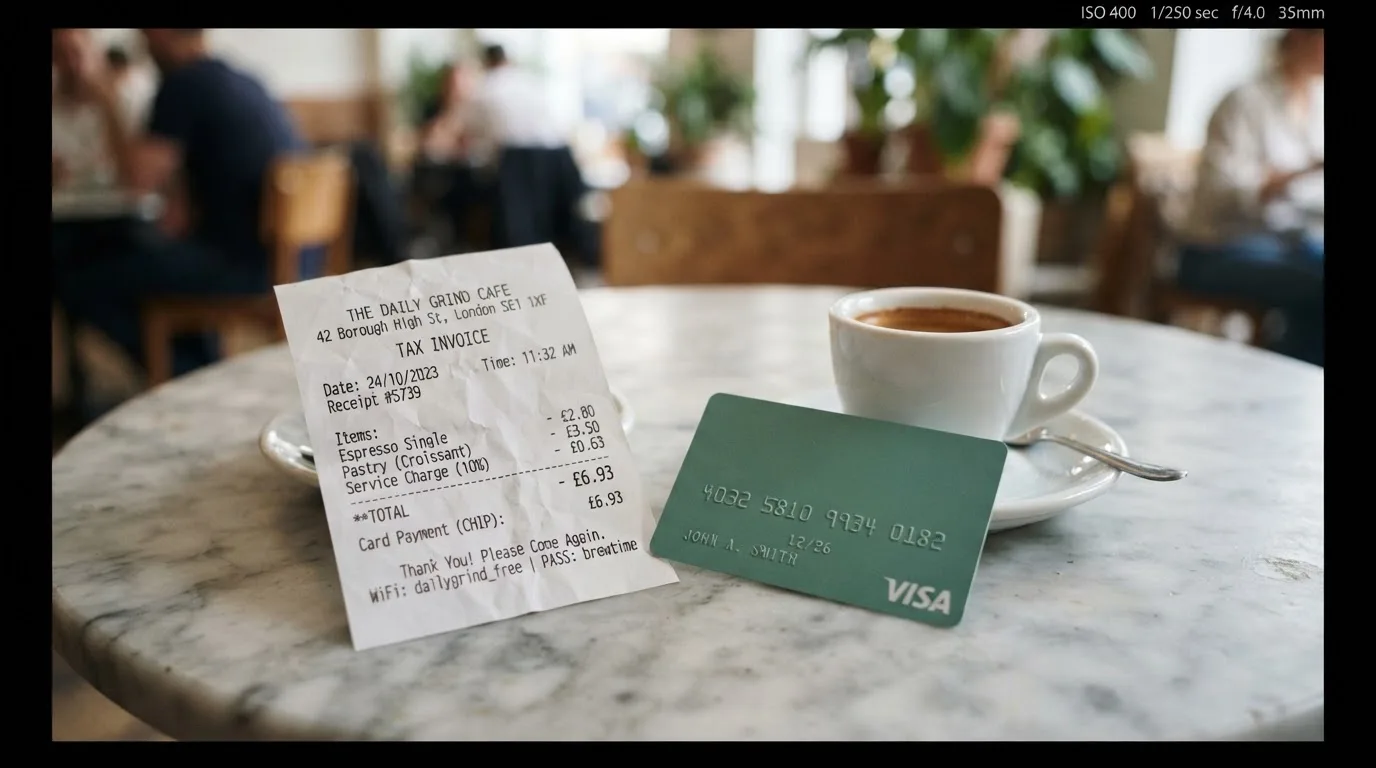
The headline price for the open tier is $9.99 to issue the Adventure card, free for users who pre-registered. Monthly maintenance is $0 if you spend $500 or more in the billing cycle, $1.50 if you spend less, and the first month is free. Closing the card costs $2.00. Pioneer ($999.99) and Frontier ($9,999) are the higher tiers, and they sit behind the same fee schedule for the operations that are not bundled into the membership.
| Fee or limit | Amount |
|---|---|
| Virtual card issuance (Adventure) | $9.99 (free for pre-registered users) |
| Monthly maintenance | $0 above $500 spending, $1.50 below (first month free) |
| Crypto-to-fiat conversion | 0.5% (0% within Adventure plan limits, per card page) |
| FX fee (non-USD payments) | 1% |
| Small transaction fee (under $50) | $0.50 |
| ATM withdrawal (physical card) | $2 + 1.5% |
| First ATM withdrawal | Free up to $200 a month |
| ATM limits | $100,000 / day, $200,000 / month, 3 / day, 30 / month |
| Spending limits | $150,000 per transaction, $1,000,000 / day, $1,000,000 / month |
| Card closure | $2.00 |
Some of those fees are waived by the card benefits on the higher tiers, but the table above is the standard schedule. The FX line matters for anyone spending outside the US: a 1% FX fee on a non-USD payment is the kind of figure that quietly adds up over a year of travel, and it is the same on every tier.
A few everyday scenarios make the table feel less abstract.
A $100 coffee in Tokyo paid with the virtual card. The card is denominated in USD and the payment is in JPY, so the FX fee is 1%. The crypto-to-fiat conversion on Adventure is shown as 0% on the card page, so on a single purchase the only fee is the FX line. The total cost is about $101, before any network or issuer fee. The same $100 paid in USD has no FX fee, and the 0% conversion line holds within plan limits, so the cost is the $100 you spent.
A $40 subscription paid in USD. The transaction is under $50, so the small-transaction fee of $0.50 applies, on top of the 0.5% conversion. That works out to about $0.70 in fees on a $40 charge, which is the kind of fee you would not notice on a $400 charge but you would notice on a $4 charge. If the subscription is billed in a non-USD currency, the FX line adds another 1%.
A $200 cash withdrawal in Berlin. The first $200 in a calendar month is free on Adventure, so on the first withdrawal of the month there is no ATM fee. The second withdrawal of the month, for any amount, attracts $2 plus 1.5%. A second $200 withdrawal would cost $2 + $3 = $5, on top of the 1% FX fee because the ATM dispenses euros.
The general pattern: the standard schedule is reasonable for a card aimed at people who would otherwise be unbanked, and the benefits on Adventure do soften the crypto-to-fiat line, but the small-transaction fee and the FX fee are the two numbers to watch for everyday use.
Top up
Top-up is where the Fizen model is least like a bank card and most like a crypto product, and it is also where most of the avoidable loss happens. The terms describe a card that is funded by transferring USDT to a Fizen-controlled wallet. That is the only path the card page lists for funding the card itself. Once the USDT is in the wallet, the card balance is updated and the virtual card can be spent.
The QR Pay feature is funded differently. QR Pay is a separate balance, and the public pages are emphatic that it is funded only with USDT on Solana or BNB Chain. Other networks and other tokens are explicitly called out as a way to lose funds permanently. Network fees on the transfer go to the blockchain validators, not to Fizen.
Fiat on- and off-ramps go through third parties. Transak is named in the terms, and the standard onboarding experience is to buy USDT through Transak, then transfer it into the Fizen wallet, then spend. The fee schedule does not list a top-up fee line, and the card page says there are no top-up fees within plan limits, so the cost on the Fizen side is the 0.5% crypto-to-fiat conversion (waived on Adventure within plan limits) plus the network fee you pay to the blockchain.
The minimum top-up is not stated. The close card fee is $2.00, and the terms describe a process for “discharging” the QR Pay balance through withdrawal where available, which can require identity verification, source-of-funds documentation, or a verified destination address. Wallet assets stay on-chain after you stop using the platform, which is a positive note for anyone worried about being unable to retrieve their crypto if they leave.
The network and token risk is worth spelling out, because it is the single most common way people lose money when funding a crypto card. A USDT transfer on the wrong network, or a transfer of a token that is not USDT, can be unrecoverable. The card page is clear that other networks or tokens sent to the QR Pay address may be permanently lost, and the same logic applies in softer form to the card wallet.
Paying with it every day
The first practical question is where the card is accepted. The card is a Visa, so it works anywhere Visa is taken online and in physical stores. The virtual card is available immediately at signup. The Pioneer and Frontier physical metal cards are “coming soon”, and the metal card experience is not something a reader can sign up and use today.
Mobile wallet support is the second practical question. The card page shows Apple Pay and Google Pay logos. Tokenisation through Apple Pay replaces the card number with a Device Account Number stored in the device’s Secure Element, and each payment uses a one-time dynamic security code. The card issuer can also restrict the tokenised number, for example blocking it for online use or magnetic-stripe transactions. The Fizen-specific tokenisation rules are not stated in the public pages, so the practical test is to add the card to Apple Pay or Google Pay and see what restrictions, if any, are applied.
QR Scan-to-Pay is the third leg of the everyday picture. The card page lists Brazil, Argentina, Peru, Vietnam, and the Philippines among the countries where QR Pay is available. That is a regional feature, not a global one, and it is funded only with USDT on Solana or BNB Chain. It is useful for a specific user, not a general one.
Merchant-category blocks are not stated. The terms prohibit use for illegal gambling and other illegal activity, and the issuer can apply its own blocks. The category of gambling is the one most issuers control at the merchant-category-code level rather than by law, so a cardholder who wants to use the card at a licensed bookmaker should expect to find that route blocked, or to find that the experience is inconsistent.
Rewards are the fourth leg. Adventure gives discounts and cashback on eSIMs, hotels, and flights, “FiPoint cashback” at a rate that is not stated, and a 5% APR bonus on USDT Vault. Pioneer adds 10% APR bonus and higher FiPoint cashback, Frontier 20% APR bonus and higher FiPoint cashback. The blog has run promotions for “up to 10% cashback + FiPoints on every spend” with terms and conditions, and on 19 August 2026 a $10 eSIM credit was offered. The cashback rates on a tier other than the promotional ones are not in the public documents at a number a reader can plan around.
The app is the Fizen Super App, downloadable from the App Store and Google Play via fizen.io/download. The app store ratings are not found in the public research, so the user-experience evidence is anecdotal: the Trustpilot reviews that mention the app describe it as “a bit buggy” sometimes, with no recurring complaints.
Disputes and chargebacks are the uncomfortable last item. The terms say disputes go to a written Notice of Dispute to [email protected], then a 60-day good-faith resolution, then SIAC arbitration in Singapore, with class actions waived and a one-year claims window. Blockchain transactions are described as generally irreversible, with Fizen able to reverse “where technically possible”. QR Pay refunds are handled under the QR Pay Terms. Chargebacks are not addressed in the Master Terms, and the FAQ and Card Terms pages that would cover them were not read. The Visa-side chargeback process is available because the card is a Visa, but the Fizen-specific framing in the public terms leans toward arbitration, not chargeback.
What can go wrong
Crypto cards live in a tighter risk environment than bank cards, and Fizen is no exception. Three categories of risk are worth being honest about.
The first is the company and the card programme. Fizen Limited is registered in Hong Kong (company no. 77059696; Unit 1411, 14/F, Cosco Tower, Queen’s Road Central). The terms say it is not a bank, an e-money institution, or a licensed payment institution. The card issuer’s name is not given in the public pages, only in the Issuer Cardholder Agreement. On 30 July 2026 Tether announced a strategic investment in Fizen, with the amount not disclosed, and the news is linked from the Fizen home page. The Tether backing is a positive signal for the company’s solvency, but it is not a deposit guarantee, not a banking licence, and not a substitute for the issuer’s own regulatory standing. The issuer’s identity, jurisdiction, and licence type are the things a careful reader will want to confirm in the Cardholder Agreement before loading a meaningful balance.
The second is custody. Fizen describes a mixed model. Fizen Wallet and Fizen Swap are non-custodial: the private key is generated on the device, encrypted locally, and Fizen says it cannot recover it. Fizen Card is custodial: the assets sit on Fizen’s internal ledger, pooled. QR Pay transfers ownership of the accepted assets to Fizen and does not segregate them. 2FA must be enabled where offered, and unauthorised access must be reported to [email protected] within 72 hours. A card-management page with freeze and control functions exists, but the details of what it can do were not read. Insurance is not stated.
The implication is that the funds loaded onto the card and into QR Pay are exposed to Fizen as a counterparty. The history of custodial platforms includes Mt. Gox (about US$350 million reported stolen between 2011 and 2014), Coincheck (about US$400 million in 2018), and Ronin Network (US$625 million in 2022). None of those failures is a prediction about Fizen, but they are the reason a crypto cardholder keeps the on-card balance small and treats it as spendable float, not as a savings account.
The third is operational. Trustpilot shows 4.1 from 5 reviews, with the visible reviews all five-star and dated between 21 April and 3 June 2026; the company has replied to each. One reviewer notes the app is “a bit buggy” sometimes. No recurring complaint pattern is visible, no Reddit threads were found, and the platform notes that the company “may be associated with high-risk investments” as a generic risk warning. The platform is also not actively inviting reviews, which is why the absolute number of reviews is small. A four-star Trustpilot score on a handful of reviews is a positive signal but a small sample, and a reader should weigh it accordingly.
The risk of programme closure is the tail-risk worth knowing about. Visa terminated its global agreements with FTX on 13 November 2022, and the FTX US debit card programme was wound down by its issuer. In 2018 WaveCrest, a Visa card issuer that supplied crypto card brands, was suspended by Visa in Europe, closing all WaveCrest-issued Visa programmes. The standard pattern in a programme closure is a notice period, then a stop on loading, then a stop on spending, then a withdrawal window for remaining balances. Fizen has not signalled any such event, but the structural risk is shared across every card in this category and is worth understanding before loading a balance that takes months to spend down.
The sanctions and country-rule risk is the last operational risk. The terms reserve the right to refuse service to citizens, residents, and persons located in sanctioned jurisdictions, and the company screens at onboarding and on an ongoing basis. If a cardholder’s situation changes (a move, a citizenship change, a new sanctions designation), the card can be restricted without notice. The 43-country list of unsupported jurisdictions, and the broader sanctions language, are the practical shape of that risk.
What to take instead
Fizen is one option in a small but active category, and the alternatives worth comparing against are not many.
| Card | Score | Best for | Cost | Funding | Rewards |
|---|---|---|---|---|---|
| Fizen | 6.4 / 10 | USD virtual card funded with USDT, used in 160+ countries | $9.99 issuance, $0–$1.50/month | USDT wallet, QR Pay on Solana/BNB Chain, fiat via Transak | 5% APR bonus on USDT Vault, FiPoint cashback (rate not stated) |
| Whop Cards | 5.2 / 10 | US consumers in 31 states and US businesses in 41 states | “No extra fees” (no numbers listed) | Stablecoin-collateralised Whop balance | 5% cashback at select merchants (Uber and more planned) |
| Stella | 6.5 / 10 | VISA prepaid card, virtual and physical, “40 million+ merchants” | Fees stated “in the App” (no public numbers) | Deposit crypto into the in-app wallet | No cashback on card; separate yield product |
| UniFi Card | 4.7 / 10 | US-centric prepaid debit card for send-money corridors | “Fees may apply” (no public numbers) | ACH, wire, SEPA, SPEI; USDC | “3% rewards on balances” (card cashback not stated) |
Whop Cards is the closest peer in the “card for people who cannot get a bank account” framing, and it is more country-restricted than Fizen (31 US states for consumers, 41 for businesses, with a separate consumer-country exclusion list that includes Russia, Belarus, China, India, Iran, Israel, Turkey, Ukraine, and Vietnam). The pricing is presented as “no extra fees” with no numbers to compare against. Funding is a Whop balance backed by stablecoin collateral from a linked wallet, with no public coin or network list. Rewards are 5% cashback at select merchants, currently Uber, with more planned. For a US-resident user who is comfortable inside the 31-state list, Whop is a viable alternative; for anyone outside the US it is not on the table.
Stella is a closer match in spirit. The card is virtual and physical, runs on Visa, and works at “over 40 million VISA merchants globally”. Country availability is not stated on the public pages, and the terms bar users under economic sanctions programmes and route US and European users through affiliates. Fees are not stated publicly, and there is no cashback on the card; the yield product is separate. Stella is the right alternative to compare for a user who wants a physical card today and does not care about cashback.
UniFi Card sits in the same category but with a different funding model. The card is a “Prepaid Debit Visa Card” issued by Lead Bank, denominated in USD, and funded by ACH, wire, SEPA (IBAN), or SPEI (CLABE), or by being paid into a USDC wallet. The send-money corridors in the App Store release notes cover the Philippines (PHP), Mexico (MXN), eurozone (EUR), Colombia, Brazil (PIX), and the UK (GBP), which makes it a more regional product. Pricing is not public, and the rewards line is “3% rewards on balances” with no card cashback. UniFi is the right alternative to compare for a user whose funding source is a USDC wallet or a US bank transfer rather than USDT.
The honest summary is that Fizen is not the cheapest crypto card and it is not the most feature-rich. Its position in the market is the USDT-funded, USD-denominated, Visa-branded card for a user who is outside the US, comfortable with crypto, and looking for a payment tool rather than a cashback vehicle.
Who I would recommend it to
The card makes most sense for a specific kind of user: someone who already holds USDT, lives in a country that is not on the 43-country exclusion list, can pass standard identity verification, and wants a virtual Visa they can spend online and in stores. The metal Pioneer and Frontier tiers are not available yet, so the only tier to sign up for today is Adventure, and the $9.99 issuance is a fair price for a working virtual card.
It does not make sense for someone who wants a primary bank account, someone who wants meaningful cashback on everyday spending, someone whose country is on the exclusion list, or someone who is not comfortable with USDT as the funding token. It also does not make sense for someone who wants a clear answer to “who issues this card” without having to read the Cardholder Agreement.
The honest test is simple. If your situation is “I have USDT, I do not have a working bank card, I am in a country where the card is supported, and I am willing to read the Cardholder Agreement before loading a meaningful balance”, then Fizen is a reasonable choice. If any of those conditions does not hold, the answer is probably one of the alternatives, or no card at all.
Frequently asked questions
What is the Fizen card?
The Fizen card is a USD Visa prepaid card issued through a Fizen Limited product, with the virtual card available at signup and the physical metal cards in higher tiers marked as “coming soon”. It is funded from a USDT balance held in a Fizen-controlled wallet, and it works anywhere Visa is accepted.
How does the Fizen card work?
You download the Fizen Super App, complete KYC, fund the wallet with USDT, and the card is issued. Spending happens at Visa merchants, and the balance is held on Fizen’s internal ledger. For QR Pay, the funding is restricted to USDT on Solana or BNB Chain, and other networks or tokens may be permanently lost.
Is Fizen a bank?
No. Fizen Limited is a Hong Kong company, and its own terms describe it as not a bank, not an e-money institution, and not a licensed payment institution. The card is issued by a regulated institution under licence from Visa, with the issuer’s name appearing in the Cardholder Agreement.
Who owns Fizen?
Fizen Limited is the operating company, headquartered in Hong Kong. On 30 July 2026 Tether announced a strategic investment in Fizen; the amount has not been disclosed. Fizen describes itself as backed by Tether on its site.
Is the Fizen card available in my country?
The card is used in 160+ countries according to the card page. The official exclusion list covers 43 countries, including Russia, Belarus, Serbia, India, China (Mainland), Iran, Ukraine, and Venezuela. The card page notes that a citizen of a restricted country living in a supported country may still be eligible, and the practical answer should be confirmed with support before signing up.
How do I get the Fizen card?
Sign up through the Fizen Super App on iOS or Android, complete KYC, and the virtual Adventure card is issued. The application takes 5 minutes. The Pioneer and Frontier physical metal cards are listed as “coming soon”, with no current delivery time or country list.
Does the Fizen card require KYC?
Yes. The terms say KYC is required “at the level required for that Service”, that the checks happen at onboarding and on an ongoing basis, and that they cover KYC, IP, device, and location. The specific KYC levels, documents, and processing time are not stated in the public pages.
How do I add the Fizen card to Apple Wallet?
The card page shows Apple Pay and Google Pay logos. In practice, you add the virtual card through the Fizen Super App, and the wallet prompts handle tokenisation. Issuer-specific restrictions on the tokenised card (for example, online or magnetic-stripe blocks) are not described in the public pages.
Is the Fizen card safe?
The card uses standard mobile-wallet tokenisation and 2FA where offered, and the Fizen Wallet and Swap products are non-custodial. The card balance and the QR Pay balance are custodial, with assets held on Fizen’s internal ledger. The company is not a bank or licensed payment institution, and the card issuer’s regulatory standing is set out in the Cardholder Agreement. Trustpilot shows 4.1 from 5 reviews, with a small sample size.
How do I withdraw money from Fizen?
Card spending is the primary use. Cash withdrawals at ATMs are supported on the physical card, with $2 + 1.5% on the standard schedule and the first $200 a month free on Adventure. Closing the card costs $2.00, and the QR Pay balance can be “discharged through withdrawal where available”, which can require identity verification, source-of-funds documentation, or a verified destination address. Wallet assets stay on-chain after you stop using the platform.
Highest-scored app and neobank cards – cryptocardbest.com
Content created by the «cryptocardbest.com» team