
A USD virtual Visa that lives on top of your Airtm balance, useful where ordinary cards are hard to get
 Available in US
The Airtm card is a virtual Visa debit card in US dollars, issued by Lead Bank and run on Airtm’s behalf by Bridge Ventures. It does not sit on a bank account. It sits on your Airtm wallet: when you pay, the platform sells USDC from your balance and loads fiat USD onto the card at the same moment, then the card settles the purchase through Visa. There is no physical card, no ATM access and no cashback. What you get instead is a way to spend dollars from a crypto balance in places where getting an ordinary bank card is difficult, and a fee structure that is unusually low for a crypto card.

The conditions described below are current as of October 28, 2026.
Verdict
I am going to walk through the whole card before I sum it up, but the short version is this: the Airtm card is a focused, low-fee product for a fairly narrow reader. It is excellent at keeping costs down and it works where many crypto cards do not, but it is virtual-only, single-currency and tied to a platform that has a long history of account-limit complaints. If that profile sounds like you, it is one of the better options in its category. If you want a physical card, multi-currency balances, cashback or a card from a brand with a cleaner public reputation, you will want to look elsewhere.
Here is the score, criterion by criterion, summed to a 6.3 out of 10. The reasons are mine.
| Criterion | Mark | Why |
|---|---|---|
| Who can get it | 5 / 10 | 15+ countries by residence, US and Argentina first, several more in the pipeline; large excluded list including Russia, Belarus, Cuba, Iran, Myanmar, North Korea, Sudan, Syria, Crimea, Donetsk, Luhansk, plus a block on some US states. |
| Cost | 9 / 10 | Issuance, monthly and annual fees are all 0 USD; 1% on the first 200 USD loaded each month (capped at 2 USDC), then 0%; 0% FX; only the 1 USD inactivity fee and a 1% card-deletion fee spoil it. |
| Top-up options | 7 / 10 | Card is loaded from the Airtm wallet in USDC; the wallet itself takes 500+ funding methods, but the supported blockchain networks are not published. |
| Reliability and complaints | 5 / 10 | Lead Bank is the issuer, Bridge Ventures runs the programme, Airtm Inc. is a FinCEN-registered MSB since 2015; Trustpilot sits at 3 out of 5 over around 7,000 reviews, with recurring complaints about account blocks and stuck funds. |
| Everyday use | 5 / 10 | Virtual Visa only, USD only, with Apple Pay and Google Pay support; no physical card, no ATM, no cashback, several merchant categories blocked. |
| Total | 6.3 / 10 | A cheap, USD-only card for residents of the supported countries, with a platform reputation that holds it back. |
The reader the card suits most clearly is a US or Latin American resident who already keeps funds in Airtm, wants to spend them in dollars without paying a conversion fee, and is comfortable with a virtual-only card and a single currency. The reader it does not suit is anyone who needs a physical card, anyone who wants to spend in euros or pounds, anyone who needs ATM cash, and anyone whose country is on the excluded list.
Who will they give you the card
The card is gated by residence, not by citizenship. Airtm says it is available to users with verified residence in 15+ countries. The first two markets were the United States and Argentina; Bolivia, Venezuela, Colombia, Ecuador and the Dominican Republic are listed as “coming soon”; Guatemala, Chile, Angola, Brazil and Peru are on a longer roadmap. The platform (and therefore the card) is not available in Belarus, Cuba, Iran, Myanmar, North Korea, Sudan, Syria, Russia, and Ukraine’s Donetsk, Luhansk and Crimea regions, and Airtm also blocks certain US states, including New York. If your country is not in the 15+ and not on the roadmap, you can use the rest of Airtm but you cannot get the card.
Two practical consequences follow. First, your passport alone is not enough; Airtm asks for an official ID that shows your name, address, date of birth and government ID number, and it verifies that you live in an eligible country. Second, even within the supported list, the rollout is uneven: in October 2026 you can get the card immediately in the US and Argentina, you can wait for it in the “coming soon” countries, and you can only read about it in the rest.
How to get it
The path to the card is short, and most of the work is verification rather than application. You need an Airtm account, you need to complete what Airtm calls the “Special Features KYC” check (a single tier that unlocks premium features including the card), and you need to be 18 or older. The KYC asks for an official ID, your address and your date of birth, and it is the same check you would already have done for the US Virtual Account feature, so if you have already gone through it on Airtm, you do not repeat it. Once the KYC is on file, you open the card section in the app and follow the instructions. Approval takes anywhere from a few minutes to two business days.
The card itself is a virtual Visa prepaid debit card denominated in US dollars. There is no plastic, no delivery, no shipping address to fill in. The card details are generated inside the app and you add them to Apple Pay or Google Pay if you want to pay in stores, or you type them in at online checkout.
A note on what Airtm does not publish: the company does not list the reasons it can reject an application. Standard Airtm account verification is separate from the “Special Features” tier, and only the latter is needed for the card. If you are unsure whether your country or state is supported today, the card page in the app is the most reliable check, because the country list and the “coming soon” list are both in motion.
What it really costs: Fees
The Airtm card is one of the cheaper crypto cards on the market, and the way it is cheap matters. The headline numbers are issuance 0 USD, monthly fee 0 USD, annual fee 0 USD, foreign-exchange fee 0%, no per-purchase fee, and only one tier. The two fees that can show up are a 1% top-up fee on the first 200 USD you load each month, capped at 2 USDC, after which loading is free, and a 1 USD inactivity fee charged after 30 days with no loads. There is also a 1% fee if you choose to delete the card and pull the remaining balance back to your Airtm account.
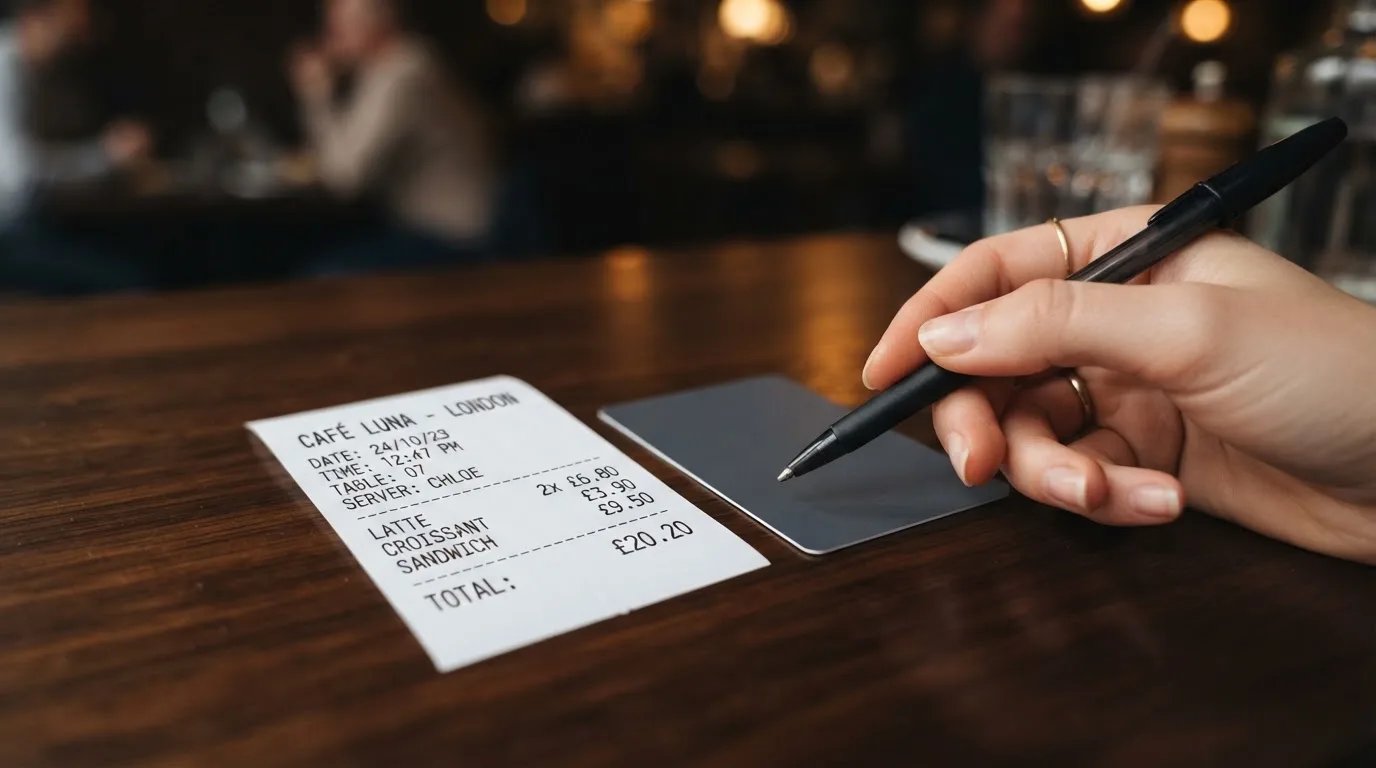
One detail is worth flagging because it is easy to miss. The Bridge cardholder agreement that governs the programme says the funding fee from the Airtm wallet can be “up to 2%”. The Airtm-facing rate is 1% on the first 200 USD per month and 0% above that, with a 2 USDC cap. If you are sensitive to the difference, the Airtm-published figures are the more favourable ones and are what I would plan around; the agreement is the legal floor and the 2% figure is the worst-case wording.
Here is the costs table, drawn only from the card’s published facts.
| Fee or limit | Value |
|---|---|
| Card issuance | 0 USD |
| Monthly fee | 0 USD |
| Annual fee | 0 USD |
| First 200 USD loaded per calendar month | 1% (max 2 USDC) |
| Loading above 200 USD per calendar month | 0% |
| Foreign exchange fee | 0% |
| Per-purchase fee | None |
| Inactivity fee | 1 USD after 30 days with no loads |
| Card deletion fee | 1% of remaining balance |
| Cashback at point of sale | None |
| ATM withdrawal | Not available |
| Daily spending limit | 2,000 USD |
| Per-transaction limit | 2,000 USD |
| Monthly spending limit | Not stated |
| Loading limits | Follow the Airtm account’s withdrawal limits |
| Card currency | USD only |
To make those numbers feel like a real week of spending, three everyday payments are useful. A 45 USD lunch in a US restaurant when the card is loaded with dollars is a flat 45 USD: no FX, no purchase fee, and the 1% loading fee has already been paid when you put the funds on the card. A 120 USD online subscription charged in euros hits the 0% FX line and settles at the rate Visa gives the issuer at the time of capture; the only cost in US dollars is the 120 USD minus whatever Visa’s wholesale rate produces. A 9.99 USD in-app purchase on Apple Pay, paid from a balance that was loaded earlier in the month inside the free tier, is 9.99 USD all-in, because the loading fee is 0% above 200 USD and there is no per-purchase fee.
The limits deserve a sentence each. The 2,000 USD daily and per-transaction ceiling is fine for everyday spending and most online shopping, but it rules out large one-off purchases such as flights, electronics or rent, and Airtm does not publish a separate monthly cap, so the daily ceiling is effectively the working limit. Loading limits are inherited from your Airtm account’s withdrawal limits, so how much you can put on the card depends on what your account is allowed to take out, not on a card-specific rule.
How to top it up: Top up
Top-up works in two stages, and it is worth understanding both because they are governed by different rules. The card itself can only be loaded from your Airtm balance, and the balance it draws on is held in USDC. When you initiate a purchase, the platform sells stablecoins from a “Platform Provider” account and loads fiat USD onto the card in real time; the card then settles the payment through Visa. In other words, the card never holds crypto, and it never holds more than one currency; the conversion is invisible to the merchant, and the only thing the card “sees” is US dollars.
The Airtm wallet that feeds the card can be funded in more than 500 ways: bank transfers, crypto deposits, mobile wallets, transfers from other Airtm users in the P2P network, and debit or credit cards through MoonPay. For US users specifically, the card can only be loaded via Airtm payouts, with the card set as the default payout method. The fee on the first 200 USD you load in any calendar month is 1%, capped at 2 USDC; beyond 200 USD it is 0%. No minimum top-up amount is published. The network fees you pay when you deposit crypto to Airtm are folded into the platform’s spread and the P2P rates rather than charged as a separate line item, so the all-in cost of getting value onto the card is the loading fee plus whatever slippage the conversion route gives you.
A few things to know about the funding chain that the public pages do not spell out. The supported blockchain networks for crypto deposits are not published, which is unusual for a card of this type and means the safest approach is to deposit through a method that does not depend on a network choice (a bank transfer, for example) until you have confirmed a working route in the app. Refunds from merchants are credited back to the Platform Provider wallet as stablecoins, not pushed back onto the card. And if you want to move funds from the card back to your Airtm balance, the supported route is to delete the card: the remaining balance, minus the 1% deletion fee, is transferred to your Airtm account. There is no fee from Lead Bank for closing the card.
Paying with it every day
In daily use the card is straightforward but limited. The Visa rails are accepted anywhere Visa is taken online, and the card can be added to Apple Pay and Google Pay for in-store and in-app payments. The card currency is USD, so a purchase in another currency goes through Visa’s wholesale rate with a 0% FX markup; you will not see a foreign-transaction fee on the statement, but the dollar amount will reflect whatever Visa charged the issuer at the moment of capture. Airtm does not give you a multi-currency wallet on the card, so a trip to a country that does not use dollars is fine in the sense that it will work, but you are exposed to the dollar’s movement against the local currency between the time of swiping and the time of settlement.
A few categories are blocked by policy rather than by the card network: gambling, firearms, drugs, adult content and services, and financial services businesses. There is no cashback at the point of sale, and there is no ATM access at all, so the card is not a route to physical cash. The Airtm app itself is well-rated: 4.8 out of 5 on the US App Store with about 5,000 ratings, and 4.5 out of 5 on Google Play with about 82,400 reviews (read 2026-10-21). The app is the only place you can manage the card; there is no web-based card dashboard.
There is one operational rule that catches people out, and it is worth reading before the first online checkout. You do not have the right to stop payment on a card transaction. If something goes wrong, you have to take it up with the merchant first; only if that fails does the dispute process kick in. Errors need to be reported within 60 days. Investigations run for 10 business days, with extensions of up to 45 days in the standard case and up to 90 days for new cards or foreign-initiated transactions. Refunds, when granted, are credited as stablecoins to the Platform Provider wallet rather than back onto the card. If a transaction is unauthorised, your liability is capped at 50 USD if you report it within two business days and at 500 USD if you report it later. Pre-authorisation holds (the temporary block a hotel or rental car places on a card) can stay on the balance for up to seven business days.
What can go wrong
The cheapest crypto card is not always the most reliable, and the Airtm card’s biggest risk is not on the card itself but on the platform behind it. Across Trustpilot, the App Store and Google Play between 2025 and 2026, four complaint themes keep coming up. Accounts are suspended or limited without a clear explanation. Funds that were available one day are “under review” the next, sometimes for weeks or months. Customer support is slow, generic, or both, with email tickets that loop back to standard answers. And on the P2P marketplace, where Airtm users exchange with each other, cashiers sometimes scam counterparties and Airtm does not always reimburse the loser. Trustpilot puts the brand at 3 out of 5 across about 7,000 reviews as of October 2026. There has been no major publicised hack or shutdown, but the steady drip of “my account is locked and my money is inside it” stories is the single most consistent thing readers will find if they go looking.
The card side has its own smaller risks. Card funds are held by Lead Bank in a custodial way, which is reassuring in the sense that a chartered bank sits between you and the platform, but the funds are not FDIC-insured. Airtm offers two-factor authentication on the account, and you can freeze or delete the card from the dashboard, which is the standard set of controls. There is no physical card to lose. Lead Bank, the issuer, is a Missouri state-chartered bank and an FDIC member; Bridge Ventures is the programme manager; Airtm Inc. is a Delaware corporation registered with FinCEN as a money services business since 2015, with the licence number 31000329787639. The address on file is 1111B S Governors Ave STE 37570, Dover, DE 19904, US. Customer support is reachable at [email protected] and at 833-237-8104, with website chat also available, and the site is published in English, Spanish and Portuguese. Hours of operation are not explicitly stated, which is itself a small but telling gap.
On the operational side, Airtm is generally online. The status tracker IsDown has logged about 36 incidents on Airtm since July 2021, with the most recent tracked outage on 2025-10-02 (“Transactions error”, 9 hours). A scheduled maintenance window was announced for 2026-06-04, 6:00 to 9:00 AM UTC. There is no public roadmap for the card’s expansion beyond the country list, and Airtm does not publish incident post-mortems, so the reader has to read the support threads for the real picture.
Two background points from the broader crypto-card world are worth keeping in mind. Stablecoins are not guaranteed to hold their value: a 2022 collapse and a 2023 temporary depeg are reminders that “stable” is an aspiration, not a contract. And in November 2022 Visa itself terminated its global agreements with FTX, winding down the FTX US debit card through its issuer. The Airtm programme sits behind the same Visa rails and the same kind of issuer relationship, and any crypto card can be wound down by the network or the issuer. Airtm has not had that happen, but the structural risk is part of the category.
What to take instead
If the Airtm card is not quite right, three other crypto cards are worth a look. None of them is a perfect substitute, because each one is built around a different trade-off.
Cardex is a debit crypto card that runs on Verve, Visa, Mastercard and UnionPay, in virtual and physical form, and it advertises availability in 200+ countries with no published exclusion list. Its app-store listing is Naira-focused, which suggests an African user base, and the standout feature is an “AI-powered conversion rate” that picks the best wholesale rate at the moment of payment. The card currency is the Naira, fees and limits are not stated, and the brand’s overall score is 5.6 out of 10. Cardex is the option to consider if you want a card that is more geographically open than Airtm and you are comfortable with an unknown fee schedule and an unknown cost of conversion.
TakeCard is a Visa prepaid card, virtual everywhere and physical in Bolivia, denominated in US dollars with USD payments at 1:1 and other currencies at the official Visa rate of the day. The virtual card costs 5 USD; the physical card in Bolivia is listed at 20 USD issuance plus 20 USD shipping in one article, and 10 USD for the physical in another, so the price is in motion. There is a 1% commission per purchase, and the card is funded from a Takenos balance rather than directly from a crypto wallet. The overall score is 5.5 out of 10. TakeCard is the option to consider if you live in one of its listed Latin American or southern European countries, want a Visa with a defined per-purchase commission, and are happy with a Takenos account as the funding layer.
OkiCard is a virtual card (with a physical card mentioned on some pages but not detailed) pegged to USD or EUR, available in 150+ to 200+ countries, and explicitly marketed as having “no geo-blocking based on your passport”. The pricing page lists issuance 0 USD, monthly 0 USD, starting at 15 USD for a virtual card; another page mentions a one-time issuance fee, so the pages disagree. The load fee is 3%, the transaction fee in USD is 0%, the FX fee is not stated, and the initial deposit is 100 USDT. The card is funded with USDT on BSC, Ethereum, Tron and Solana, with USDC “soon” and BTC and other coins “coming soon”. The overall score is 6.0 out of 10. OkiCard is the option to consider if you want a card that spells out the supported networks and accepts USDT across the main chains, and you are willing to pay a 3% load fee in exchange for more transparency on the funding side.
| Card | Where it works | Form factor | Card currency | Standout feature | Score |
|---|---|---|---|---|---|
| Airtm | 15+ countries, US/Argentina first | Virtual only | USD | 0% FX, 1% on first 200 USD/mo | 6.3 / 10 |
| Cardex | 200+ countries | Virtual and physical | Naira | “AI-powered” conversion at payment | 5.6 / 10 |
| TakeCard | Latin America and a few EU countries, Bolivia for physical | Virtual everywhere, physical in Bolivia | USD | 1% per-purchase commission, USD 1:1 | 5.5 / 10 |
| OkiCard | 150+ to 200+ countries | Virtual, physical mentioned | USD or EUR peg | Named networks, 0% USD transaction fee | 6.0 / 10 |
The honest summary of the comparison is that the Airtm card is the cheapest of the four on the headline fee lines, the most restrictive in form factor, and the one with the longest published track record. The alternatives each pay for what Airtm does not offer, in their own way.
Who I would recommend it to
I would recommend the Airtm card to a fairly specific reader. If you live in the United States or Argentina, already use Airtm, and want to spend dollars from your USDC balance without paying a foreign-exchange fee, the card is a clean fit. If you live in one of the “coming soon” countries on the residency list and you are happy to wait, the card is also a reasonable bet. If your main concerns are cheap loading, no monthly fee, and acceptance on Apple Pay or Google Pay at any merchant that takes Visa, the card does the job.
I would not recommend the Airtm card to a reader who needs a physical card, who needs to spend in a currency other than dollars, who needs to take cash out at an ATM, who wants cashback or other rewards, who lives in a country that is on the excluded list or that is not on either the live or the “coming soon” lists, or whose main worry is platform risk rather than cost. The Trustpilot profile is a real signal, and a reader who needs reliable access to funds under stress should weigh it against the headline fee savings. For everyone else, the Airtm card is a low-cost, single-currency, virtual-only tool that does exactly what it says it will.
Frequently asked questions
What is the Airtm card?
The Airtm card is a virtual Visa prepaid debit card in US dollars, issued by Lead Bank and managed on Airtm’s behalf by Bridge Ventures. It is funded from your Airtm wallet in USDC and converts stablecoins to fiat USD at the moment of purchase, so the merchant only ever sees a normal Visa transaction in dollars.
How does the Airtm card work?
When you pay, the platform sells USDC from your Airtm balance and loads the equivalent in US dollars onto the card in real time, then the card settles the payment through Visa. The card only ever holds dollars, and the conversion is invisible to the merchant. There is no physical card and no bank account attached.
Is Airtm a bank?
No. Airtm Inc. is a Delaware corporation registered with FinCEN as a money services business since 2015. The card programme is run by Bridge Ventures, a Delaware-based programme manager, and the card itself is issued by Lead Bank, a Missouri state-chartered bank and FDIC member. Card funds are not FDIC insured.
Who owns Airtm?
Airtm Inc., the operating company behind the platform and the card, is a Delaware corporation registered with FinCEN as a money services business under registration number 31000329787639. The card programme is run by Bridge Ventures LLC and the issuing bank is Lead Bank.
Is the Airtm card available in my country?
The card is available to residents of 15+ countries, with the US and Argentina as the first two markets. Coming soon: Bolivia, Venezuela, Colombia, Ecuador and the Dominican Republic. On a longer roadmap: Guatemala, Chile, Angola, Brazil and Peru. Airtm and the card are not available in Belarus, Cuba, Iran, Myanmar, North Korea, Sudan, Syria, Russia, Crimea, Donetsk and Luhansk, and certain US states are also blocked, including New York.
How do I get the Airtm card?
You complete the “Special Features KYC” check on Airtm (an official ID showing your name, address, date of birth and government ID number), open the card page in the app, and follow the instructions. You need to be 18 or older. Approval takes between a few minutes and two business days, and the virtual card is generated in the app rather than posted to you.
How do I top up the Airtm card?
The card is loaded from your Airtm balance, which is held in USDC. You fund the Airtm wallet itself through 500+ methods: bank transfers, crypto deposits, mobile wallets, the P2P network, or debit and credit cards via MoonPay. The first 200 USD loaded in a calendar month costs 1% (capped at 2 USDC), and loading above 200 USD per month is free.
How do I add the Airtm card to Apple Wallet or Google Pay?
Once the card is approved, the virtual card details are available inside the Airtm app. In Apple Wallet or Google Pay you choose to add a card, select the option to enter details manually, and type in the number, expiry and CVV from the app. From that point on, you can pay contactless with Apple Pay or Google Pay at any terminal that takes Visa.
Is the Airtm card safe?
The card is built on standard rails: Visa for the network, Lead Bank as the chartered US issuer, two-factor authentication on the Airtm account, and the ability to freeze or delete the card from the dashboard. Card funds are not FDIC insured, however, and the platform behind the card has a long public history of account-limit and slow-support complaints on Trustpilot and the app stores, which is a real consideration.
Is the Airtm card worth it?
It depends on what you are comparing it to. If you are a US or Latin American resident who already uses Airtm and wants a low-cost, virtual-only Visa in dollars, the fee structure is hard to beat. If you need a physical card, multi-currency balances, ATM access or cashback, the card is not a fit and you should compare it to alternatives such as Cardex, TakeCard or OkiCard.
Highest-scored virtual cards – cryptocardbest.com
Content created by the «cryptocardbest.com» team