
Spending USDC Straight From a Self-Custody Wallet — With a $3 Monthly Footnote
 Available in US
The pitch here is unusually clean, and that is both the appeal and the catch. There is no exchange account to open, no pooled balance sitting with a provider, and no fiat on-ramp bolted on the side. You keep USDC in a wallet you control, that USDC stands as collateral, and a virtual Visa spends against it. On paper, that removes the single thing crypto card buyers complain about most — handing custody of your money to somebody else’s website. What the card then charges you for that privilege is a monthly account fee, a currency conversion spread on anything that is not dollars, and a set of answers about where you live that the public pages do not give away.
Conditions are current as of October 28, 2026.
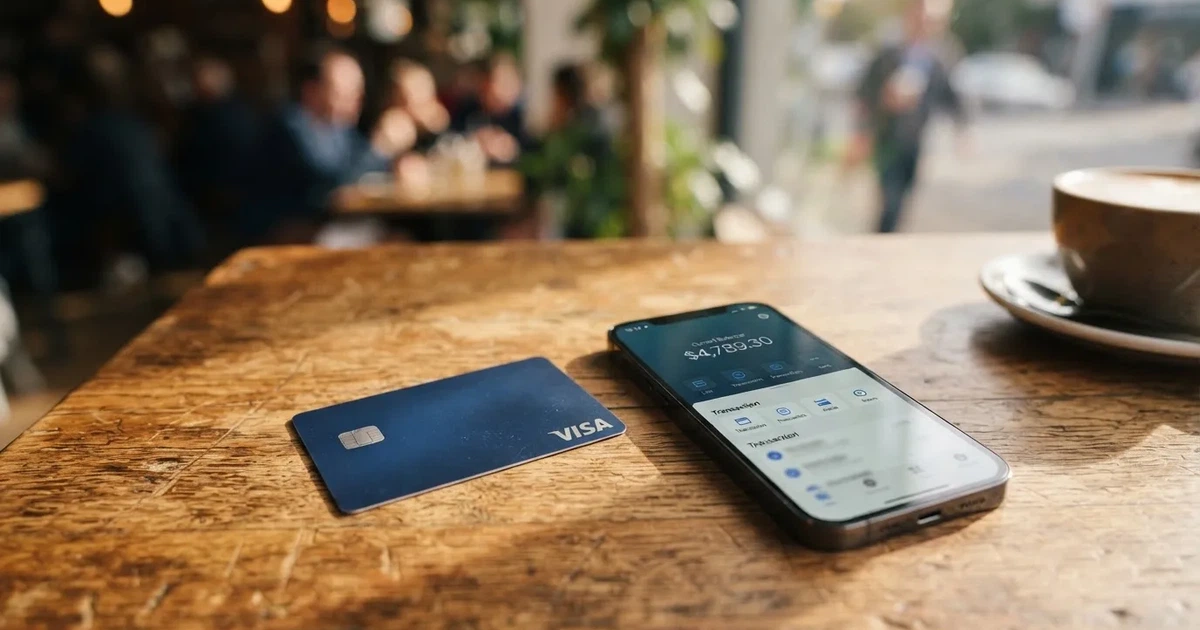
I read the card’s own pages closely and scored it 5.4 out of 10. That is a mid-table mark, and it is not a punishment. The everyday-use and top-up mechanics are genuinely good for the one job this card does well. The cost structure is the problem, and so is the silence on eligibility.
The conditions described below are current as of October 2026.
The Score: 5.4 / 10
Here is how the total breaks down, criterion by criterion, with the reasoning behind each mark.
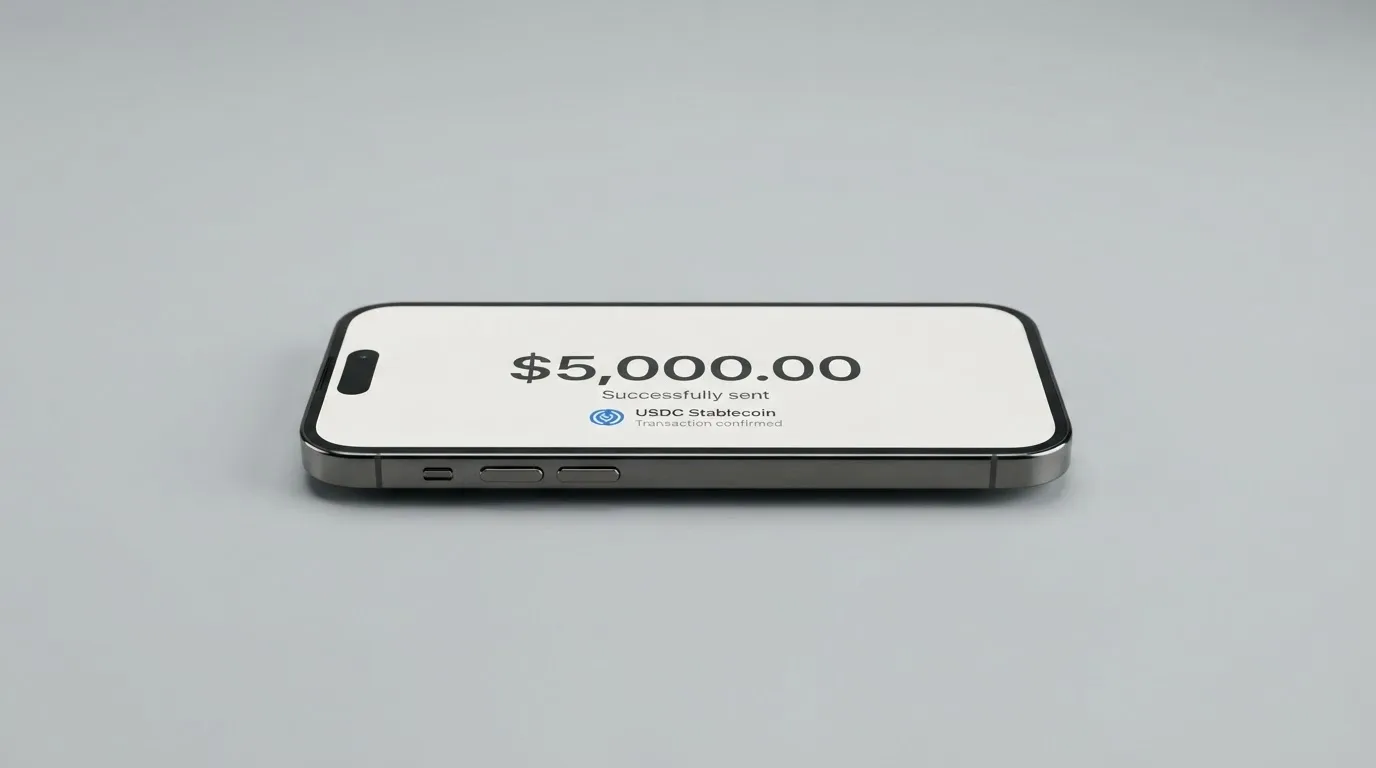
| Criterion | Mark | Why |
|---|---|---|
| Who can get it | 6 / 10 | No public country list; admission is decided during your application and hinges on where you live; sanctioned persons and countries are excluded |
| Cost | 3 / 10 | Virtual issuance 5.00 USD, account keeping 3.00 USD per month per card, closure 10.00 USD; non-USD payments 1.99%, a payment under 25 USD costs 0.20 USD; top-up shown as 2% in the fee table against a site claim of “0% deposit fees” |
| Top-up options | 6 / 10 | USDC held as collateral in a self-custody wallet on Base, Arbitrum or Ethereum; no other coins, and the site’s network naming is inconsistent |
| Reliability and complaints | 6 / 10 | Codego Group brand, cards issued by an unnamed Visa Principal Member, described as “not a bank”, governed by the law of England and Wales; no incidents or complaints found, and no Trustpilot page |
| Everyday use | 7 / 10 | Virtual Visa, Apple Pay and Google Pay, ATM withdrawals at 1.50 USD flat or 1% + 1 USD; no plastic, and store apps marked “Coming soon” |
Two things jump out of that table. The everyday-use mark is the highest of the five, and it should be: Apple Pay and Google Pay support on a virtual card removes most of the anxiety people have about virtual cards, and an ATM with a stated flat fee is better than an ATM with no fee information at all. The cost mark is the lowest, at 3, and that is where your monthly arithmetic should live.
Who suits this card: someone already holding USDC who wants to spend it directly, who is comfortable holding a recovery phrase themselves, and who mostly pays in dollars. Who it does not suit: anyone who needs a physical card, who wants a fee-free month, who spends mainly outside the US, or who needs to know before applying whether their country is on the list.
Will They Give You the Card?
The honest answer is that you will find out during the application, not before it.
There is no public country list. The card’s own words are that eligibility is “determined during your application” and depends on your place of residence — citizenship is not mentioned at all. Sanctioned persons and sanctioned countries are prohibited, which is a standard line and also the only hard exclusion I can confirm from the published material.
This is worth sitting with for a moment, because it is the kind of thing that bites people in the wrong order. You may spend an evening on identity documents, take a selfie, dig out a utility bill, and only then learn that your country of residence is not one the programme will open. There is no public list to check first, so you cannot pre-screen yourself. If your situation depends on a specific national or residency treatment — dual residence, a recently moved address, a territory with an awkward banking history — that uncertainty is the main practical risk in the whole flow, and it sits ahead of anything about fees.
Two further gaps in the published material. Age is not stated, although prepaid and debit cards in this category are generally available to adults at 18 and above. And there are no tiers: no level system, no stated benefits that unlock at higher volumes. A Standard tier is named in the FAQ, and Individual and Business accounts both exist, but nothing further about what separates them.
The verification itself is standard. Government photo ID plus a selfie liveness check, and proof of address — a recent utility bill or bank statement. The sequence is verify identity, then card issuance. There is standard due diligence before the card is issued, source-of-funds checks above certain risk thresholds, and enhanced due diligence for higher-risk cases. How long that takes is not stated, nor are the grounds on which an application is refused. You are told what they will ask for, not what happens next.
How to Get It
The route is short on paper, which is its own kind of reassurance.
You verify your identity, then the card is issued. The card you get is virtual, and the fee list refers to it as “virtual card setup”. The network is Visa. The fee list also names Platinum and Signature alongside Infinite, so the tier you receive is not fully pinned down by the pages I read — treat the exact product name as something to confirm once you see your account. The card currency is USD.
Two things you will not find. Delivery timing is not stated, which for a virtual card is a slightly odd silence rather than a red flag — there is no parcel to wait for. And activation steps are not described beyond issuance; how you confirm that the card is live is something you will learn in the app.
What I would check before you start, given that the app is the centre of this product: the store listings for both iOS and Android are marked “Coming soon” as of 21 October 2025, with no ratings. That is a small but real fact to weigh. Much of what makes a card usable day to day — freeze, spending caps, transaction alerts, per-merchant controls — lives in the app, and at the time of reading the app was not the place a customer could evaluate it from the public listings. It may well be shipping now; I could only report what was shown.
Fees: What It Really Costs
This is where the 3 out of 10 comes from, so I want to be precise rather than rhetorical.
| Fee or limit | Amount |
|---|---|
| Virtual card setup | $5.00 per card |
| Account keeping | $3.00 per card per month |
| Account closure | $10.00 one-time |
| Non-USD transactions | 1.99% |
| Small transaction (under $25) | $0.20 |
| Crypto conversion fee | not separately stated |
| ATM withdrawal | $1.50 fixed, or 1% plus $1 (both listed) |
| Authorisation / balance / decline | $0.60 |
| Free allowance on ATM | not stated |
| Spending, withdrawal, top-up limits | amounts not published; shown in app, depend on verification tier, card type and risk profile, and you can set your own |
The card says there is no annual fee on the Standard tier. Given the monthly fee is per card, one is a useful arithmetic exercise in your head before you commit: a single virtual card held for a year is 36.00 USD in account keeping, on top of 5.00 USD to set it up. Add the closure fee and a full year of use costs meaningfully more than the monthly fee alone suggests, which is why the $3 matters if you are only going to use the card occasionally.
Now three everyday payments, with the fees that actually attach:
A $12 coffee in New York. Under the $25 threshold, so the small-transaction charge of $0.20 applies, and no currency fee because it is in USD. Total cost: $0.20 on $12 — roughly one and two-thirds percent for a small purchase.
A €40 dinner in Berlin. The $40 converts to the euro amount and the 1.99% non-USD fee applies on top. Add the $3.00 monthly account fee if that month has not already been charged. This is where the card quietly reveals what it is: fine for dollar spending, more expensive everywhere else.
A $180 online subscription paid from a foreign merchant. USD, so no currency fee, above $25, so no small-transaction charge — but note that a merchant in another country may trigger extra checks, and a declined authorisation can leave a hold on the funds for several days, typically up to seven.
The number I find hardest to accept is the $0.60 for an authorisation, a balance enquiry or a decline. Those are the involuntary moments, the ones you did not choose, and they are billed per event rather than per month.
Two limits are worth flagging on their own. The card does not publish daily or monthly spending, withdrawal or top-up limits; they are shown in the app and depend on your verification tier, card type and risk profile, and you can set your own limits. That last part is genuinely useful — it turns an unknown into something you control.
How to Top It Up
Top-up is where this card is at its most distinctive, and also where the site contradicts itself.
USDC is held as collateral in a self-custody wallet, on Base, Arbitrum or Ethereum. Those three networks are what the card states. One page lists only Base and Arbitrum, so treat the full list as the safer assumption and confirm which network your funds should actually move on. There are no other coins — no USDT, no BTC, no ETH-denominated top-up.
The fee conflict is the thing to note. The fee table says 2% on all listed coins and networks. The site also says “0% deposit fees” and “No fee on USDC top-ups”. Both statements are live on the same site. I cannot resolve that from public pages, and neither can you, so the practical move is to send a small test amount, see what is actually deducted, and judge the product on the answer rather than the cheaper of the two claims. The minimum top-up is not stated, and no fiat top-up is stated either — funding comes from a stablecoin you already hold.
Two mechanics you should know before your first transfer. Network gas is paid by you, on top of any platform fee — so a transfer on Ethereum costs more in total than the same transfer on Base, whatever the platform charges. And blockchain transfers are irreversible. Send to a network the provider does not support, or to an address belonging to a different network, and the money can be gone or reduced to a support ticket with no guarantee of recovery. Copy the address character by character, not by clipboard, if your device has a wallet app that watches for address swaps.
Withdrawal is not stated — the card does not say what, if anything, you can take back out. What it does say is that your collateral stays in your own self-custody wallet after termination. That is the central design promise and it holds up as a description: the card cannot take your USDC, because it never held it in the first place.
Paying With It Every Day
Virtual card, Visa, Apple Pay and Google Pay supported, with the wallet fee free. Those are the three facts that make daily use tolerable, because tokenised mobile wallets remove the single biggest practical complaint about virtual cards: the card number exists only on a screen you might lose or that a screenshot might expose. The card also lists anti-screenshot protection, 3-D Secure, step-up verification, instant freeze and per-merchant controls as standard security features.
What the merchant will see is a Visa from wherever the issuing member sits. Merchants can look up the issuing institution and country from the card’s identification number, and some apply extra scrutiny when the issuer country differs from the billing address. This is normal for crypto cards and produces the occasional decline for no reason you can fix.
Payments need reporting within 60 days of posting if something is unauthorised or wrong. Investigations follow Visa’s operating regulations, and there is a dispute or chargeback processing fee of $35.00 per case. That figure deserves a moment: if a $40 transaction goes wrong, the fee to recover it is close to the value of the transaction. Read the 60-day window as a deadline, not a suggestion.
On rewards: no cashback is stated. What is stated is a referral — 0.15% of your referred friends’ spend, plus $10 for each friend who reaches $500 in spend, paid monthly in USDC. Modest, and the $10 threshold is high enough that it is not an income strategy. Prohibited uses are named — unlicensed gambling, illegal drugs, weapons. Whether specific merchant categories are blocked is not stated, so you should expect gambling and similar high-risk categories to fail at the till rather than at the app.
What Can Go Wrong
No official incidents found, and no user reports surfaced in my search — the results that came back were company press releases and unrelated material. No Trustpilot page exists for Whitecryptocard or for Codego. How complaints are handled is not stated. An absence of complaints is not the same as a track record: it means nobody has publicly written one, and a young programme is exactly where that is expected.
The structural risks are worth more attention than the historical ones.
The issuer is unnamed. Cards are issued by an unnamed Visa Principal Member — a licensed card-issuing partner — and the issuer’s country is not stated. You are told the brand belongs to and is operated by Codego Group, that the company is “not a bank”, and that your agreement is governed by the law of England and Wales. The parent reported 350,000+ users in a 2025 press release, which is the company’s own claim. None of this is a red flag in itself, but you are being asked to trust a programme whose banking partner you cannot name from the public pages.
You hold the keys, which means you hold the risk. The wallet is controlled by you via a 24-word recovery phrase. Lose the phrase and the funds cannot be recovered by anyone, including the card company. That is the flip side of self-custody: no counterparty to sue, no support desk to call. Transfers are irreversible, and no network can freeze or return them.
A programme can end. Cards run on licences that can be withdrawn. Visa terminated its global agreements with FTX in November 2022 and the FTX US debit card was wound down. WaveCrest, a Visa issuer that supplied crypto card brands, was suspended in Europe in 2018, closing all its Visa programmes. The usual pattern when a programme closes is a notice period, then spending and loading stop, then you are asked to withdraw remaining balances. With a self-custody card the balances are already yours, which is the strongest argument for the design.
Support response times conflict. The site promises 24/7 ticket intake and a response “within 4 working hours” in one place and “4-hour” in another. Smaller inconsistency than the deposit fee, but it tells you the documentation is maintained unevenly — which is why I would not treat any favourable-sounding claim on the site as verified until it shows up in your account.
On the wider regulatory picture, a card in this category is a payment instrument regulated separately from the crypto side, so a product like this tends to depend on two sets of rules at once. In the EU, MiCA took legal effect in June 2023, with rules for stablecoins and e-money tokens applying from 30 June 2024 and the crypto-asset service provider rules from 30 December 2024; e-money tokens may be issued only by a credit institution or an electronic money institution. Providers already operating under national law have a transitional window until 1 July 2026 or until they are authorised or refused, whichever comes first. ESMA maintains an interim public register of authorised providers, white papers and non-compliant entities, and it is worth searching the company there. That is a check, not a verdict.
What to Take Instead
Three alternatives came up with higher scores than this card — 6.9, 6.2 and 6.2 — and each trades away something different. Here is the comparison.
| Whitecryptocard | BloFin Wallet Card | Decaf | SafePal | |
|---|---|---|---|---|
| Score | 5.4 / 10 | 6.9 / 10 | 6.2 / 10 | 6.2 / 10 |
| Card | Virtual Visa | Visa Platinum, virtual/physical not stated | Decaf Visa, virtual or physical | Virtual Mastercard debit |
| Account / card fees | $5.00 setup, $3.00 per month per card, $10.00 closure | Activation, annual, issuance and dormancy fees $0.00 each; cancellation free | Virtual $5; physical $10 (US) or $90 (rest of world); no annual or monthly fee | No account creation or management fees; issuance fee not stated |
| Spending / FX fee | 1.99% on non-USD | 1% or lower by VIP tier, from 1.00% down to 0.00% | No added FX fee — “the FX is the one Visa offers” | 1% Mastercard non-USD settlement; refund processing 1 USD/EUR/CHF/7 CNH |
| Top-up | USDC on Base, Arbitrum, Ethereum; 2% vs “0%” contradiction | USDT and USDC on Arbitrum and Base | USDC shown as sample balance; which coins and networks fund the card is not stated | Crypto from 40+ blockchains converted to USDC or fiat, transactions on Arbitrum; top-up fee as low as 0.4% on top tier |
| Where it is available | No public country list | 35 countries listed in starting data, citizenship vs residence not stated | Long restricted-country and restricted-US-state list | “Citizens of supported regions who live in supported areas”; the regions page was empty when fetched |
| Rewards | Referral only, 0.15% plus $10 per $500 | None — reduced rate instead | Not stated | No cashback; referral commissions up to 40% of referred top-up fees |
BloFin Wallet Card is the one to look at first if fees are your deciding factor. Its activation, annual, issuance and dormancy fees are all $0.00 and cancellation is free, which against a $3.00 monthly charge plus $5.00 setup is the single biggest practical difference. Its spend fee starts at 1.00% and falls with VIP tier to zero, charged at payment. Two cautions: its country data lists 35 countries but does not say whether the test is citizenship or residence, and it takes USDT as well as USDC, on two networks rather than three. It replaces cashback with a lower rate — a matter of taste, though if you prefer an immediate discount to a delayed one, that may suit you.
Decaf is the one with the clearest published availability, which is ironic given its restricted list: 17 named countries including Belarus, Russia and Ukraine, plus 11 named US states. The card does not say whether the test is citizenship or residence, so if you hold a passport in a restricted country but live elsewhere, read this one carefully. Its distinguishing feature is FX: it adds no fee and states that “the FX is the one Visa offers”, meaning the Visa rate itself. On a foreign-heavy spend pattern, that is a meaningful edge. It also offers a physical card, tracked delivery, virtual at $5.00 and physical at $10.00 in the US or $90.00 elsewhere. Which coins and networks actually top up the card is not stated.
SafePal is the broadest on funding: crypto from more than 40 blockchains, converted to USDC by default or to fiat, with transactions on Arbitrum. Its standard top-up fee is 0%, and elsewhere on its site crypto top-up appears as low as 0.4% on the top tier. The catch is Mastercard rather than Visa, limits denominated in EUR on a Swiss Fiat24 account, and an availability description — “citizens of supported regions who live in supported areas” — with a regions page that returned empty when fetched, which is the least reassuring detail in the whole comparison.
| Consider | In favour of Whitecryptocard | Against |
|---|---|---|
| Cost | Self-custody means no counterparty risk on your crypto; no annual fee on Standard tier | $3.00 per card per month plus $5.00 setup and $10.00 closure; $0.60 for a decline; 1.99% FX; $35.00 dispute fee; a 2% vs 0% top-up contradiction |
| Availability | No restricted list published, so no named-country exclusion | No public country list either — you find out during the application, after the documents |
| Everyday use | Apple Pay and Google Pay, free wallet fee, ATM with a stated flat $1.50 | Virtual only, no plastic; store apps listed as “Coming soon” |
| Proof of reputation | Codego Group brand; 350,000+ users claimed for the parent in 2025 | Issuer unnamed; “not a bank”; no Trustpilot page and no complaint history found |
Who I Would Recommend It To
I would recommend this card to someone who already has USDC sitting in their own wallet and wants to spend it without moving it to a platform first. If you are comfortable with a 24-word recovery phrase, if your spending is mostly in dollars, if you pay for ordinary things rather than run a business through it, and you are willing to treat $3.00 a month as the price of the wallet-to-terminal convenience — yes, this does that job cleanly. The self-custody design is not a marketing line here; it is the actual mechanism, and the collateral stays yours.
I would tell you to look elsewhere first if any of these is true. You need a physical card. You cannot commit to a monthly fee and would rather have a flat percentage. You travel and spend mostly in other currencies, where 1.99% compounds. You need to know your country is eligible before spending an evening on documents. You want a card you can raise a complaint about through a public complaints record. Or you want cashback and the referral programme here is too thin to matter.
My own order of preference, if I were choosing today: BloFin first on pure fee arithmetic, Decaf if foreign spending is the pattern and I can live with its geography list, SafePal if I hold assets across many chains. This card for the specific case of USDC you refuse to move.
Two things I would check before depositing anything, in this order. Search the company in ESMA’s interim register, and read the top-up fee table against the “0% deposit fees” claim and settle which one your account actually applies by testing with a small amount. Those two answers tell you more about whether to trust the product than anything else on this page.
Frequently asked questions
What is the Whitecryptocard card?
It is a virtual Visa that spends USDC you hold in your own wallet, without moving it to an exchange. The USDC sits in a self-custody wallet as collateral, and the card draws against it. There is no pooled balance with a provider. The brand belongs to Codego Group, the cards are issued by an unnamed Visa Principal Member, and the company states plainly that it is “not a bank”. Your agreement is governed by the law of England and Wales.
How does the Whitecryptocard card work?
You verify your identity with photo ID, a selfie liveness check and proof of address, the card is issued virtually, and the app shows the card number you load into Apple Pay or Google Pay. When you pay, the card draws against the USDC collateral in your wallet. Network gas on any transfer is paid by you, on top of whatever the platform charges. Spending limits, card freeze and per-merchant controls all live in the app.
Is Whitecryptocard a bank?
No, and it does not claim to be. The card’s own description is “not a bank”. What it is is a card programme front-end: the brand markets and operates it, while an unnamed licensed Visa Principal Member actually issues the cards. The distinction matters if something goes wrong, because the regulated entity you hold the agreement with is that issuer, not the brand name you recognise.
Who owns Whitecryptocard?
The brand is owned and operated by Codego Group. Codego published a press release reporting more than 350,000 users, which is a company claim from 2025 rather than something independently verified. The card-issuing partner is not named on the public pages, and neither is the issuer’s country. There is no Trustpilot page for either Whitecryptocard or Codego, and I found no user complaints.
Which countries can get the card?
The card publishes no country list, which is unusual. Eligibility is “determined during your application” and depends on your place of residence; citizenship is not mentioned. Sanctioned persons and sanctioned countries are prohibited — that exclusion is the only one stated. The practical consequence is that you cannot pre-screen yourself, so if your country of residence is unusual in any way, expect the answer only after the documents are in.
How much does the card cost to hold?
Virtual card setup is $5.00 per card, the account keeping fee is $3.00 per card per month, and closing the account is a one-time $10.00. The site says there is no annual fee on the Standard tier. On top of that: 1.99% on non-USD transactions, $0.20 on payments under $25, and $0.60 for an authorisation, balance enquiry or decline. An ATM withdrawal is $1.50 flat, or 1% plus $1.
Is the Whitecryptocard card free?
Not entirely. Several individual charges are zero — the mobile wallet fee is free, there is no annual fee on the Standard tier, and one page claims “0% deposit fees” and “No fee on USDC top-ups” — but the fee table says 2% on all listed coins and networks. That contradiction is unresolved on the public pages. With a $3.00 monthly account fee on top, the honest answer is that this is not a free card, and you should test with a small amount to see which top-up figure your account applies.
How do I top up the card, and with what?
With USDC only, sent to a self-custody wallet, on the Base, Arbitrum or Ethereum networks. No other coins are supported, and one page lists only Base and Arbitrum, so the three-network list is the safer assumption. A critical detail: transfers are irreversible, so sending on an unsupported network or to an address belonging to a different network can lose the funds or reduce the matter to a support request with no guarantee.
Is the Whitecryptocard card safe and worth it?
Safety depends on which risk you mean. Your USDC stays in a wallet you control, so the card company cannot take it — but that also means a lost 24-word recovery phrase is unrecoverable by anyone. I found no official incidents and no user complaints, but there is also no complaint history to rely on. On value: worth it if you spend mainly in dollars and want crypto-to-terminal without an exchange. Probably not worth a $3.00 monthly fee if you spend occasionally or mostly abroad.
Can I add the card to Apple Wallet, and where can I use it?
Apple Pay and Google Pay are both supported and the wallet fee is free, which is the practical reason a virtual card is tolerable day to day. You can use it online and at terminals wherever Visa is accepted, but merchants can see the issuing institution and country from the card’s identification number, and some apply extra scrutiny when that country differs from your billing address. That produces occasional declines for reasons you cannot fix.
Highest-scored wallet cards – cryptocardbest.com
Content created by the «cryptocardbest.com» team