
A very new card with almost no numbers published
 Available in US
There is a particular kind of uncertainty you meet in this corner of the market, and Stablepay is a clean example of it. The company is real, the terms are real, the app is in the App Store, and the service describes itself in plain words: balances in “digital dollars”, payments from clients and employers, a card that converts to local currency at checkout. What is missing is arithmetic. No fee schedule, no limits, no country list, no named card issuer, no named partner bank, no exchange rate table. I gave it 4.6 out of 10, and that number is not a judgement about whether the service works — I could not verify most of the things a reviewer is supposed to verify.
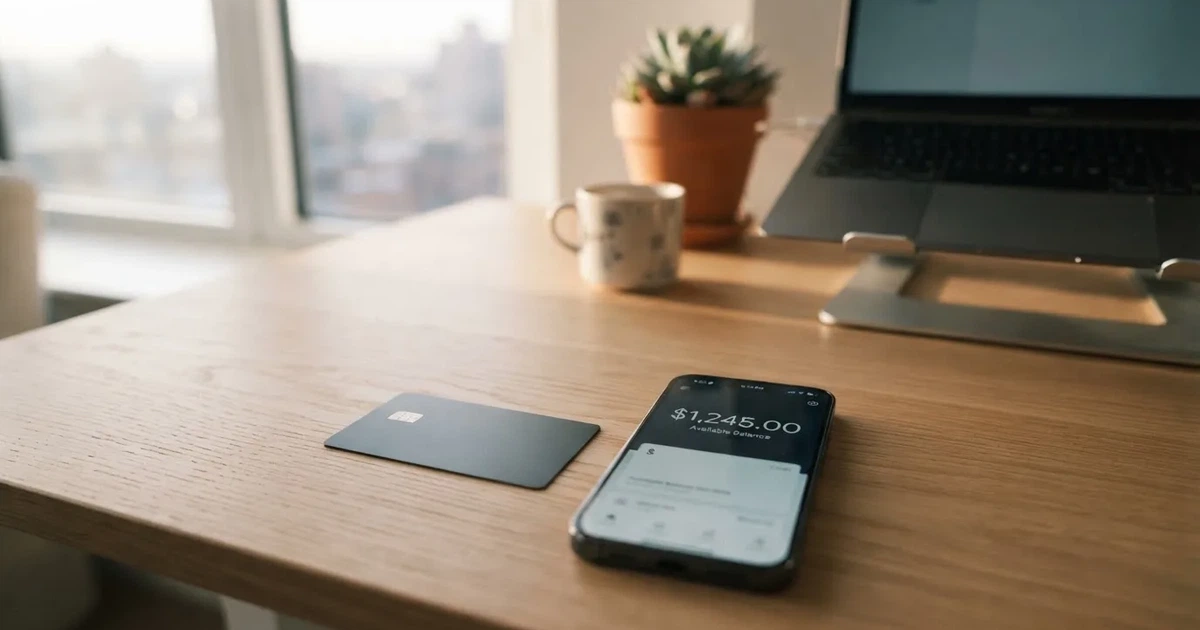
The audience this suits, on the evidence available, is narrow and specific: freelancers and contractors who are paid in digital dollars, or who get paid by clients who hold them, and who want to spend that money by card rather than hold it idle. For them the model makes obvious sense — money arrives, it converts, it spends. Everyone else is guessing. If your problem is a rejected card application, a frozen bank account, or a country where normal banking is awkward, this is at least worth a look, because the terms do not restrict you by citizenship as far as anyone can tell. If your problem is knowing what a payment will cost you, this is the wrong card to read about, because nobody has published the numbers.
| Criterion | Mark | Why |
|---|---|---|
| Who can get it | 5 / 10 | No country list; countries under comprehensive US or other applicable sanctions are barred, and the privacy policy covers the US, EU/EEA, UK, Switzerland |
| Cost | 5 / 10 | Card fees are not disclosed; transfer fees depend on method and country and are shown before you confirm |
| Top-up options | 4 / 10 | Balances in “digital dollars” and supported currencies; fiat routes via ACH, SEPA, Pix and SPEI, with no coins or networks named |
| Reliability and complaints | 5 / 10 | StablePay International, LLC in Delaware; issuers not named; app released 27 July 2026 with 0 ratings in the App Store and no complaints found |
| Everyday use | 3 / 10 | The app listing says only “A Stablepay card” — no virtual or physical, no Apple Pay, no Google Pay, no ATM |
| Total | 4.6 / 10 | A service whose mechanics are plausible and whose numbers are absent |
The conditions described here are current as of October 28, 2026.
Will They Give You the Card
The short answer is: the terms put very few countries out of bounds, but they also do not tell you which countries are in. That is an unusual position, and you should read it carefully rather than optimistically.
Here is what the card’s own documents say. Users must not appear on OFAC’s SDN or Foreign Sanctions Evaders lists, and must not be located in, or owned by persons in, countries under comprehensive US or other applicable sanctions (Section 5.2.7). The company is US-based: StablePay International, LLC, 2810 N. Church St #36879, Wilmington, Delaware, USA 19802-4447. The privacy policy is written for residents of the United States, the EU/EEA, the United Kingdom, Switzerland, Iceland, Liechtenstein, Norway and California. That list of jurisdictions is a statement about who the privacy policy is *for* — it is not a list of who can open an account.
Two things you will want to know and cannot learn from these pages. First, whether eligibility turns on citizenship or on residence. The terms are not stated on that point. It matters more than it sounds: sanctions screening and issuer risk policy are routinely applied to citizenship and country of birth as well as to the country of address, so someone living in a permitted country with citizenship elsewhere may be treated differently from someone whose paperwork shows only the permitted country. Second, which countries are actually served. There is no list. The app and website do not publish one.
So the honest reading is: if you are in a country under comprehensive sanctions, this is closed to you, and no amount of cleverness changes that. If you are anywhere else, you are in an undetermined space — not refused, not invited. The practical consequence is that you will find out at the verification stage, not at the reading stage, and you should plan your time accordingly.
How to Get It
The signup route is the ordinary one: register an account and provide the information the company asks for, then wait. Nothing exotic is described, and nothing is described in enough detail to plan around.
Individuals provide KYC information and entities provide KYB information, which Stablepay may verify. Access can be denied if the information is refused or inaccurate (Section 3.3). Users must be at least 18. Biometric identity verification is carried out by Sumsub Inc., and Stablepay says it does not receive the biometric data itself — a common arrangement in this industry, and a reassuring one about that particular data point, though it says nothing about the rest of the file. The terms set no tiered verification levels: there is one KYC or KYB requirement, and that is what is not stated beyond it. Which documents are accepted, and whether proof of address is required, is not stated.
Then the card itself. The app listing describes “A Stablepay card” accepted at merchants worldwide, with the balance converted to local currency at checkout. The terms are more careful: Spend Cards are issued and managed by third-party Issuers, and there is a separate set of documents — Spend Card Terms, Prepaid Card Terms and Card Authorized User Terms — that govern the card rather than the account. Whether the card is virtual or physical, and whether it runs on Visa or Mastercard, is not stated. Delivery time is not stated. There is also no application fee on record, and no statement that there is none.
For you, the practical shape of this is a KYC form, a wait, and a card arriving by some route you cannot yet predict. That route matters more than usual here, and the reason is not bureaucracy. It is that the card is issued by a company whose name the terms do not disclose. In this category the issuer is the party that runs the card programme, holds the licence under the network’s rules, and is the one that ends up handling a dispute about a specific payment. You are told such a party exists and that separate terms apply to it; you are not told which party it is.
Fees: What It Really Costs
Here is where this review has the least to work with, and I want to be blunt about it rather than dress it up. The card’s own cost is not stated. No issuance fee, no monthly or annual fee, no ATM fee — none of it appears. That does not mean zero. It means unknown.
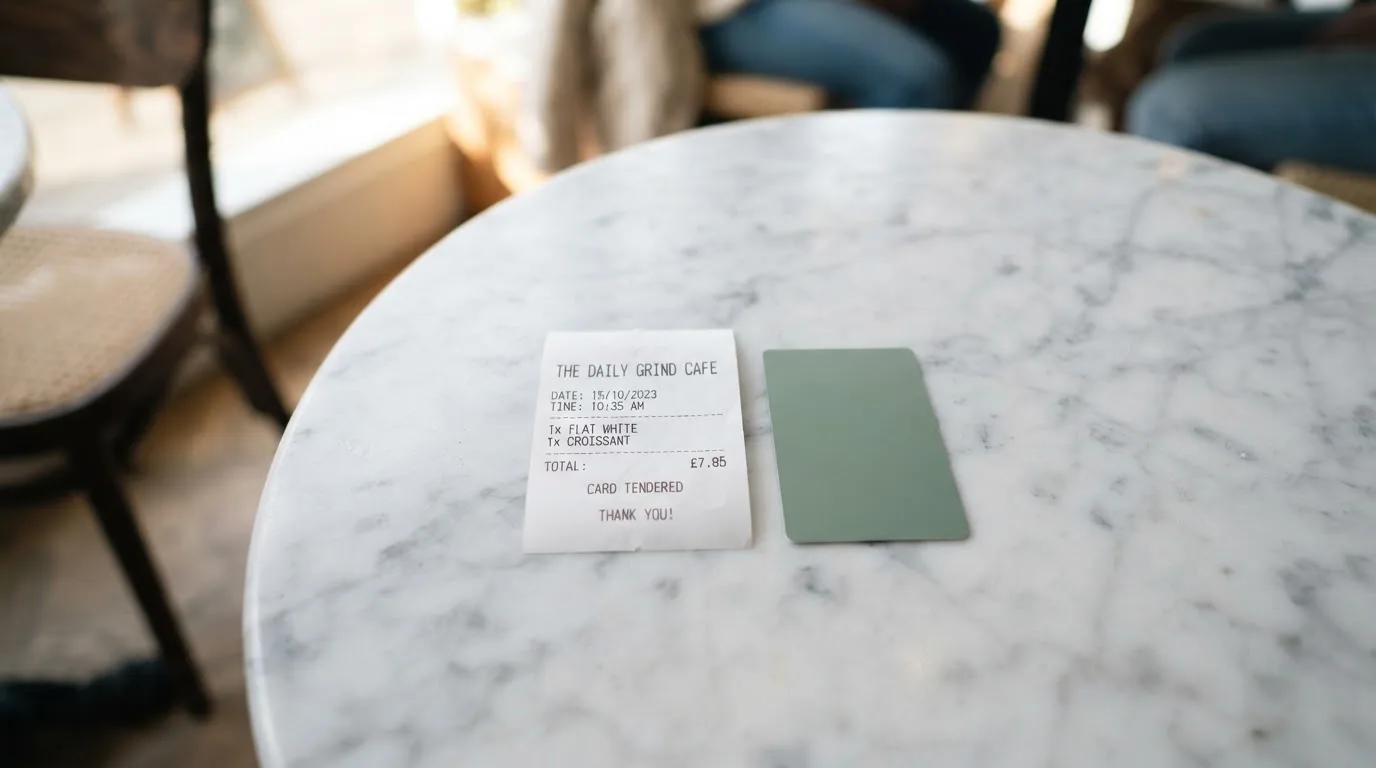
What is stated is a mechanism rather than a price. The balance converts to local currency automatically at checkout, according to the app listing, so the conversion happens per purchase rather than by your hand. On transfers, Section 2.1.8 says transfer fees vary by method, destination and whether third parties are involved, and that they are disclosed before a Transfer is finalised — on a commercially-reasonable-efforts basis, which is the phrase companies use when disclosure is a goal rather than a guarantee. No rates are listed. ATM terms, daily limits and monthly limits are all not stated.
| Fee or limit | What the card’s pages say |
|---|---|
| Card issuance | not stated |
| Monthly or annual fee | not stated |
| Conversion at checkout | Balance converts to local currency automatically; no rate published |
| Transfer fees | Vary by method, destination and third-party involvement; shown before a Transfer is finalised |
| ATM | not stated |
| Daily limits | not stated |
| Monthly limits | not stated |
| Tiers or discounts | not stated |
| Minimum deposit | not stated |
The card does say one useful thing about limits, and it is not a number: the terms set no numeric Transfer limits and say Stablepay or its providers may refuse any Transfer at any time (Section 2.1.5). Read that as what it is — no published ceiling, and no promise that any given transfer will go through.
Two or three ordinary payments
Let me take three everyday situations and walk you through what the material actually lets me say, because the general picture is easy to get wrong.
A subscription billed monthly, paid from a digital-dollar balance. You know the mechanics: the balance converts to local currency at checkout, and that happens automatically. What I cannot tell you is what the conversion is called, what the margin is, or whether a monthly fee rides on top. If you are signing up for a subscription whose whole point is that the amount is predictable, this is precisely the card that refuses to tell you the predictable part.
A dinner in a eurozone city, card present. Same mechanism, same silence. What is genuinely unknown — and this is where the category knowledge does some work — is whether the payment is treated as foreign. Address Verification Service compares the numeric parts of a billing address against issuer records and is mainly offered in the US, Canada and the UK; it is generally unavailable for foreign-issued cards, which can cause declines at checkout. Some merchants also decline prepaid or foreign BINs, because a BIN lookup reveals both the card type and the issuer country. That is not a Stablepay-specific claim — it is a property of how card acceptance works, and it applies to any card issued in one country and used in another.
A small cash withdrawal abroad. Not stated, in any sense. Whether ATMs are supported, what it costs, and what the limit is per day — all absent. I would not plan a trip around this card.
One background point worth holding onto: network fees for depositing crypto are charged by the blockchain, not by the card provider. So even a card with zero card fees can cost you something to get money in, and that cost is invisible in the card’s own pricing because it is charged by a system the card does not control.
How to Top Up
The funding story is the strongest part of the public picture, and it is built around fiat rather than crypto. Balances are held in “digital dollars and supported currencies”. Incoming payments from clients and employers are the stated use case. Cross-border transfers run through ACH, SEPA, Pix and SPEI via licensed partners, with availability, timing and fees varying by country and eligibility.
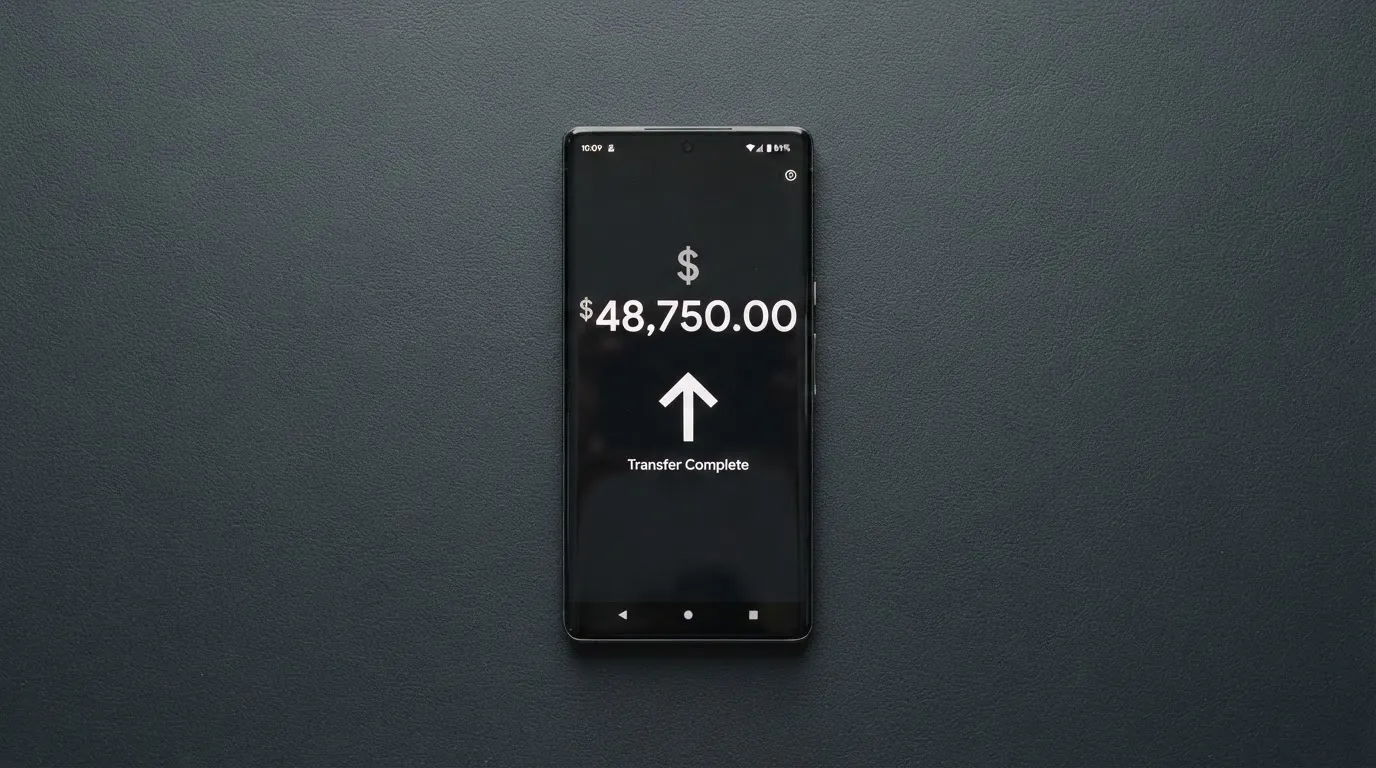
Read that list of rails and think about who it serves. ACH is the US system. SEPA is the European one. Pix is Brazil’s instant scheme. SPEI is Mexico’s. That is a set of corridors covering the large economies where freelancers and contractors actually get paid, which tells you something real about the intended customer: someone invoicing in dollars or euros and paid into a local system, not someone mining a token and moving it on-chain. The app listing’s own framing — send and spend, get paid by clients and employers — lines up.
What is not stated is the part that would matter most if you are coming from crypto. Coins and networks are not named. Deposit fees are not stated. Minimums are not stated. Whether there is a crypto deposit route at all, alongside those four fiat rails, is not something the pages resolve for me. Withdrawing is better covered: transfers to other people and cross-border payouts run over ACH, SEPA, Pix and SPEI, with fees varying and shown before a Transfer is finalised. What happens to a balance if you close the account is not stated, though either party may terminate on 30 days’ written notice under Section 7.
That last combination is the thing to sit with. Thirty days’ notice is a real right and a real clause. “What happens to the money in the meantime” is not something the pages answer, and if your income arrives on day 3 of a month, the timing of that clause is not a detail.
Paying With It Every Day
Daily use is where this card scored lowest for me, and the reason is simply that almost nothing is described. The app listing says “A Stablepay card” and stops. Whether it is virtual or physical, whether you can add it to Apple Pay or Google Pay, whether it works in a terminal, whether there is an ATM at all — not stated. Spending limits in any currency — not stated. Rewards, cashback, rebates, tier levels — not stated.
The app itself: iOS, “Stablepay: Send & Spend”, free, version 2026.10.20 (77) dated 21 October 2026, requiring iOS 16.4 or later, showing no rating and 0 ratings when I looked on 22 October 2026. The website also links a Google Play listing, so Android is intended, though I have no equivalent detail for it. The app language is English.
Two pieces of context that shape how to read a zero-rating app. A released-in-2026 listing with no ratings is not evidence of anything bad; it is mostly evidence of age. And more importantly, an app with 0 ratings tells you nothing about whether the card works, because app reviews and card reliability are different systems — the card’s own risk is not in the software, it is in the issuer, the partners and the balance.
If a payment goes wrong, here is what you have. Spend Cards are governed by separate Issuer Terms, so the dispute path for a card charge runs through documents you cannot read from the main terms. Disputes with Stablepay fall under New York law, with courts in New York, New York having exclusive jurisdiction and jury trial waived; aggregate liability is capped at $500 USD (Sections 9.1, 10). The chargeback process and its time frames are not stated. In the United States, debit card reversal rights come from Regulation E and credit card rights from Regulation Z, and prepaid-card coverage varies and should not be assumed — so I would not treat a $500 liability cap as the whole of your exposure in a bad scenario.
What Can Go Wrong
Four risks, ordered by how much they would actually hurt you.
The company is new and small. The app was first released on 27 July 2026. The Terms were last revised 8 October 2026 and the Privacy Policy took effect 15 October 2026. All three dates are within a few months of each other, which tells you the legal framework is young. The company itself is a Delaware LLC. No licences are named — Stablepay says transfers go through “licensed partners”, and identifies none of them.
Card programmes end. This is not a Stablepay story; it is the category’s. In November 2022 Visa said it had “terminated our global agreements with FTX”, and the FTX US debit card programme was wound down by its issuer. WaveCrest, a Visa card issuer that supplied crypto card brands, was suspended by Visa in Europe in 2018, closing all WaveCrest-issued Visa programmes. The pattern of programme closure typically runs: a notice period, then spending and loading stop, then users are asked to withdraw remaining balances. One 2026 closure, reported by a secondary source and unconfirmed, had new loads ending 8 July 2026 and spending stopping 8 August 2026. You are not expecting this to happen to Stablepay. You are noting that “the issuer withdrew” is an ordinary ending for a card like this one, and that a young programme with an unnamed issuer is not insulated from it.
Self-custody means you hold the risk. Stablepay states it is not a custodian, bank, FDIC-insured account, trustee, fiduciary or escrow agent, and that users are responsible for their wallet’s security (Sections 2.1.1–2.1.2). The app listing says “Stablepay doesn’t take custody of your balance”, with real-time transaction tracking. That is a real commitment from the company and a real transfer of risk to you. Control of crypto belongs to whoever holds the private key or seed phrase; a seed phrase is typically 12 to 24 words in unencrypted form, and anyone who obtains it can restore the wallet and spend its funds. Blockchain transfers are typically irreversible — a stolen private key has no built-in recovery, because the network cannot freeze or return the funds. And in the self-custody model you also carry key loss, phishing, and clipboard-hijacking malware that swaps an address after you copy it. Two-factor authentication and card freeze are not stated, so I cannot tell you what everyday safeguards exist alongside this. Compare that with the custodial world, where the risk runs the other way: Mt. Gox (about US$350 million reported stolen, 2011–2014), Coincheck (about US$400 million, 2018) and Ronin Network (US$625 million, 2022) are the standing evidence that trusting a custodian is not a free choice either.
Complaints: nothing found, and absence is thin. No official incident notices were read; a search on 22 October 2026 returned no Stablepay-specific coverage or reviews, with results pointing at other companies such as Stables and Cashi. There is no Trustpilot page or reviews to read, and the App Store shows 0 ratings. I am not going to convert that into a clean bill of health. A service three months old with no reviews and no complaints is simply unobserved, which is different from untroubled. If something goes wrong, [email protected] is the address named in the privacy policy for questions about the third parties used to facilitate the services, and legal notices go to [email protected].
One more thing belongs here rather than in a section of its own: stablecoins can depeg. TerraUSD collapsed in May 2022 and USDC temporarily lost its peg in March 2023 during the US banking crisis. The name is a promise, not a mechanism — “despite the name, stablecoins are not necessarily stable”. A balance described as digital dollars is exposed to that, and the pages do not tell me which asset backs it.
What to Take Instead
If any of the above makes you uneasy, there are three cards I looked at with published numbers, and comparing them is the fastest way to see how much disclosure you are normally entitled to. All three scored higher than Stablepay.
| Stablepay | BloFin Wallet Card | Decaf | SafePal | |
|---|---|---|---|---|
| Score | 4.6 / 10 | 6.9 / 10 | 6.2 / 10 | 6.2 / 10 |
| Card | not stated | BloFin Wallet Visa Platinum (Visa) | Decaf Visa card, virtual or physical | Virtual Mastercard debit |
| Card fees | not stated | Activation, annual, issuance, dormancy $0.00 each | Virtual $5 worldwide; physical $10 US, $90 rest of world; no annual fee | No account or management fees; issuance not stated |
| Spend or FX cost | Conversion at checkout; transfer fees vary | Spend fee 1% or lower by VIP tier, 1.00% down to 0.00% | No added FX fee — “the FX is the one Visa offers” | 1% FX on Mastercard non-USD settlement |
| Top-up | ACH, SEPA, Pix, SPEI; coins not named | USDT and USDC on Arbitrum and Base | Payment link or account details by card, bank transfer or USDC; app on Solana and Stellar | Crypto from 40+ blockchains to USDC or fiat; transactions on Arbitrum |
| Rewards | not stated | No cashback — reduced spend rate instead | not stated | No cashback; referral commissions up to 40% of referred top-up fees |
| Who gets it | Sanctioned countries barred; no country list | 35 countries listed; citizenship vs residence not stated | 18 restricted countries and 10 restricted US states; basis not stated | “Citizens of supported regions who live in supported areas”; region list was empty |
The thing this table makes obvious is not which card is best. It is what a published fee looks like. BloFin prints its spend fee as a tier ladder from 1.00% to 0.00%. Decaf prints a card price in dollars and tells you its FX is Visa’s rate. SafePal prints a 0% standard top-up fee and a 1% FX fee and a 1 USD/EUR/CHF refund processing charge. Stablepay prints none of that.
There is a second contrast worth drawing, on eligibility, because it runs the other way. Decaf names 18 restricted countries — Belarus, China, North Korea, India, Iran, Iraq, Israel, Myanmar, Nepal, Russia, Syria, Turkey, Cuba, Ukraine, Venezuela, Vietnam, Nicaragua, Puerto Rico, Nigeria — and 10 restricted US states: Arizona, Delaware, Georgia, Idaho, Louisiana, Maryland, Montana, Ohio, Oregon, Rhode Island, Washington, Wisconsin. Note Delaware, where StablePay International, LLC is registered. Whether Decaf’s rule turns on citizenship or residence is not stated there either, and Russia and Belarus both appear on its list. A named exclusion list is more useful than no list, because at least you know where the edge is.
What the alternatives cost you. BloFin takes crypto only (USDT and USDC on Arbitrum and Base), so the fiat-corridor advantage Stablepay offers is gone. Decaf runs on Solana and Stellar, and which coins and networks top the card itself is not stated — the sample balance on the page is in USDC. SafePal converts to USDC by default or to fiat and gives spending limits in EUR through a Swiss Fiat24 account, with a card that is virtual only; its swaps include a spread that is not quantified, and its bank page elsewhere says crypto top-up “as low as 0.4%” on the top tier. SafePal also had an empty region page when I fetched it, which is its own version of the same problem.
Who I Would Recommend It To
Three people, concretely.
A US- or EU-based freelancer who is paid in digital dollars by clients or an employer, and who wants to spend that balance by card. This is the case the material supports and the audience the service seems built for. ACH and SEPA are the two rails you would actually use, the pay-to-me-then-spend flow is described plainly, and self-custody means your balance is not an asset on someone’s balance sheet.
Someone in a country where an ordinary bank card is hard to get, and who has no strong need to know the fee schedule. The absence of a country list is unusual but not obviously restrictive; the absence of a citizenship rule in the terms suggests the gate is sanctions, not passport. What you are accepting is that you will discover the practical details — physical or virtual, which networks, what a withdrawal costs — only after you have passed verification.
Someone who already has a payment card and is deliberately looking for the newest entrant. The app is recent, the terms are recent, the company is a young Delaware entity, and the self-custody position is stated clearly. That combination can be attractive to someone who knows how to evaluate an issuer.
And the person I would not recommend it to, plainly: anyone who decides on a card by its fee schedule. You cannot read one. Anyone whose plan depends on ATM access, on Apple Pay, or on a subscription of a fixed amount — all not stated. Anyone who is uneasy holding private keys, because the model is explicitly self-custodial and the everyday safeguards that would soften that, two-factor authentication and card freeze, are not stated either. And anyone who is already inside an established banking relationship and might lose something by moving.
Frequently asked questions
What is Stablepay card?
It is a payment card tied to a self-custodial crypto wallet and a balance of “digital dollars and supported currencies”. You receive payments from clients and employers, and the balance converts to local currency automatically at checkout. The app listing describes “A Stablepay card” accepted at merchants worldwide. The terms add that the cards themselves are issued and managed by third-party Issuers under separate card terms.
Is Stablepay a bank?
No. Stablepay states it is not a custodian, bank, FDIC-insured account, trustee, fiduciary or escrow agent, and that users are responsible for their own wallet’s security. The company is StablePay International, LLC in Wilmington, Delaware. Transfers move through licensed partners.
Who owns Stablepay?
StablePay International, LLC, at 2810 N. Church St #36879, Wilmington, Delaware, USA 19802-4447. The card itself is not issued by that company: the terms say Spend Cards are issued and managed by third-party Issuers, and those issuers are not named. Card programme documents are linked from a separate legal domain, and an E-Sign notice points there too.
How do I get a Stablepay card?
You register an account, provide KYC information as an individual or KYB information as an entity, and the company may verify it. Access can be denied if information is refused or inaccurate, and you must be at least 18. Biometric checks are run by Sumsub Inc. Delivery, card format, and whether it is virtual or physical are all not stated.
Does Stablepay require KYC?
Yes. Section 3.3 requires KYC for individuals and KYB for entities, with the company free to verify the information. Biometric identity verification is handled by Sumsub Inc., which Stablepay says does not receive the biometric data. Which documents count, whether proof of address is needed, and whether there are verification tiers are not stated — there is a single stated requirement.
How much does a Stablepay card cost?
The public pages do not say. Card cost is not stated, and neither are issuance, monthly, ATM or conversion fees. Transfer fees vary by method, destination and third-party involvement, and are disclosed before a transfer is finalised on a commercially-reasonable-efforts basis. No rates are published, and daily and monthly limits are not stated either.
How do I top up the Stablepay card?
Through fiat rails mainly: balances are held in “digital dollars and supported currencies”, and incoming payments come from clients and employers, with cross-border transfers via ACH, SEPA, Pix and SPEI through licensed partners. Availability, timing and fees vary by country and eligibility. Coins and networks are not named, and no deposit fee or minimum is stated.
Is Stablepay safe?
The company states you keep your own keys and that it does not take custody of your balance, which removes counterparty risk but transfers key-loss, phishing and irreversible-transfer risk to you. Support is at [email protected] and legal notices go to [email protected]. I found no complaints and no reviews either way, with the App Store showing 0 ratings as of 22 October 2026.
Is Stablepay available in my country?
There is no published country list. The terms exclude users on OFAC’s SDN or Foreign Sanctions Evaders lists and users located in, or owned by persons in, countries under comprehensive US or other applicable sanctions (Section 5.2.7). The privacy policy covers the US, EU/EEA, UK, Switzerland, Iceland, Liechtenstein, Norway and California, but that is a privacy scope, not an eligibility list.
Is a Stablepay card worth it?
For a freelancer paid in digital dollars who wants to spend them, the mechanics fit the job and self-custody is a genuine advantage. For anyone choosing by cost, predictability or everyday convenience, the pages give nothing to work with: no fee schedule, no limits, no card format, no wallet support, no ATM terms. My mark was 4.6 out of 10, which reflects missing disclosure as much as anything else.
Highest-scored wallet cards – cryptocardbest.com
Content created by the «cryptocardbest.com» team