
Wayment: a Telegram-based virtual card built for paying foreign services from Russia, with the trade-offs that come with it
 Available in US
Wayment is a Russian-language service that issues virtual USD cards you fund through SBP (the Russian Faster Payments System) or cryptocurrency. The whole experience runs through a Telegram bot and a small web cabinet. There is no app on the App Store or Google Play, no physical card, no cash withdrawal, and no identity check. The first year of service is free; after that, an annual fee equal to the issuance price kicks in, and every payment carries a flat fee in dollars on top of any conversion loss.
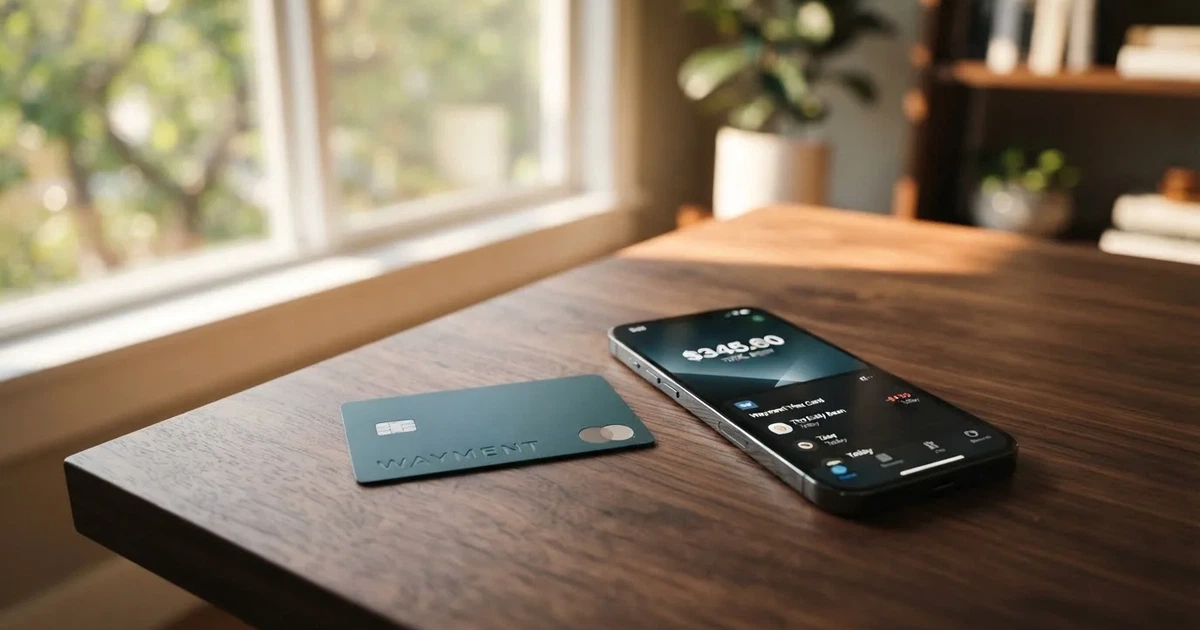
If you need to pay for ChatGPT, Claude, or some other foreign subscription that your bank card keeps rejecting, the Subscriptions tier is built for exactly that. The Travel and Premium tiers add Apple Pay, Google Pay, and WeChat Pay support, and they work offline in 190+ countries, but they cannot be used for ChatGPT or Claude. That split is the first thing to understand about Wayment: it is not one product, it is three products aimed at slightly different jobs, and the cost grows quickly once the free year ends.
This review walks through who can actually get the card, what it costs to use day to day, how the top-up works, and what to watch out for. The conditions described here are current as of October 28, 2026.
Verdict
Wayment gets 4.6 out of 10. It solves a real problem, paying foreign services from Russia when bank cards are unreliable, and the no-KYC, no-app, Telegram-only approach is genuinely convenient for that. The problem is the cost structure: a flat dollar fee on every payment, an annual fee after year one, a 2% conversion hit on anything that isn’t USD, and no way to get cash out. The card is also virtual-only and depends on issuing banks in Singapore and Armenia that the service does not name.
How the score breaks down
| Criterion | Score | Why it lands there |
|---|---|---|
| Who can get it | 5 / 10 | Russian-language service aimed at paying foreign services from Russia; no country or citizenship list published; works offline in 190+ countries, but Apple Pay and Google Pay are restricted in some markets, Russia among them |
| Cost | 3 / 10 | Issuance 2,990 / 3,990 / 7,990 RUB across the three tiers; first year free, then annual fee equal to the price; $0.30–$0.50 per successful payment, $0.50 per failed payment, conversion loss “typically up to 2%”; top-up is 0% |
| Top-up options | 4 / 10 | SBP from any Russian bank and crypto through the app; specific coins and networks not published; minimum $10 |
| Reliability and complaints | 6 / 10 | Operated by LVLUP LIMITED, Hong Kong; the Singapore and Armenian issuing banks are not named; no specific complaints found in the public sources checked; an aggregator shows mixed ratings |
| Everyday use | 5 / 10 | Virtual USD only, up to three cards; Apple Pay, Google Pay, Alipay, WeChat Pay on the higher tiers; no ATM access |
Who it suits: Users who want to pay foreign subscriptions and online services with minimal friction, who already use Telegram, and who are comfortable with the conversion cost and the lack of identity checks.
Who it does not suit: anyone who needs a physical card, cash access, transparent licensing, or a card that works equally well in any currency without watching the rate. If you are outside Russia, the value proposition weakens sharply because the SBP funding path disappears.
Who can actually get the Wayment card
Wayment does not publish a list of supported countries, nor does it state any citizenship or residence rules. The site is in Russian, the service is built around a payment rail for the region, and the first fact the help centre spells out is that this is a service “for paying foreign services from Russia.”
In practice that means the audience Wayment targets is Russian residents paying subscriptions, software, and online tools to providers outside Russia. The card itself, once issued, is a USD virtual card that works “in 190+ countries” for offline (in-store) payment through mobile wallets on the Travel and Premium tiers. The help centre also notes that Apple Pay and Google Pay are restricted in some countries, Russia among them, so the offline claim depends on which market you actually take the phone to.
There is one more thing to know here. The company is LVLUP LIMITED, registered in Hong Kong (registration 77106962), and the issuing banks are described only as a Singapore bank for the Subscriptions tier and an Armenian bank for Travel and Premium. The banks themselves are not named on the public pages, and the licences are not stated. If the legal structure matters to you, for example because you want a regulator you can write to, Wayment does not give you much to work with.
How to sign up
The signup flow is deliberately minimal. There is no passport upload, no selfie, no address proof. Wayment’s own page says “no passport or identity verification is required.” You register through a Telegram account, pay the issuance price for the tier you want, and the card is issued “within a couple of minutes.” After issuance the only additional piece of information the service asks for is an email address.
The card itself is virtual. You get a number, an expiry date, and a CVV. There is no physical version and no delivery step. Each account can hold up to three cards, all denominated in USD. The validity is five years for Subscriptions and 2.5 years for Travel and Premium.
The network is not stated on Wayment’s official pages. Third-party catalogues describe it as Mastercard and Visa, but the issuer’s network choice for each tier is not something Wayment confirms publicly. If a specific network matters to a merchant you want to pay, that gap is worth flagging before you pay for the tier.
What it really costs: Wayment Fees
The headline price on Wayment is the issuance fee, and the first year of service is included. After that, an annual fee equal to the issuance price starts being charged. The flat per-payment fees and the conversion spread are where the real cost lives.
Cost summary
| Fee or limit | Subscriptions | Travel | Premium |
|---|---|---|---|
| Issuance | 2,990 RUB | 3,990 RUB | 7,990 RUB |
| Annual fee after year 1 | 2,990 RUB | 3,990 RUB | 7,990 RUB |
| Successful payment | $0.30 (payments up to $30) | $0.50 | $0.50 |
| Failed payment | $0.50 | $0.50 | $0.50 |
| 3-D Secure code | $0.03 each | free | free |
| Conversion (non-USD) | typically up to 2% | typically up to 2% | typically up to 2% |
| Top-up fee | 0% | 0% | 0% |
| Daily top-up / spend limit | $50,000 | $50,000 | $50,000 |
| Monthly top-up / spend limit | $200,000 | $200,000 | $200,000 |
| ATM withdrawal | not supported | not supported | not supported |
| Welcome bonus | $10 per card | $10 per card | $10 per card |
A few everyday scenarios make the cost concrete. None of these are exact predictions, they are illustrations of which fees apply.
A $9.99 monthly ChatGPT subscription on the Subscriptions tier: that is a $0.30 successful payment fee on a $9.99 charge, so 3% of the value of the transaction goes to the fee. The conversion leg does not apply because the card is USD and the merchant charges in USD.
A $25 one-off online purchase on the Travel tier: $0.50 flat fee plus, if the merchant charges in EUR or another non-USD currency, up to 2% on the conversion. On a $25 charge that is $0.50 from the rate plus $0.50 flat, which adds to the overall cost.
A failed payment of any size on any tier: $0.50, regardless of the tier or the amount. Failed payments on Subscriptions can also trigger a $0.20 bank verification fee.
A non-USD in-store payment through Apple Pay on Premium abroad: the flat $0.50 fee plus the conversion layer “typically up to 2%.” The exact rate Wayment uses is not published.
The annual fee after year one is the line that surprises people. The card costs nothing the first year, then renews at the same price as issuance. If you use the Subscriptions tier for one $9.99 monthly ChatGPT payment, you are paying 2,990 RUB a year, roughly $30 at typical rates, just to keep the card open, on top of the 3% per-payment fee.
The daily and monthly limits are high enough that almost no individual user will hit them. The ceiling is the same on all three tiers, so Premium does not buy you higher limits; Premium is described as having the best top-up rate and “extended limits” elsewhere in Wayment’s own copy, but the published daily and monthly figures are the same across tiers.
How to Top up the Wayment card
Wayment describes two top-up methods: SBP from any Russian bank, including credit cards issued by Russian banks, and cryptocurrency through the app. The top-up fee is 0% on both, with a minimum of $10.
SBP is the practical route for most Russian users. You open the bot, request a top-up, and pay the QR or the recipient details from any bank connected to the SBP rail. The money is credited in USD at Wayment’s internal rate, and Premium users get the better rate on SBP and credit-card top-ups specifically. The credit appears within a few minutes in the normal case; Wayment’s help text says to contact support if it has not shown up after 15 minutes.
The crypto route is more of a black box. Wayment’s pages do not list the supported coins or the networks. The official line is that “the app displays the available options” at the moment of top-up, and that the same minimum of $10 applies. Network fees (gas, bandwidth) are charged by the blockchain itself, not by Wayment, but Wayment does not state which networks are supported, so you can only discover the options inside the app. Premium users are described as getting the best top-up rate on this path as well, although the exact spread is not published.
Two things are not supported. You cannot withdraw the balance back to a bank account or a card. You cannot make a transfer to another Wayment user or to an external wallet. The only way to get money off the platform is to spend it through the card, or to wait for the balance on a deleted or expired card to be handled under the terms you have not been shown, since that case is not described. Referral bonuses can be paid out to the Wayment card.
Paying with Wayment every day
The card is virtual, USD-denominated, and works in two modes. Online, you type the number, expiry, and CVV into a merchant’s checkout. In a physical store, you add the card to a mobile wallet and tap.
The wallet support depends on the tier. Subscriptions works with Google Pay and Alipay. Travel and Premium add Apple Pay and WeChat Pay. That matters if your phone is an iPhone and you want offline tap-to-pay: on Subscriptions, you do not get Apple Pay. It also matters in mainland China, where WeChat Pay is the practical way to pay at small merchants.
The blocked categories are similar across all three tiers. Money transfers, quasi-cash (which includes crypto purchases and e-wallet top-ups), financial services, securities, gambling, lotteries, utilities, pharmacies, oil and fuel, some game-key sites, and 18+ content are all restricted. Travel and Premium additionally do not work for ChatGPT or Claude, which is the reverse of what you might expect: the cheaper tier is the one aimed at those services, and the more expensive tiers cannot pay them. If your main goal is ChatGPT, Subscriptions is the tier to buy, not Travel or Premium.
There is no cashback, no points programme, and no rewards on spending. The only bonuses are the $10 welcome bonus per card and a $5 referral bonus paid when a friend you invite gets a card. The $10 is credited per card, not per account, so a user with three cards can collect $30 over the first year, which goes a small way toward the annual fee on the lower tiers.
The app is a Telegram mini-app plus a bot, @WaymentBot, with a web cabinet at wayment.net/cabinet. There is no listing on the App Store or Google Play. If you do not use Telegram, the service is not really designed for you.
On disputes and refunds, the rule Wayment publishes is that “standard refunds are not issued.” Exceptions are reviewed individually through support when the fault is on Wayment’s side. For a failed payment that put a hold on funds, the hold typically returns automatically; if it does not, the help centre asks for the card, the service, the amount, the date, and screenshots. No time frame for resolution is published.
What can go wrong with Wayment
Public complaint data for Wayment is limited. The service is Russian-language and lacks a Trustpilot page. An aggregator on crmindex.ru shows 5 from 11 reviews, with the text not publicly visible, while the service’s own pages report ratings of 4.9 on Yandex Maps, 4.9 on Exnode, and 5.0 on Otzovik. A Russian banking catalogue shows 4.5 from 898 votes for the site, not the card. Self-reported ratings on a service’s own pages are not a substitute for independent reviews.
The structural risks are easier to describe than the complaint volume. The company behind the cards, LVLUP LIMITED, is a Hong Kong entity, and the issuing banks are not named on the public pages, only described as a Singapore bank and an Armenian bank. Licences are not stated. If the issuing bank changes its terms, or if a regulator in either jurisdiction acts, the cards could be affected. The history of crypto cards includes past programme closures where Visa suspended an issuer, as in the 2018 WaveCrest case, leaving cardholders with a short window to spend down balances.
Custody is a second risk worth thinking about. The balance on a Wayment account is held by the service. You do not hold a private key, and there is no self-custody option described. The protection is that you can freeze and unfreeze the card in the app, and you can set spending limits in the bot. Two-factor authentication and fund safeguarding are not stated on the official pages. If the service goes down or is wound down, getting the balance back depends on the support team and the underlying issuer’s process.
The lack of identity checks is part of the appeal and part of the risk. The service is open because there is no KYC, which means a regulator can pressure it to add checks at any time, and account freezes or closures can happen with no advance documentation on file to resolve them. If you rely on the card for a critical subscription, that fragility is real.
A practical risk on the crypto top-up path is sending funds on the wrong network. Wayment does not publish the supported coins or networks, and blockchain transfers are not reversible, so a deposit sent to an address or a network the service does not currently accept can be lost or need manual recovery with no guarantee. The 0% top-up fee is also internal to Wayment; the underlying network still charges gas or bandwidth, which is not Wayment’s fee but is part of what you actually pay.
The final, more mundane risk is conversion. The card is USD only, and any non-USD payment takes a conversion hit of “typically up to 2%.” On a small purchase the flat $0.30 to $0.50 fee dominates, but on larger purchases the conversion layer becomes a real line item. Wayment does not publish the rate it uses, so the actual cost on a non-USD payment is only visible at the moment of payment.
What to take instead of Wayment
The honest comparison depends on what you actually need. If your goal is to pay foreign services from Russia with the least friction, the alternatives below each take a different angle. None of them are a drop-in replacement; the right choice depends on whether KYC, cashback, or a broader crypto on-ramp matters more to you.
Ape Wallet
Ape Wallet scores 5.5 out of 10 in the same framework. There is no country list and the site is in Russian, with SBP top-ups and Russian passport KYC. The card is a virtual Visa with two flavours: a “service card” aimed at subscriptions and online payments, and an Apple Pay / Google Pay card for offline use. The card currency is not stated. Issuance prices are not fixed; the site runs promo codes, and holders of an active Apple/Google Pay card get a discount on a service card. There are no published fee amounts, the only rule is that the fee and total are shown before you confirm. Transfers to other users by Telegram username carry no fee. The wallet balance is in USDT, and issuance and top-ups are paid from that balance. There is no cashback, but a two-level referral programme pays a share of card purchases by invited users, with no published percentage.
Ape Wallet is the closest competitor to Wayment on shape, and the more interesting option if you want a USDT-denominated balance and free peer-to-peer transfers inside the ecosystem. It is less interesting if you want flat pricing.
MaxSwap
MaxSwap scores 5.2 out of 10. The site claims “no geographical restrictions,” and the card is a virtual Mastercard. The headline price is $50 for the card with a $25 first deposit required, which the catalogue lists as a total issuance cost of 77.125 USD. There is no published monthly fee. Top-ups cost 4.5% plus $1, and each transaction costs $0.25 plus 0.4%. There is no separate FX rate; the page advises you to take “into account possible fees when paying and converting currencies.” The funding side is the widest of the three alternatives, with a published list of supported coins that includes ADA, ALGO, AVAX, BCH, BNB, BTC, DOT, ETH, HBAR, HT, KRRX, LINK, LTC, MATIC, NEAR, SHIB, SUSHI, TON, TRX, UNI, USDC, USDT, XLM, and XRP. Cashback is not stated.
MaxSwap is the right comparison if your priority is a long list of supported crypto assets and you do not mind a 4.5% top-up fee, which is much higher than Wayment’s 0%.
AnoCard
AnoCard scores 5.9 out of 10. The cards are virtual (VCC) with both reloadable and one-time products, drawn from several BINs and selected with filters in a web dashboard. The network and currency depend on the BIN. The creation fee varies by BIN, and some products carry a maintenance fee; both are shown in the dashboard before payment. The top-up percentage and minimum depend on the asset route and are shown before payment. According to the page, supported starting assets include SOL, BTC, USDT, USDC, and ETH, accessed through a Telegram bot or the web dashboard. There is no cashback; a referral programme pays $5 per referred card creation and 0.25% of referred top-ups.
AnoCard is the right comparison if you want a web dashboard and a wider set of card products from multiple BINs, and you do not need a single fixed fee schedule.
How they compare on the basics
- Wayment: 0% top-up, $0.30 to $0.50 per payment, virtual USD only, Telegram only, no KYC, named company and unnamed issuing banks.
- Ape Wallet: no published fees, USDT balance, Telegram-native, KYC with a Russian passport.
- MaxSwap: 4.5% + $1 top-up, $0.25 + 0.4% per transaction, virtual Mastercard, broad crypto support, no KYC mentioned.
- AnoCard: fees depend on the BIN and the asset, web dashboard, multi-BIN selection, referral rewards.
If the goal is “lowest cost per payment for a small subscription,” Wayment’s Subscriptions tier is competitive on a typical monthly charge once you account for the annual fee. If the goal is “broadest crypto funding options,” MaxSwap is more honest about what it supports. If the goal is “no KYC and a published company structure,” none of the three is particularly strong, but AnoCard is the most transparent about its dashboard mechanics.
Who I would recommend Wayment to
The honest recommendation is narrow. Wayment is a reasonable choice if you already use Telegram as your main app, you need a virtual USD card to pay one or two foreign subscriptions, and you are comfortable with the trade-offs. The Subscriptions tier at 2,990 RUB is the cheapest way in, and for a single typical monthly service the per-payment fee of $0.30 plus the $10 welcome bonus is workable. The card becomes less attractive the moment you add a second paid subscription, the moment the first free year ends, and the moment you need to pay in a currency that is not USD.
Wayment is not the right card if you want a physical card, cash access, a card you can use in Russia through a Russian bank’s POS network, or a card with a clearly named issuer and a regulator you can write to. It is also not the right card if you are outside Russia: the SBP top-up path stops making sense, the Telegram-first design becomes a limitation, and the wallet restrictions in some markets (Russia included) start to bite.
If you fall into the narrow group for whom Wayment is built, the practical steps are straightforward. Pick the tier that matches the wallet support and merchant category you actually need. Remember that ChatGPT and Claude only work on Subscriptions, and that Travel and Premium are the only tiers that work for offline tap-to-pay through Apple Pay. Plan for the annual fee after year one. Top up through SBP unless you specifically need crypto, because the coin and network list is not published. Treat the balance as a working balance, not a store of value.
Frequently asked questions
What is the Wayment card?
Wayment is a virtual USD card issued through a Telegram bot by LVLUP LIMITED, a Hong Kong company. It is aimed at users who want to pay foreign services, and the funding side is built around SBP and crypto. There is no physical card and no identity check.
How does the Wayment card work?
You register in Telegram, pay the issuance fee for the tier you want, and receive a virtual card number, expiry, and CVV within a couple of minutes. You top the card up through SBP or crypto, and the card spends the loaded USD balance online or, on the higher tiers, through Apple Pay, Google Pay, Alipay, or WeChat Pay.
Is Wayment a bank?
No. Wayment is a card programme operated by LVLUP LIMITED, a Hong Kong company. The actual issuing banks are a Singapore bank for the Subscriptions tier and an Armenian bank for Travel and Premium; neither bank is named on Wayment’s public pages, and the licences are not stated.
Who owns Wayment?
The legal entity behind Wayment is LVLUP LIMITED, registered in Hong Kong at 7/F MW Tower, 111 Bonham Strand, Sheung Wan, with company number 77106962. The owners of that entity are not disclosed on the public pages.
Is the Wayment card available in my country?
Wayment does not publish a country list. The service is in Russian, and the published top-up method is SBP. The card itself, once issued, works “in 190+ countries” through mobile wallets on Travel and Premium, but Apple Pay and Google Pay are restricted in some markets.
Does the Wayment card require KYC?
No. The official line is “no passport or identity verification is required.” Registration is by Telegram, and the only additional information the service asks for after issuance is an email address. The lack of KYC is part of the appeal for some users and part of the risk for others.
How do I top up the Wayment card?
There are two methods: SBP from any Russian bank, including credit cards issued in Russia, and cryptocurrency through the app. The minimum is $10 and the Wayment top-up fee is 0%, but the underlying blockchain still charges its own network fee on the crypto path. Premium gets the better internal rate on both methods.
Can I withdraw cash from the Wayment card?
No. Cash withdrawals, transfers, and external withdrawals are not supported. The only ways to use the balance are to spend it through the card, or to receive a referral bonus paid out to the Wayment card.
Is the Wayment card free?
The first year of service is included with the issuance fee. After that, an annual fee equal to the issuance price starts applying: 2,990 RUB for Subscriptions, 3,990 RUB for Travel, and 7,990 RUB for Premium. Top-ups are 0%, but successful payments cost $0.30 to $0.50 each and non-USD payments take a conversion hit of “typically up to 2%.”
How do I add the Wayment card to Apple Wallet?
Adding to Apple Pay is only supported on the Travel and Premium tiers; the Subscriptions tier does not include Apple Pay. The standard Apple Pay add-card flow applies, and you can freeze and unfreeze the card from the Telegram bot at any time. If you are in a country where Apple Pay is restricted, the card will not tokenise.
Highest-scored virtual cards – cryptocardbest.com
Content created by the «cryptocardbest.com» team