
A prepaid crypto card with a 5% top-up fee, 135+ coins and no bank behind it
 Available in US
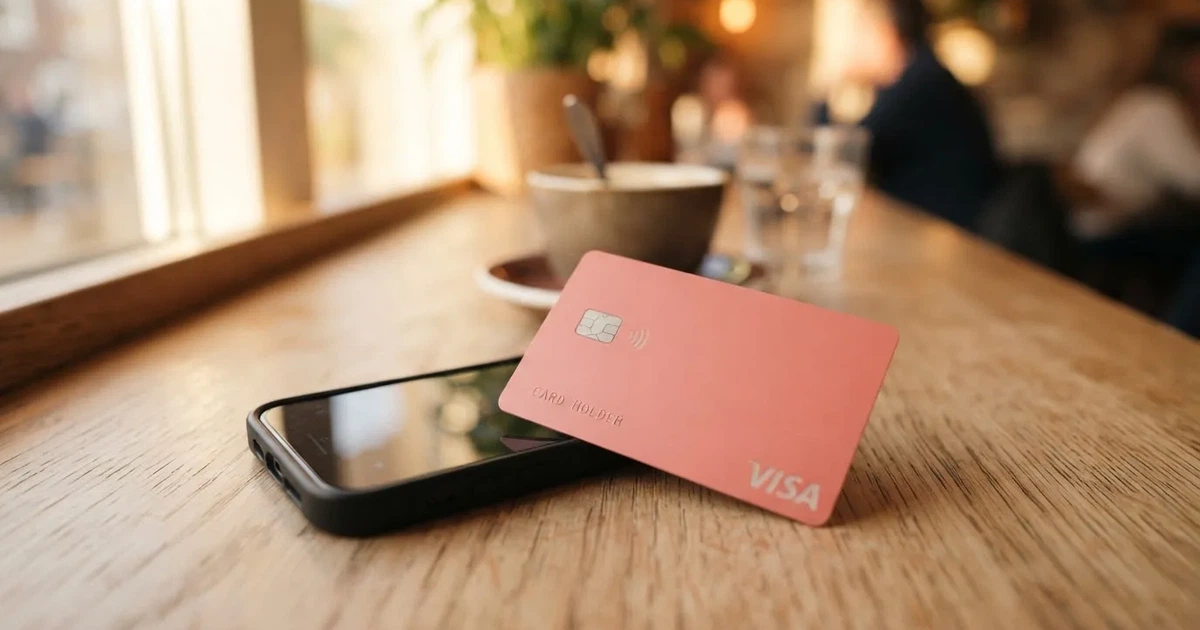
The WaldenPay card is a virtual prepaid card that you load with cryptocurrency and then spend like an ordinary Visa or Mastercard. That is the whole idea, and the idea is not new. What makes WaldenPay interesting is the breadth of what it accepts: 135+ cryptocurrencies across 35+ networks, converted into a US dollar balance that you then spend through a virtual card number, Apple Pay or Google Pay. What makes it cautious is everything around that: a flat 5% fee on top-ups before volume discounts, an issuer that states in plain words that it is not a bank, no named bank or licence on the public pages, a single aggregator’s report of divided user sentiment, and no Trustpilot page to check against.
I scored it 6.3 / 10. That is a card that does one thing well and asks you to accept uncertainty on the rest. If your situation is “I hold crypto on several networks and I need a spendable card number that does not care which exchange I used”, it fits. If your situation is “I need a bank-grade payment card with predictable total cost, a named regulated issuer and clear dispute rights”, this is the wrong tool.
The conditions described below are current as of October 28, 2026.
The score at a glance
| Criterion | Mark | Why |
|---|---|---|
| Who can get it | 9 / 10 | Sign-up and card loading are described as supported globally except in a short list of restricted jurisdictions |
| Cost | 3 / 10 | $10 to issue, $0 a month, but top-up starts at 5% with no currency markup from WaldenPay itself |
| Top-up options | 10 / 10 | 135+ cryptocurrencies across 35+ networks, $25 minimum, instant crediting |
| Reliability and complaints | 5 / 10 | Issuer BlueHouse Software B.V. states it is not a bank; bank and licences unnamed; unofficial reports of split user sentiment |
| Everyday use | 5 / 10 | Virtual card only, roughly 10 minutes from sign-up, Apple Pay and Google Pay, no physical card |
| Total | 6.3 / 10 | Strong funding breadth, thin cost story, thin transparency |
One note on how those numbers land. The 9 and the 10 are earned by reach: a genuinely wide list of accepted coins and networks, and a country stance that excludes a specific short list rather than everything outside one region. The 3 and the 5s are where the caution sits. A 5% flat load fee is the single largest number most users will meet, and it only falls if you are moving serious volume through the card.
Will They Give You the Card?
Yes, for most people, and the card says so plainly. Sign-up and card loading are described as supported globally except in what it calls the restricted jurisdictions. The list is short and specific:
- North Korea
- Iran
- Syria
- Cuba
- Russia
- Belarus
- Crimea, Donetsk and Luhansk regions
- Afghanistan
- Myanmar
The Russia entry cites EU restrictions on providing crypto-asset and payment services (Reg. 833/2014). The Belarus entry cites EU sectoral sanctions (Reg. 765/2006). So the exclusions are not arbitrary; they follow from European sanctions policy.
There is one thing the public pages do not settle, and you should know it before you fill anything in. The page is framed by jurisdiction, and it does not say whether it is your citizenship or your country of residence that decides whether you are inside or outside the list. In practice, sanctions screening in this industry usually looks at both, and country of birth as well as country of address. If you are a citizen of a listed country but live and bank elsewhere, or the reverse, the answer is not something the marketing page will resolve for you. Support is the place to ask, and support details are in the risk section.
For everyone else the practical answer is that a card is very likely available to you. What is not guaranteed is the limit on what you may do once you have it — and the card is explicit about that: purchases are subject to AML and regulatory requirements, and availability depends on onboarding and eligibility checks. The identity documentation that would trigger those checks is not stated on the public pages.
How to Get It
The card describes registration as instant, with fast onboarding, and some card pages say no identity documents are needed to get started. Documents and age requirements are not stated. Do not read that as a promise that verification never arrives: the same pages say purchases are subject to AML and regulatory requirements and that onboarding depends on eligibility checks. The honest reading is that you can begin the flow without documents and that documentation may be required later, depending on checks you cannot see from the outside.
What you get is a virtual prepaid card on Visa or Mastercard rails, with the balance held in US dollars. Virtual only — there is no physical card in the current offering. The stated timeline is roughly 10 minutes from sign-up to a working card, and one card page says the card is issued instantly after the first top-up. So the practical sequence is: sign up, add a wallet, send crypto, receive a card number.
Where you do it afterwards matters more than most people expect. There is a web dashboard at app.waldenpay.com and a Telegram bot that handles cards, balances, deposits and notifications. No App Store or Google Play listing was found. That is not a red flag in itself — plenty of crypto products are web-first — but it does mean you will be typing card details and confirming transfers in a browser rather than in an app reviewed by a platform.
What It Really Costs
Here is the part worth reading twice. The headline numbers are friendly and the recurring cost is genuinely zero. The variable cost is where your money goes.
| Item | Value |
|---|---|
| Card issuance | $10 one-time |
| Monthly fee | $0 — no recurring charges |
| Top-up fee | 5% base |
| Top-up fee at $2,000+ in 30 days | 4.75% |
| Top-up fee at $5,000+ in 30 days | 4.5% |
| Top-up fee at $10,000+ in 30 days | 4.25% |
| Top-up fee at $25,000+ in 30 days | 4% |
| Top-up fee at $50,000+ in 30 days | 3.5% |
| Top-up fee at $100,000+ in 30 days | 3% |
| Top-up fee at $250,000+ in 30 days | Individual |
| Foreign exchange markup from WaldenPay | None; the network standard rate applies |
| Card spending limits | Not stated |
| ATM withdrawal | Not stated |
| Send to Friend | $1 to $10,000 per transfer; $20,000 per rolling 24 hours |
| Collect Payments | $1 to $10,000 |
| Card balance currency | USD; crypto converts to USD at loading |
Two things stand out. First, there is no feature tier — no plus or premium version. The only tiering is the volume ladder on the top-up fee, and it is worth understanding what that ladder is actually measuring: your card spend over the rolling 30-day window, not your lifetime volume. Miss a month and you are back at 5%.
Second, there are no published card spending limits, and no published ATM terms. If you are the kind of person who plans around a monthly ceiling, that absence will bother you. You would be relying on whatever control appears in the dashboard at the time.
Three everyday payments, and which fees apply
A $20 lunch paid from a card you just loaded with $200 of USDT:
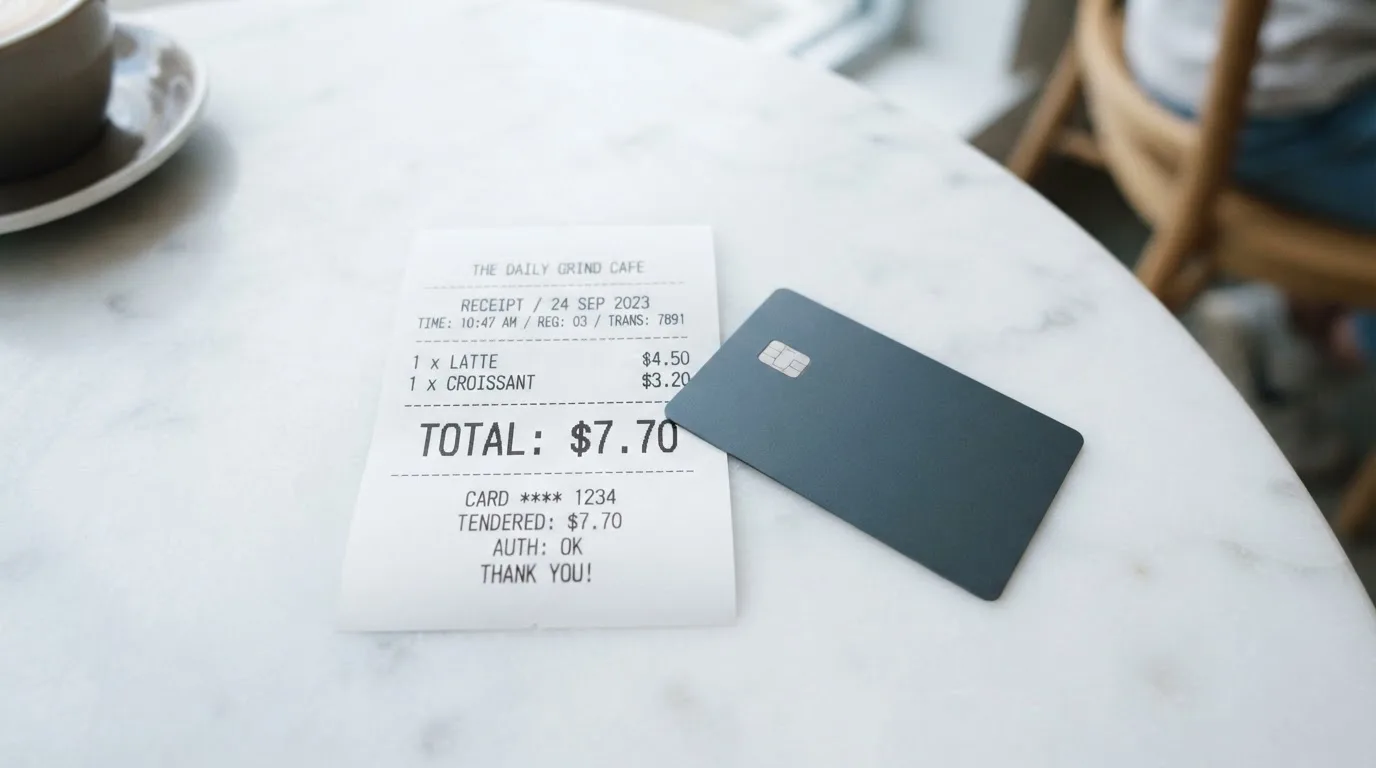
- Top-up fee on the $200 load: 5% base = $10
- Network fee for the transfer: charged by the blockchain you choose, not by WaldenPay
- The lunch itself: no WaldenPay purchase fee stated
- Total WaldenPay-side cost to make that one purchase: $10, which is the full fee on the load
A $15 subscription while you are just under the $2,000 30-day spend line:
- Top-up fee: still 5%
- Card spending limits: not stated, so whether the purchase clears depends on settings you can see in the dashboard
- No foreign exchange markup, because you are spending dollars, not converting them
A $15 purchase from a dollar balance:
- No foreign transaction markup from WaldenPay; the network standard rate applies
- Address Verification Service, which many merchants use to check billing details, is mainly offered in the US, Canada and the UK and is generally unavailable for foreign-issued cards, so a decline here is not a WaldenPay problem
- Possible hold on funds if the authorisation is declined, which can linger for several days
The pattern is simple: the fee is charged once, on the way in, and it is charged on the whole load rather than on the purchase. Load more often, pay the percentage more often. Loading once a month and spending from the balance is the shape of use the fee ladder assumes.
How to Top It Up
This is the strongest part of the card, and it is why it scored 10 out of 10. The card advertises 135+ cryptocurrencies across 35+ networks, with USDT, USDC, BTC, ETH, SOL, TRX and LTC given as examples. Crypto is converted to your card balance at the moment of loading.
| Option | Detail |
|---|---|
| Cryptocurrencies | 135+ |
| Networks | 35+ |
| Named examples | USDT, USDC, BTC, ETH, SOL, TRX, LTC |
| Minimum top-up | $25 USD equivalent |
| Crediting | Instant |
| Top-up fee | See the volume ladder in the cost table |
| Network fee | Paid to the network, not to WaldenPay; TRON typically under $1 |
| Fiat top-up | Not stated |
| Withdrawal from card balance | Not stated |
Three practical consequences follow from that table, and all three matter more than the coin count.
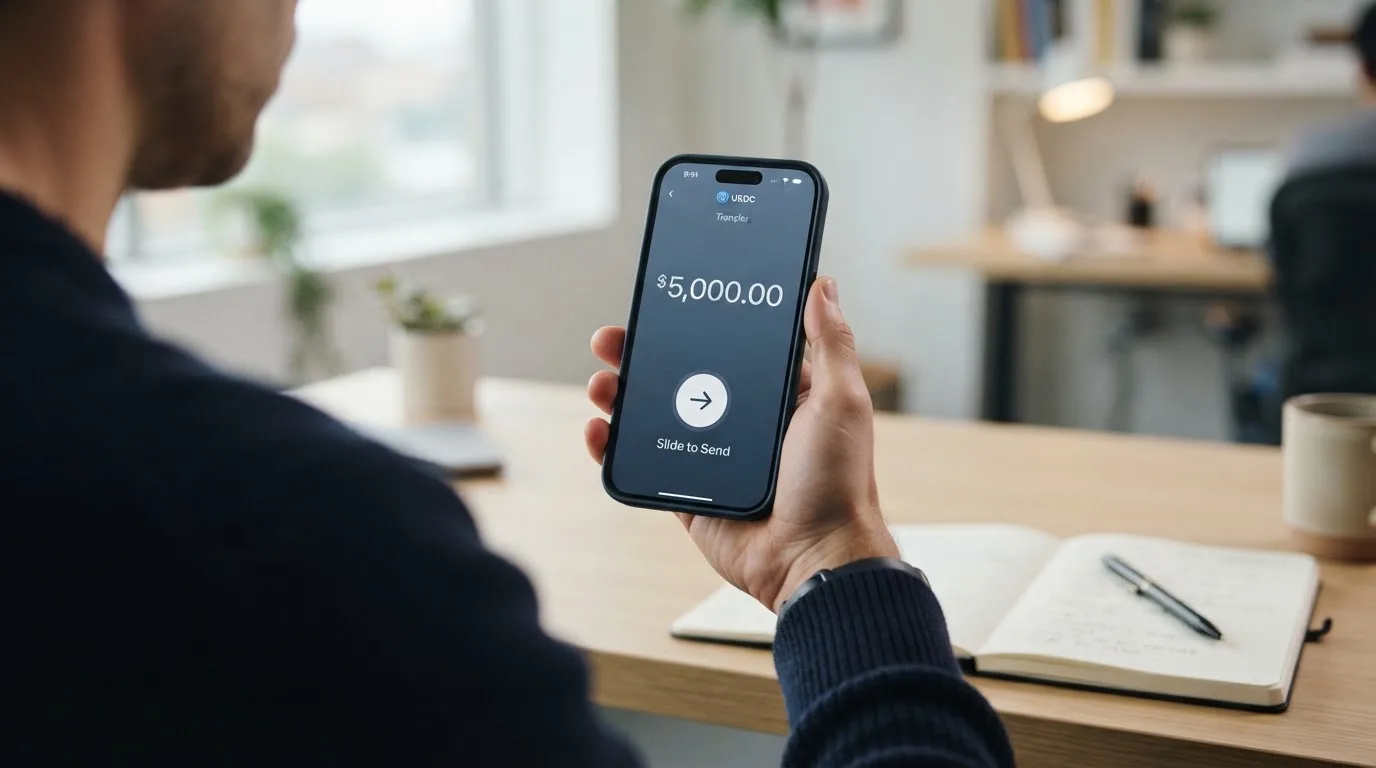
The minimum is $25. Combined with the 5% base fee, a $25 load costs $1.25 in fee. Below roughly $100 the percentage does real damage to the amount you actually get.
Network choice is yours, but it is a real decision. Blockchain fees are charged by the network rather than the card provider, so choosing an expensive chain to save a card fee is a bad trade. Tron transfers typically cost under $1, which is why TRX USDT is the common route.
You must get the network right. A deposit sent on a network the provider does not support, or sent to an address belonging to another network, can be lost or need manual support recovery with no guarantee — blockchain transfers are irreversible. This is the single most common way people lose money on cards like this, and it has nothing to do with the card’s fees.
One ecosystem detail worth knowing: Circle stopped supporting USDC on Tron in February 2024, so USDC over TRC-20 is not a native option. If you hold USDC on Tron you are holding USDT. If you want USDC, look at Ethereum, Solana, or one of the other chains it supports.
Fiat top-ups are not stated, and withdrawal from the card balance is not stated. If you hold crypto and want cash back out, that path is undocumented on the public pages.
Paying With It Every Day
Once funded, spending is ordinary. The card works in Apple Pay and Google Pay for contactless and online payments, and the virtual card number works anywhere those numbers are accepted. There is no physical card, and ATM withdrawal is not addressed, which in practice means you should treat this as an online and contactless spending tool rather than a cash tool.
The daily shape of use, in order: you convert crypto to a dollar balance, you spend the balance, and there is no revolving credit, no lending and no overdraft. A prepaid card draws on a stored balance; it cannot go below zero.
Which is the honest appeal of a card like this. If you are paid in crypto, or you are moving money between chains, a pre-loaded balance means your spending is capped by what you have loaded and nothing more. There is no debt to accumulate.
Where the friction shows up is merchant acceptance and verification. Some merchants decline prepaid or foreign-issued cards, because the issuer identification number at the front of the card reveals the card type and the issuing country and some risk systems treat that as a flag. Address Verification Service is mainly a US, Canadian and UK mechanism and is generally unavailable for foreign-issued cards, so online checkouts that verify a billing street number and postcode can fail on a card like this for reasons that have nothing to do with your balance.
Blocked merchant categories are not stated, and neither are rewards — no cashback is mentioned. So you should not plan around earning anything back from the card itself, and you cannot tell from the public pages whether gambling, adult content or similar categories are closed off on your particular card.
Dispute handling for card purchases is not stated. The one documented refund behaviour is that incomplete Collect Payments are refunded automatically. If a merchant takes your money and does not deliver, the card’s own pages do not tell you what happens next.
What Can Go Wrong
The most important risk is not on any fee schedule. It is who is actually behind the card.
The issuer entity is BlueHouse Software B.V., registration 000062404148, Bas Jungiusstraat 200 A, 3081VP Rotterdam, Netherlands. The site says WaldenPay is not a bank and that partners provide the accounts, cards and conversion. The issuing bank is not named and no licences are named on the public pages. That is not automatically a problem — most crypto cards work this way, with an e-money institution or a partner bank holding the balance while the crypto brand runs the front end. But it means the entity you are contracting with is the programme manager, and the regulated entity holding your funds is somewhere behind it, unnamed. You can read that arrangement in general terms further down, where custody and e-money regulation are explained.
On complaints, what exists is thin and partly unofficial. An aggregator, cryptocards.so, reports that Reddit sentiment is split: some users find it functional for low-value privacy use, others warn about non-KYC risk. The same aggregator flags the flat 5% top-up fee and a partner-bank freeze risk. These are third-party observations and I could not check them against original threads, so treat them as unofficial and not confirmed by the card. No Trustpilot page for WaldenPay was found, and no press coverage surfaced. That absence cuts both ways: it is not a scandal, and it is not independent verification either.
Security claims are conventional and partly reassuring. The card cites 256-bit AES encryption, PCI DSS-compliant partners, full card numbers not stored, and 24/7 monitoring. Those are the right things for a card to claim. What is not stated is how customer funds are safeguarded, whether your funds sit in an account segregated from the company’s own money, and what freeze controls exist in the app. Those are the three questions to ask support directly.
A freeze is the failure mode people describe in this category generally. A crypto card’s authorisation path runs through a partner bank or e-money institution, and that institution can be required by its own regulator to freeze, block or close an account. It also has its own risk appetite. That can happen without any wrongdoing on your part, and it is not something you can appeal through the crypto brand.
On support: there is a free Contact Support page, an email route, and Telegram at @WaldenPay. Hours and languages are not stated, which matters if you are in a timezone where a freeze is happening in real time.
Two structural risks deserve a paragraph each, because they apply to the whole category rather than to this card alone.
Custody first. If you load crypto through a provider that holds the keys, you are trusting that provider completely, and the category has a documented record: Mt. Gox with roughly US$350 million reported stolen between 2011 and 2014, Coincheck at about US$400 million in 2018, and Ronin Network at US$625 million in 2022. Transfers are typically irreversible and a stolen private key has no recovery path built into the network.
Programme closure second. Card programmes end. Visa terminated its global agreements with FTX on 13 November 2022 and the FTX US debit card was wound down by its issuer. WaveCrest, a Visa issuer that supplied several crypto card brands, was suspended by Visa in Europe in 2018, closing all its Visa programmes. The pattern is usually a notice period, then loading stops, then spending stops, then you are asked to withdraw whatever is left. A 2026 closure reported by a single secondary source had new loads ending 8 July 2026 and spending stopping 8 August 2026; that is one unconfirmed source and I am passing it on as an illustration of the sequence, not as fact about WaldenPay.
Finally, the regulatory floor is still rising under all of this. In the EU, MiCA is the markets-in-crypto-assets regulation; ESMA states it took legal effect in June 2023, with rules for asset-referenced and e-money tokens applying from 30 June 2024 and the remaining provisions, including crypto-asset service provider rules, applying from 30 December 2024. Providers already operating under national law have a transitional period that runs only until 1 July 2026 or until they receive or are refused a MiCA authorisation, whichever comes first. ESMA maintains an interim register of authorised providers and white papers, which is where you can check whether the entity behind a card is listed. That is a practical step, not a formality.
And a footnote on money movement that catches people: if you buy crypto and then spend it through a card, most tax authorities treat each disposal as a taxable event. In the US the IRS treats digital assets as property, so exchanging them for goods, services or dollars generally produces a gain or loss measured at fair market value on the date of the transaction. I am not giving tax advice here — but you should assume each card payment funded from crypto is its own taxable event and check with a professional in your own jurisdiction.
What to Take Instead
Three alternatives came up in the same category. None of them is a clear upgrade on every axis, and the differences are mostly about cost structure, physical form and how far each one has been checked.
| WaldenPay | Cardex | TakeCard | OkiCard | |
|---|---|---|---|---|
| Score | 6.3 / 10 | 5.6 / 10 | 5.5 / 10 | 6.0 / 10 |
| Reach | Global except a short restricted list | “One crypto card, 200+ countries”, no exclusions listed | Physical card Bolivia only; country list not in help articles | “150+ countries”, some pages say “200+” |
| Card form | Virtual only | Virtual and physical | Virtual immediate; physical Bolivia only | Virtual, page also mentions physical |
| Issuance | $10 | Not stated | Virtual $5; physical Bolivia $20 plus $20 shipping, one article says $10 | Pricing page $0 and $0 monthly but a $15 virtual starting price; pages disagree |
| Ongoing fee | 5% top-up, falling with volume | No percentage stated | 1% commission per purchase | 3% load, 0% transaction fee in USD |
| Assets | 135+ coins, 35+ networks | USDT, USDC, BTC | Coin routes unverified in the article I read | USDT on BSC, Ethereum, Tron, Solana; USDC, BTC “coming soon” |
Cardex converts crypto to fiat at the moment of payment and claims an AI-powered conversion rate that scans global exchange rates and picks the best one when you spend. No fee percentage is stated on the site. Its App Store listing is Naira-focused, which is the practical constraint to know about: the card currency is Naira per the listing, so it is aimed at a Nigerian market rather than a general one.
TakeCard is the cheapest to open and the clearest on purchase cost: 1% commission per purchase, dollar payments 1:1 with no currency adjustment, and other currencies at the official Visa rate of the day. It is prepaid, issued in the United States, Visa, with an immediate virtual card. Its limit is form and reach: the physical card is Bolivia-only for now, and the country coverage I could not verify from the help articles. There is also a conflict inside its own help centre, where one article quotes USD 10 for a physical card in Bolivia and another quotes USD 20 issuance plus USD 20 shipping.
OkiCard has the most attractive published fee structure for a light user: 3% to load, 0% transaction fee in dollars, and no hidden exchange spreads, with issuance and monthly both shown as $0 on the pricing page while the same site quotes a $15 virtual starting price elsewhere. It states there is no geo-blocking based on your passport, though users must confirm they are not in a sanctioned jurisdiction. Its asset list is narrower than WaldenPay’s right now — USDT across BSC, Ethereum, Tron and Solana, with USDC, BTC and altcoins marked as coming soon — and the minimum initial deposit is 100 USDT, well above WaldenPay’s $25.
The honest comparison: OkiCard is cheaper to use, Cardex is broader in ambition, TakeCard is cheapest to open with a transparent per-purchase fee, and WaldenPay is the one with the widest list of coins and networks and the most explicit restricted-jurisdiction policy. What none of the four does better than WaldenPay is disclose its issuer’s bank and licences.
Who I Would Recommend It To
I would recommend this card to someone in a fairly specific position: you already hold several different coins across several networks, you want a spendable balance without converting back to your home currency first, and you can afford a 5% load fee because your ordinary spending is small relative to it. If that is you, the funding breadth is genuinely the best in this comparison and the $25 minimum is genuinely low.
I would not recommend it as your primary or only card. The reason is the combination I keep coming back to: the issuer says it is not a bank, no issuing bank or licence is named on the public pages, there is no Trustpilot page to read, the only complaint data is one aggregator’s unofficial read of split Reddit sentiment, and card spending limits are not published. If the card is the only route to your money, a freeze at the partner level is a serious outcome. If it is one of several tools and you keep the bulk of your funds elsewhere, the same freeze is an inconvenience.
The concrete questions to ask support before you commit anything meaningful:
- Which bank or e-money institution holds my card balance, and in which jurisdiction?
- What licences does that entity hold, and can I verify them on a public register?
- Are customer funds safeguarded in a segregated account, and is that protection a deposit guarantee or something weaker?
- What are the card spending limits, and can I set my own?
- Is there any ATM withdrawal, and what does it cost?
- How do I file a dispute if a merchant takes payment and does not deliver?
- Is USD fiat top-up supported, and can I withdraw my balance back to a bank or wallet?
If the answers to the first two are vague, take that as an answer. The card may still serve you well as a convenience tool for crypto you were going to spend anyway. It is a thinner proposition than the coin count suggests, and the 5% fee is what you pay for the difference.
Frequently asked questions
What is WaldenPay card?
WaldenPay is a virtual prepaid payment card on Visa or Mastercard rails that you fund with cryptocurrency. You send crypto to the network the card supports, it is converted into a US dollar balance, and you spend that balance through a card number, Apple Pay or Google Pay. The card is issued by BlueHouse Software B.V. in Rotterdam, the Netherlands, which states that WaldenPay is not a bank and that partners provide the accounts, cards and conversion.
Is WaldenPay a bank, and who owns it?
No, it says so itself. The issuing entity is BlueHouse Software B.V., registration 000062404148, at Bas Jungiusstraat 200 A, 3081VP Rotterdam, and the site states WaldenPay is not a bank. Partners provide the accounts, cards and currency conversion. The issuing bank and the licences held are not named on the public pages, so the regulated entity holding your balance sits behind the scenes. Ask support which institution it is before you load anything significant.
Is the WaldenPay card available in my country?
Sign-up and loading are described as supported globally except in restricted jurisdictions: North Korea, Iran, Syria, Cuba, Russia, Belarus, Crimea, Donetsk and Luhansk regions, Afghanistan, and Myanmar. The Russia and Belarus entries cite EU sanctions regulations. The pages do not say whether citizenship or residence decides the question, which matters if your nationality and your address point to different countries.
Does the WaldenPay card require KYC?
Unclear, and you should assume yes eventually. Some card pages say no identity documents are needed to get started, and registration is described as instant. But other pages say purchases are subject to AML and regulatory requirements and that availability depends on onboarding and eligibility checks. Documents and age requirements are not stated. What documents are actually required is not published.
What does it cost to use the WaldenPay card?
Issuance is $10 once and the monthly fee is $0, with no recurring charges. The cost that matters is the top-up fee: 5% at base, falling to 4.75% at $2,000 spent in 30 days, 4.5% at $5,000, 4.25% at $10,000, 4% at $25,000, 3.5% at $50,000, 3% at $100,000, and individual terms at $250,000. There is no foreign exchange markup from WaldenPay itself.
How do I top up the WaldenPay card?
Send one of 135+ cryptocurrencies over one of 35+ networks — USDT, USDC, BTC, ETH, SOL, TRX and LTC are the named examples — to the address the card gives you. The minimum is $25 USD equivalent and crediting is instant. Network fees are paid to the blockchain rather than to WaldenPay, and Tron transfers typically cost under $1. Check the network before you send: a transfer on an unsupported network can be lost, since blockchain transfers are irreversible.
Can I add the WaldenPay card to Apple Pay or Google Wallet?
Yes, both are supported, for contactless payments and online payments. When you add the card to a mobile wallet the number is replaced by a device-specific token stored in the phone’s secure hardware, and each payment carries a one-time code rather than the real card number. Note that Apple Pay and Google Pay are ways to use the virtual card; there is no physical card in the current offering.
Is the WaldenPay card safe?
Partly, and the unknown parts are about money rather than encryption. The card cites 256-bit AES encryption, PCI DSS-compliant partners, full card numbers not stored, and 24/7 monitoring. Not stated are how customer funds are safeguarded, whether they are segregated from company funds, and what freeze controls exist in the app. Unofficial reports from one aggregator describe split user sentiment on forums and a partner-bank freeze risk; no Trustpilot page was found. Freeze controls are exactly what to ask about.
What are the WaldenPay card limits?
Card spending limits are not stated on the public pages, and ATM withdrawal is not addressed at all, so treat both as unknown and check the dashboard. Two limits are published: Send to Friend allows $1 to $10,000 per transfer and $20,000 per rolling 24 hours, and Collect Payments allows $1 to $10,000. You may be able to set your own spending cap in the app; that is not stated either.
Why should I not load a large balance at once?
Two reasons. The 5% top-up fee is charged on the whole load, so small frequent reloads pay it repeatedly and one large load pays it once. And the card’s own pages do not name the bank holding your balance, which means a freeze or closure at that partner would affect whatever is loaded at the time. Load what you need, check the answers to the questions in the recommendation section, and keep the rest elsewhere.
Highest-scored virtual cards – cryptocardbest.com
Content created by the «cryptocardbest.com» team